Ligustrum obtusifolium
Siebold.&Zucc.
Border privet
iNaturalist· cc-by-sa
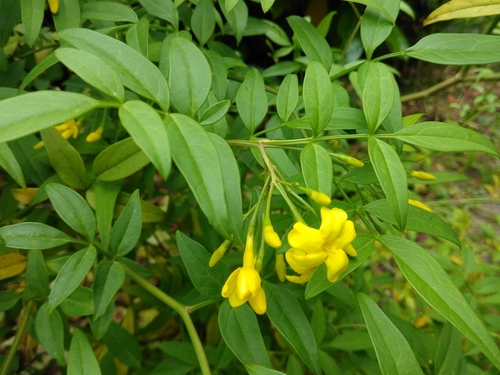
(c) Douglas Goldman, some rights reserved (CC BY-SA), uploaded by Douglas Goldman
iNaturalist· cc-by
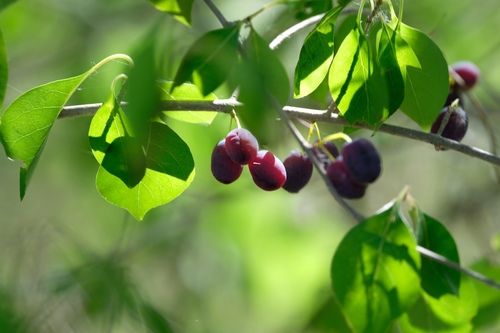
(c) Sandy Wolkenberg, some rights reserved (CC BY), uploaded by Sandy Wolkenberg
iNaturalist· cc-by
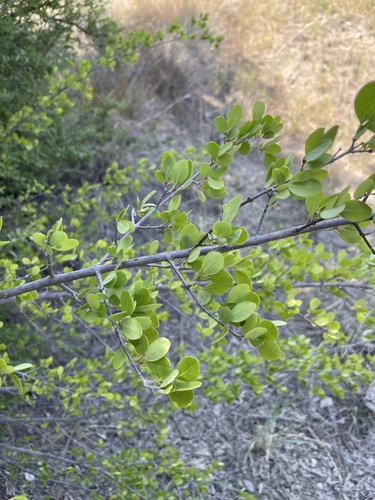
(c) Sandy Wolkenberg, some rights reserved (CC BY), uploaded by Sandy Wolkenberg
Description
Ligustrum obtusifolium is an evergreen Shrub growing to 3 m (9ft 10in) at a medium rate. See above for USDA hardiness. It is hardy to UK zone 3. It is in leaf all year, in flower in July, and the seeds ripen in October. The species is hermaphrodite (has both male and female organs) and is pollinated by Insects. Suitable for: light (sandy), medium (loamy) and heavy (clay) soils and can grow in heavy clay soil. Suitable pH: mildly acid, neutral and basic (mildly alkaline) soils. It can grow in semi-shade (light woodland) or no shade. It prefers moist soil.
Edible Uses
Tea. The roasted seed is a coffee substitute. Leaves are a tea substitute.
Known Hazards
Although no reports of toxicity have been seen for this species, at least one member of this genus is recorded as being mildly toxic and it is quite possible that other members of the genus also contain toxins.
Distribution
E. Asia - China, Japan.
Where It Grows
TEMPERATE ASIA: China (Heilongjiang Sheng, Jiangsu Sheng, Liaoning Sheng, Shandong Sheng, Zhejiang Sheng), Korea, Japan (Hokkaidô (south), Honshu, Kyushu, Shikoku)
Cultivation
A very tolerant and easily grown plant, it succeeds in any soil that is not impoverished or water-logged. Grows well in heavy clay soils. A very ornamental plant. Polymorphic. Prefers hotter summers than are normally experienced in Britain. Closely related to L. ovalifolium. This species is notably susceptible to honey fungus.
Propagation
The seed does not require any pre-treatment and can be sown in the spring in a cold frame. When they are large enough to handle, prick the seedlings out into individual pots and grow them on in the greenhouse for at least their first winter. Plant them out into their permanent positions in late spring or early summer, after the last expected frosts. Cuttings of half-ripe wood, 5 - 10cm with a heel, July/August in a frame. Very easy. Cuttings of mature wood, 20 - 30cm in a sheltered outdoor bed in November/December. High percentage.
Other Uses
WaxA commercial insect wax is produced on the branches as a result of eggs being laid by insects. Another report says that the wax is produced by the plant due to the stimulation of the feeding insects. Yet another report says that the wax is produced by the insects. It is used for candles and as a polish for earthenware pots, book edges etc. The sub-species L. obtusifolium regelianum and its cultivar 'Dart's Perfection' make a good carpeting ground cover about 1.2 metres tall. They should be spaced about 2.5 metres apart each way.