Lactuca serriola
L.
Prickly Lettuce
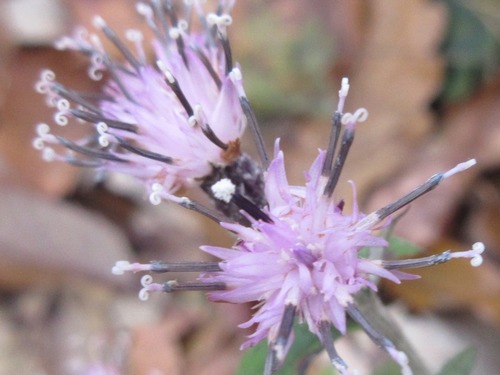
iNaturalist· cc-by-sa
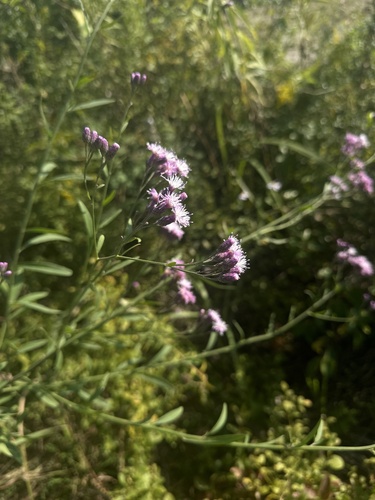
(c) George F Mayfield, some rights reserved (CC BY-SA)
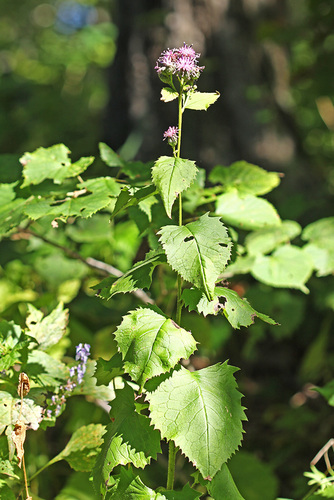
iNaturalist· cc-by-sa
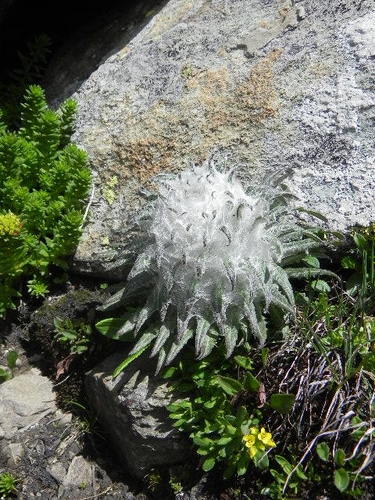
(c) Ayotte, Gilles, 1948-, some rights reserved (CC BY-SA)
iNaturalist· cc0
no rights reserved, uploaded by Stephen James McWilliam
Description
Lactuca serriola is a BIENNIAL growing to 1.5 m (5ft) by 0.3 m (1ft in). See above for USDA hardiness. It is hardy to UK zone 7. It is in flower from July to September, and the seeds ripen from August to September. The species is hermaphrodite (has both male and female organs). The plant is self-fertile. Suitable for: light (sandy) and medium (loamy) soils and prefers well-drained soil. Suitable pH: mildly acid, neutral and basic (mildly alkaline) soils. It cannot grow in the shade. It prefers moist soil.
Edible Uses
Oil. Young leaves - raw or cooked. A bitter flavour. The young tender leaves are mild and make an excellent salad, but the whole plant becomes bitter as it gets older, especially when coming into flower. As a potherb it needs very little cooking. Large quantities can cause digestive upsets. Young shoots - cooked. Used as an asparagus substitute. An edible oil is obtained from the seed. The oil must be refined before it is edible. A pleasant flavour.
Medicinal Uses
Anodyne Antipyretic Diuretic Homeopathy Hypnotic Narcotic Sedative Urinary. The whole plant is rich in a milky sap that flows freely from any wounds. This hardens and dries when in contact with the air. The sap contains 'lactucarium', which is used in medicine for its anodyne, antispasmodic, digestive, diuretic, hypnotic, narcotic and sedative properties[9, 21, 46, 165, 192, 213, 238]. Lactucarium has the effects of a feeble opium, but without its tendency to cause digestive upsets, nor is it addictive. It is taken internally in the treatment of insomnia, anxiety, neuroses, hyperactivity in children, dry coughs, whooping cough, rheumatic pain etc. Concentrations of lactucarium are low in young plants and most concentrated when the plant comes into flower. It is collected commercially by cutting the heads of the plants and scraping the juice into china vessels several times a day until the plant is exhausted. This species does not contain as much lactucarium as L. virosa. An infusion of the fresh or dried flowering plant can also be used. The plant should be used with caution, and never without the supervision of a skilled practitioner. Even normal doses can cause drowsiness whilst excess causes restlessness and overdoses can cause death through cardiac paralysis. The fixed oil from the seeds is said to possess antipyretic and hypnotic properties. A homeopathic remedy is made from the plant. It is used in the treatment of chronic catarrh, coughs, swollen liver, flatulence and ailments of the urinary tract.
Known Hazards
The mature plant is mildly toxic.
Distribution
S. and C. Europe, incl Britain, from the Netherlands south and east to N. Africa and the Himalayas.
Where It Grows
TEMPERATE ASIA: Saudi Arabia, Afghanistan, Cyprus, Egypt (Sinai), Iran, Iraq, Israel, Jordan, Lebanon, Syria, Turkey, Russian Federation-Ciscaucasia (Ciscaucasia), Armenia, Azerbaijan, Georgia, Russian Federation (Dagestan), Russian Federation (Tyva, Respublika, Altay, Kemerovskaja oblast, Kurganskaja oblast, Novosibirsk, Omsk, Tyumen (south)), Kazakhstan, Kyrgyzstan, Tajikistan, Turkmenistan, Uzbekistan, China (Xinjiang Uygur Zizhiqu) TROPICAL ASIA: India (Himachal Pradesh, Jammu and Kashmir (north), Uttar Pradesh, Arunachal Pradesh), Pakistan EUROPE: Denmark, United Kingdom, Austria, Belgium, Switzerland, Czech Republic, Germany, Hungary, Netherlands, Slovakia, Russian Federation (European part), Belarus, Moldova, Ukraine (incl. Krym), Albania, Bulgaria, Bosnia and Herzegovina, Greece (incl. Crete), Croatia, Italy (incl. Sardinia, Sicily), North Macedonia, Montenegro, Romania, Serbia, Slovenia, Spain (incl. Baleares), France (incl. Corsica), Portugal AFRICA: Spain (Canarias), Portugal (Madeira Islands), Algeria, Egypt, Morocco, Tunisia, Ethiopia
Cultivation
Prefers a light sandy loam in a sunny position. The wild lettuce is cultivated for the oil in its seed in Egypt. A compass plant, the top leaves align north-south.
Propagation
Seed - sow spring in situ and only just cover the seed. Germination is usually fairly quick.
Other Uses
Oil Oil. The seed contains 35.2% of a semi-drying oil. It is used in soap making, paints, varnishes etc.