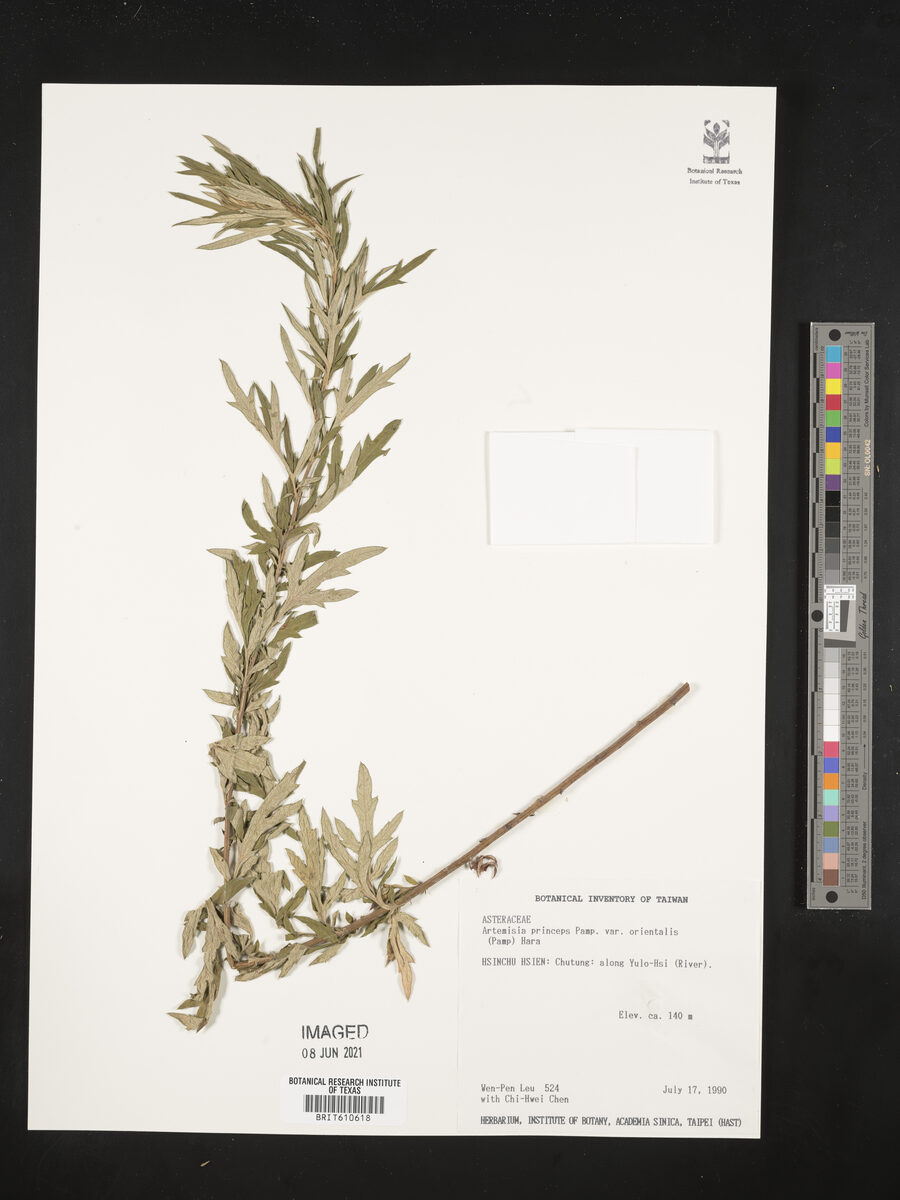
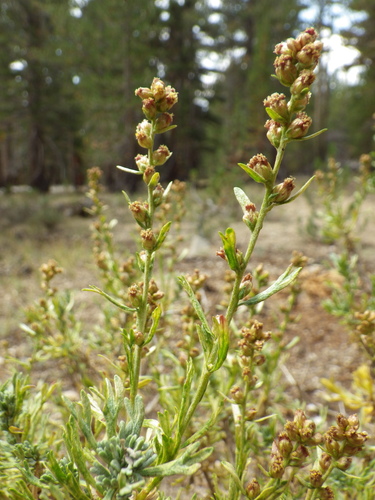
Dendranthema indicum
(L.) Des Moul.
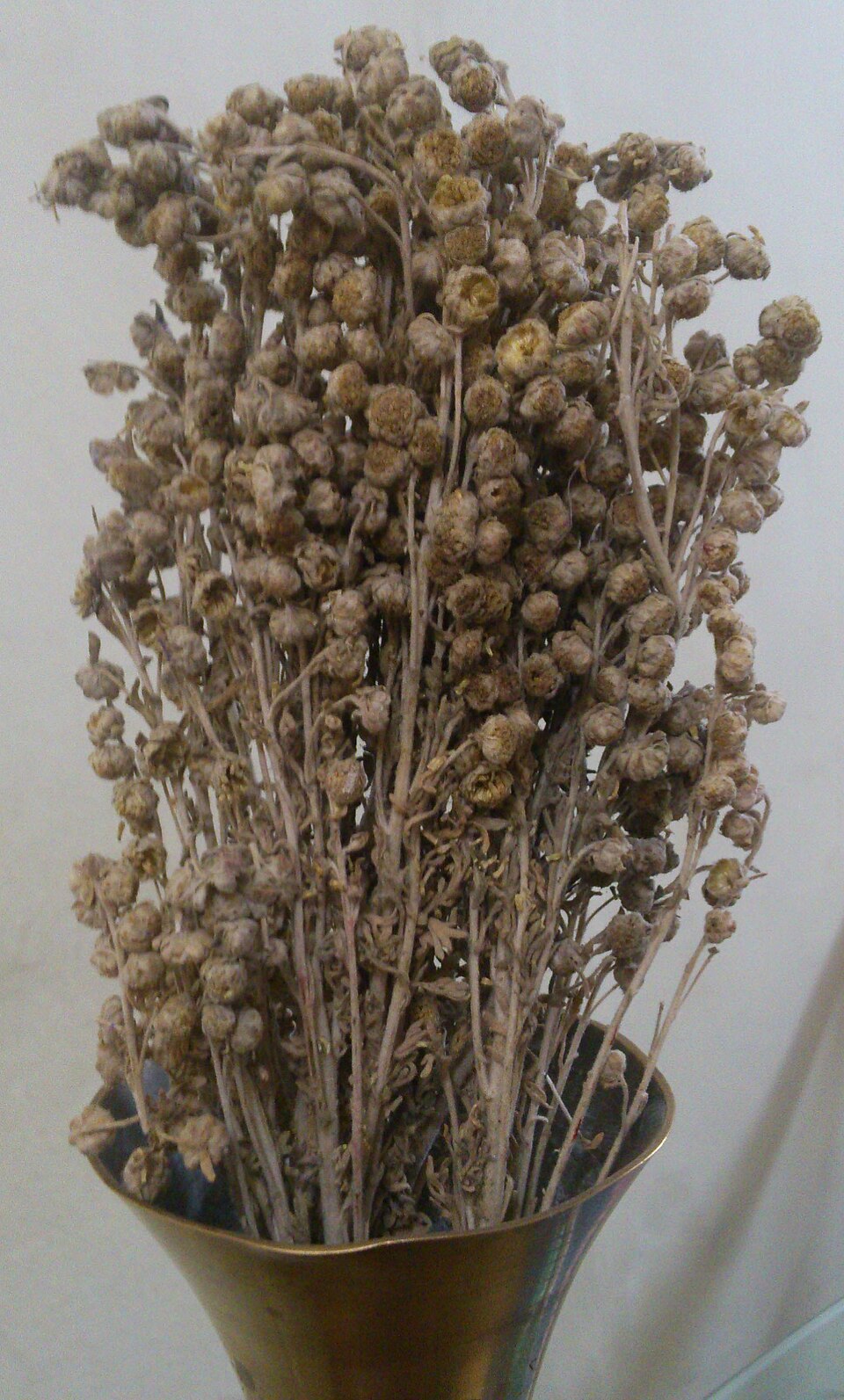
Nanking chrysanthemum shoot
iNaturalist· cc-by-nc
(c) 艸目伊, some rights reserved (CC BY-NC)
iNaturalist· cc-by-nc
(c) 艸目伊, some rights reserved (CC BY-NC)
iNaturalist· cc-by-nc
(c) 艸目伊, some rights reserved (CC BY-NC)
Summary
Source: WikipediaA perennial reaching 0.6 m tall and wide, hardy to UK zone 6. Flowers August to October and is insect-pollinated. Hermaphroditic plant suitable for light sandy, medium loamy, and heavy clay soils with mildly acid to basic pH. Requires full sun and prefers moist soil.
Description
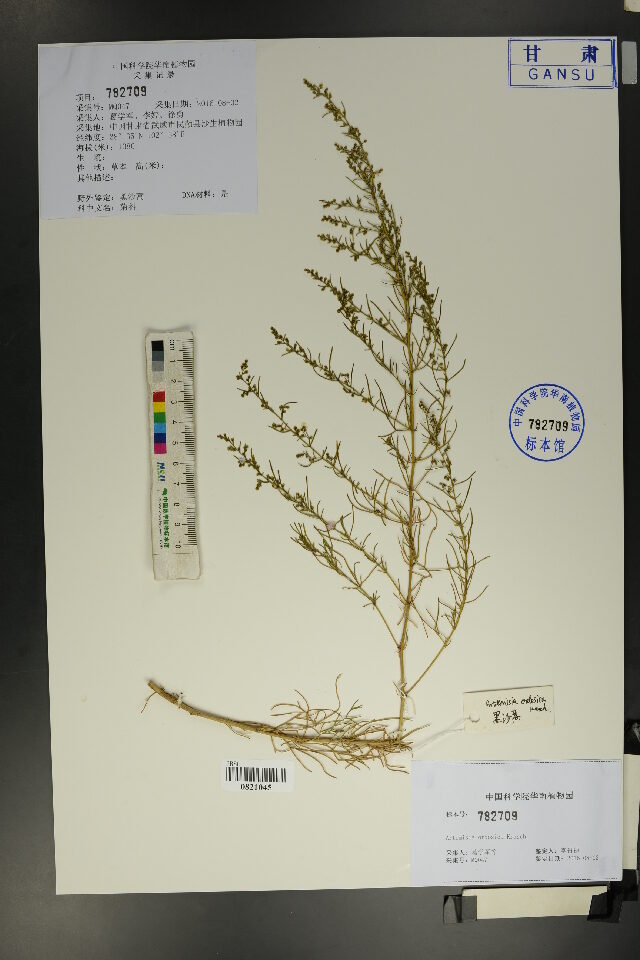
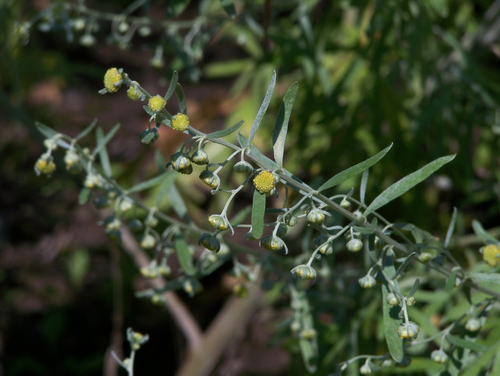
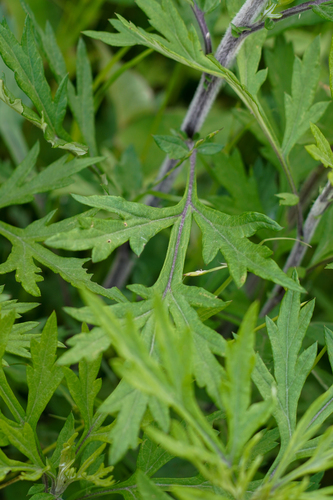
A herb that grows in clumps. It keeps growing from year to year. It grows 1 m tall. The leaves are oval and 5-7 cm long by 4-6 cm wide. The lower portions are divided into leaflets with lobes and teeth. The leaves are dark green. Flowers are yellow.
Edible Uses
Flower heads are pickled in vinegar. Young leaves are eaten cooked. An aromatic tea is made from the leaves. The seed is also edible, though no further details are given and it is very small, making it rather fiddly to use.
Traditional Uses
The flower heads are pickled in vinegar. The flowers are dried and made into tea. The young leaves are cooked. The leaves are also used for tea.
Medicinal Uses
The whole plant is antiphlogistic, blood tonic, depurative, febrifuge, and vulnerary. It is used in China to treat eye ailments, and combined with black pepper it is used in the treatment of gonorrhoea. The leaves are depurative and are used in China for migraine. The flowers are aperient, bitter, hypotensive, stomachic, and vasodilator, containing the glycoside chrysanthemin — which yields glucose and cyanidin on hydrolysis — along with stachydrine and an essential oil. They have antibacterial activity against Staphylococcus, E. coli, Streptococcus, C. diphtheriae, and Bacillus dysenteriae. The flowers are used to treat furuncle, scrofula, deep-rooted boils, inflammation of the throat, eyes and cervix, eczema, skin itchiness, and hypertension, and are said to have a rejuvenating effect when used over a long period. An essential oil from the plant contains chrysanthenone, which is active on the brain centre affected by Parkinson's disease.
Distribution
It is a temperate plant. It grows in grasslands on mountain slopes, thickets, wet places by rivers, fields, roadsides, salty places by seashores, under shrubs between 100-2900 m in China. It grows along walls and in hedges.
Where It Grows
Asia, Bhutan, Central Asia, China, Europe, Himalayas, India, Indochina, Japan, Korea, Mediterranean, Mongolia, Nepal, Pakistan, Portugal, Russia, Uzbekistan,
Cultivation
Plants can be grown from seeds. Seedlings can be transplanted. Plants can be divided for planting.
Propagation
Sow seed in spring to early summer in a greenhouse, barely covering it. Germination usually takes 10–18 days at 15°C; if germination has not occurred within 4 weeks, chill the seed for 3 weeks in the salad compartment of a refrigerator. Prick out into individual pots once large enough to handle and plant out during summer. Divide established clumps in spring — larger clumps can go straight into permanent positions, while smaller clumps are best potted up and grown on in a cold frame until rooting well before planting out in spring.
Other Uses
The seed contains about 16% of a semi-drying oil, though no information is given on its specific uses. The seed is rather small, making commercial extraction probably unviable.
Notes
There are 37 Dendranthema species. Used in medicine.
Synonyms
Also Known As
Ye ju hua
References (8)
- Actes Soc. Linn. Bordeaux 20:561-562. 1855
- Flora of Pakistan.
- Hu, Shiu-ying, 2005, Food Plants of China. The Chinese University Press. p 724 (As Chrysanthemum nankingense)
- Hwang, H., et al, 2013, A Study on the Flora of 15 Islands in the Western Sea of Jeollanamdo Province, Korea. Journal of Asia-Pacific Biodiversity Vol. 6, No. 2 281-310
- Lim, T. K., Edible Medicinal and Non-Medicinal Plants Volume 7 Flowers
Show all 8 references Hide references
- Ling Yuou-ruen & C. J. Humphries, ASTERACEAE (Draft), Tribe ANTHEMIDEAE Cassini, in Flora of China.
- Plants for a Future database, The Field, Penpol, Lostwithiel, Cornwall, PL22 0NG, UK. http://www.pfaf.org
- Sachula, et al, 2020, Wild edible plants collected and consumed by the locals in Daqinggou, Inner Mongolia, China. Journal of Ethnobiology and Ethnomedicine (2020) 16:60