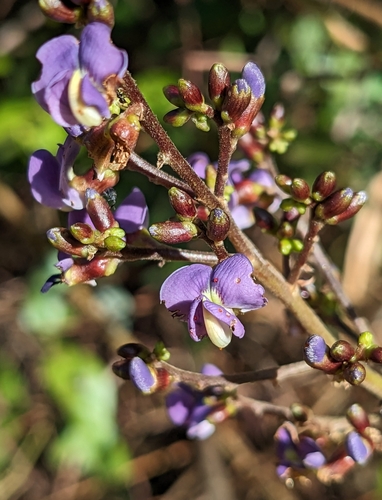
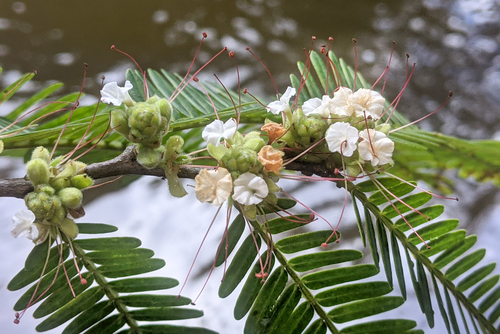
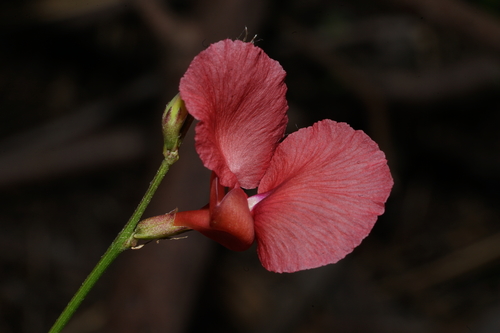
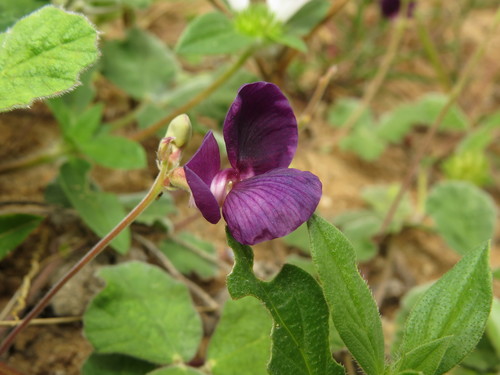
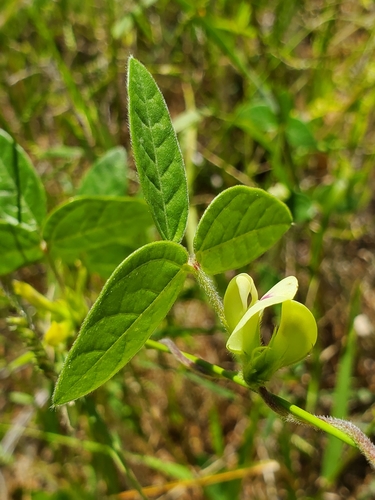
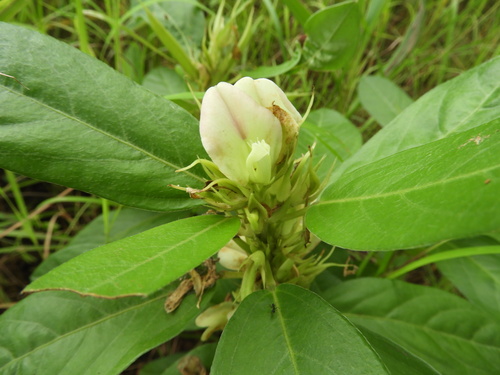
Hoffmannseggia densiflora
Benth. ex A.Gray.
Indian Rush-Pea
gbif· cc0
Arizona Western College Herbarium (AWC-)
Description
Hoffmannseggia densiflora is a PERENNIAL growing to 0.3 m (1ft). See above for USDA hardiness. It is hardy to UK zone 8. The species is hermaphrodite (has both male and female organs) and is pollinated by Bees, Lepidoptera (Moths & Butterflies), Diptera. Suitable for: light (sandy), medium (loamy) and heavy (clay) soils and can grow in heavy clay soil. Suitable pH: neutral and basic (mildly alkaline) soils and can grow in very alkaline soils. It can grow in semi-shade (light woodland) or no shade. It prefers moist soil.
Edible Uses
Tuber - roasted[61 , 161 , 177 , 274 , 1493 ]. The roasted tubers were relished by the native N. Americans. Hog potato (Hoffmannseggia glauca), also known as Indian rushpea or pignut, is a member of the bean family (Fabaceae) native to the southwestern United States. Its deeply buried tubers are edible and were highly valued by Native Americans. These tubers are often described as one of the best wild foods available. Their flavor, texture, and appearance are similar to potatoes, though they are generally smaller, sweeter, firmer, and drier. The interiors are smooth and uniform without woody cores, while the thin brown skins can taste bitter and are best removed before eating. Hog potatoes can be prepared much like true potatoes—after parboiling to counteract their dryness, they may be baked, fried, roasted, sautéed, mashed, or scalloped. They can also be dried and ground into flour. Boiling for about an hour softens the texture and removes residual bitterness from the skins. The tubers make an excellent addition to soups and stews, imparting a pleasant sweetness to the broth. Despite their quality, gathering hog potatoes is difficult. Tubers are usually buried 30–70 cm (1–2 feet) deep, often in hard-packed soils, making them labor-intensive to dig up.
Distribution
SW. & Central U.S.A. to Mexico, Bolivia to S. South America.
Where It Grows
NORTHERN AMERICA: United States (Kansas, Oklahoma, Colorado, New Mexico, Texas, Arizona, California, Nevada), Mexico (Baja California (Norte), Baja California Sur, Chihuahua, Coahuila de Zaragoza, Durango, Nuevo León, San Luis Potosí, Sonora, Zacatecas, Aguascalientes, Guanajuato, Michoacán de Ocampo, Oaxaca, Puebla, Querétaro) SOUTHERN AMERICA: Bolivia, Peru (La Libertad), Argentina (Buenos Aires, Catamarca, Chaco, Chubut, Córdoba, Jujuy, La Rioja, Mendoza, Neuquén, Río Negro, Salta, San Juan, San Luis, Santiago del Estero, Tucumán), Chile (Atacama, Coquimbo)
Cultivation
Hoffmannseggia glauca is native to mainly sub-arid climates and is not very cold-hardy, being able to tolerate short-lived temperatures falling to around -8°c when fully dormant. It can tolerate occasional snow cover up to 2 weeks a year. The plant is likely to require a sunny position and to succeed in alkaline and heavy soils. Plants are known to tolerate at least some soil salinity. Established plants are very drought-tolerant. Although many species within the family Fabaceae have a symbiotic relationship with soil bacteria, this species is said to be devoid of such a relationship and, therefore, does not fix atmospheric nitrogen. Cultivation: Ornamental, Wild. Hog potato is adapted to arid and semi-arid regions of the southwestern U.S. and northern Mexico, and grows best in USDA Hardiness Zones 7–10. It is considered a noxious weed in farmland and rangeland, largely because of its deep, regenerative root networks that make eradication challenging.
Propagation
Seed -
Synonyms
Also Known As
Hog potato, Indian rushpea, or pignut