Chrysopogon zizanioides - (L.) Roberty
(L.) Roberty
Vetiver, Vetiver Root, Khus Khus
gbif· cc-by-nc
Rafael Hoad
gbif· cc-by-nc
Rafael Hoad
gbif· cc-by-nc
Rafael Hoad
Description
Chrysopogon zizanioides is an evergreen Perennial growing to 1.8 m (6ft) by 1.8 m (6ft) at a fast rate. See above for USDA hardiness. It is hardy to UK zone 8. Suitable for: light (sandy) and medium (loamy) soils. Suitable pH: mildly acid, neutral and basic (mildly alkaline) soils and can grow in very acid, very alkaline and saline soils. It can grow in semi-shade (light woodland) or no shade. It prefers moist or wet soil and can tolerate drought. The plant can tolerates strong winds but not maritime exposure.
Edible Uses
Oil. Edible portion: Root - oil for flavouring. An essential oil obtained from the roots is used as a flavouring in sherbets, syrup sweets, fruit drinks and canned asparagus. It is used in certain canned foods, such as asparagus and peas, to reinforce the natural odour and taste.
Medicinal Uses
Anthelmintic Antispasmodic Carminative Diaphoretic Diuretic Emmenagogue Refrigerant Stimulant Stomachic Tonic. The essential oil obtained from the roots is used medicinally as a carminative, diaphoretic, diuretic, emmenagogue, refrigerant, stomachic, tonic, antispasmodic and sudorific. A stimulant drink is made from fresh rhizomes The plants are used as an anthelmintic.
Distribution
E. Asia - Pakistan, India, Sri Lanka, Myanmar, Thailand.
Where It Grows
TROPICAL ASIA: India (Assam, Bihar, Madhya Pradesh, Meghalaya, Odisha, Tamil Nadu, Uttar Pradesh, West Bengal), Sri Lanka, Pakistan (Punjab), Indochina, Myanmar, Thailand
Cultivation
It grows best in areas where annual daytime temperatures are within the range 22 - 35°c, but can tolerate 12 - 45°c. When dormant, the plant can survive temperatures down to about -15°c, but young growth can be severely damaged at 0°c. It prefers a mean annual rainfall in the range 500 - 2,500mm, but tolerates 200 - 5,000mm. Prefers a moisture-retentive soil in full sun. Succeeds in a very wide range of soils, tolerating occasional waterlogging once established. Plants are very tolerant of saline soils. Prefers a Ph in the range 4.5 - 8, tolerating 3 - 9.9. A yield of 1 - 5 tonnes of dried roots per hectare can be harvested annually, at an oil content of 0.7 - 2.5%, this produces 40 - 100 kilos of essential oil. Tolerant to drought because of its deep roots, flood, and submergence.
Propagation
Seed, Division.
Other Uses
Basketry Biomass Cosmetic Essential Hedge Insecticide Oil Paper Soap making Soil reclamation Soil stabilization Straw. Other uses rating: High (4/5). Agroforestry Uses: Unlike most grasses, which tend to have a more or less surface-rooting habit, the very dense root system of Vetiver has a strong tendency to grow downwards for 4 metres or more. This effectively anchors strips of plants and the soil behind them. Traditionally, the plant is grown in southern India in strips as permanent field boundaries and occasionally in contour strips to control erosion, while in Java it is planted to protect sloping drains. Its use as an erosion-control plant has spread throughout the tropics, but for a long time remained restricted to small areas. Recent interest started in Fiji, where it was grown in contour strips in sugar-cane plantations on steep slopes. Since the late 1980s, its planting for erosion control has been promoted strongly, not only around fields, but also to protect terraces and road shoulders. Strips of densely packed, stiff and tough grass stems break the speed of run-off water and divide it evenly, reducing the risk of formation of run-off streams and gully erosion. The plant is highly tolerant of heavy metals in the soil, including silver, cadmium, manganese and aluminium. In addition, it can grow in land where fuel has been spilt. Over a period of time it gradually accumulates these toxins which can then be removed by cutting the grass and the metals can be reclaimed. Other Uses A high-quality essential oil, known as 'vetiver oil' is obtained from the root. Its scent is heavy and woody. It has a wide range of applications, being used is used in perfumery, cosmetics, deodorants, soaps and other toilet articles. In perfumery, the essential oil and vetiveryl acetate, synthesized by acetylation of vetiver oil, are important fixatives for more volatile fragrance materials. The chemical stability of vetiver oil under alkaline conditions makes it a suitable scent compound for soaps. The essential oil, and the roots, have insecticidal and insect-repellent properties about which little is known. The roots are used for making baskets, mats, fans or 'pamaypay' in the Philippines and cooling screens named 'tatties' in India. These give a pleasant smell to a room, especially when dampened[ 46 , 200 , 310 , 454 ]. The dried roots, or sachets of powdered roots, are stored between clothes to give them a pleasant smell and to repel insects. The stems and old leaves are an excellent, long lasting thatch and can be processed into a coarse paper-pulp. Absorbs dissolved heavy metals from polluted water, tolerates As, Cd, Cr, Ni, Pb, Hg, Se and Zn.
Synonyms
Also Known As
Vetiver (Chrysopogon zizanioides). Other Names: Akar wangi, Botha grass, Janur, Khas-khas, Khus-khus, Kusu-kusu, Larasetu, Larawastu, Nara setu, Nara wastu, Narawastu, Ramacham, Reshira, Sugandhimula, Usar, Vetiver Root, Vetiver.
More from Amaranthaceae
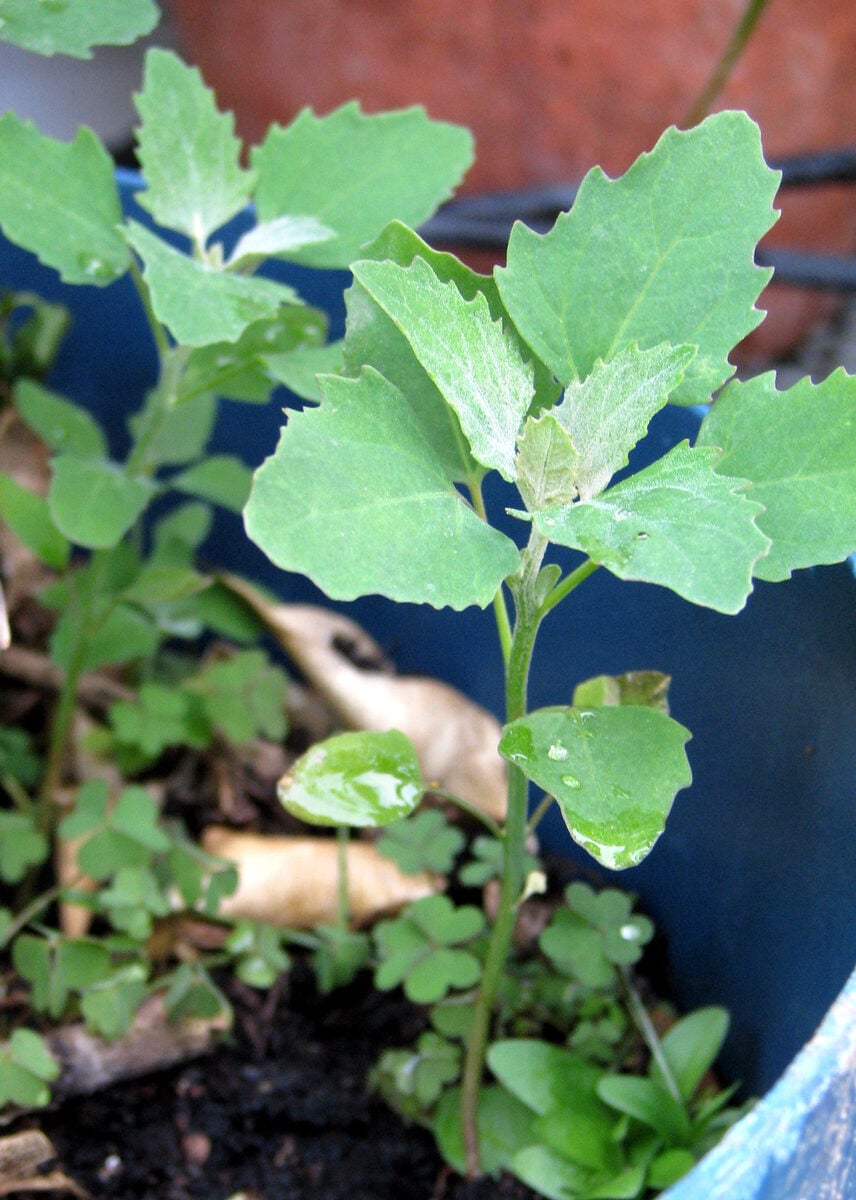
Chenopodium album
Fat hen, Lamb’s quarters
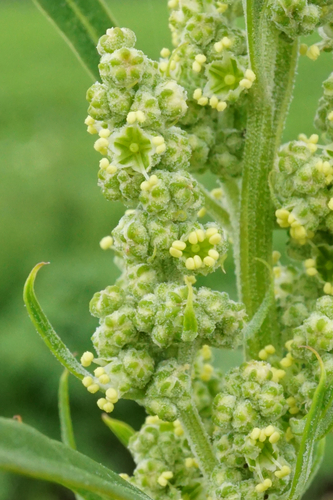
Chenopodium album subsp. iranicum
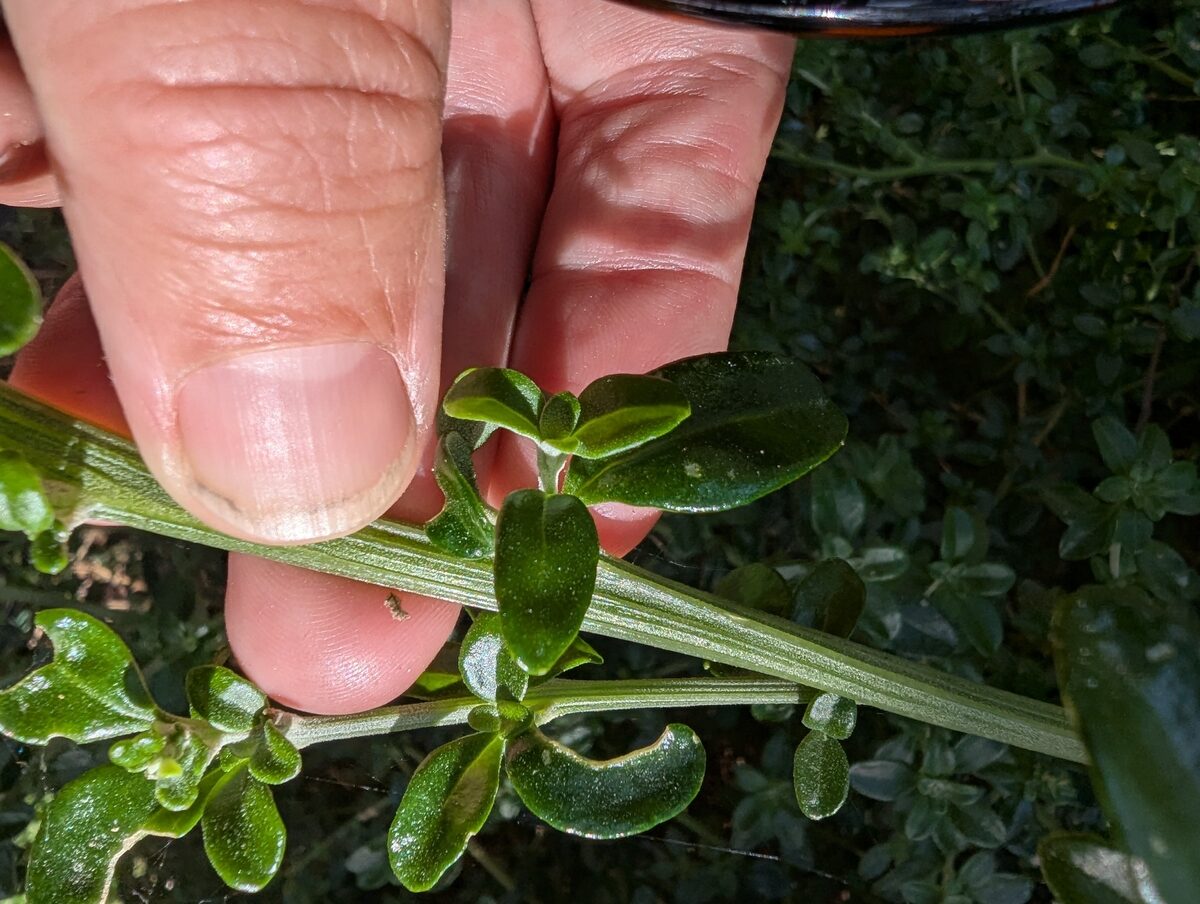
Chenopodium ambrosioides
Mexican Tea. Epazote.
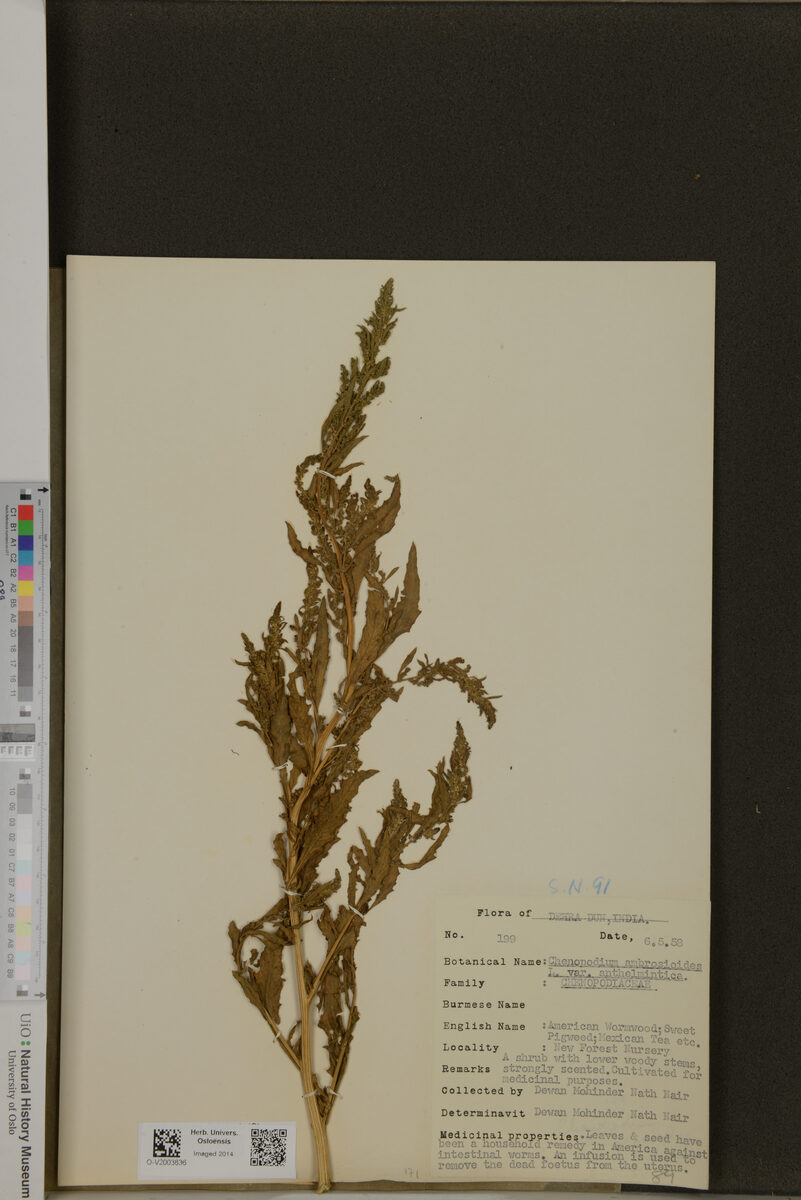
Chenopodium ambrosioides anthelminticum - (L.)Gray.
Wormseed
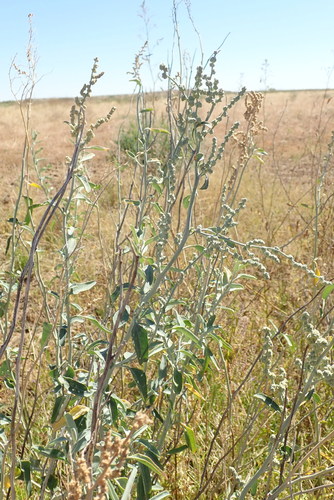
Chenopodium auricomum
Blue bush, Golden Goosefoot, Queensland bluebush
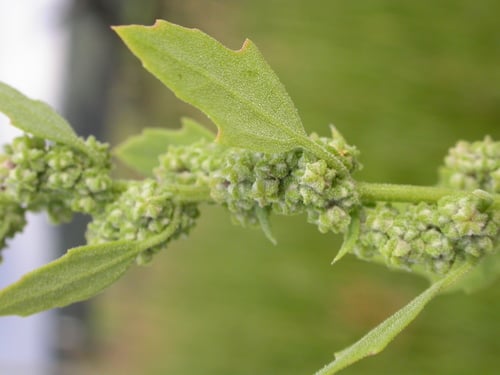
Chenopodium berlandieri
Berlandier’s lamb’s quarters