Chenopodium album
L.
Fat hen, Lamb’s quarters
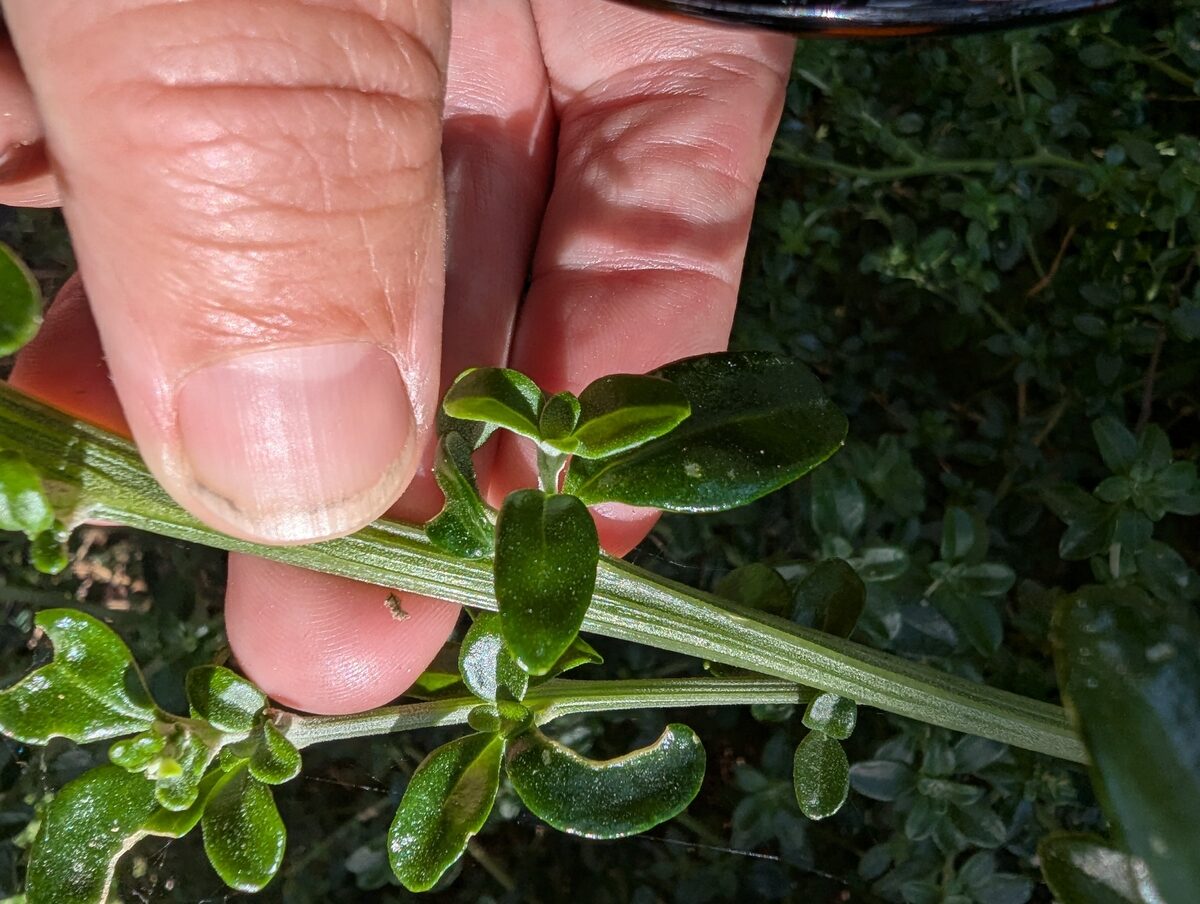
wikimedia· cc-by-sa
6th Happiness (via Wikimedia Commons)
wikimedia· cc-by-sa
Maksymilian Buś (via Wikimedia Commons)
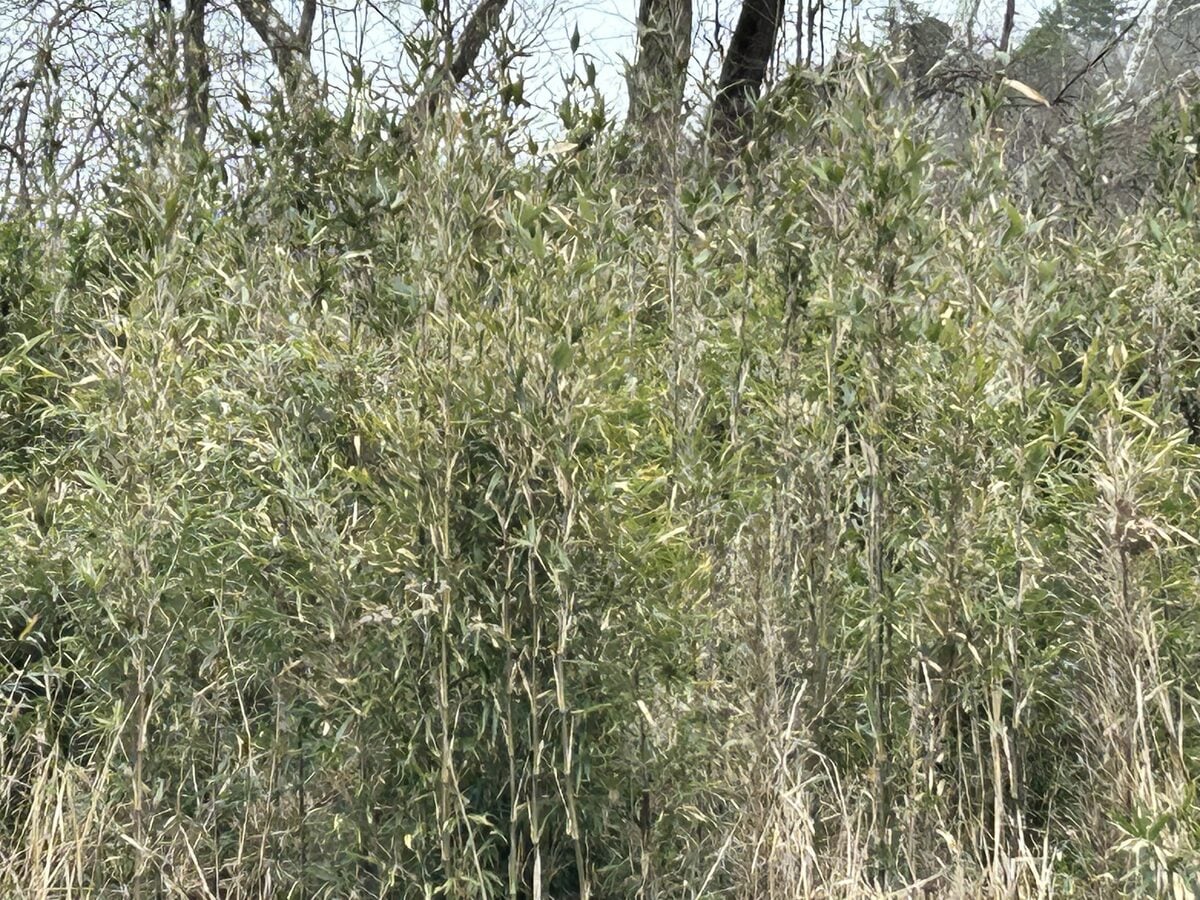
wikimedia· cc-by-sa
Rasbak (via Wikimedia Commons)
iNaturalist· cc0
no rights reserved, uploaded by Kristi Zoebelein
iNaturalist· cc-by-nc
(c) jeff_hickle, some rights reserved (CC BY-NC)
iNaturalist· cc-by-nc
(c) J. Richard Abbott, some rights reserved (CC BY-NC)
Summary
Source: WikipediaChenopodium album is a fast-growing annual plant in the flowering plant family Amaranthaceae. Though cultivated in some regions, the plant is elsewhere considered a weed. Common names include lamb's quarters, melde, goosefoot, wild spinach and fat-hen, though several are also applied to other species of the genus Chenopodium, for which reason it is often distinguished as white goosefoot.
Description
An annual plant. It grows to 1 m high and spreads to 1 m across. The stem is erect. The stems are succulent and without hairs. They often have soft mealy lumps which can be rubbed off. The leaves are simple, with one at each node, and occurring alternately up the stem. The leaves are oval and wedge shaped with saw like edges. They are 5-12 cm long by 3-10 cm wide. The leaf stalk is usually shorter than the leaf blade. The under surface of the leaf often has a white mealy layer which can be rubbed off. The flowers occur in dense white spikes. The flowers occur at the tip and ends of branches. The fruit is a pod. It is small and roundish and papery. It opens around the tip. The pod contains a shiny black seed. Seed are 1.2-1.8 mm across. Seeds can occur in very large numbers.
Edible Uses
A top-tier wild edible producing excellent spinach-like greens and easily processed, highly nutritious quinoa-like seeds. Safe when cooked and exceptionally abundant, it remains one of the most important edible “weeds” worldwide. Edible Uses & Rating: Both the leaves and seeds are edible. Lambsquarter is an excellent wild vegetable with spinach-like leaves that serve well both raw and cooked. The seeds are also edible and were historically an important grain-like food, comparable in many ways to quinoa. As a wild edible, lambsquarter ranks extremely high: the leaves are flavorful, abundant, and nutritious, and the seeds represent a reliable caloric resource accessible in large quantities. Its rating among wild foods is exceptional, placing it among the best all-purpose edible plants in disturbed or cultivated landscapes. Leaves - raw or cooked[2, 4, 5, 9, 12, 20, 54, 62, 102]. A very acceptable spinach substitute, the taste is a little bland but this can be improved by adding a few stronger-flavoured leaves. One report says that, when eaten with beans, the leaves will act as a carminative to prevent wind and bloating. The leaves are best not eaten raw, see the notes above on toxicity. The leaves are generally very nutritious but very large quantities can disturb the nervous system and cause gastric pain. The leaves contain about 3.9% protein, 0.76% fat, 8.93% carbohydrate, 3% ash. A zero moisture basis analysis is also available. Edible seed - dried and ground into a meal and eaten raw or baked into a bread[[2, 4, 12, 14, 54, 102, 183]. The seed can also be sprouted and added to salads. The seed is very fiddly to harvest and use due to its small size. Although it is rather small, we have found the seed very easy to harvest and simple enough to utilize. The seed should be soaked in water overnight and thoroughly rinsed before being used in order to remove any saponins. The seed contains about 49% carbohydrate, 16% protein, 7% ash, 5.88% ash. Young inflorescences - cooked. A tasty broccoli substitute. Taste, Processing & Kitchen Notes: Fresh leaves have a mild, spinach-like flavor with a slightly salty undertone and no bitterness. The mealy surface can feel soft and pleasant and helps thicken soups when cooked. Leaves are excellent as salad greens when young, though the oxalate content makes long-term consumption of large raw quantities unwise. Cooking neutralizes harshness and improves digestibility, producing a flavor comparable to spinach but slightly richer. Seeds are tiny but delicious when toasted or boiled. Toasting imparts a nutty, quinoa-like aroma. Boiling creates a soft porridge with a faint sweetness. Combining toasting and boiling often yields the best flavor and texture. Seeds can also be ground into flour for breads or pancakes. The papery pericarp is thin and softens during cooking; elaborate processing is rarely required. Seasonality (Phenology): Lambsquarter germinates in spring and grows vigorously through summer, producing abundant leaves until flowering. Flowering typically begins in mid-summer, with seed ripening from late summer through autumn. Leaves remain edible until the plant becomes overly tough near maturity. Seeds persist on drying stalks well into late autumn, sometimes into early winter if not dispersed by wind or wildlife. Safety & Cautions (Food Use): Leaves contain oxalates and saponins, especially in older foliage. Cooking reduces these compounds significantly. Consuming very large quantities of raw leaves may cause digestive discomfort or—rarely—oxalate-related issues in susceptible individuals. Seeds are generally safe but should be cooked for digestibility. Avoid harvesting from chemically treated fields or roadsides. Harvest & Processing Workflow: For leaf harvest, pick young growing tips or tender upper leaves in spring and early summer. Wash thoroughly to remove soil and the natural mealy coating. Use raw in salads or lightly steam or boil for cooked dishes. For seeds, wait until late summer or autumn when seed heads dry to a dark color. Strip seed clusters into a container, winnow lightly to remove excess chaff, and toast or boil. Storage is easy: dried seeds keep for months in airtight containers. Cultivar / Selection Notes: No named cultivars exist for C. album, though related species such as quinoa have been domesticated. Garden volunteers may vary in leaf size, color, and mealy coating. Look-Alikes & Confusion Risks: Goosefoot species are often confused with one another. Chenopodium berlandieri, C. fremontii, and C. pratericola can appear similar. Lambsquarter is distinguished by its triangular leaves, mealy white coating, and relatively mild odor. Young amaranths resemble goosefoots but have different leaf venation and lack the mealy surface. Traditional / Indigenous Use Summary: Many Indigenous nations—including Apache, Navajo, Hopi, Paiute, Pima, and Pueblo peoples—used lambsquarter as both a leafy green and seed crop. Leaves were boiled or dried for winter use, while seeds were ground into flour, used in porridge, baked into bread, or combined with other grains. Archaeological evidence shows lambsquarter seeds used in North America for over 8,000 years and possibly cultivated during the Eastern Agricultural Complex.
Traditional Uses
The seeds can be ground into flour. They contain saponin which should be leached out. They are used for bread, pancakes, muffins and biscuits. The tender leaves are cooked and eaten as a vegetable. The leaves are chopped small before cooking. They are also used in stews and soups and in stir fries. The older leaves are boiled to remove the bitter taste then stir fried. They can be dried and stored for winter use. Young flowers are cooked and eaten. The sprouted seeds are edible.
Medicinal Uses
Fat hen is not commonly used in herbal medicine, though it has some gentle medicinal properties. The leaves are anthelmintic, antiphlogistic, antirheumatic, mildly laxative, and odontalgic. An infusion is taken internally for rheumatism. Leaves can be applied as a wash or poultice to bug bites, sunstroke, rheumatic joints, and swollen feet, and a decoction is used for carious teeth. The seeds are chewed to treat urinary problems and are considered useful for relieving the discharge of semen through the urine. The juice of the stems is applied to freckles and sunburn. The juice of the root is used in the treatment of bloody dysentery. Food comprising 25.5% powdered herb may suppress the oestrus cycle.
Known Hazards
The leaves and seeds of all members of this genus are more or less edible. However, many of the species in this genus contain saponins, though usually in quantities too small to do any harm. Although toxic, saponins are poorly absorbed by the body and most pass straight through without any problem. They are also broken down to a large extent in the cooking process. Saponins are found in many foods, such as some beans. Saponins are much more toxic to some creatures, such as fish, and hunting tribes have traditionally put large quantities of them in streams, lakes etc in order to stupefy or kill the fish. The plants also contain some oxalic acid, which in large quantities can lock up some of the nutrients in the food, but these plants are very nutritious vegetables in reasonable quantities. Cooking the plant will reduce its content of oxalic acid. People with a tendency to rheumatism, arthritis, gout, kidney stones or hyperacidity should take especial caution if including this plant in their diet since it can aggravate their condition. There is also a report that very large quantities of the leaves have caused photosensitivity in some people. Only the raw leaves can cause problems, and then only if large quantities are consumed. A further report says that if the plant is grown in soils that contain too much nitrates then the plant can concentrate these substances in the leaves. Nitrates have been shown to cause many health problems including stomach cancers and blue-baby syndrome. In nitrogen-rich soils, the plants can also concentrate hydrogen cyanide. In small quantities, hydrogen cyanide has been shown to stimulate respiration and improve digestion, it is also claimed to be of benefit in the treatment of cancer. In excess, however, it can cause respiratory failure and even death.
Distribution
A temperate plant. It also grows in tropical places. It grows best on light to medium well drained soil. It suits an open sunny position but can tolerate shade. It is drought and frost resistant. It commonly occurs as a weed in old fields and waste places. In Papua New Guinea is only occurs in the high altitude zone (2,500 m ). In Zimbabwe it grows between 1,100-1,600 m above sea level. In Nepal it grows to about 4000 m altitude. In the Indian Himalayas it grows between 1,200-2,300 m above sea level. It can grow in arid places. It can tolerate temperatures between 5°C and 30°C. Tasmania Herbarium. In Yunnan. In Sichuan. In Inner Mongolia.
Where It Grows
Africa, Alaska, Albania, Andorra, Argentina, Armenia, Asia, Australia, Balkans, Bangladesh, Belarus, Belgium, Benin, Bolivia, Bosnia, Botswana, Brazil, Britain, Bulgaria, Canada, Caucasus, Central America, Central Asia, Chile, China, Croatia, Czech Republic, Denmark, East Africa, Ecuador, Egypt, Estonia, Eswatini, Ethiopia, Europe*, Finland, Georgia, Germany, Hawaii, Himalayas, Hungary, India, Indochina, Indonesia, Iran, Ireland, Italy, Japan, Kenya, Korea, Kuwait, Latvia, Lesotho, Libya, Lithuania, Luxembourg, Macedonia, Madagascar, Malaysia, Mediterranean, Mexico, Middle East, Moldova, Mongolia, Mozambique, Myanmar, Namibia, Nepal, New Zealand, Norfolk Island, North Africa, North America, Northeastern India, NW India, Norway, Pacific, Pakistan, Papua New Guinea, PNG, Paraguay, Poland, Portugal, Qatar, Romania, Russia, Sao Tome and Principe, Saudi Arabia, Scandinavia, SE Asia, Sicily, Sikkim, Slovenia, Socotra, South Africa, Southern Africa, South America, Spain, Sri Lanka, Swaziland, Sweden, Switzerland, Taiwan, Tajikistan, Tanzania, Tasmania, Thailand, Tibet, Tunisia, Turkey, Türkiye, Ukraine, United Arab Emirates, UAE, Uganda, Ukraine, Uruguay, USA, Vietnam, West Africa, Yemen, Zambia, Zimbabwe,
Cultivation
Lambsquarter is one of the most reliable, nutritious, and abundant wild foods across North America. Its leaves rival spinach in culinary value, and its seeds provide a grain-like resource comparable to quinoa. Resilient in poor soils, tolerant of drought, and prolific in disturbed landscapes, it remains a staple plant for survivalists, gardeners, and foragers alike. An easily grown plant, succeeding in most soils but disliking shade. Lambsquarter thrives in rich, nitrogen-bearing soils—fertile farmland, compost heaps, gardens, and areas disturbed by human activity. It tolerates drought, heat, and poor soils but performs best in loose, fertile substrates with full sun. The plant readily colonizes plowed fields and abandoned lots, often emerging in vast numbers after disturbance. It is tolerant of moderate salinity and alkaline soils. prefers a moderately fertile soil. Tolerates a pH range of 4.5 to 8.3. In moderate amounts, this plant is a good companion for potatoes, corn, and cucurbits. The plant responds directly to the magnesium content of the soil so it can be used to indicate the presence of that element. Fat hen is occasionally cultivated as a food crop, there is at least one named variety. Called 'Magenta' in reference to the colour of its leaves, it is considered by some people to be the best tasting of all potherbs. In garden design, as well as the above-ground architecture of a plant, root structure considerations help in choosing plants that work together for their optimal soil requirements including nutrients and water. Thick or swollen - fibrous or tap root. Form: Irregular or sprawling. Habitat & Range: This species is cosmopolitan and found throughout nearly all of North America. It dominates in agricultural landscapes, gardens, farm edges, riverbanks, vacant lots, and disturbed soils. In the Southwest, it occurs in irrigated fields, riparian corridors, canyon bottoms, and areas with soil enrichment. It is far less common in extremely dry, undisturbed desert zones. Size & Landscape Performance: Lambsquarter typically reaches 30–150 cm tall, but can exceed 2 meters in exceptionally rich soil. It forms upright, branching clumps rather than mats. In landscapes, it behaves as a persistent annual weed, sometimes producing dense stands. Its deep taproot helps uptake nutrients from the soil while stabilizing loose substrates. Cultivation (Horticulture): Although seldom intentionally cultivated in the West, lambsquarter grows readily when encouraged. Gardeners may treat it as a volunteer “spinach substitute.” It requires minimal care, germinates readily, and tolerates drought. To maintain tender leaves, consistent moisture is beneficial. Cutting young plants encourages branching and prolongs leaf production. Pests & Problems: Lambsquarter rarely suffers major pest damage. Leaf miners and flea beetles occasionally feed on leaves. Powdery mildew can appear in humid late-summer conditions but rarely impacts seed production. In gardens, it competes for water and nutrients and can overtake weaker crops if not managed. Cultivar / Selection Notes: No named cultivars exist for C. album, though related species such as quinoa have been domesticated. Garden volunteers may vary in leaf size, color, and mealy coating. Pollination: Flowers are wind-pollinated and produce little nectar. Their small, inconspicuous nature reflects their reliance on air currents rather than insect visitation. Seed set remains high even in isolated patches. Identification & Habit: Lambsquarter is an upright annual herb with a branching, often reddish-striped stem and noticeably powdery, white-mealy leaf surfaces, especially on new growth. The leaves are variable in shape—triangular, rhombic, or lanceolate—but typically have coarsely toothed margins and a pale, dusty appearance due to tiny reflective particles on the surface. The plant grows rapidly, often reaching waist height in rich soil. The inflorescences are clusters of small, green, petal-less flowers forming dense spikes or panicles at the tips of stems and in leaf axils. The plant frequently feels soft or flour-dusted to the touch, and the growing tips often appear as though dipped in chalk. By late summer, the flowers mature into masses of tiny, shiny black seeds held inside thin papery coverings.
Propagation
Sow seed in spring in situ. Most seed germinates within a few days of sowing. Since the plant is a common garden weed that self-sows freely in most soils, deliberate sowing is usually unnecessary.
Other Uses
A green dye is obtained from the young shoots. The crushed fresh roots can be used as a mild soap substitute.
Production
The tops can be eaten before and after flowering. They are harvested after 40 days.
Other Information
A useful naturally occurring green leafy vegetable. Plants are sold in markets in India and Mexico. It is also cultivated. It is highly palatable. Commonly used in Swaziland. It is commonly eaten in Bhutan.
Notes
There are about 100-150-250 Chenopodium species. They are mostly in temperate regions. Chemical composition (Chinese samples): Protein = 16.1%. Fat = 6.87%. Carbohydrate = 48.85%. Ash = 5.8%. (Leafy stems): Protein = 3.9%. Fat = 0.76%. Carbohydrate = 8.93%. Ash = 3.0%. Chemical composition (after Hooper): Water = 78.00% (fresh). Fat = 4.53% (dry). Albumenoids = 22.14% (dry). Carbohydrates = 40.22% (dry). Fibre = 7.60% (dry). Ash = 25.51% (dry). Nitrogen = 3.54% (dry). Phosphoric acid = 1.35% (dry). Silicates = 2.00% (dry). Analysis of non-Chinese seed samples indicates that the seeds are a promising plant protein source, with a balanced amino acid pattern close to that of the hen's egg. "One of the 18 most serious weeds in the world"! Also put in the family Chenopodiaceae.
Nutrition
| Part | Moisture | kJ | kcal | Protein | Vit A | Vit C | Iron | Zinc |
|---|---|---|---|---|---|---|---|---|
| Seeds | 1654 | 395 | 16 | — | — | — | — | — |
| Leaves | 71 | 266 | — | 8.8 | — | — | — | — |
| Leaves - boiled | 88.9 | 134 | 32 | 3.2 | 970 | 37 | 0.7 | 0.3 |
| Leaves | 87.7 | 113 | 27 | 5.3 | 33 | 108 | — | — |
| Seeds | 9.2 | — | — | 14.4 | — | — | 5.3 | 2.4 |
Synonyms
Also Known As
Aghu, Ajara, Anamenaka, Ancarinha-branca, Aphom, Armollas, Aru, Bacon weed, Bai li, Baithu, Balanda, Bathal, Bathu-sag, Bathu, Bathua, Bathusag, Bathuwa, Batuashak, Batwa, Bela metlika, Bethe, Betho, Bethu, Bethua-sak, Bethusaag, Bethuwa, Bettu, Betua sag, Bhatua sag, Bithu, Blamon, Bota sak, Bothua, Bhotuwa, Bhútwa, Boreda madama, Botha-sag, Bothua sak, Buthia, Buthwa, Butua, Byala kucha loboda, Ceniglo blanco, Cenizo, Chakai, Chakkaravarthi greens, Chakvat, Chakwat, Chandan-beta, Charai, Chave, Chil, Chili, Chulai, Churu, Cigara, Cimel, Cinisch, Daledale, Dauthulai, Desi battoon, Dou yi, Em, Evlidaotu, Eyar, Farinaccio, Farinello, Fedegosa, Ge xia wo niu, Goosefoot, Goyalo, Granasche, Gulluotu, Gurosa, Guskina noga, Haba-vu, Hanemalts, Henshu, Hoskiran, Houche, Huanaschi mora do, Hui, Huihuicai, Hui tiao, Imbikicane, Imbilikicane, Imibicicane, Inisca, Irr, Isijapa, Jangli bathoo, Jau ság, Jausag, Jhilmil sak, Jilmil, Jilimili, Kanda lathe, Kandrabe, Katanatsera, Kato bethu, Kawa, Kawlbuh, Kullumancar, Labada, Laboda, Lainu, Lattey sag, Lebeda, Lebioda, Lei, Liabiada, Li za, Loboda, Lúnak, Makhlaq, Ma lan gai, Malts, Mansaobi, Masuping, Meldestokk, Merlik bily, Monsaobi, Monshaobi, Morin nuil, Msoa, Mubvunzandadya, Mulv, muTyangetyange, Myongaju, Myu, Natsarqatama, Nena, Nene, Neukhar, Noil, Nuo za, Oruo, Pa hong ge, Paico, Pappukura, Parippukkera, Parupuk-kirai, Pathow, Peqetsane, Pucchu arxa, Quelite cenizo, Quilma, Quingua del campo, Quinguilla, Quinhuilla, Quinoa blanca, Quino blanca, Raafo, Sabekki soppu, Salmanca, Sarmai, Sarmay, Seaport Goosefoot, Seepbossie, Selmask, Selmi, Serbimast, Sermast, Serue, Shar-ri-mu, Shinge, Shizu, Silmastik, Silmik, Si na, Sirken, Sne'u, Soa, Sormai, Sormi, Spin soba, Surma, Takka, Tamaita, Tavukotu, Taye, Teya ao, Tor sag, Ts'icts'ikmlhp, Udharam, Unluca, Vartakul, Wata, White goosefoot, Yaohu, Yaolu, Yuyu blanco
References (312)
- Agarwal, R. & Chandra, V., 2019, Diversity of wild edible plants in the Mandal-Chopta forest, Uttarakhand. Journal of Medicinal Plants Studies 2019; 7(1): 89-92
- Ahmad, K., et al, 2018, Ethnobotanical investigation of wild vegetables used among local communities in northwest Pakistan. Acta Soc Bot Pol. 2019;88(1):3616.
- Altschul, S.V.R., 1973, Drugs and Foods from Little-known Plants. Notes in Harvard University Herbaria. Harvard Univ. Press. Massachusetts. no. 869
- Abbasi, A. M., et al, 2013, Ethnobotanical appraisal and cultural values of medicinally important wild edible vegetables of Lesser Himalayas-Pakistan. Journal of Ethnobiology and Ethnomedicine 9:66
- Abbet, C., et al, 2014, Ethnobotanical survey on wild alpine food plants in Lower and Central Valais (Switzerland). Journal of Ethnopharmacology 151 (2014) 624–634
Show all 312 references Hide references
- Afzal, S., et al, 2009, Ethno-botanical Studies from Northern Pakistan. J. Ayub Med Coll Abbottabad 21(1)
- Ahmad, I., et al, 2011, Ethnobotanical Study of Tehsil Kabal, Swat District, KPK, Pakistan. Hindawi Publishing Corporation Journal of Botany Volume 2011, Article ID 368572, 9 pages
- Ajaib, M., et al, 2015, Ethnobotanical Study of Some Plants of Darguti, Tehsel Khuiratta, Azad Jammu and Kashmir. Int. J. Biol. Res., 3(2): 101-107
- Ajain, M., Ali, T., & Siddiqui, M.F., 2015, A Survey of Ethnobotanically Important Herbaceous Plants of Tehsil Jatoi,District Muzaffar Garh, Punjab, Pakistan. Int. J. Biol. Res., 3(2): 87-92, 2015.
- Ali, H., et al, 2011, Ethnobotanical profile of some plant resources in Malam Jabba valley of Swat, Pakistan. Journal of Medicinal Plants Research Vol. 5(18), pp 4676-4687
- Al-Sodany, Y. M., et al, 2013, Medicinal Plants in Saudi Arabia: I. Sarrwat Mountains at Taif, KSA. Academic Journal of Plant Sciences 6 (4): 134-145
- Ambasta, S.P. (Ed.), 2000, The Useful Plants of India. CSIR India. p 119
- Amin, M. et al, 2023, Edible wild plant species used by different linguistic groups of Kohistan Upper Khyber Pakhtunkhwa (KP), Pakistan. Journal of Ethnobiology and Ethnomedicine 19:6 p 9
- Ara, R. I. T., 2015, Leafy Vegetables in Bangladesh. Photon eBooks. p 13
- Ari, S., et al, 2015, Ethnobotanical survey of plants used in Afyonkarahisar-Turkey. Journal of Ethnobiology and Ethnomedicine 11:84
- Arora, R. K., 2014, Diversity in Underutilized Plant Species - An Asia-Pacific Perspective. Bioversity International. p 38
- Aryal, K. P. et al, 2009, Uncultivated Plants and Livehood Support - A case study from the Chepang people of Nepal. Ethnobotany Research and Applications. 7:409-422
- Aryal, K. P., et al, 2018, Diversity and use of wild and non-cultivated edible plants in the Western Himalaya. Journal of Ethnobiology and Ethnomedicine (2018) 14:10
- Awan, M. R., et al, 2011, Studies on traditional knowledge of economically important plants of Kaghan Valley, Mansehra District, Pakistan. Journal of Medicinal Plants Research Vol. 5(16), pp. 3958-3967
- Azam, F. M. S., et al, 2014, Are Famine Food Plants Also Ethnomedicinal Plants? An Ethnomedicinal Appraisal of Famine Food Plants of Two Districts of Bangladesh. Evidence-Based Complementary and Alternative Medicine Volume 2014, Article ID 741712, 28 pages
- Balkrishna, A., et al, 2022, Indigenous Uses of Plants among Forest-dependent Communities of Seijosa, Arunachal Pradesh. International Journal of Economic Plants 2022, 9(1):064-080
- Bandyopadhyay, S. et al, 2009, Wild edible plants of Koch Bihar district, West Bengal. Natural Products Radiance 8(1) 64-72
- Bandyopadhyay, S., et al, 2012, A Census of Wild Edible Plants from Howrah District, West Bengal, India. Proceedings of UGC sponsored National Seminar 2012
- Banerjee, A., et al, 2013, Ethnobotanical Documentation of Some Wild Edible Plants in Bankura District, West Bengal, India. The Journal of Ethnobiology and Traditional Medicine. Photon 120 (2013) 585-590
- BARC, 2016, State of Biodiversity for Food and Agriculture in Bangladesh. Bangladesh Agricultural Research Council.
- Barkatullah, et al, 2009, Ethnobotanical studies of plants of Charkotli Hills, Batkhela District, Malakand, Pakistan. Front. Biol. China 2009, 4(4): 539–548
- Barkatullah and Ibrar, M., 2011, Plants profile of Malakand Pass Hills, District Malakand, Pakistan. African Journal of Biotechnology Vol. 10 (73) pp. 16521-16535
- Baro, D., Baruah, S. and Borthukar, S. K. 2015, Documentation on wild vegetables of Baksa district, BTAD (Assam). Scholars Research Library. Archives of Applied Science Research, 2015, 7 (9):19-27
- Barua, U., et al, 2007, Wild edible plants of Majuli island and Darrang districts of Assam. Indian Journal of Traditional Knowledge 6(1) pp 191-194
- Battacharyya, A., 1991, Ethnobotanical Observations in the Ladakh Region of Northern Jammu and Kashmir State, India. Economic Botany, Vol. 45, No. 3, pp. 305-308
- Beckstrom-Sternberg, Stephen M., and James A. Duke. "The Foodplant Database." http://probe.nalusda.gov:8300/cgi-bin/browse/foodplantdb.(ACEDB version 4.0 - data version July 1994)
- Behera K. K., et al, 2008, Wild Edible Plants of Mayurbhanj District, Orissa, India. J. Econ. Taxon. Bot. Vol. 32 (Suppl.) pp 305-314
- Bentley, J., Nina, S & Perez, S., 2001, Ethnobotany of Weeds in Cochabamba.
- Bhatia, H., et al, 2018, Traditionally used wild edible plants of district Udhampur, J&K, India. Journal of Ethnobiology and Ethnomedicine (2018) 14:73
- Bhattarai, S and Chaudary, R. P., 2009, Wild Edible Plants Used by the People of Manang District, Central Nepal. Ecology of Food and Nutrition, 48:1-20
- Bidak, L. M., et al, 2015, Goods and services provided by native plants in desert ecosystems: Examples from the northwestern coastal desert of Egypt. Global Ecology and Conservation 3 (2015) 433–447
- Biscotti, N. et al, 2018, The traditional food use of wild vegetables in Apulia (Italy) in the light of Italian ethnobotanical literature. Italian Botanist 5:1-24
- Blanco-Salas, J., et al, 2019, Wild Plants Potentially Used in Human Food in the Protected Area “Sierra Grande de Hornachos” of Extremadura (Spain). Sustainability 2019, 11, 456
- Bodkin, F., 1991, Encyclopedia Botanica. Cornstalk publishing, p 248
- Boesi, A., 2014, Traditional knowledge of wild food plants in a few Tibetan communities. Journal of Ethnobiology and Ethnomedicine 10:75
- Bohra, N., et al, 2017, Ethnobotany of wild edible plants traditionally used by the local people in the Ramnagar regions from Nainital District, Uttarakhand, India. Biolife 5(1): 12-19
- Bremness, L., 1994, Herbs. Collins Eyewitness Handbooks. Harper Collins. p 240
- Bowser, M., 2017, Handout on Edible Plants of the Kenai Peninsula. USFWS Kenai National Wildlife Refuge p 8
- Burkill, I.H., 1966, A Dictionary of the Economic Products of the Malay Peninsula. Ministry of Agriculture and Cooperatives, Kuala Lumpur, Malaysia. Vol 1 (A-H) p 529
- Bussman, R. W., et al, 2016, A comparative ethnobotany of Khevsureti, Samtskhe-Javakheti, Tusheti, Svaneti, and Racha-Lechkhumi, Republic of Georgia (Sakartvelo), Caucasus. Journal of Ethnobiology and Ethnomedicine (2016) 12:43
- Bussman, R. W. et al, 2017, Ethnobotany of Samtskhe-Javakheti, Sakartvelo (Republic of Georgia), Caucasus. Indian Journal of Traditional Knowledge Vol. 16(1) pp 7-24
- Bvenura, C. and Afolayan, A. J., 2017, Tackling food and nutrition insecurity using leafy wild vegetables: The nutritional compositions of some selected species.
- Cakir, E. A., 2017, Traditional knowledge of wild edible plants of Iğdır Province (East Anatolia, Turkey). Acta Soc Bot Pol. 2017;86(4):3568.
- Cao, Y., et al, 2020, Ethnobotanical study on wild edible plants used by three trans-boundary ethnic groups in Jiangcheng County, Pu’er, Southwest China. Journal of Ethnobiology and Ethnomedicine (2020) 16:66
- Cerne, M., 1992, Wild Plants from Slovenia used as Vegetables. Acta Horticulturae 318
- Chauhan, S. H., et al, 2018, Consumption patterns of wild edibles by the Vasavas: a case study from Gujarat, India. Journal of Ethnobiology and Ethnomedicine (2018) 14:5
- Cheifetz, A., (ed), 1999, 500 popular vegetables, herbs, fruits and nuts for Australian Gardeners. Random House p 53
- Chen, W., et al, 2021, Wild plants used by the Lhoba people in Douyu Village, characterized by high mountains and valleys, in southeastern Tibet, China. Journal of Ethnobiology and Ethnomedicine (2021) 17:46
- Cheng, Z., et al, 2022, Ethnobotanical study on wild edible plants used by Dulong people in northwestern Yunnan, China. Journal of Ethnobiology and Ethnomedicine (2022) 18:3
- Chowdery, T., et al, 2014, Wild edible plants of Uttar Dinajpur District, West Bengal. Life Science Leaflets. 47:pp 20-36 http://lifesciencesleaflets.ning.com
- Chowdhury, A. & Das, A. P., 2014, Conservation through sustainable utilization of wetland leafy vegetables of Terai and Duars, West Bengal, India. International Journal of Advanced Life Sciences (IJALS), 7(4) p 653
- Chowdhury, M. & Mukherjee, R., 2012, Wild Edible Plants Consumed by Local Communities of Maldah of West Bengal, India. Indian J.Sci.Res.3(2) : 163-170
- Ciocarlan, N. & Ghendov, V., 2015, Ethnobotanical and Ecological Studies of Wild Edible Plants from Bugeac Steppe, Republic of Moldova. Journal of EcoAgriTourism. Cailta terra Vol. 11(2):
- Cordero, S. E., Abello, L. A., & Galvez, F. L., 2017, Plantas silvestres comestibles y medicinales de Chile y otras partes del mundo. CORMA p 160
- Cormack, Tribes of Arunachal Pradesh, Northeastern India. Economic Botany, Vol. 44, No. 1 pp. 94-105
- Couture, M. D., 1978, Recent and Contemporary Foraging Practices of the Harney Valley Paiute. Thesis, Portland State University
- Denes, A., et al, 2012, Wild plants used for food by Hungarian ethnic groups living in the Carpathian Basin. Acta Societatis Botanicorum Poloniae 81 (4): 381-396
- Devi, O.S., P. Komor & D. Das, 2010, A checklist of traditional edible bio-resources from Ima markets of Imphal Valley, Manipur, India. Journal of Threatened Taxa 2(11): 1291-1296
- Devi, O. S., et al, 2021, Wild edible plants associated with the people of Thoubal Khunou village and its migrated villagers. Int. J. Adv. Res. Biol. Sci. 8(9): 72-90
- Diaz-Betancourt, M., et al, 1999, Weeds as a future source for human consumption. Rev. Biol. Trop. 47(3):329-338
- Dobriyal, M. J. R. & Dobriyal, R., 2014, Non Wood Forest Produce an Option for Ethnic Food and Nutritional Security in India. Int. J. of Usuf. Mngt. 15(1):17-37
- Dogan, Y., 2012, Traditionally used wild edible greens in the Aegean Region of Turkey. Acta Societatis Botanicorum Poloniae 81(4): 329-342
- Dogan, Y. et al, 2013, Wild Edible Plants sold in the Local Markets of Izmir, Turkey. Pak. J. Bot. 45(S1): 177-184
- Dogan, A. & Tuzlaci, E., 2015, Wild Edible Plants of Pertek (Tunceli-Turkey). Marmara Pharmaceutical Journal 19: 126-135
- Dolina, K. & Luczaj, L., 2014, Wild food plants used on the Dubrovnik coast (south-eastern Croatia) Acta Soc Bot Pol 83(3):175–181
- Ertug, F, Yenen Bitkiler. Resimli Türkiye Florası -I- Flora of Turkey - Ethnobotany supplement
- Esperanca, M. J., 1988. Surviving in the wild. A glance at the wild plants and their uses. Vol. 2. p 47
- Ethnobotanical Study of Tehsil Kabal, Swat District, KPK, Pakistan, Table 1
- Farooq, S., et al, 2012, Ethnobotanical Studies of the Flora of Tehsil Birmal in South Waziristan Agency, Pakistan. Pak. J. Weed Sci. Res. 18(3): 277-291
- Fox, F. W. & Young, M. E. N., 1982, Food from the Veld. Delta Books. p 152
- Gautam, R. S., et al, 2022, Ethnobotanical Review of Wild Edible Plants of Nepal. Journal of Natural History Museum Volume 32, 2021-22 p 101
- Geng, Y., et al, 2016, Traditional knowledge and its transmission of wild edibles used by the Naxi in Baidi Village, northwest Yunnan province. Journal of Ethnobiology and Ethnomedicine. 12:10
- Geraci, A., et al, 2018, The wild taxa utilized as vegetables in Sicily (Italy): a traditional component of the Mediterranean diet. Journal of Ethnobiology and Ethnomedicine (2018) 14:14
- Girard, N. J., 2020, Sustainable Foraging of Wild Edible Plants in Norway. A Bioculutral Approach. M. Sc. thesis Norwegian University. p 127
- Ghimeray, A. K., Lamsal, K., et al, 2010, Wild edible angiospermic plants of the Illam Hills (Eastern Nepal) and their mode of use by local community. Korean J. Pl. Taxon. 40(1)
- Ghosh, C. & Das A. P., 2011, Some useful and poisonous tea garden weeds from the Darjiling District of West Bengal, India. Pleione 5(1): 91 - 114
- Goode, P., 1989, Edible Plants of Uganda. FAO p 30
- Grivetti, L. E., 1980, Agricultural development: present and potential role of edible wild plants. Part 2: Sub-Saharan Africa, Report to the Department of State Agency for International Development. p 49, 65
- Grubben, G. J. H. and Denton, O. A. (eds), 2004, Plant Resources of Tropical Africa 2. Vegetables. PROTA, Wageningen, Netherlands. p 178
- Guil-Guerrero, J. L., et al, 2001, Edible Wild Plants. in Recent Progress in Medicinal Plants Vol. 8 Sci. Tech publishing, Texas
- Guo, C., et al, 2022, An Ethnobotany Survey of Wild Plants Used by the Tibetan People of the Yadong River Valley, Tibet, China. Journal of Ethnobiology and Ethnomedicine
- GUPTA & KANODIA,
- Hadjichambis, A. C., et al, 2007, Wild and semi-domesticated food plant consumption in seven circum-Mediterranean areas. International Journal of Food Sciences and Nutrition. 2007, 1-32.
- Haj, F., et al, 2012, Species Diversity and Ethno Botanical Classes of the Flora of Allai Valley District Battagram Pakistan. International Journal of Plant Research 2012, 2(4): 111-123
- HANAUSEK,
- Hancer, C. K., et al, 2020, Traditional Knowledge of Wild Edible Plants of Biga (Çanakkale), Turkey. Acta Societatis Botanicorum Poloniae / 2020 / Volume 89 / Issue 1 / Article 8914
- Hanif, U., et al, 2013, Ethnobotanical studies on some wild plants of head Qadirabad and adjoining areas, Pakistan. International Journal of Phytomedicine 5:373-377
- Harris, S., Buchanan, A., Connolly, A., 2001, One Hundred Islands: The Flora of the Outer Furneaux. Tas Govt. p 133
- Hedrick, U.P., 1919, (Ed.), Sturtevant's edible plants of the world. p 184
- Heller, C. A., 1962, Wild Edible and Poisonous Plants of Alaska. Univ. of Alaska Extension Service. p 10
- Heo, B., et al., 2009, Antiproliferative Activity of Korean Wild Vegetables on Different Human Tumor Cell Lines. Plant Foods for Human Nutrition. 64:257-263
- High, C. & Shackleton, C. M., 2000, The comparative value of wild and domestic plants in home gardens of a South African rural village. Agroforestry Systems 48: 141–156, 2000
- HOOPER,
- Holloway, P. S. & Alexander, G., 1990, Ethnobotany of the Fort Yukon Region, Alaska. Economic Botany, Vol. 44, No. 2 pp. 214-225
- Hossain, U. & Rahman, A., 2018, Study and quantitative analysis of wild vegetable floral diversity available in Barisal district, Bangladesh. Asian J. Med. Biol. Res. 2018, 4 (4), 362-371
- Hovsepyan, R., et al, 2016, Food as a marker for economy and part of identity: traditional vegetal food of Yezidis and Kurds in Armenia. Journal of Ethnic Foods. 3:32-41
- https://en.wikipedia.org/wiki/List of wild edible plants in Mongolian cuisine
- http://nordicfood lab/org/blog/2102/9/wild-edible-plants-an-overview
- Hussey, B.M.J., Keighery, G.J., Cousens, R.D., Dodd, J., Lloyd, S.G., 1997, Western Weeds. A guide to the weeds of Western Australia. Plant Protection Society of Western Australia. p 132
- Hu, Shiu-ying, 2005, Food Plants of China. The Chinese University Press. p 377
- Hwang, H., et al, 2013, A Study on the Flora of 15 Islands in the Western Sea of Jeollanamdo Province, Korea. Journal of Asia-Pacific Biodiversity Vol. 6, No. 2 281-310
- Hyde-Wyatt, B.H. & Morris D.I., 1975, Tasmanian Weed Handbook. Dept of Ag Tasmania. p 63
- Irving, M., 2009, The Forager Handbook, A Guide to the Edible Plants of Britain. Ebury Press p 189
- Jansen, P.C.M., 2004. Chenopodium album L. [Internet] Record from Protabase. Grubben, G.J.H. & Denton, O.A. (Editors). PROTA (Plant Resources of Tropical Africa), Wageningen, Netherlands. < http://database.prota.org/search.htm>. Accessed 14 October 2009.
- Jardin, C., 1970, List of Foods Used In Africa, FAO Nutrition Information Document Series No 2.p 66
- Jia, X., et al, 2022, Ethnobotany of wild edible plants in multiethnic areas of the Gansu–Ningxia–Inner Mongolia junction zone. Journal of Ethnobiology and Ethnomedicine 18:53
- Joshi, N., et al, 2007, Traditional neglected vegetables of Nepal: Their sustainable utilization for meeting human needs. Tropentag 2007. Conference on International Agricultural Research for Development.
- Joshi, N. & Siwakoti, M., 2012, Wild Vegetables Used by Local Community of Makawanpur District and Their Contribution to Food Security and Income Generation. Nepal Journal of Science and Technology Vol. 13, No. 1 (2012) 59-66
- Joshi, A., et al, 2018, Halophytes of Thar Desert: Potential source of nutrition and feedstuff. International Journal of Bioassays 8.1 (2018) pp. 5674-5683
- Ju, Y., et al, 2013, Eating from the wild: diversity of wild edible plants used by Tibetans in Shangri-la region, Yunnan, China, Journal of Ethnobiology and Ethno medicine 9:28
- Kalle, R. & Soukand, R., 2012, Historical ethnobotanical review of wild edible plants of Estonia (1770s-1960s) Acta Societatis Botanicorum Poloniae 81(4):271-281
- Kang, Y., et al, 2012, Wild food plants and wild edible fungi in two valleys on the Qinling Mountains (Shaanxi, central China) Journal of Ethnobiology and Ethnomedicine; 9:26
- Kang, Y., et al, 2014, Wild food plants used by the Tibetans of Gongba Valley (Zouqu country, Gansu, China) Journal of Ethnobiology and Ethnomedicine 10:20
- Kang, J. et al, 2016, Wild food plants and fungi used in the mycophilous Tibetan community of Zhagana (Tewo Country, Gansu, China) Journal of Ethnobiology and Ethnomedicine. 12:21
- Kar, A., & Borthakur, S. K., 2008, Wild vegetables of Karbi - Anglong district, Assam, Natural Product Radiance, Vol. 7(5), pp 448-460
- Kargioglu, M. et al, 2010, Traditional Uses of Wild Plants in the Middle Aegean Region. Human Ecology 38:429-450
- Kanis, A., in Henty, E.E., (Ed.), 1981, Handbooks of the Flora of Papua New Guinea, Vol. 2, Melbourne University Press, p 20
- Karthi, Sathya, & Salome, 2014, Uncultivated Edible Greens from Small Millet Farms Tamil Nadu India. IDRC
- Kaul, M.K. et al, 1985, Ethno-botanic studies in North-West and Trans-Himalaya - contribution to the wild food plants of Ladakh. J.Econo. Tax. Bot. Vol. 6 No. 3 pp 523-527
- Kayabasi, N. P., et al, 2018, Wild edible plants and their traditional use in the human nutrition in Manyas (Turkey). Indian Journal of Traditional Knowledge. Vol. 17(2), April 2018, pp 299-306
- Kepe, T., 2008, Social Dynamics of the Value of Wild Edible Leaves (Imifino) in a South African Rural Area. Ecology of Food and Nutrition, 47:531-558
- Khakurel, D., et al, 2021, Foods from the wild: Local knowledge, use pattern and distribution in Western Nepal. PLOS ONE.
- Khalid, N., et al, 2023, Wild food plants gathered by four cultural groups in North Waziristan, Pakistan. Genet Resour Crop Evol. 70:1243–1276
- Khan, A. H., et al, 2023, Traditional foraging for ecological transition? Wild food ethnobotany among three ethnic groups in the highlands of the eastern Hindukush, North Pakistan. Journal of Ethnobiology and Ethnomedicine 19:9
- Khan, M. & Hussain, S., 2014, Diversity of wild edible plants and flowering phenology of district Poonch (J & K) in the northwest Himalaya. Indian Journal of Sci, Res. 9(1): 032-038
- Khan, W., et al, 2013, Ethnomedicinal plants of Kakul Hills, District Abbottabad, KPK, Pakistan.
- Khanal, R., et al, 2014, Documenting abundance and use of underutilized plant species in the mid hill region of Nepal. ECOPRINT 21: 63-71, 2014
- Khasbagan, Yeruhan and Zhao Hui, 2011, Study on Traditional Knowledge of Wild Edible Plants Used by the Mongolians in Xilingol Typical Steppe Area. Plant Diversity and Resources. 33(2): 239-246
- Khodram,S. D., et al, 2019, Local knowledge of edible flowers used in Mizoram. Indian Journal of Traditional Knowledge Vol 18(40 pp 715-723
- Kiple, K.F. & Ornelas, K.C., (eds), 2000, The Cambridge World History of Food. CUP p 1750, 1798
- Kiran, K. C., et al, 2019, Diversity and Seasonal Availability of Potential Wild Edible Plants from Vidarbha Region of Maharashtra State, India. Int.J.Curr.Microbiol.App.Sci (2019) 8(2): 1434-1446
- Kizilarslan, C. & Ozhatay, N., 2012, An ethnobotanical study of the useful and edible plants of İzmit. Marmara Pharmaceutical Journal 16: 134-140, 2012.
- Koca, I., et al, 2015, Some Wild Edible Plants and Their Dietary Fiber Contents. Pakistan Journal of Nutrition. 14(4): 188-194
- Konsam, S., et al, 2016, Assessment of wild leafy vegetables traditionally consumed by the ethnic communities of Manipur, northeast India. Journal of Ethnobiology and Ethnomedicine, 12:9
- Kuhnlein, H. V., et al, 2009, Indigenous Peoples' food systems. FAO Rome p 33
- Kumar, A., 2013, Ethnobotanical study of wild vegetables used by rural communities of Kannauj district, Uttar Pradesh, India. Emir. J. Food Agric. 2013. 25 (10): 760-766
- Kumar, R. & Saikia, P., 2020, Wild edible plants of Jharkhand and their utilitarian perspectives. Indian Journal of Traditional Knowledge Vol 19 (2), April 2020, pp 237-250
- Kumar, S. A., Manus, D. & Mallika, M., 2018, Impact of non-timber forest products on Forest and in Livelihood Economy of the People of Adjoining Areas of Jalpaiguri Forest Division, West Bengal, India. Int. J. of Life Sciences, 2018; 6 (2):365-385
- Kuo, W. H. J., (Ed.) Taiwan's Ethnobotanical Database (1900-2000), http://tk.agron.ntu.edu.tw/ethnobot/DB1.htm
- KWOLEK & VAN ETTEN,
- Ladio, A. H. & Lozada, M., 2000, Edible Plant Use in a Mapuche Community of North-western Patagonia, Human Ecology. Vol. 28, No. 1. pp. 53-71
- Ladio, A. H., 2001, The Maintenance of Wild Edible Plant Gatherings in a Mapuche Community of Patagonia. Economic Botany, Vol. 55, No. 2, pp. 243-254
- Ladio, A. H. and Lozada, M., 2003, Comparison of wild edible plant diversity and foraging strategies in two aboriginal communities of northwestern Patagonia. Biodiversity and Conservation 12: 937–951
- Ladio, A., Lozada, M. & M. Weigandt, 2007, Comparison of traditional wild plant knowledge between aboriginal communities inhabiting arid and forest environments in Patagonia, Argentina. Journal of Arid Environments 69 (2007) 695–715
- Lamp, C & Collet F., 1989, Field Guide to Weeds in Australia. Inkata Press. p 68
- Lazarides, M. & Hince, B., 1993, Handbook of Economic Plants of Australia, CSIRO. p 56
- Letsela, T., et al, 2003, Plant Resources Used for Subsistence in Tsehlanyane and Boking in Lesotho. Economic Botany 57(4): 619-639
- Li, D. et al, 2017, Ethnobotanical survey of herbal tea plants from the traditional markets in Chaoshan, China. Journal of Ethnopharmacology. 205 (2017) 195-206
- Li, S., et al, 2020, Monpa, memory, and change: an ethnobotanical study of plant use in Mêdog County, South-east Tibet, China. Journal of Ethnobiology and Ethnomedicine. (2020) 16:5 p 16
- Liu, Yi-tao, & Long, Chun-Lin, 2002, Studies on Edible Flowers Consumed by Ethnic Groups in Yunnan. Acta Botanica Yunnanica. 24(1):41-56
- Long, C., 2005, Swaziland's Flora - siSwati names and Uses http://www.sntc.org.sz/flora/
- Low, T., 1991, Wild Herbs of Australia and New Zealand. Angus & Robertson. p 46 (Drawing)
- Low, T., 1992, Bush Tucker. Australia’s Wild Food Harvest. Angus & Robertson. p 155
- Łukasz Łuczaj and Wojciech M Szymański, 2007, Wild vascular plants gathered for consumption in the Polish countryside: a review. J Ethnobiol Ethnomedicine. 3: 17
- Luczaj et al, 2013, Wild vegetable mixes sold in the markets of Dalmatia (southern Croatia). Journal of Ethnobiology and Ethnomedicine. 8:2
- Luczaj, L. et al, 2013, Wild food plants used in the villages of the Lake Vrana Nature Park (northern Dalmatia, Croatia). Acta Societatis Botanicorum Poloniae, 82(4): 275-281
- Łuczaj, L., et al, 2013, Wild edible plants of Belarus: from Rostafiński’s questionnaire of 1883 to the present. Journal of Ethnobiology and Ethnomedicine 2013, 9:21
- Luczaj, L. et al, 2014, Wild Food Plants of Dalmatia (Croatia). in A. Pieroni, C. L. Quave (eds.), Ethnobotany and Biocultural Diversities in the Balkans, p 142
- Luczaj, L., et al, 2015, Wild food plants and fungi used by Ukrainians in the western part of the Maramureş region in Romania. Acta Soc Bot Pol 84(3):339–346
- Luczaj, L. et al, 2017, Comfrey and Buttercup Eaters: Wild Vegetables of the Imereti Region in Western Georgia, Caucasus. Economic Botany, 71(2), 2017, pp. 188–193
- Luo, B., et al, 2019, Wild edible plants collected by Hani from terraced rice paddy agroecosystem in Honghe Prefecture, Yunnan, China. Journal of Ethnobiology and Ethnomedicine 15:56
- Lyle, K. L., 2010, The Complete Guide to Edible Wild Plants, Mushrooms, Fruits and Nuts. Falcon Guides. p 17
- MacKinnon, A., et al, 2009, Edible & Medicinal Plants of Canada. Lone Pine. p 308
- Macmillan, H.F. (Revised Barlow, H.S., et al), 1991, Tropical Planting and Gardening. Sixth edition. Malayan Nature Society. Kuala Lumpur. p 351
- Mabey, R., 1973, Food for Free. A Guide to the edible wild plants of Britain, Collins. p 89
- Magwede, K., van Wyk, B.-E., & van Wyk, A. E., 2019, An inventory of Vhavenḓa useful plants. South African Journal of Botany 122 (2019) 57–89
- Maheshwari, J.K., & Singh, J.P., 1984, Contribution to the Ethnobotany of Bhoxa Tribe of Bijnor and Pauri Garhwal Districts, U.P. J. Econ. Tax. Bot. Vol.5. No.2 pp 253-
- Mahklouf, M. H., 2019, Ethnobotanical Study of Edible Wild Plants in Libya. European Journal of Ecology. 5(2): 30-40
- Majeed, M., et al, 2021, Gathered Wild Food Plants among Diverse Religious Groups in Jhelum District, Punjab, Pakistan. Foods 2021, 10, 594.
- Malezas Comestibles del Cono Sur, INTA, 2009, Buernos Aires
- Manandhar, N.P., 2002, Plants and People of Nepal. Timber Press. Portland, Oregon. p 148
- Manzanero-Medina, G. I., et al, 2020, Ethnobotany of food plants (quelites) sold in two traditional markets of Oaxaca, Mexico. South African Journal of Botany. 130 (2020) 215-223
- Marandi, R. R. & Britto, S. J., 2015, Medicinal Properties of Edible Weeds of Crop Fields and Wild plants Eaten by Oraon Tribals of Latehar District, Jharkhand. International Journal of Life Science and Pharma Research. Vo. 5. (2) April 2015
- Maroyi, A., 2011, The Gathering and Consumption of Wild Edible Plants in Nhema Communal Area, Midlands Province, Zimbabwe. Ecology of Food and Nutrition 50:6, 506-525
- Maroyi, A., 2013, Use of weeds as traditional vegetables in Shurugwi District, Zimbabwe. Journal of Ethnobiology and Ethnomedicine 9:60
- Martin, F.W. & Ruberte, R.M., 1979, Edible Leaves of the Tropics. Antillian College Press, Mayaguez, Puerto Rico. p 182
- Medhi, P. & Borthakur, S. K., 2012, Phytoresources from North Cachur Hills of Assam -3: Edible plants sold at Hflong market. Indian Journal or Natural Products and Resources. 3(1) pp 84-109
- Medhi, P. & Borthakur, S. K., 2013, Wild edible plants sold by the Zeme Nagas at the makeshift market of Mahur, Dima Hasao district of Assam. Pleione 7(1): 84 - 93. 2013.
- Medhi, P., Sarma, A and Borthakur, S. K., 2014, Wild edible plants from the Dima Hasao district of Assam, India. Pleione 8(1): 133-148
- Menninger, E.A., 1977, Edible Nuts of the World. Horticultural Books. Florida p 146
- Michael, P., 2007, Edible Wild Plants and Herbs. Grub Street. London. p 101
- Mirdeilami, S. Z., et al, 2011, Ethnopharmacological survey of medicinal plants in Maraveh Tappeh region, north of Iran. Iranian Journal of Plant Physiology 2(1): 327‐338
- Miskoska-Milevska, E. et al, 2020, Traditional uses of wild edible plants in the Republic of North Macedonia. PHYTOLOGIA BALCANICA 26(1): 155–162, Sofia, 2020 p 158
- Mir, M. Y., 2014, Documentation and ethnobotanical survey of wild edible plants used by the tribals of Kupwara, J & K, India. International Journal of Herbal Medicine. 2(4): 11-18
- Miya, M. S. & Gautum, D., 2021, Checklist of floral species at the Institute of Forestry, Pokhara Campus, Pokhara, Nepal. Journal of Institute of Forestry, Nepal 18 (2021) 133-177
- Masoodi, H. U. R. & Sundriyal, R. C., 2020, Richness of non-timber forest products in Himalayan communities—diversity, distribution, use pattern and conservation status. Journal of Ethnobiology and Ethnomedicine 16:56
- Mot So Rau Dai an Duoc O Vietnam. Wild edible Vegetables. Ha Noi 1994, p 56
- Murtem, G. & Chaudhrey, P., 2016, An ethnobotanical note on wild edible plants of Upper Eastern Himalaya, India. Brazilian Journal of Biological Sciences, 2016, v. 3, no. 5, p. 63-81
- Murugan, Pal M., et al, 2010, Phytofoods of Nubra valley, Ladakh - The cold desert. Indian Journal of Traditional Knowledge. Vol. 9(2): 303-308
- Narayanan Ratheesh, M. K. et al, 2011, Wild edible plants used by the Kattunaikka, Paniya and Kuruma tribes of Wayanad District, Kerala, India. Journal of Medicinal Plants Research Vol. 5(15), pp. 3520-3529
- Narzary, H., et al, 2013, Wild Edible Vegetables Consumed by Bodo tribe of Kokrajhar District (Assam), North-East India. Archives of Applied Science Research, 5(5): 182-190
- Nedelcheva A., 2013, An ethnobotanical study of wild edible plants in Bulgaria. EurAsian Journal of BioSciences 7, 77-94
- Negi, P. S. & Subramani, S. P., 2015, Wild Edible Plant Genetic Resources for Sustainable Food Security and Livelihood of Kinnaur District, Himachal Pradesh, India, International Journal of Conservation Science. 6 (4): 657-668
- Neogi, B., Prasad, M. N. V. and Rao, R. R., 1989, Ethnobotany of Some Weeds of Khasi and Garo Hills, Meghalaya, Northeastern India. Economic Botany 43(4): 471-479
- Norton, J., et al, 2009, An Illustrated Checklist of the Flora of Qatar. UNESCO Office in Doha.
- Ogle, B. M. & Grivetti, L. E., 1984, Legacy of the Chameleon: Edible Wild Plants in the Kingdom of Swaziland, Southern Africa. A Cultural, Nutritional Study. Part 4 - Nutritional Analysis and Conclusions. Ecology of Food and Nutrition. Vol 17, pp 431-64
- Oomen, H.A.P.C., & Grubben, G.J.H., 1978, Tropical Leaf Vegetables in Human Nutrition, Communication 69, Department of Agricultural research, RTI Amsterdam, p 87, 91
- Ozbucak, T. B., et al, 2007, Nutrition Content of Some Wild Edible Plants in the Central Black Sea Region of Turkey. International Journal of Natural and Engineering Sciences 1:11-13
- Paczkowska, G. & Chapman, A.R., 2000, The Western Australian Flora. A Descriptive Catalogue. Western Australian Herbarium. p 201
- Paoletti, M.G., Dreon, A.L., and Lorenzoni, G.G., 1995, Pistic, Traditional Food from Western Friuli, NE Italy. Economic Botany 49(1) pp 26-30
- Pasta, S., et al, 2020, An Updated Checklist of the Sicilian Native Edible Plants: Preserving the Traditional Ecological Knowledge of Century-Old Agro-Pastoral Landscapes. Frontiers in Plant Science. Volume 11|Article 388
- Patiri, B. & Borah, A., 2007, Wild Edible Plants of Assam. Geethaki Publishers. p 111
- Pemberton, R. W. & Lee, N. S., 1996, Wild Food Plants in South Korea: Market Presence, New Crops, and Exports to the United States. Economic Botany, Vol. 50, No. 1, pp. 57-70
- Peters, C. R., O'Brien, E. M., and Drummond, R.B., 1992, Edible Wild plants of Sub-saharan Africa. Kew. p 82
- Pfoze, N. L., et al, 2012, Survey and assessment of floral diversity on wild edible plants from Senapati district of Manipur, Northeast India. Journal or Biodiversity and Environmental Sciences. 1(6):50-52
- Phillips, K. M., et al, 2014, Nutrient composition of selected traditional United States Northern Plains Native American plant foods. Journal of Food Composition and Analysis 34 (2014) 136–152 141
- Pieroni, A., 1999, Gathered wild food plants in the Upper Valley of the Serchio River (Garfagnana), Central Italy. Economic Botany 53(3) pp 327-341
- Pieroni, A., et al, 2005, Food for two seasons: Culinary uses of non-cultivated local vegetables and mushrooms in a south Italian village. International Journal of Food Sciences and Nutrition, 56(4): 245-272
- Pieroni, A., 2008, Local plant resources in the ethnobotany of Theth, a village in the Northern Albanian Alps. Genet Resour Crop Evol (2008) 55:1197–1214
- Pieroni, A., et al, 2012, "We are Italians!": The Hybrid Ethnobotany of a Venetian Diaspora in Eastern Romania. Human Ecology 40:435-451
- Pieroni, A. & Soukand, R., 2017, Are Borders more Important than Geographical Distance? The Wild Food Ethnobotany of the Boykos and its Overlap with that of the Bukovinian Hutsuls in Western Ukraine. Journal of Ethnobiology 37(2): 326–345
- Pieroni, A. & Soukand, R., 2018, Forest as Stronghold of Local Ecological Practice: Currently Used Wild Food Plants in Polesia, Northern Ukraine. Economic Botany, XX(X) pp. 1-21
- Pieroni, A., et al, 2020, Wild food plants traditionally gathered in central Armenia: archaic ingredients or future sustainable foods? Environment, Development and Sustainability. Springer p 7
- Plants for a Future database, The Field, Penpol, Lostwithiel, Cornwall, PL22 0NG, UK. http://www.scs.leeds.ac.uk/pfaf/ (Also as Chenopodium viride)
- Polunin, O., & Stainton, A., 2006, Flowers of the Himalaya, Oxford India Paperbacks. p 340
- Plowes, N. J. & Taylor, F. W., 1997, The Processing of Indigenous Fruits and other Wildfoods of Southern Africa. in Smartt, L. & Haq. (Eds) Domestication, Production and Utilization of New Crops. ICUC p 188
- Polat, R., et al, 2015, Survey of wild food plants for human consumption in Elazig (Turkey). Indian Journal of Traditional Knowledge. Vol. 1(1): 69-75
- Polat, R., et al, 2017, Survey of wild food plants for human consumption in Bingol, (Turkey). Indian Journal of Traditional Knowledge. Vol. 16(3) July 2017, pp. 378-384
- Pradheep, K., et al, 2016, Wild edible plants used by Konyak tribe in Mon district of Nagaland: Survey and inventorisation. Indian Journal of Natural Products and Resources. Vol 7(1) pp 74-81
- Prakofjewa, J., et al, 2023, Boundaries Are Blurred: Wild Food Plant Knowledge Circulation across the Polish-Lithuanian-Belarusian Borderland. Biology 2023, 12, 571.
- PROSEA (Plant Resources of South East Asia) handbook Volume 10 Cereals. p 79
- Pruse, B., et al, 2021, Active Wild Food Practices among Culturally Diverse Groups in the 21st Century across Latgale, Latvia. Biology 2021, 10, 551.
- Purseglove, J.W., 1968, Tropical Crops Dicotyledons, Longmans. p 632
- Radha, B., et al, 2013, Wild Edible Plant Resources of the Lohba Range of Kedarnath Forest Division (KFD), Garhwal Himalaya, India. Int. Res J. Biological Sci. Vol. 2 (11), 65-73
- Rana, J.C. et al, 2011, Genetic resources of wild edible plants and their uses among tribal communities of cold arid regions of India. Genetic Resources and Crop Evolution. 59:135-149
- Rana, P. K., et al, 2014, Uses of Local Plant Biodiversity among the Tribal Communitiesof Pangi Valley of District Chamba in Cold Desert Himalaya, India. The Scientific World Journal, Volume 2014m Article ID 753289, 15 pages
- Rana, D., et al, 2019, Ethnobotanical knowledge among the semi-pastoral Gujjar tribe in the high altitude (Adhwari’s) of Churah subdivision, district Chamba, Western Himalaya. Journal of Ethnobiology and Ethnomedicine (2019) 15:10
- Rashid, A., Anand, V.K. & Serwar, J., 2008, Less Known Wild Plants Used by the Gujjar Tribe of District Rajouri, Jammu and Kashmir State. International Journal of Botany 4(2):219-244
- Rawat, G.S., & Pangtey, Y.P.S., 1987, A Contribution to the Ethnobotany of Alpine Regions of Kumaon. J. Econ. Tax. Bot. Vol. 11 No. 1 pp 139-147
- READ,
- Redzic, S. J., 2006, Wild Edible Plants and their Traditional Use in the Human Nutrition in Bosnia-Herzegovina. Ecology of Food and Nutrition, 45:189-232
- Redzic, S., 2010, Use of Wild and Semi-Wild Edible Plants in Nutrition and Survival of People in 1430 Days of Siege of Sarajevo during the War in Bosnia and Herzegovina (1992–1995). Coll. Antropol 34 (2010) 2:551-570
- Rigat, M et al, 2009, Ethnobotany of Food Plants in the High River Ter Valley (Pyrenees, catalonia, Iberian Peninsula): Non-Crop Food Vascular Plants and Crop Food Plants with medicinal Properties. Ecology of Food and Nutrition, 48:303-327
- Rijal, A., 2011, Surviving on Knowledge: Ethnobotany of Chepang community from mid-hills of Nepal. Ethnobotany Research & Applications 9:181-215
- Rivera, C., et al, 2005, The Ethnobotanical Study of Local Mediterranean Food Plants as Medicinal Resources in Southern Spain. Journal of Physiologyand Pharmacology. 56, Suppl. 1, 97-114
- Royal Botanic Gardens, Kew (1999). Survey of Economic Plants for Arid and Semi-Arid Lands (SEPASAL) database. Published on the Internet; http://www.rbgkew.org.uk/ceb/sepasal/internet [Accessed 8th April 2011]
- Ruiters-Welcome, A. K., 2019, Food plants of southern Africa. Ph.D. thesis. Univ. of Johannesburg p 11
- Sachula, et al, 2020, Wild edible plants collected and consumed by the locals in Daqinggou, Inner Mongolia, China. Journal of Ethnobiology and Ethnomedicine (2020) 16:60
- Saikia, M., 2015, Wild edible vegetables consumed by Assamese people of Dhemaji District of Assam, NE India and their medicinal values. Archives of Applied Science Research, 2015, 7 (5):102-109
- Sakar, A. & Das, A. P., 2018, The traditional knowledge on edible wild leafy vegetables of Rabha Tribe in Duars of North Bengal: a potential reinforcement to food security. Pleione 12(2): 275 - 281. 2018.
- Saunders, C.F., 1948, Edible and Useful Wild Plants. Dover. New York. p 118
- SAXENA,
- Schneider, E., 2001, Vegetables from Amaranth to Zucchini: The essential reference. HarperCollins. p 351
- Seidemann J., 2005, World Spice Plants. Economic Usage, Botany, Taxonomy. Springer. p 95
- Senkardes, I & Tuzlaci, E., 2016, Wild Edible Plants of Southern Part of Nevsehir inTurkey. Marmara Pharmaceutical Journal 20:34-43
- Setiya, A. V., et al, 2016, Exploration and documentation of some wild edible plants used by the aboriginals from Gadchiroli District (M.S.) India. International Advanced Research Journal in Science, Engineering and Technology. 3(7)
- Shackleton, S. E., et al, 1998, Use and Trading of Wild Edible Herbs in the Central Lowveld Savanna Region, South Africa. Economic Botany, Vol. 52, No. 3, pp. 251-259
- Shah, S. K., 2014, Dietary contribution of underutilized minor crops and indigenous plants collected from uncultivated lands and forests in Nepal. in Promotion of Underutilized Indigenous Food Resources for Food Security and Nutrition in Asia and Pacific. FAO. Bangkok p 64
- Sharma, P., et al, 2013, Wild edibles of Murari Devi and surrounding areas in Mandi district of Himachal Pradesh, India. International Journal of Biodiversity and Conservation. Vol. 5(9), pp. 580-592, September 2013
- Sharma, L. et al, 2018, Diversity, distribution pattern, endemism and indigenous uses of wild edible plants in Cold Desert Biosphere Reserve of Indian Trans Himalaya. Indian Journal of Traditional Knowledge. Vol 17(1) January 2018 pp 122-131
- SHANKARNARAYAN & SAXENA,
- Sharma, B.B., 2005, Growing fruits and vegetables. Publications Division. Ministry of Information and broadcasting. India. p 196
- Shava, S., 2000, The Use of Indigenous Plants as Food by a Rural Community in the Eastern Cape: an Educational Exploration. Masters Thesis Rhodes University. p 63
- Shava, S., et al, 2009, Traditional food crops as a source of community resilience in Zimbabwe. International Journal of the African Renaissance 4(1)
- Sher, H. et al, 2011, Ethnobotanical and Economic Observations of Some Plant Resources from the Northern Parts of Pakistan. Ethnobotany research & Applications 9:027-041
- Sher, Z., Hussain, F., & Ibrar, M., 2014, Traditional knowledge on plant resources of Ashezai and Salarzai Valleys, District Buner, Pakistan. African Journal of Plant Science. Vol. 8(1), pp. 42-53, January 2014
- Shrestha, S., 2021, Wild Edible Plants of Dhankuta, Eastern Nepal. Rupantaran : A Multidisciplinary Journal Vol. V : pp 100-109, September, 2021 p 103
- Sina, B. & Degu, H. D., 2015, Knowledge and use of Wild Edible Plants in the Hula District of the Sidama Zone. International Journal of Bio-resource and Stress Management 6(3):352-365
- Simkova, K. et al, 2014, Ethnobotanical review of wild edible plants used in the Czech Republic. Journal of Applied Botany and Food Quality 88, 49-67
- Singh, A. G., Panthi, M. P., & Tewari, D. D., 2012, Wild Plants Used as Vegetable in Rupandehi District of Nepal and their Ethnomedicinal Importance. J. Nat. Hist. Mus. Vol. 26, 2012, 111-125
- Singh, G. K. & Ahirwar, R. K., 2013, An Ethnobotanical Survey for Certain Wild Edible Plants of Chanda Forest District Dindori Central India. International Journal of Science and Research. 6:14
- Singh, H.B., Arora R.K.,1978, Wild edible Plants of India. Indian Council of Agricultural Research, New Delhi. p 21
- Sinha, R. & Lakra, V., 2007, Edible weeds of tribals in Jharkhand, Orissa and West Bengal. Indian Journal of Traditional Knowledge 6(1) January 2007 pp 217-222
- Skinner, G. & Brown, 1981, C., Simply Living. A gatherer's guide to New Zealand's fields, forests and shores. Reed. p 9
- Smith, N., Mori, S.A., et al, 2004, Flowering Plants of the Neotropics. Princeton. p 98
- Soukand, R., et al, 2017, Multi-functionality of the few: current and past uses of wild plants for food and healing in Liubań region, Belarus. Journal of Ethnobiology and Ethnomedicine (2017) 13:10
- Sp. pl. 1:219. 1753
- Srivastava, R. C., 2009, Traditional knowledge of Adi tribe of Arunachal Pradesh on plants. Indian Journal of Traditional Knowledge. 8(2): 146-153
- Stern, G., 1986, Australian Weeds. A Source of Food and Medicine. Harper & Row. p 79
- Sulamain, N., et al, 2023, The Importance of Becoming Tamed: Wild Food Plants as Possible Novel Crops in Selected Food-Insecure Regions. Horticulturae 2023,9,171.
- Sundriyal, M., et al, 1998, Wild edibles and other useful plants from the Sikkim Himalaya, India. Oecologia Montana 7:43-54
- Sundriyal, M., et al, 2004, Dietary Use of Wild Plant Resources in the Sikkim Himalaya, India. Economic Botany 58(4) pp 626-638
- Taram, M., et al, 2018, Wild Food Plant Resources of Komkar Adi Tribe of Upper Siang District in Arunachal Pradesh, India. Bulletin of Arunachal Forest Research, Vol. 33(2), 27-35
- Tardio, J., et al, 2006, Ethnobotanical review of wild edible plants in Spain. Botanical J. Linnean Soc. 152, 27-71
- Tareen, N. M., et al, 2016, Ethnomedicinal Utilization of Wild Edible Vegetables in District Harnai of Balochistan Province - Pakistan. Pakistan Journal of Botany 48(3): 1159-1171
- Tasmanian Herbarium Vascular Plants list p 21
- Teron, R. & Borthakur, S. K., 2016, Edible Medicines: An Exploration of Medicinal Plants in Dietary Practices of Karbi Tribal Population of Assam, Northeast India. In Mondal, N. & Sen, J.(Ed.) Nutrition and Health among tribal populations of India. p 150
- Thakur, D., et al, 2017, Why they eat, what they eat: patterns of wild edible plants consumption in a tribal area of Western Himalaya. Journal of Ethnobiology and Ethnomedicine (2017) 13:70
- Thapa, L. B., et al, 2014, Wild Edible Plants used by endangered and Indigenous Raji Tribe in Western Nepal. International Journal of Applied Sciences and Biotechnology. Vol 2(3):243-252
- Thiselton-Dywer, W.T., (Ed.), 1913, Flora of Tropical Africa. Vol VI-section 1. Reeve, p 78
- Torre, de la L., et al, 2008, Enciclopedia de las Plantas Útiles del Ecuador. Herbario QCA. Pontificia Universidad Católica del Ecuador. p 155
- Toupal, R. S. & Hollenback, K., 2009, An Ethnobotany of Indiana Dunes National Lakeshore: Plant Uses of the Ojibwa People. Bureau of Applied Research in Anthropology. University of Arizona
- Tozer, F., 2007, The Uses of Wild Plants. Green Man Publishing. p 64
- Tsering, J., et al, 2017, Ethnobotanical appraisal on wild edible plants used by the Monpa community of Arunchal Pradesh. Indian Journal of Traditional Knowledge. Vol 16(4), October 2017, pp 626-637
- Tsherig, K., 2012, Edible Wild Plants of Bhutan and their contribution to Food and Nutrition Security. Ministry of Ag. and Forests, Bhutan. www.fao.org
- Turner, N. J. et al, 2011, Edible and Tended Wild Plants, Traditional Ecological Knowledge and Agroecology. Critical Reviews in Plant Sciences, 30:198-225
- Uprety, Y., et al, 2016, Traditional use and management of NTFPs in Kangchenjunga Landscape: implications for conservation and livelihoods. Journal of Ethnobiology and Ethnomedicine (2016) 12:19
- USDA, ARS, National Genetic Resources Program. Germplasm Resources Information Network - (GRIN). [Online Database] National Germplasm Resources Laboratory, Beltsville, Maryland. Available: www.ars-grin.gov/cgi-bin/npgs/html/econ.pl (10 April 2000)
- van Wyk, B., 2005, Food Plants of the World. An illustrated guide. Timber press. p 126
- van Wyk, Be., & Gericke, N., 2007, People's plants. A Guide to Useful Plants of Southern Africa. Briza. p 68
- Vartak, V.D. and Kulkarni, D.K., 1987, Monsoon wild leafy vegetables from hilly regions of Pune and neighbouring districts, Maharashtra state. J. Econ. Tax. Bot. Vol. 11 No. 2 pp 331-335
- Wang, J. et al, 2013, A Study on the Utilization of Wild Plants for Food in Liangshan Yi Autonomous Prefecture. Plant Diversity and Resources. 35(4): 416-471
- Weckerle, C. S., et al, 2006, Plant Knowledge of the Shuhi in the Hengduan Mountains, Southwest China. Economic Botany 60(1):2-23
- Wehmeyer, A. S, 1986, Edible Wild Plants of Southern Africa. Data on the Nutrient Contents of over 300 species
- Welcome, A. K. & Van Wyk, B.-E., 2019, An inventory and analysis of the food plants of southern Africa. South African Journal of Botany 122 (2019) 136–179
- Wiersema, J. H. & Leon, B., 2013, World Economic Plants. A Standard Reference CRC Press. 2nd Ed. p 167
- World Checklist of Useful Plant Species 2020. Royal Botanic Gardens, Kew
- Wujisguleng, W., & Khasbagen. K., 2010, An integrated assessment of wild vegetable resources in Inner Mongolian Autonomous Region, China. Journal or Ethnobiology and Ethnomedicine 6:34
- www.wildediblefood.com
- www.eFloras.org Flora of China
- www.zimbabweflora.co.zw 2011
- Xu, You-Kai, et al, 2004, Wild Vegetable Resources and Market Survey in Xishuangbanna, Southwest China. Economic Botany. 58(4): 647-667.
- Yesil, Y., et al, 2019, Wild edible plants in Yeşilli (Mardin-Turkey), a multicultural area. Journal of Ethnobiology and Ethnomedicine (2019) 15:52
- Yesil, Y., et al, 2019, Traditional knowledge of wild edible plants in Hasankeyf (Batman Province, Turkey). Acta Societatis Botanicorum Poloniae. 88(3):3633
- Zennie, T.M. and Ogzewalla, C.D., Ascorbic Acid and Vitamin A content of Edible Wild Plants of Ohio and Kentucky. (As Chenopodium albidum)
- Zhang, L., et al, 2016, Ethnobotanical study of traditional edible plants used by the Naxi people during droughts. Journal of Ethnobiology and Ethnomedicine. 12:39
- Zhu Gelin (Chu Ge-ling); Steven E. Clemants, CHENOPODIACEAE [Draft], Flora of China