Erythrina edulis
Triana ex M. Micheli
Andean tree bean
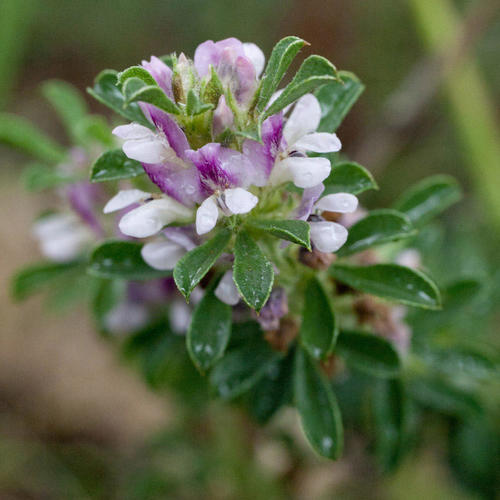
iNaturalist· cc-by-sa
(c) Alejandro Bayer Tamayo, some rights reserved (CC BY-SA)
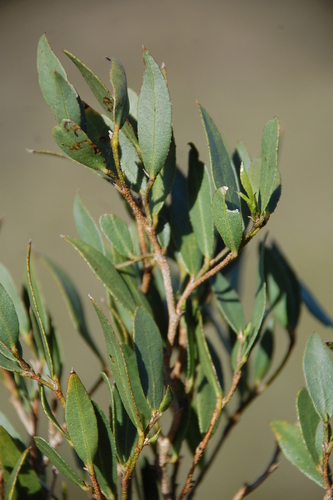
iNaturalist· cc-by-nc
(c) Bitty A. Roy, some rights reserved (CC BY-NC), uploaded by Bitty A. Roy
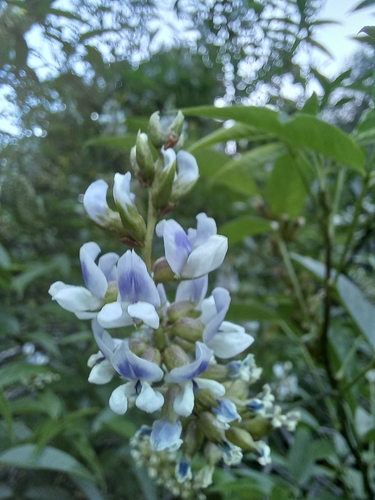
iNaturalist· cc-by-sa
(c) Alejandro Bayer Tamayo, some rights reserved (CC BY-SA)
Summary
Source: WikipediaErythrina edulis (basul) is a nitrogen fixing tree that is native to the Andean region from western Venezuela to southern Bolivia. Nowadays it is known in Venezuela as "frijol mompás", in Bolivia, Peru and Northwest Argentina as "psonay", "pajuro", "sachaporoto del basul" or "poroto del sacha", in Colombia as "chachafruto", "balú", "baluy" or "sachaporoto" and in Ecuador as "guato". Although it is widely known, it is not commonly cultivated. Future research is needed, especially in agroforestry. Basul is a legume and so it produces protein-rich beans covered in pods which can be used for human or animal nutrition. The leaves and branches can be used as fodder. Besides the agricultural aspects, Erythrina edulis can also be used as a fence plant.
Description
A leafy tree. It grows 14 m tall. The crown can be 7 m across. The trunk can be 37 cm across. The stem and branches have stout prickles. The leaves are alternate and have 3 leaflets. They have long leaf stalks and 2 nectar producing glands at the base of each leaflet. The flowers are in large clusters on a stout stalk. The flowers are red. The fruit hang in bunches of 9-18. They are cylinder shaped pods. The pods can be 32 cm long by 3 cm wide. They have 6 seeds. The seeds are large and succulent.
Edible Uses
The large, succulent seeds are the primary edible part and have a pleasant, slightly sweet flavour. They are most commonly eaten cooked and salted, but must be boiled for at least 45 minutes or thoroughly fried before consumption. Ground into a paste, they form a nutritious base for tortillas, desserts, pies, soups, and infant food. They can also be boiled, sun-dried, ground, and added to flour. The fruits hang from the tree in bunches of 9 to 18 cylindrical pods, which average 32 cm long and 3 cm in diameter, each containing around six seeds. The seed contains 23% protein, 1% fat, 8% crude fibre, and 84% moisture. It has a good balance of amino acids and a digestibility of approximately 50% after cooking.
Traditional Uses
The beans are boiled (for 45 minutes or more) and eaten with corn, cassava, bread or potatoes. They are also mashed with cheese, and fried. Caution: The uncooked seeds can be poisonous if eaten often.
Medicinal Uses
A soap made from the bark, branches, and leaves is used to wash dogs with skin disease. The seed is mixed into a liquid preparation to treat bladder inflammation. The flowers are used to treat eye irritations.
Known Hazards
Research indicates that the uncooked seeds can be toxic if consumed over a long period. Although no specific mention has been seen for this species, the bark and stems of plants in this genus usually contain alkaloids that are toxic in all but small amounts.
Distribution
A tropical plant. In the Andes it grows between 2,000-2,800 m altitude. It can be down to 500 m above sea level. It grows in dry and moist tropics. It can be in areas with a temperature range between 5-25°C and a rainfall of 450-1,800 mm. It is best in a sunny position in a loose textured soil. It cannot tolerate soils with a pH below 4.5.
Where It Grows
Amazon, Andes, Argentina, Australia, Bolivia, Brazil, Central America, Colombia, Ecuador*, Panama, Peru, South America, Venezuela,
Cultivation
It is found at a wide range of elevations from 900 - 3,200 metres, and grows in areas where the annual temperatures range between 5 - 25°c and the rainfall is 450 - 1,800mm. Plants do not tolerate frequent frosts. Grows well in loose-textured sandy loams and in heavy clay soils, but does not like strongly acidic soils where the pH is below 4.5. A pioneer species, it grows best in full sunlight, but trees can tolerate some shade in the early stages of growth. It does not tolerate long periods of drought, especially during the early stages of establishment. The species is cultivated at quite high altitudes, between 1,800 - 2,200 metres, in the Central Andes, and in Colombia between 1,000 - 2,700 metres. The tree has a normal life span of 30 - 40 years. Seedlings grow rapidly (2.5 metres tall in the 1st year) and begin producing fruit in approximately 24 - 27 months. Cuttings begin producing fruit about 18 months after planting. In Colombia, live fence posts are established from stakes at 2 metre intervals and allowed to grow for 30 months before pruning or attaching barbed wire. Left unpruned, the posts can provide up to 85 tons of fruit. Seeds mature about three months after the plant flowers. The various species of Erythrina can all, as far as is known, be intercrossed to produce fertile hybrids. This species has a symbiotic relationship with certain soil bacteria, these bacteria form nodules on the roots and fix atmospheric nitrogen. Some of this nitrogen is utilized by the growing plant but some can also be used by other plants growing nearby.
Propagation
Plants can be raised from seed or cuttings, though seedlings tend to root more deeply and live longer than cuttings. Larger seeds tend to produce more vigorous seedlings. Seeds should be planted in 1-kg polyethylene bags with the convex side facing upward and slightly exposed; germination begins in 5–10 days. Seedlings should be shaded in the nursery, with shade gradually reduced in the final two weeks before planting out. At 60 days, seedlings can be planted into holes 30 cm deep. Direct seeding is also possible. Seeds should be removed from pods immediately after harvest and stored in paper bags in a cool, dark place; they lose viability quickly and should be planted within 8 days of harvesting. Viability can be extended to up to 20 days by dipping seeds in molten paraffin to coat the entire seed with a thin layer. Cuttings should be 4–6 cm in diameter and typically 1 m in length, planted to a depth of 30–50 cm within 3 days of cutting. Cuts should be made with sharp tools to minimise damage and reduce rot risk; the top cut should be at a 45° angle. Sealing cuts with paraffin, plastic, mud, or similar material can improve survival rates.
Other Uses
The species is a fast-growing pioneer that fixes atmospheric nitrogen and is used for planting living fences. It is grown in Panama as a shade tree for coffee and has been recommended for agroforestry systems. Fallen leaves contribute leaf litter and organic matter to the soil. The wood is used for construction, and the tree serves as a source of firewood.
Production
Seedlings grow rapidly and can fruit after 2 years. Trees last for 30-40 years. Seeds mature about 3 months after flowering.
Other Information
A productive high protein crop. It is a cultivated food plant. It is an important food crop.
Notes
There are 108 Erythrina species. They are rich in protein.
Nutrition
| Part | Moisture | kJ | kcal | Protein | Vit A | Vit C | Iron | Zinc |
|---|---|---|---|---|---|---|---|---|
| Seeds | — | — | 23 | — | — | — | — | — |
Synonyms
Also Known As
Amasisa, Antipurutu, A'tolon, Balu, Basul, Canaro, Canrabo, Chachafruto, Frejol de monte, Guato, Pajuro, Pashul, Poroto, Porotillo, Sachaporoto
References (21)
- Burkill, I.H., 1966, A Dictionary of the Economic Products of the Malay Peninsula. Ministry of Agriculture and Cooperatives, Kuala Lumpur, Malaysia. Vol 1 (A-H) p 960
- Castillo, R. O., 1995, Plant Genetic Resources in the Andes: Impact, Conservation, and Management. Crop Science 35:355-360
- Facciola, S., 1998, Cornucopia 2: a Source Book of Edible Plants. Kampong Publications, p 104
- Gori, B., et al, 2022, Understanding the diversity and biogeography of Colombian edible plants. Scientific Reports 12:7835
- Grandtner, M. M. & Chevrette, J., 2013, Dictionary of Trees, Volume 2: South America: Nomenclature, Taxonomy and Ecology. Academic Press p 224
Show all 21 references Hide references
- Hermandez Bermejo, J.E., and Leon, J. (Eds.), 1994, Neglected Crops. 1492 from a different perspective. FAO Plant Production and Protection Series No 26. FAO, Rome. p18
- ILDIS Legumes of the World http:www:ildis.org/Legume/Web
- INFOODSUpdatedFGU-list.xls
- Kermath, B. M., et al, 2014, Food Plants in the Americas: A survey of the domesticated, cultivated and wild plants used for Human food in North, Central and South America and the Caribbean. On line draft. p 344
- Kew Plants of the World Online
- Macbride. J. F., 1942, Flora of Peru. Leguminosae. Field Museum Natural History. Chicago. p 309
- Martin, F. W., et al, 1987, Perennial Edible Fruits of the Tropics. USDA Handbook 642 p 98
- M. Micheli, J. Bot. (Morot) 6:145. 1892
- Recher, P, 2001, Fruit Spirit Botanical Gardens Plant Index. www.nrg.com.au/~recher/ seedlist.html p 2
- Roa, J. A. G. & Boada, D. S. G., 2018, Fundación para el Fortalecimiento de la Fruticultura y Plantas Alimenticias no Convencionales en Colombia.
- Tapia, M. E., The role of under-utilised plant species with regard to increased food security and improved health of poor poeople, in mountain regions. IIAP-PNUD/Peru
- Torre, de la, L., et al, 2008, Enciclopedia de las Plantas Útiles del Ecuador. Herbario QCA. Pontificia Universidad Católica del Ecuador. p 340 (Also as Erythrina megistophylla)
- Van den Eynden, V., et al, 2003, Wild Foods from South Ecuador. Economic Botany 57(4): 576-603
- Wiersema, J. H. & Leon, B., 2013, World Economic Plants. A Standard Reference CRC Press. 2nd Ed. p 283
- World Checklist of Useful Plant Species 2020. Royal Botanic Gardens, Kew
- www.worldagroforestrycentre.org/treedb/