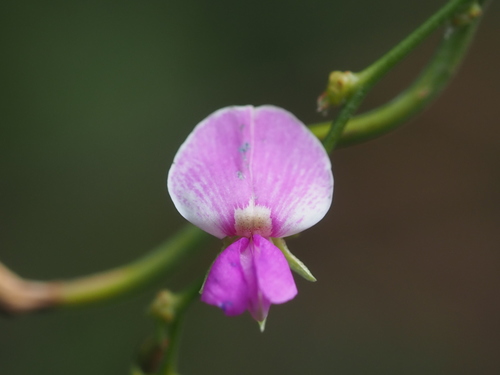
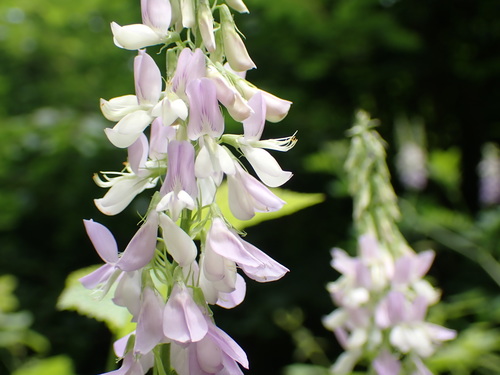
Mimosa pigra
L.
Catclaw mimosa
iNaturalist· cc0
no rights reserved, uploaded by 葉子
iNaturalist· cc-by-nc
(c) pbulman, some rights reserved (CC BY-NC)
iNaturalist· cc-by
(c) Ricard Busquets Reverte, some rights reserved (CC BY), uploaded by Ricard Busquets Reverte
Summary
Source: WikipediaMimosa pigra, commonly known as the giant sensitive tree (pigra = lazy, slow), is a species of plant of the genus Mimosa, in the family Fabaceae. The genus Mimosa (Mimosaceae) contains 400–450 species, most of which are native to South America. M. pigra is a woody shrub native to tropical America but which has now become widespread throughout the tropics. It has been listed as one of the world's 100 worst invasive species and forms dense, thorny, impenetrable thickets, particularly in wet areas.
Description
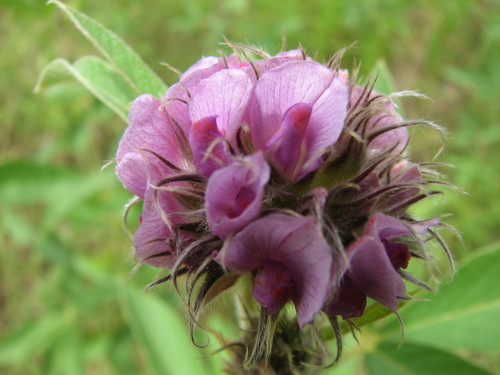
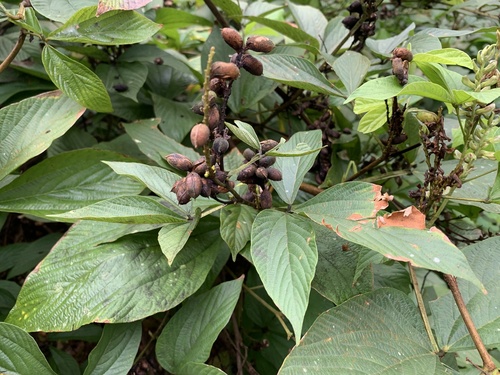
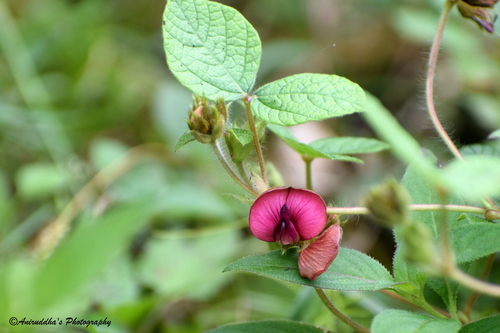
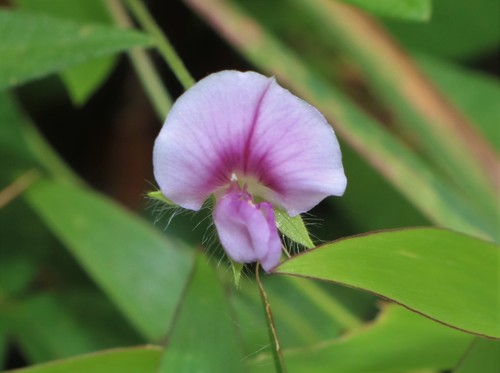
A small shrub. It can be 6 m tall. The stems are green but become woody later. There are broad prickles 7 mm long. The leaves are bright green and twice divided. The central stalk is 20-25 cm long and has prickles. There are 16 pairs of pinnae 5 cm long and each has pairs of leaflets 3-8 mm long. The leaves fold up when touched and at night. The flowers are red or pink and in tight heads 1 cm across. These contain about 100 flowers. Each head produces 10-20 seed pods. These break into segments when ripe. Each section contains one seed. The seeds are light brown or green.
Edible Uses
The plant is used as a spice and flavouring.
Medicinal Uses
The plant is used in tropical Africa as a tonic and a treatment for diarrhoea, gonorrhoea and blood poisoning. The leaf is said to contain mimosine; it is purgative and perhaps tonic. A decoction of the leaves and stems is used to treat thrush in babies and bed-wetting in children. The powdered leaf is taken with water to relieve swelling. The leaves are macerated in the hands and rubbed on the eyes of babies or children to put them to sleep when they are irritable. The root is apparently aphrodisiac to some persons and calming to others. The root ash is sprinkled over leprous patches on the skin. The seed is emetic and expectorant. It is used for treating tooth troubles.
Distribution
It is a tropical plant. It grows in wet savannah and along rivers. It is also in palm groves and along the edges of small lakes. In Argentina it grows from sea level to 1,000 m above sea level.
Where It Grows
Africa, Angola, Argentina, Asia, Australia, Bangladesh, Belize, Benin, Bolivia, Botswana, Brazil, Burkina Faso, Burundi, Cambodia, Cameroon, Central Africa, Central African Republic, CAR, Central America, Colombia, Congo DR, Costa Rico, Cuba, East Africa, Ecuador, El Salvador, French Guiana, Guatemala, Guianas, Guinea, Guinée, Guinea-Bissau, Guyana, Honduras, India, Indochina, Jamaica, Laos, Leeward Is., Liberia, Madagascar, Malawi, Mali, Mauritania, Mauritius, Mexico, Mozambique, Myanmar, Namibia, Nicaragua, Niger, Nigeria, North America, Pacific, Panama, Paraguay, Peru, Puerto Rico, Rwanda, SE Asia, Senegal, Sierra Leone, Somalia, South Africa, Southern Africa, South America*, Suriname, Swaziland, Taiwan, Tanzania, Thailand, Togo, Trinidad-Tobago, Uganda, Uruguay, USA, Venezuela, Vietnam, West Africa, Winward Is., Zambia, Zimbabwe,
Cultivation
Plants grow from seeds. Dry seeds on sandy soil can survive for over 20 years.
Propagation
Seed - mature seed requires pre-treatment in order to break down the hard seed coat and allow the ingress of water. This can be done in various ways, including abrading the seed coat (being careful not to damage the embryo); immersing the seed in a small quantity of almost boiling water (which cools fairly quickly and so does not cook the seed) and then soaking the seed for 12 - 24 hours in warm water; the seeds also germinate profusely if they are subject to burning - though obvious care is required to ensure the heat is not too great and cooks the seed. Germination rates of 98% have been achieved from treated seed.
Other Uses
The root yields 10% tannin. The wood is used for full. When groundwater levels start falling at the beginning of the dry season, the defoliated stems and branches are left and become dry. These dry materials are collected and utilized as firewood by the low-income people living in the vicinity of the reservoirs. The use of this material as firewood releases the wood harvesting pressure in the upstream area of the reservoir. The plant can be used on the steep banks of water reservoirs as an erosion-control measure. When grown at the damp water-inlet areas in reservoirs, it can remove debris from floodwater entering the reservoir. It has been used as a green manure and cover crop in Thailand since the 1960s. The plant is a good source of pollen for bees.
Notes
Also as Mimosaceae. It is invasive.
Synonyms
Also Known As
Giniandji, Gnanhoun, Kufa, Maiduong, Namanhalo, Nambara-nambara, Nancingue, Trinhnu nhon
References (6)
- Bonou, A., et al, 2013, Valeur economique des Produits Forestiers Non Ligneux (PFNL) au Benin. Editions Universitaires Europeennes p 96
- Kew Plants of the World Online
- PROTA
- Sutjaritjai, N., et al, 2019, Traditional Uses of Leguminosae among the Karen in Thailand. Plants 2019, 8, 600 p 7
- Terashima, H., et al, 1992, Ethnobotany of the Lega in the Tropical Rainforest of Eastern Zaire (Congo): Part Two, Zone de Walikale, African Study Monographs, Suppl. 19:1-60
Show all 6 references Hide references
- World Checklist of Useful Plant Species 2020. Royal Botanic Gardens, Kew