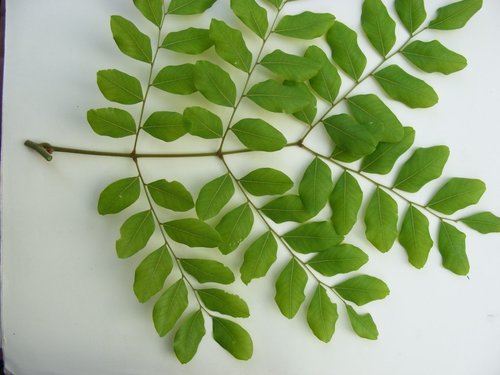
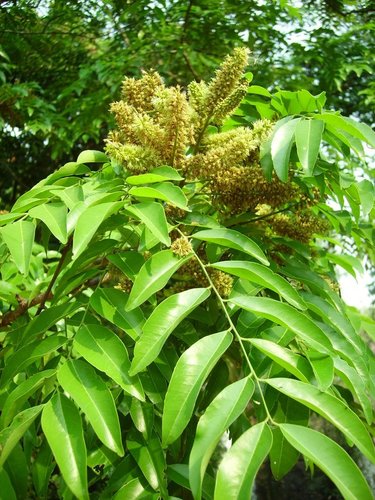
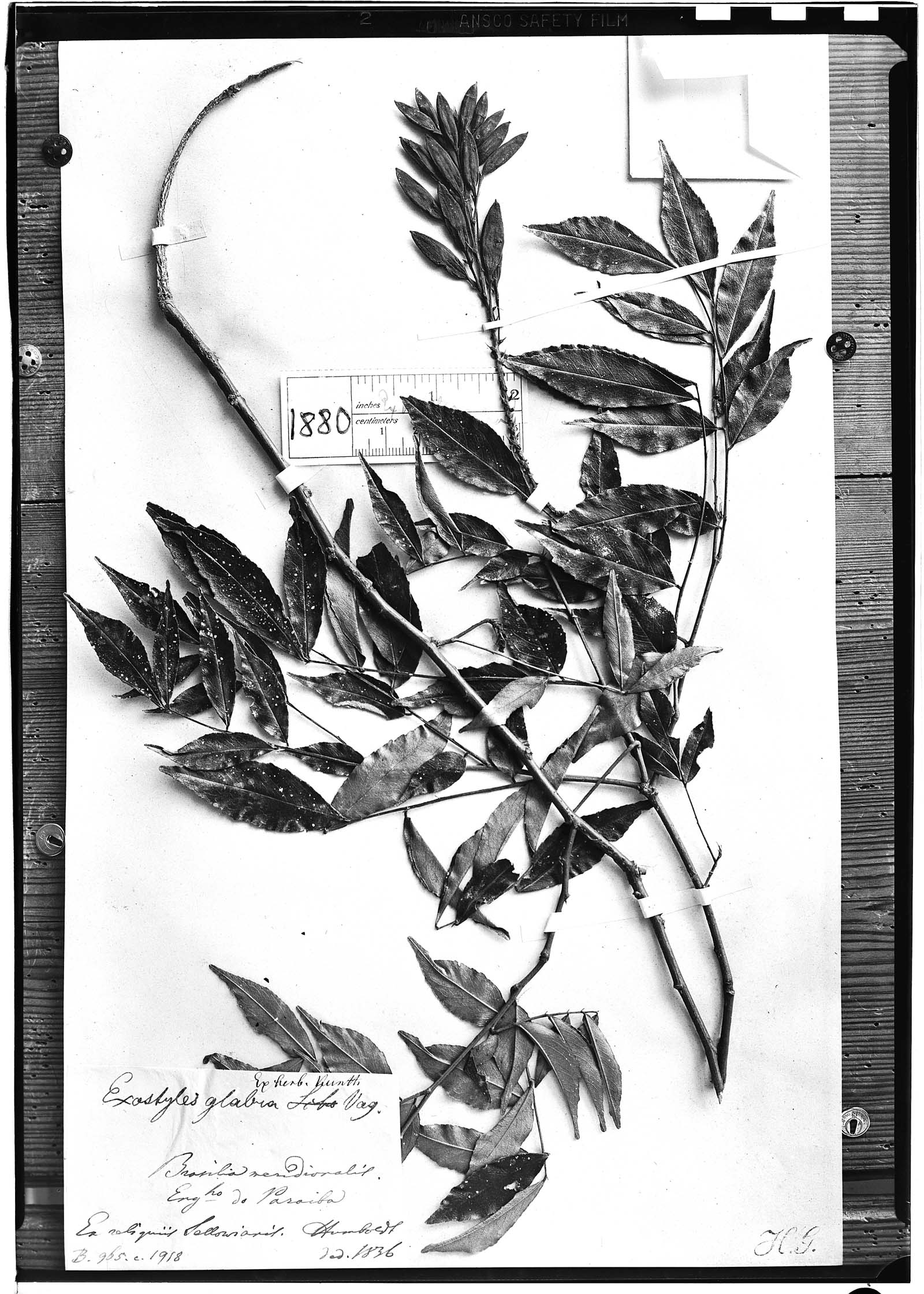
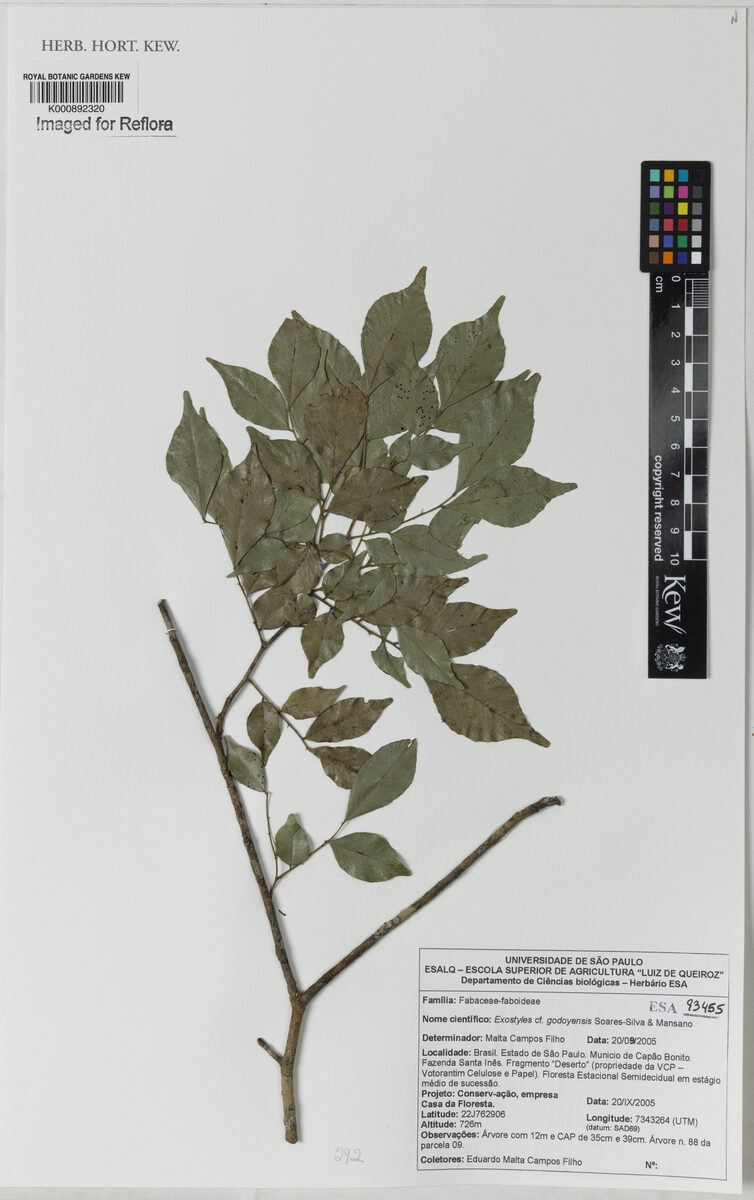
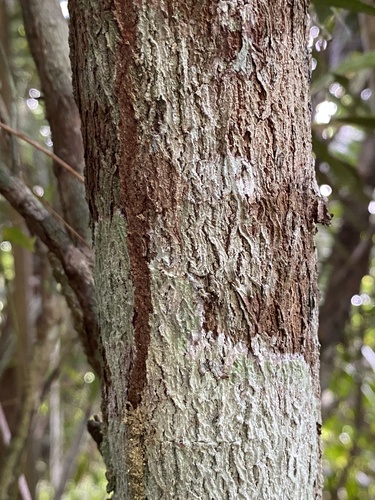
Monopteryx angustifolia
Spruce ex Benth.
Narrowleaf monopteryx
gbif· cc-by-nc
Rapid Reference Collection (RRC) | Field Museum of Natural History - Keller Science Action Center
gbif· cc-by-nc
Field Museum of Natural History - Botany Department
gbif· cc0
President and Fellows of Harvard College
Description
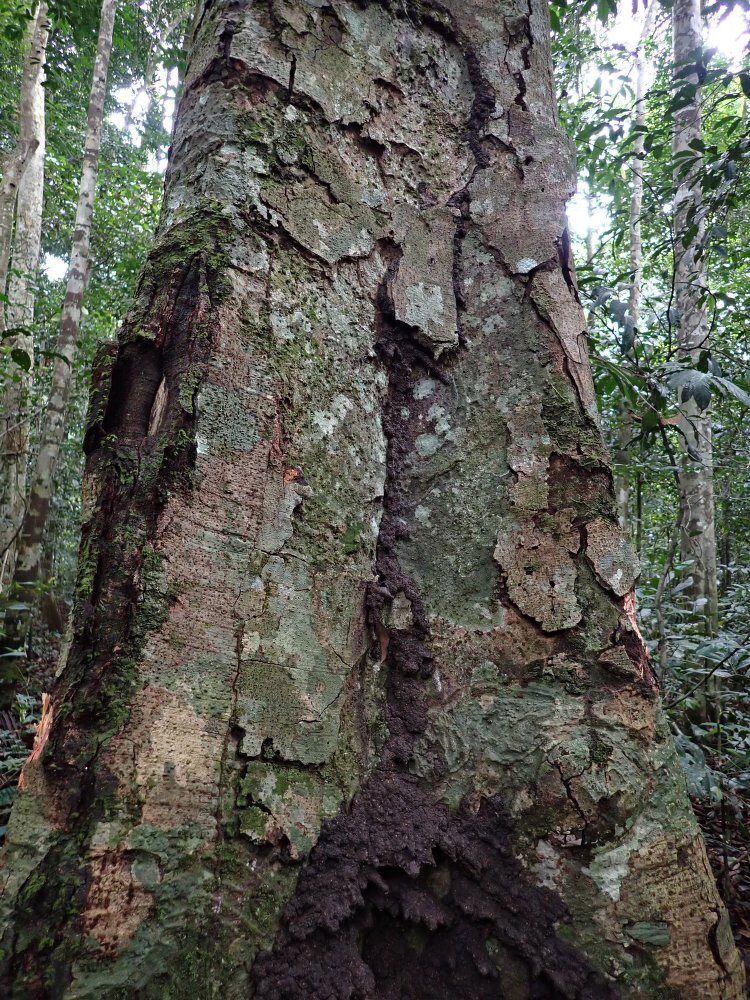
A large tree. It grows 25 m tall. The trunk is 120 cm across. It has buttresses. The fruit is a seed pod 18-20 cm long and flattened. The seeds are flattened and disk shaped and 45 mm x 35 mm x 10 mm.
Edible Uses
The seeds are an important food for local people and can be roasted or cooked. They are better prepared by removing the seed coat and the layer between seeds, then softening in boiling water for 3 hours. To remove bitterness, they are leached in running water for 2 days. The seeds also yield oil.
Traditional Uses
The seeds are cooked and eaten. They can be roasted. They are bitter. They are better prepared by removing the seed coat and layer between the seeds and then softened in boiling water for 3 hours. To remove the bitterness they are leached in running water for 2 days.
Medicinal Uses
A bitter tea prepared from the bark is valued as a vermifuge.
Known Hazards
The seeds are naturally bitter.
Distribution
A tropical plant. It grows in rainforest near rivers. It grows in the humid tropical lowlands. It grows in areas with an average rainfall of 26°C and an annual rainfall of about 3,400 mm.
Where It Grows
Amazon, Brazil, Colombia, South America, Venezuela,
Cultivation
A plant of the humid, lowland tropics. It is found in areas where the mean annual temperature is in the region of 26°c and the mean annual rainfall is around 3,400mm. The rainfall is fairly well distributed, but there is a drier period of about 3 months.
Production
Seeds are collected from the ground after the pods split open. A seed weighs 7 g.
Other Information
The seeds are an important food for local people.
Also Known As
Jimio, Sucupira, Uacurana-de-cheiro
References (5)
- Etkin, N.L. (Ed.), 1994, Eating on the Wild Side, Univ. of Arizona. p 122, 123, 139
- Fern, K., 2012, Tropical Species Database http://theferns.info/tropical/
- Grandtner, M. M. & Chevrette, J., 2013, Dictionary of Trees, Volume 2: South America: Nomenclature, Taxonomy and Ecology. Academic Press p 419
- Kew Plants of the World On line
- Roa, J. A. G. & Boada, D. S. G., 2018, Fundación para el Fortalecimiento de la Fruticultura y Plantas Alimenticias no Convencionales en Colombia.