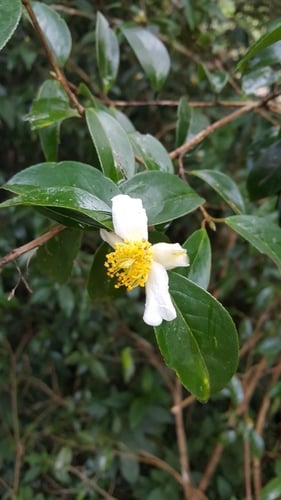
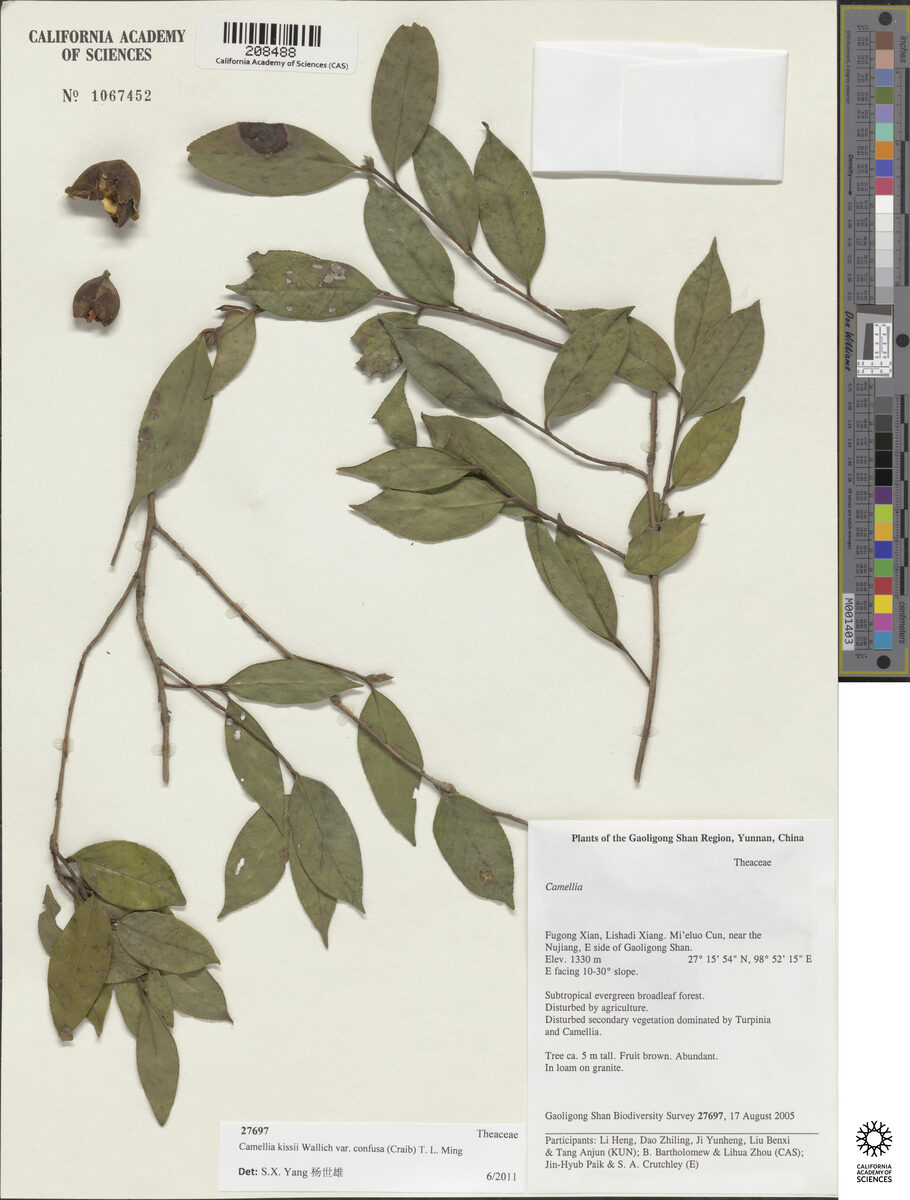
Camellia gracilis
Hemsl.
Camellia
gbif· cc-by
The New York Botanical Garden
gbif· cc-by-nc
President and Fellows of Harvard College
gbif· cc-by
The New York Botanical Garden
Description
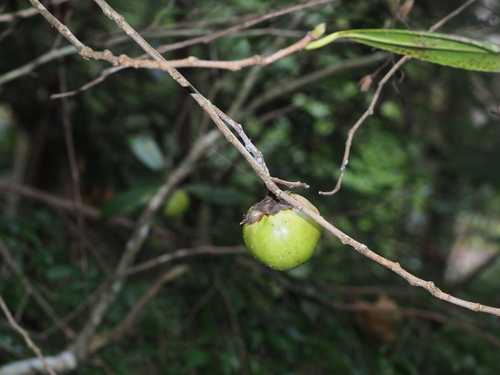
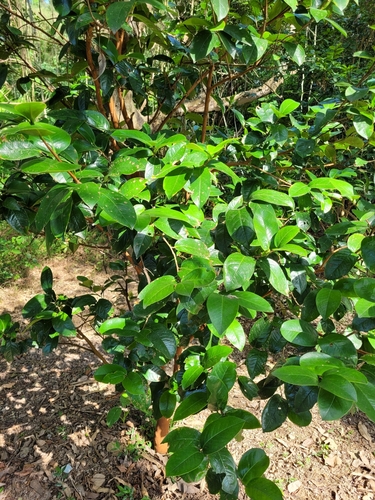
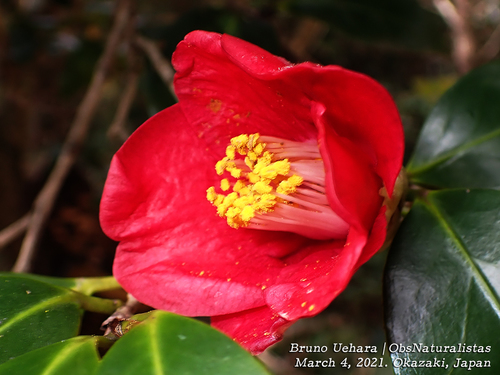
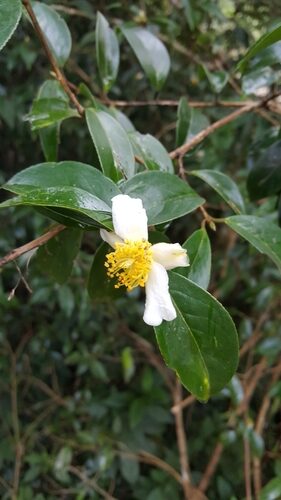
Camellia gracilis is an evergreen Shrub growing to 4 m (13ft 1in). It is in leaf all year, in flower from October to January, and the seeds ripen in October. The species is hermaphrodite (has both male and female organs) and is pollinated by Bees. Suitable for: light (sandy) and medium (loamy) soils and prefers well-drained soil. Suitable pH: mildly acid and neutral soils. It can grow in semi-shade (light woodland) or no shade. It prefers moist soil.
Edible Uses
An oil is obtained from the seed.
Distribution
E. Asia - Taiwan.
Where It Grows
Coming Soon
Cultivation
We have very little information on this species and do not know if it will be hardy in Britain, though judging by its native range it should succeed outdoors at least in the milder parts of this country. According to some botanists this species is part of C. caudata. Wall., ranging from the Himalayas and Burma to China and Indo-China. The following notes are based on the general needs of the genus. Prefers a woodland soil but thrives in a warm open well-drained loam if leafmould is added. A calcifuge plant, preferring a pH between 5 and 7. Prefers the partial shade of a light woodland. Prefers a wet summer and a cool but not very frosty dry winter. Plants are not very self-compatible, self-fertilized flowers produce few seeds and these are of low viability.
Propagation
Seed - can be sown as soon as it is ripe in a greenhouse. Stored seed should be pre-soaked for 24 hours in warm water and the hard covering around the micropyle should be filed down to leave a thin covering. It usually germinates in 1 - 3 months at 23°c. Prick out the seedlings into individual pots when they are large enough to handle and grow them on in light shade in the greenhouse for at least their first winter. Plant them out into their permanent positions when they are more than 15cm tall and give them some protection from winter cold for their first year or three outdoors. Cuttings of almost ripe wood, 10 - 15cm with a heel, August/September in a shaded frame. High percentage but slow. Cuttings of firm wood, 7 - 10cm with a heel, end of June in a frame. Keep in a cool greenhouse for the first year. Leaf-bud cuttings, July/August in a frame.
Other Uses
Oil. None known