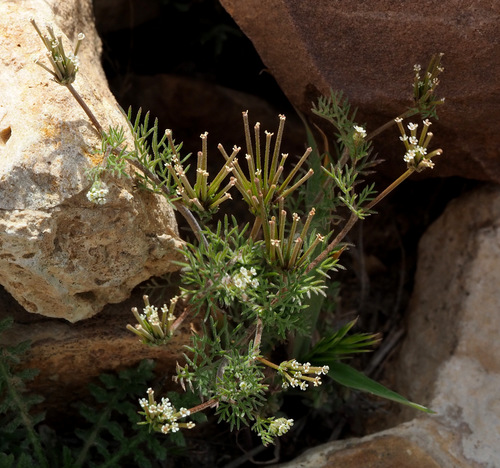
Eryngium maritimum
L.
Sea Holly, Sea Eryngo
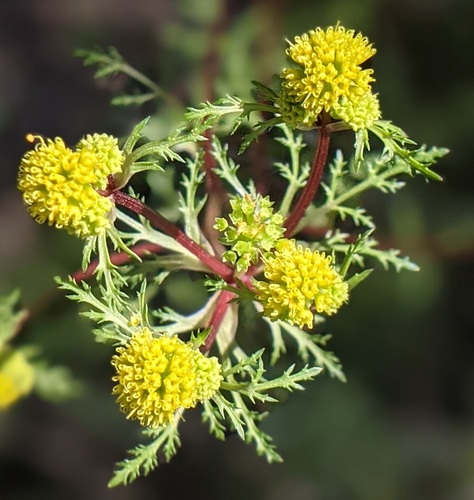
iNaturalist· cc-by-nc
(c) Hornbeam Arts, some rights reserved (CC BY-NC)
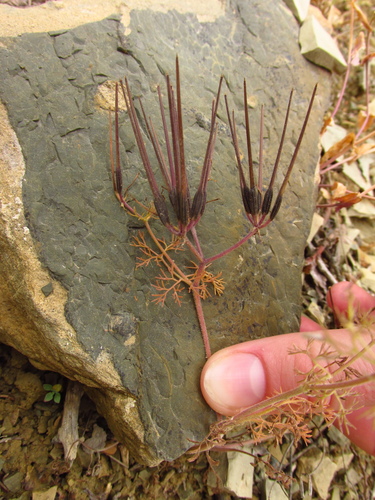
iNaturalist· cc-by-nc
(c) David Renoult, some rights reserved (CC BY-NC), uploaded by David Renoult
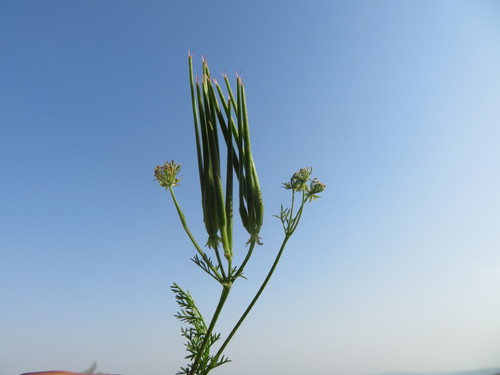
iNaturalist· cc-by-sa
(c) Luis Miguel Bugallo Sánchez (Lmbuga), some rights reserved (CC BY-SA)
Summary
Source: WikipediaEryngium maritimum, also called the sea holly, sea eryngo, or sea eryngium, is a perennial species of flowering plant in the carrot family Apiaceae, native to the coasts of most of Europe and the Mediterranean. Its prickly holly-like leaves and compact flower heads give it the appearance of a thistle. Despite its common name, it is not a holly but an umbellifer.
Description
A plant that normally completes its life cycle in 2 years but can live for a few years. It grows 60 cm high and spreads 50 cm wide. The leaves are stiff and spiny. They are rounded and silvery grey. They are 10 cm long and have 5 lobes with spines at their tips. The flowers are metallic blue and occur in the summer.
Edible Uses
Young shoots are cooked and used as an asparagus substitute; they are typically blanched by excluding light from the growing plant and are considered palatable and nourishing. The root is cooked and used as a vegetable or candied as a sweetmeat. It is palatable, nutritious, slightly sweet, and smells of carrots; boiled or roasted roots are said to resemble parsnips or chestnuts in flavour.
Traditional Uses
The leaves are brewed to make tea. The young shoots are sometimes blanched and eaten. The flowering shoots can also be used. The candied roots are called "eryngo". The roots are boiled or roasted like parsnips. The candied roots are made into conserve or used to flavour jellies and toffee.
Medicinal Uses
Sea holly roots were collected on a large scale in 17th- and 18th-century England, where they were candied and used as restorative, quasi-aphrodisiac lozenges. The plant remains in use in modern herbalism, valued especially for its diuretic action. The root is considered aphrodisiac, aromatic, diaphoretic, diuretic, expectorant, stimulant, and tonic. It promotes free expectoration and is regarded as very useful in treating the debility associated with chronic coughs in the advanced stages of pulmonary consumption. It is used in the treatment of cystitis and urethritis, to help alleviate kidney stones (likely by retarding formation rather than dissolving them), and to treat enlargement or inflammation of the prostate gland. Drunk freely, it is used for diseases of the liver and kidneys. Applied externally as a poultice, the dried powdered root is said to aid tissue regeneration. The root should be harvested in autumn from plants at least 2 years old.
Distribution
It is a temperate plant. It grows on pebbly shorelines. It suits hardiness zones 5-9.
Where It Grows
Africa, Asia, Australia, Balkans, Bosnia, Britain, Croatia, Cyprus, Denmark, Europe, France, Greece, Ireland, Italy, Mediterranean, North Africa, North America, Portugal, Slovenia, Spain, USA,
Cultivation
Requires a deep well-drained soil and a sunny position. Prefers a light sandy saline soil but tolerates most soil types including lime and poor gravels. Plants are best grown in a hot dry position. Established plants are drought tolerant. Plants are hardy to about -15°c. Sea holly has very long roots that penetrate deeply in the soil and are often several feet long. These roots are sweetly scented. The plant should be placed in its final position whilst small since it resents root disturbance. Although a sea-shore plant, it is amenable to garden cultivation. A good bee plant.
Propagation
Seed is best sown as soon as it is ripe in early autumn, placed on the surface of a well-drained compost in a cold frame. Sowing in spring is also possible. Germination can be very slow, though one report indicates it typically occurs in 5–90 days at 20°C. Once large enough to handle, prick seedlings out into individual pots and grow them on in the greenhouse through their first winter, then plant out into permanent positions in late spring or early summer after the last expected frosts. Division can be done in early spring or autumn, though care should be taken as the plant resents root disturbance. Root cuttings can be taken in autumn or winter.
Other Uses
The plant's extensive root system helps to bind sand on the sea shore, making it useful for soil stabilization.
Other Information
The candied roots are sold in markets.
Notes
There are 230 Eryngium species.
Also Known As
Eringo, Eryngo, Obmorska možina, Sea-holm
References (21)
- Biscotti, N. et al, 2018, The traditional food use of wild vegetables in Apulia (Italy) in the light of Italian ethnobotanical literature. Italian Botanist 5:1-24
- Blamey, M and Grey-Wilson, C., 2005, Wild flowers of the Mediterranean. A & C Black London. p 154
- Bodkin, F., 1991, Encyclopedia Botanica. Cornstalk publishing, p 400
- Bremness, L., 1994, Herbs. Collins Eyewitness Handbooks. Harper Collins. p 249
- Brown, D., 2002, The Royal Horticultural Society encyclopedia of Herbs and their uses. DK Books. p 205
Show all 21 references Hide references
- Cundall, P., (ed.), 2004, Gardening Australia: flora: the gardener's bible. ABC Books. p 560
- Facciola, S., 1998, Cornucopia 2: a Source Book of Edible Plants. Kampong Publications, 18
- Hammer, K. & Spahillari, M., 1999, Crops of European origin. in Report of a networking group on minor crops. IPGRI p 44
- Hedrick, U.P., 1919, (Ed.), Sturtevant's edible plants of the world. p 293
- Hermandez Bermejo, J.E., and Leon, J. (Eds.), 1994, Neglected Crops. 1492 from a different perspective. FAO Plant Production and Protection Series No 26. FAO, Rome. p 263
- Heywood, V.H., Brummitt, R.K., Culham, A., and Seberg, O. 2007, Flowering Plant Families of the World. Royal Botanical Gardens, Kew. p 35
- Hibbert, M., 2002, The Aussie Plant Finder 2002, Florilegium. p 95
- Jackes, D. A., Edible Forest Gardens
- Kiple, K.F. & Ornelas, K.C., (eds), 2000, The Cambridge World History of Food. CUP p 1849
- Lim, T. K., 2015, Edible Medicinal and Non Medicinal Plants. Volume 9, Modified Stems, Roots, Bulbs. Springer p 41
- Luczaj et al, 2013, Wild vegetable mixes sold in the markets of Dalmatia (southern Croatia). Journal of Ethnobiology and Ethnomedicine. 8:2
- Luczaj, L. et al, 2014, Wild Food Plants of Dalmatia (Croatia). in A. Pieroni, C. L. Quave (eds.), Ethnobotany and Biocultural Diversities in the Balkans, p 138
- Mabey, R., 1973, Food for Free. A Guide to the edible wild plants of Britain, Collins. p 69
- Sp. pl. 1:233. 1753
- Tardio, J., et al, Ethnobotanical review of wild edible plants in Spain. Botanical J. Linnean Soc. 152 (2006), 27-71
- World Checklist of Useful Plant Species 2020. Royal Botanic Gardens, Kew