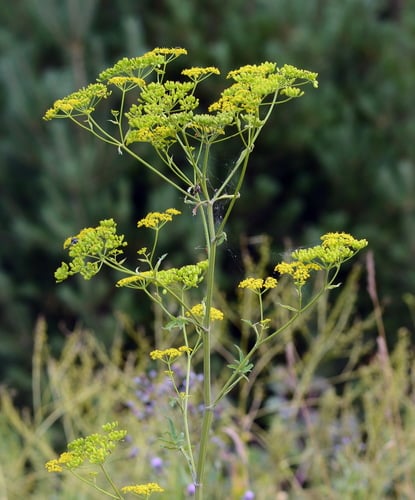
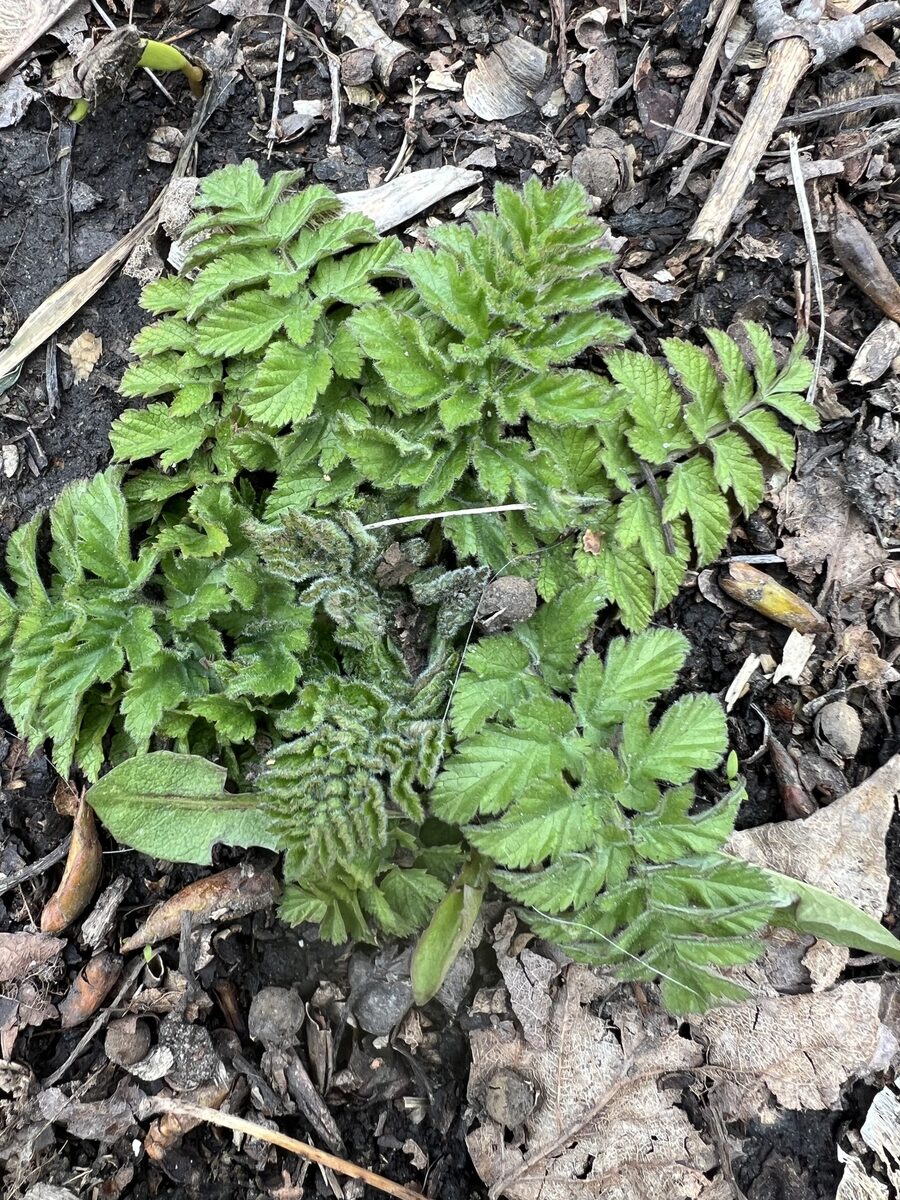
Pimpinella anisum
L.
Anise, Aniseed
iNaturalist· cc-by-sa
(c) David Monniaux, some rights reserved (CC BY-SA)
iNaturalist· cc-by-nc-nd
(c) Steluma, some rights reserved (CC BY-NC-ND)
iNaturalist· pd
Charbelgereige, no known copyright restrictions (public domain)
Summary
Source: WikipediaAn annual herb growing to 0.5m tall by 0.2m wide, frost-tender and hardy to UK zone 8. Foliage present May to October with July flowering and seed ripening August to September. Prefers well-drained light sandy or medium loamy soil, tolerating mildly acid to basic pH. Requires full sun and adapts to dry or moist soil. Self-fertile, pollinated by insects.
Description
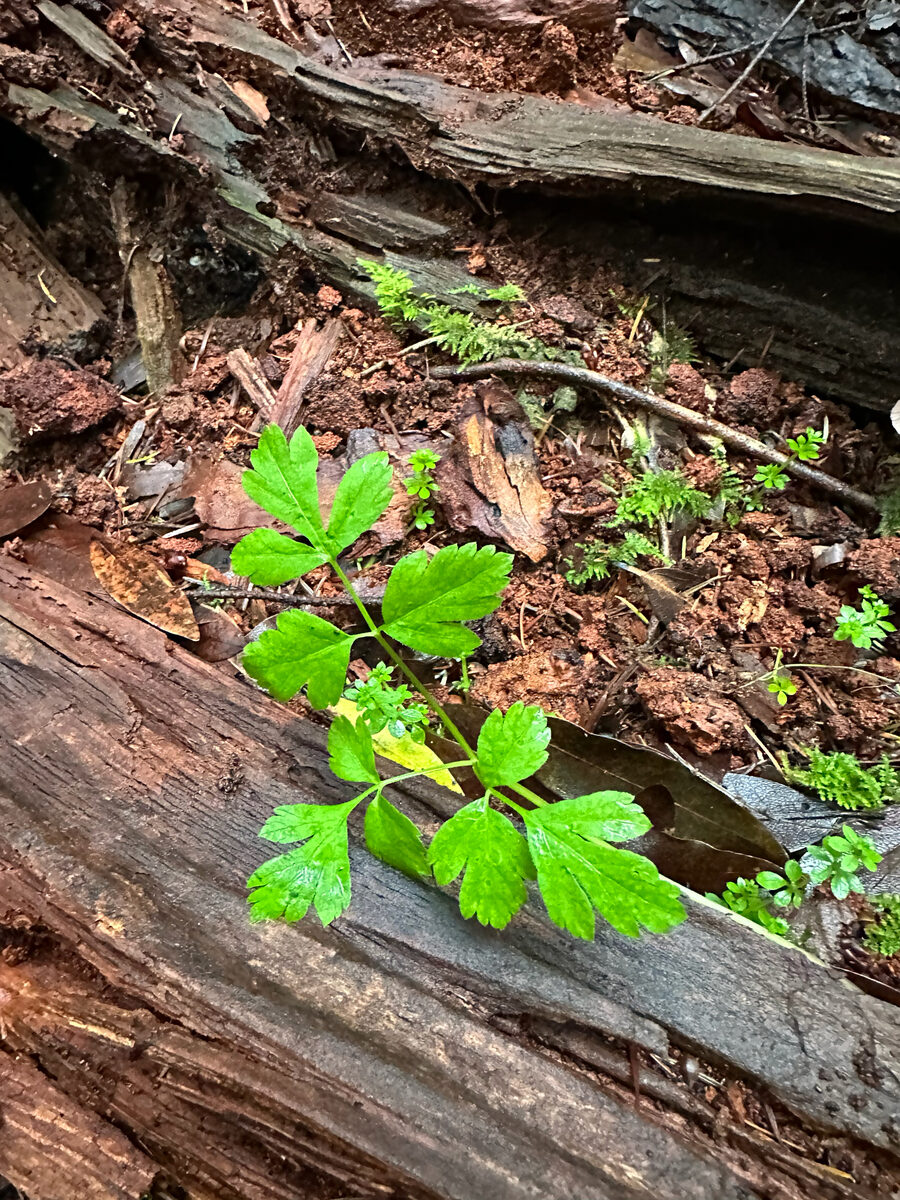
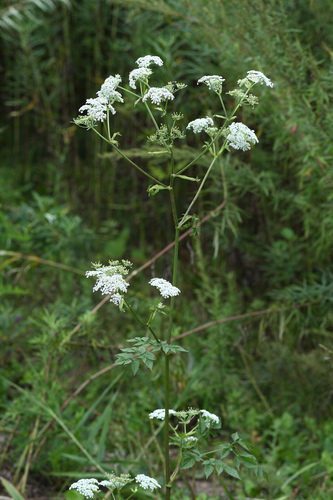
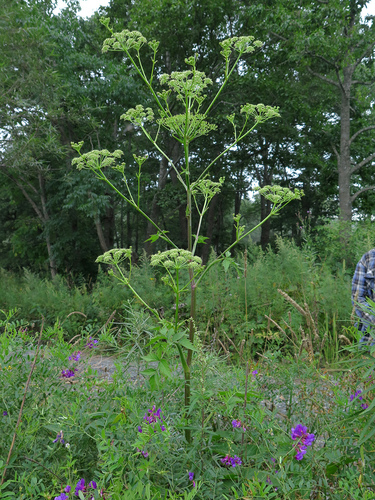
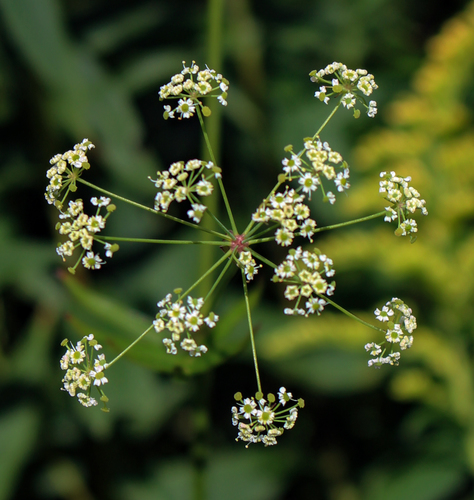
A herb which re-grows from seed each year. It grows 50- 60 cm high. It spreads 40-50 cm wide. The leaves near the ground are simple, broad and oval. The leaves on the stems are finely cut into 3 leaflets. These are feathery looking leaves. The leaves are mid green and have teeth around the edge. The flowers form flat white heads. These are on wispy, fine stems. The seed are about 3 mm long. They are oval and curved. They are pale brown.
Edible Uses
Young leaves can be eaten raw or cooked and have a sweet aniseed flavour — refreshing to chew and pleasant as a flavouring in salads, puddings, soups, and stews. When adding to cooked dishes, stir in the leaves only during the last few minutes to preserve the flavour. The aromatic seeds are eaten raw or used to flavour a wide range of foods including soups, pies, bread, and cakes; their distinctive sweet liquorice flavour also supports digestion. To harvest, cut the whole plant when seed is ripe, keep in a warm dry place for a week, then thresh to remove seeds, which should be stored in a dark, airtight jar. An essential oil from the seed is used to flavour sweets (especially aniseed balls), ice cream, chewing gum, and pickles, and is widely used in alcoholic drinks such as pernod, ouzo, and anisette. Both the leaves and seeds can be brewed into a sweet liquorice-like tea.
Traditional Uses
Seeds are used to give a licorice taste to foods. Leaves can be used fresh in salads or added to soups and stews when the food is almost cooked. The oil can be used for flavouring. Fruit are used to flavour biscuits and cakes. The leaves and seeds are brewed into a sweet, licorice-like tea.
Medicinal Uses
Aniseed has a delicious sweet liquorice-like flavour and is a commonly used and very safe herbal remedy suited to all age groups from children to the elderly, though its use has declined with the rise of cheaper substitutes such as Illicium verum and synthetic alternatives. It is a particularly useful tonic to the digestive system, and its antispasmodic and expectorant effects make it valuable in treating respiratory problems. The seed is the primary part used, generally as an extracted essential oil. The essential oil comprises 70–90% anethole, which has an observed oestrogenic effect; the seed itself is also mildly oestrogenic. This may support the herb's traditional use as a stimulant of sexual drive and breast-milk production. The essential oil should not be taken internally except under professional supervision, and the seeds are best avoided medicinally during pregnancy, though normal culinary quantities are considered safe. The seed is antiseptic, antispasmodic, aromatic, carminative, digestive, expectorant, pectoral, stimulant, stomachic, and tonic. Internally it is used for asthma, whooping cough, coughs, and other pectoral complaints, as well as digestive disorders including wind, bloating, colic, nausea, and indigestion. Externally it treats lice, scabies, and is used as a chest rub for bronchial disorders. A strong decoction of the seeds can be applied to swollen breasts or used to stimulate milk flow. The German Commission E Monographs approve it for cough and bronchitis, fevers and colds, common cold, inflammation of the mouth and pharynx, dyspepsia, and loss of appetite. It is contraindicated in patients allergic to anise and anethole; sensitisation as an adverse effect is rarely observed.
Distribution
It is a cool temperate plant. Plants are grown in summer in temperate climates. In the monsoonal tropics it is best grown in the cooler, drier season. It needs to have full sunlight. It needs shelter from strong winds. The soil should be light and sandy and well drained. Seeds need long hot summers to dry properly. In Nepal it grows to about 3000 m altitude. Plants will often only flower after long, hot summers. It can grow in arid places. In Argentina it grows between 400-1,500 m above sea level. It suits hardiness zones 4-8.
Where It Grows
Africa, Andorra, Argentina, Armenia, Asia, Australia, Austria, Balkans, Bangladesh, Belarus, Brazil, Britain, Bulgaria, Caucasus, Central America, Central Asia, Chile, China, Crete, Croatia, Cuba, Cyprus, Czech Republic, Denmark, East Africa, East Timor, Ecuador, Egypt, Estonia, Ethiopia, Europe, France, Germany, Greece, Guatemala, Himalayas, Hungary, India, Indonesia, Iran, Iraq, Italy, Japan, Kazakhstan, Laos, Lebanon, Macedonia, Madagascar, Malaysia, Mediterranean, Mexico, Middle East, Moldova, Morocco, Myanmar, Nepal, Netherlands, North Africa, North America, Norway, Oman, Pakistan, Palestine, Philippines, Poland, Portugal, Romania, Russia, Scandinavia, SE Asia, Serbia, Slovakia, Slovenia, Somalia, South America, Spain, Sri Lanka, Sweden, Syria, Tajikistan, Tanzania, Tasmania, Timor-Leste, Trinidad-Tobago, Tunisia, Turkey*, Turkmenistan, Ukraine, USA, Uzbekistan, Venezuela, Xinjiang, West Africa, West Indies, Yugoslavia,
Cultivation
Succeeds in ordinary garden soil but prefers a fairly rich warm well-drained light soil in a sunny position. Prefers a pH in the range 6 to 7.5. Aniseed has a very long history of herbal and culinary use, and is often cultivated for its edible and medicinal seed in warm temperate zones. The plant needs warm summers if it is to grow well and seeds only ripen in Britain in long warm summers. Plants strongly resent root disturbance and should not be transplanted. A good companion plant in the garden, its aromatic nature helping to keep nearby plants free of aphis etc. Its flowers attract parasitic wasps to the garden and these prey on a large number of garden pests. Aniseed grows especially well with coriander.
Propagation
Sow seed in situ in mid to late spring. This timing only reliably produces ripe seed in years with hot summers. For a more certain crop, sow 4–5 seeds per pot in a greenhouse in early spring; germination should occur within 3 weeks. Thin to the strongest seedling and plant out after the last expected frosts. Aniseed strongly resents root disturbance.
Other Uses
An essential oil from the seed is used in perfumery, toothpastes, medicines, and food flavourings. The powdered seed can serve as a dentifrice and mouthwash. The plant is an ingredient of pot-pourri. It acts as an insect repellent but is also said to attract mice; liberally smearing aniseed oil around live-traps can draw in mice and other rodents. The plants appear immune to slug and snail damage and may help protect neighbouring plants. A spray made by boiling one part coriander leaves and one part anise seeds in two parts water is highly effective against red spider mites and woolly aphids.
Production
Seed are harvested when the heads are dry then dried in the sun. Fresh leaves can be picked as needed.
Other Information
It is a cultivated commercial crop.
Nutrition
| Part | Moisture | kJ | kcal | Protein | Vit A | Vit C | Iron | Zinc |
|---|---|---|---|---|---|---|---|---|
| Seed | 9.5 | 1411 | 338 | 17.6 | 31 | 21 | 37 | 5.3 |
Synonyms
Also Known As
Anice, Anijs, Anis, Anisa, Anisu, Anizs, Badian, Badishep, Cinimo, Guamrui, Huei-hsiang, Jintan manis, Koromač, Kuppi, Mith-jira, Muhuri, Pa chio, Pekak, Qammuun, Saunf, Sawonf, Shetapushapa, Shombu, Somp, Sompf, Sonf, Sop, Sopu, Souf, Suara, Sweet cumin, Yanisun
References (46)
- Ali-Shtayeh, M. S., et al, 2008, Traditional knowledge of wild edible plants used in Palestine (Northern West Bank): A comparative study. J Ethnobiol Ethnomed. 4: 13
- Ambasta, S.P. (Ed.), 2000, The Useful Plants of India. CSIR India. p 456
- Beckstrom-Sternberg, Stephen M., and James A. Duke. "The Foodplant Database." http://probe.nalusda.gov:8300/cgi-bin/browse/foodplantdb.(ACEDB version 4.0 - data version July 1994)
- Bodkin, F., 1991, Encyclopedia Botanica. Cornstalk publishing, p 798
- Bremness, L., 1994, Herbs. Collins Eyewitness Handbooks. Harper Collins. p 266
Show all 46 references Hide references
- Burkill, I.H., 1966, A Dictionary of the Economic Products of the Malay Peninsula. Ministry of Agriculture and Cooperatives, Kuala Lumpur, Malaysia. Vol 2 (I-Z) p 1758
- Burnie, G & Fenton-Smith, J., 1999, A Grower's Guide to Herbs. Murdoch Books. p 10
- Cheifetz, A., (ed), 1999, 500 popular vegetables, herbs, fruits and nuts for Australian Gardeners. Random House p 149
- Cobley, L.S. (rev. Steele, W.M.) 2nd Ed., 1976, An Introduction to the Botany of Tropical Crops. Longmans. p 249
- Cundall, P., (ed.), 2004, Gardening Australia: flora: the gardener's bible. ABC Books. p 1045
- Denes, A., et al, 2012, Wild plants used for food by Hungarian ethnic groups living in the Carpathian Basin. Acta Societatis Botanicorum Poloniae 81 (4): 381-396
- Dolina, K. & Luczaj, L., 2014, Wild food plants used on the Dubrovnik coast (south-eastern Croatia) Acta Soc Bot Pol 83(3):175–181
- Ertug, F, Yenen Bitkiler. Resimli Türkiye Florası -I- Flora of Turkey - Ethnobotany supplement
- Esperanca, M. J., 1988. Surviving in the wild. A glance at the wild plants and their uses. Vol. 1. p 60
- Facciola, S., 1998, Cornucopia 2: a Source Book of Edible Plants. Kampong Publications, p 21
- Gouldstone, S., 1983, Growing your own Food-bearing Plants in Australia. Macmillan p 186
- Hedrick, U.P., 1919, (Ed.), Sturtevant's edible plants of the world. p 495
- Hemphill, I, 2002, Spice Notes Macmillan. p 43
- Hibbert, M., 2002, The Aussie Plant Finder 2002, Florilegium. p 234
- Hinnawi, N. S. A., 2010, An ethnobotanical study of wild edible plants in the Northern West Bank "Palestine". An-Najah National University. p 91 (As Anisum vulgare)
- http://nordicfood lab/org/blog/2102/9/wild-edible-plants-an-overview
- http://www.botanic-gardens-ljubljana.com/en/plants
- Kalle, R. & Soukand, R., 2012, Historical ethnobotanical review of wild edible plants of Estonia (1770s-1960s) Acta Societatis Botanicorum Poloniae 81(4):271-281
- Kew Plants of the World Online
- Kiple, K.F. & Ornelas, K.C., (eds), 2000, The Cambridge World History of Food. CUP p 432, 1719
- Kybal, J., 1980, Herbs and Spices, A Hamlyn Colour Guide, Hamlyn Sydney p 152
- Lazarides, M. & Hince, B., 1993, Handbook of Economic Plants of Australia, CSIRO. p 190
- Manandhar, N.P., 2002, Plants and People of Nepal. Timber Press. Portland, Oregon. p 364
- Miguel, E., et al, 1989, A checklist of the cultivated plants of Cuba. Kulturpflanze 37. 1989, 211-357
- Molla, A., Ethiopian Plant Names. http://www.ethiopic.com/aplants.htm
- Mulherin, J., 1994, Spices and natural flavourings. Tiger Books, London. p 25
- Nebel, S., Pieroni, A. & Heinrich, M., 2006, Ta cho`rta: Wild edible greens used in the Graecanic area in Calabria, Southern Italy. Appetite 47 (2006) 333–342
- Plants for a Future, The Field, Penpol, Lostwithiel, Cornwall, PL22 0NG, UK. http://www.scs.leeds.ac.uk/pfaf/
- PROSEA
- Raghavan, S., 2007, Handbook of Spices, Seasonings, and Flavourings. Second Edition. CRC Press p 66
- Rashid, H. E., 1977, Geography of Bangladesh. Westview. p 280
- Royal Botanic Gardens, Kew (1999). Survey of Economic Plants for Arid and Semi-Arid Lands (SEPASAL) database. Published on the Internet; http://www.rbgkew.org.uk/ceb/sepasal/internet [Accessed 13th June 2011]
- Small, E., 2009, Top 100 Food Plants. The world's most important culinary crops. NRC Research Press. p 74
- Solomon, C., 2001, Encyclopedia of Asian Food. New Holland. p 11
- Sp. pl. 1:264. 1753
- Torre, de la L., et al, 2008, Enciclopedia de las Plantas Útiles del Ecuador. Herbario QCA. Pontificia Universidad Católica del Ecuador. p 171
- Tyagi, R. K., et al, 2004, Conservation of Spices Germplasm in India. Indian J. Plant Genet. Resour. 17(3): 163-174
- van Wyk, B., 2005, Food Plants of the World. An illustrated guide. Timber press. p 296
- Wiersema, J. H. & Leon, B., 2013, World Economic Plants. A Standard Reference CRC Press. 2nd Ed. p 529
- World Checklist of Useful Plant Species 2020. Royal Botanic Gardens, Kew
- Zeven, A. C. & de West, J. M. J., 1982, Dictionary of cultivated plants and their regions of diversity. Wageningen. p 101