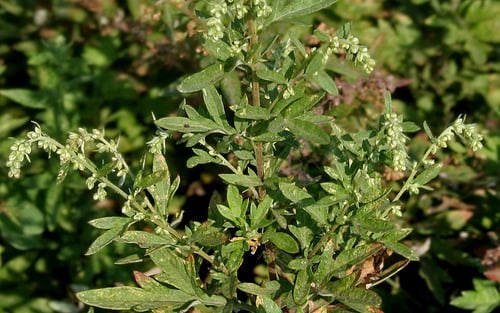
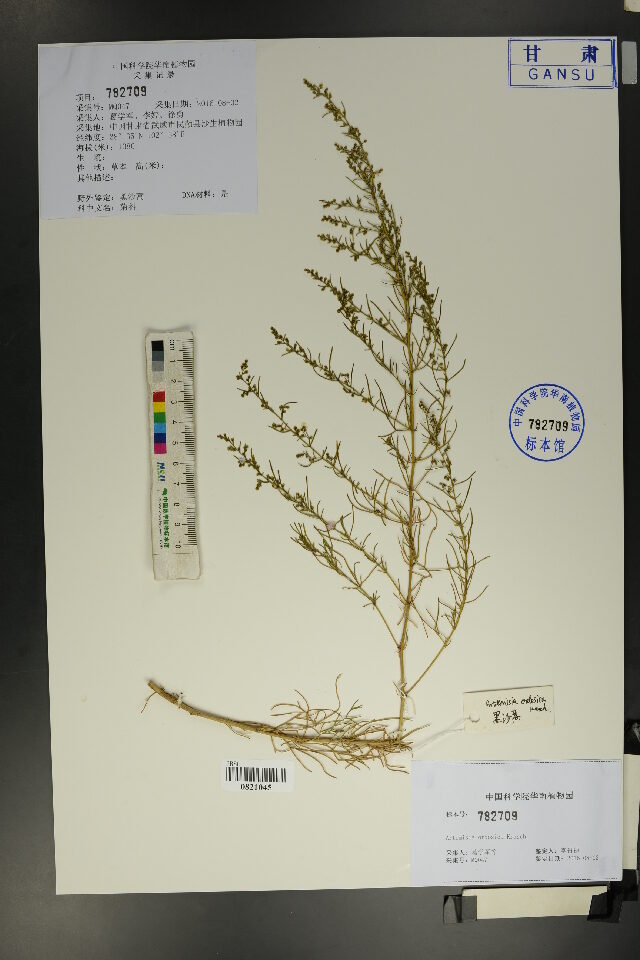
Ambrosia artemesiifolia
L.
Roman Wormwood, Bitterweed, Blackweed, Carrot Weed, Hay Fever Weed, Stickeweed, Tassel Weed, Wild Ta
No photos yet for Ambrosia artemesiifolia
Sign in to contribute a photoDescription
Ambrosia artemesiifolia is a ANNUAL growing to 0.9 m (3ft) by 0.2 m (0ft 8in) at a medium rate. See above for USDA hardiness. It is hardy to UK zone 4. It is in flower from August to October. The species is monoecious (individual flowers are either male or female, but both sexes can be found on the same plant) and is pollinated by Wind. Suitable for: light (sandy), medium (loamy) and heavy (clay) soils. Suitable pH: mildly acid, neutral and basic (mildly alkaline) soils. It can grow in semi-shade (light woodland) or no shade. It prefers moist soil.
Edible Uses
An oil is obtained from the seed. It has been suggested for edible purposes because it contains little linolenic acid. The seed contains up to 19% oil, it has slightly better drying properties than soya bean oil.
Medicinal Uses
Antidote Astringent Disinfectant Emetic Febrifuge Women's complaints. The leaves are very astringent, emetic and febrifuge. They are applied externally to insect bites, rheumatic joints and various skin complaints, internally they are used as a tea in the treatment of fevers, pneumonia, nausea, intestinal cramps, diarrhoea and mucous discharges. Juice from the wilted leaves is disinfectant and is applied to infected toes. A tea made from the roots is used in the treatment of menstrual disorders and stroke. The pollen is harvested commercially and manufactured into pharmaceutical preparations for the treatment of allergies to the plant.
Known Hazards
The pollen of this plant is a major cause of hayfever in N. America. Ingesting or touching the plant can cause allergic reactions in some people.
Distribution
N. America - British Columbia to Nova Scotia and Florida. Locally established casual in Britain.
Where It Grows
Coming Soon
Cultivation
We have very little information on this species but suggest growing it in a sunny position in a well-drained soil. It has been suggested for commercial cultivation. Some plants produce mainly sterile heads. The pollen from the flowers of this species is an important cause of hay-fever in N. America.
Propagation
Seed - we have no details for this species but suggest sowing the seed in situ in April.
Other Uses
Disinfectant Oil. There is some indication it has been used as a disinfectant and Oil.