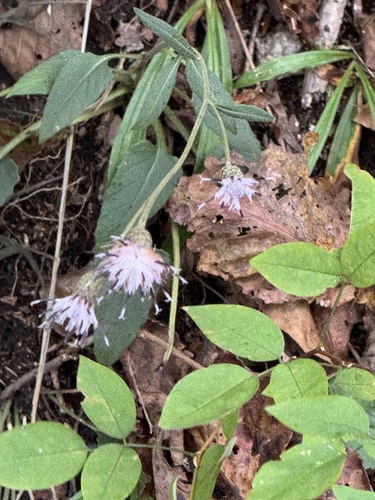
Microseris scapigera - (Sol. ex Cunn.)Sch.Bip.
(Sol. ex Cunn.)Sch.Bip.
Yam Daisy
gbif· cc0
Connor Sydney (Squid)
gbif· cc0
Connor Sydney (Squid)
gbif· cc0
Connor Sydney (Squid)
Description
Microseris scapigera is a PERENNIAL growing to 0.3 m (1ft). The species is hermaphrodite (has both male and female organs) and is pollinated by Insects. Suitable for: light (sandy), medium (loamy) and heavy (clay) soils. Suitable pH: mildly acid, neutral and basic (mildly alkaline) soils and can grow in saline soils. It cannot grow in the shade. It prefers moist soil.
Edible Uses
Root - raw or cooked. Sweetish and moist with a coconut flavour. The root tastes like a sweet potato with an occasional hot taste. It is said to be delicious. The root is between 2 and 8cm long. A favourite food of the Australian Aborigines, who ate the roots in quantity. The root can be harvested all year round but it tastes bitter at certain times of the year, especially in early winter.
Distribution
Australia - New South Wales, South Australia, Victoria and Tasmania. New Zealand.
Where It Grows
AUSTRALASIA: Australia (Tasmania), New Zealand
Cultivation
We do not have much information on this species and do not know if it will be hardy in Britain, though judging by its native range it should succeed outdoors at least in the milder areas of the country. The Australian form is said to be hardy to at least -7°c in Australian gardens, though this cannot be translated directly to British gardens due to our cooler summers and longer colder and wetter winters. Plants are likely to require a well-drained soil in a sunny position. This is a polymorphic species that is found in both New Zealand and in Australia. Some botanists have separated off the Australian form as a distinct species, M. lanceolata, which is here used as a synonym. An alpine form in the Snowy mountains of Australia has fibrous roots too thin to be worth eating. The plant has been suggested for commercial cultivation in temperate zones for its edible root.
Propagation
Seed - we have no information for this species but suggest sowing the seed in early spring in a greenhouse. Prick out the seedlings into individual pots when they are large enough to handle and grow them on in the greenhouse for their first winter, planting them out in late spring or early summer. Division in spring might be possible.