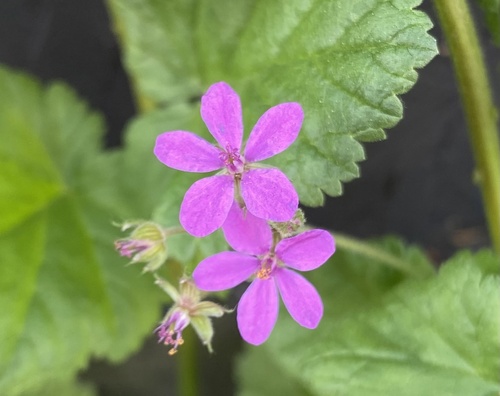
Erodium cygnorum subsp. glandulosum
Nees, Carolin
Swan river crowsfoot, Blue Storksbill
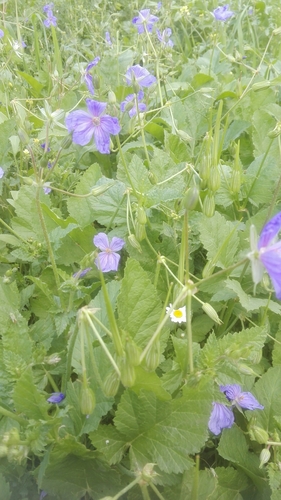
iNaturalist· cc-by-sa
(c) Mark Marathon, some rights reserved (CC BY-SA)
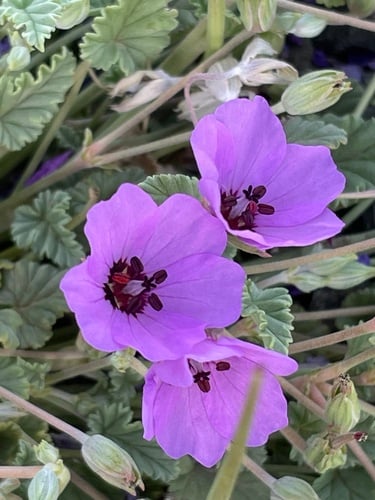
iNaturalist· cc-by
(c) Thomas Mesaglio, some rights reserved (CC BY), uploaded by Thomas Mesaglio
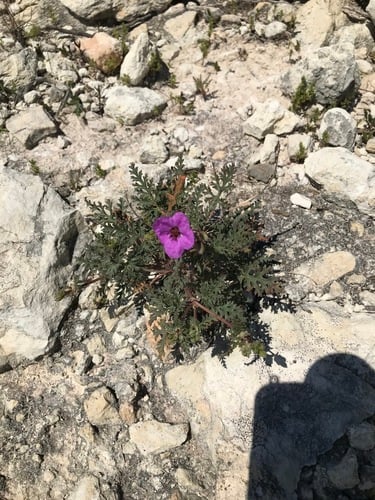
iNaturalist· cc-by-nc
(c) Yingyod Lapwong, some rights reserved (CC BY-NC), uploaded by Yingyod Lapwong
Summary
Source: WikipediaErodium cygnorum is a species of herb native to Australia. It is commonly known as blue heronsbill in Western Australia, and blue storksbill in South Australia. In the United States, where the species is cultivated as a garden plant, it is commonly known as Australian stork's bill and Australian filaree. In the British Isles, it is commonly known as western stork's-bill.
Description
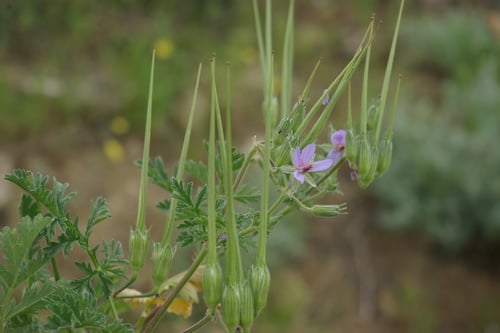
A small herb. It grows 70 cm high. It has glandular hairs on the stems and leaves. The flowers have bluish-purple petals with red veins near the base.
Edible Uses
The roots and seeds are edible.
Traditional Uses
Plants can be grown from seed or cuttings.
This uses section is brief — help expand it
Distribution
It grows in warm temperate and subtropical places. It can grow in arid places.
Where It Grows
Australia*,
Notes
There are about 200 Erodium species.
References (6)
- Cherikoff V. & Isaacs, J., The Bush Food Handbook. How to gather, grow, process and cook Australian Wild Foods. Ti Tree Press, Australia p 189
- Elliot, W.R., & Jones, D.L., 1984, Encyclopedia of Australian Plants suitable for cultivation. Vol 3. Lothian. p 484
- Latz, P.K., 1996, Bushfires and Bushtucker: Aboriginal plant use in Central Australia. IAD Press Alice Springs p 179
- Lazarides, M. & Hince, B., 1993, Handbook of Economic Plants of Australia, CSIRO. p 95
- Paczkowska, G. & Chapman, A.R., 2000, The Western Australian Flora. A Descriptive Catalogue. Western Australian Herbarium. p 252
Show all 6 references Hide references
- Urban, A., 1990, Wildflowers of Inland Australia. Portside editions. p 105