Monsonia senegalensis
Guill. & Perr.
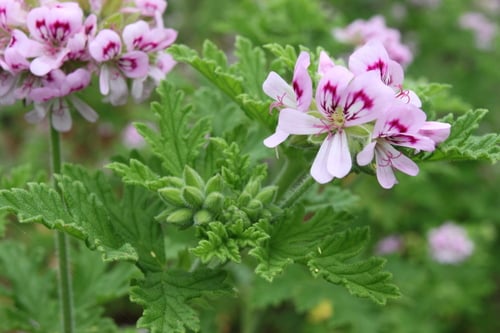
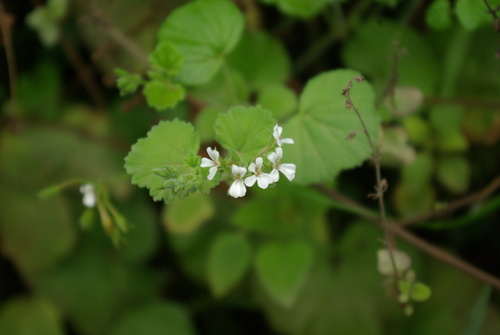
Annual dysentery-flower
iNaturalist· cc-by-nc
(c) Mayuresh Kulkarni, some rights reserved (CC BY-NC), uploaded by Mayuresh Kulkarni
iNaturalist· cc-by-nc
(c) Alex Dreyer, some rights reserved (CC BY-NC), uploaded by Alex Dreyer
Description
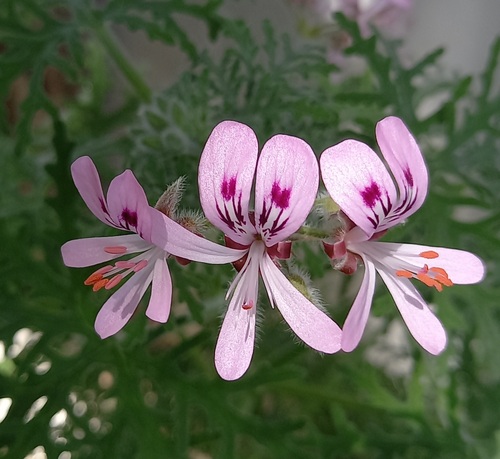
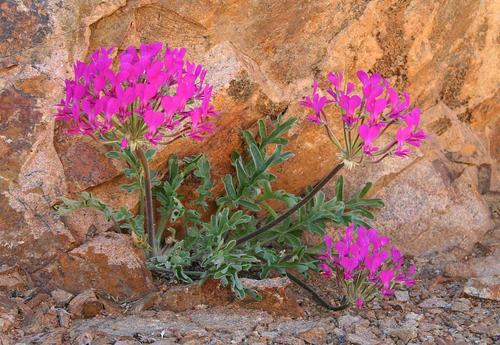
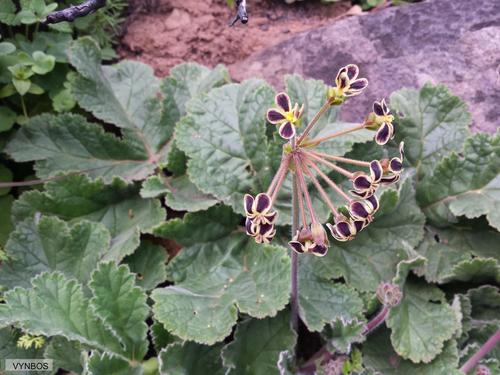
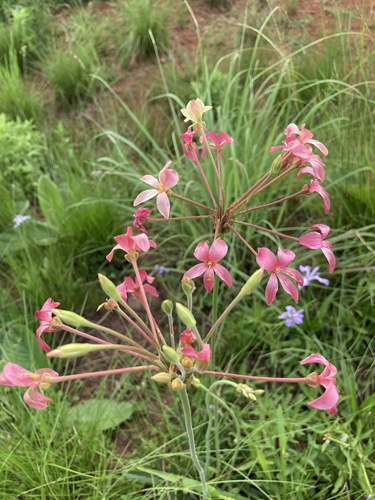
A herb or small shrub. It can lie along the ground. It can grow each year from seeds or keep growing for a few years. It grows 30 cm high. The leaves are alternate on the short primary stem. They are opposite on the side branches. The leaves are oval and there are teeth along the edge. The base is heart shaped. The flowers are pink with darker veins. The fruit are 7-10 cm long including the curved beak.
Edible Uses
The leaves are brewed as a tea substitute and added to couscous for texture. The seeds, usually roasted, are eaten as a snack food, added to porridge, and used in beers. A gum from the plant is also edible.
Traditional Uses
The leaves are used as a tea substitute. They are also added to couscous to give it a smooth consistency. The seeds are eaten as a snack food and added to porridge. They are usually roasted. They are also used in beers.
Medicinal Uses
Traditionally used in the treatment of dysentery, as suggested by the common name.
Distribution
It is a subtropical plant. It grows in hot arid areas. In can grow in dry sandy soils or loams. It grows from sea level to 2,100 m above sea level. It can grow in arid places.
Where It Grows
Africa, Angola, Arabia, Botswana, Burkina Faso, Central Africa, Chad, East Africa, Egypt, Ethiopia, Gambia, India, Kenya, Mauritania, Middle East, Mozambique, Namibia, Niger, Nigeria, North Africa, Pakistan, Sahel, Saudi Arabia, Senegal, Somalia, South Africa, Southern Africa, Sudan, Tanzania, West Africa, Yemen, Zambia, Zimbabwe,
Production
The seeds are often collected by ants.
Also Known As
Diidii, Gerin, Komba-sokwe, Mdusuru, Musamu, Ragem
References (4)
- Royal Botanic Gardens, Kew (1999). Survey of Economic Plants for Arid and Semi-Arid Lands (SEPASAL) database. Published on the Internet; http://www.rbgkew.org.uk/ceb/sepasal/internet [Accessed 16th April 2011]
- Ruiters-Welcome, A. K., 2019, Food plants of southern Africa. Ph.D. thesis. Univ. of Johannesburg p 64
- Welcome, A. K. & Van Wyk, B.-E., 2019, An inventory and analysis of the food plants of southern Africa. South African Journal of Botany 122 (2019) 136–179
- World Checklist of Useful Plant Species 2020. Royal Botanic Gardens, Kew