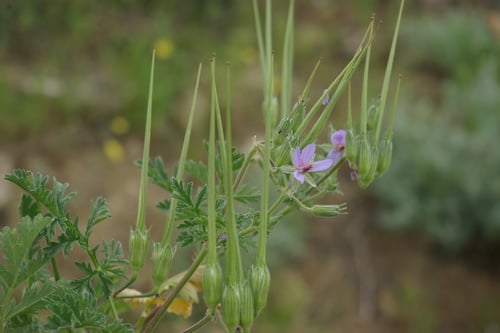
Geranium thunbergii
Siebold ex Lindl. & Paxton
iNaturalist· cc-by
(c) Cheng-Tao Lin, some rights reserved (CC BY), uploaded by Cheng-Tao Lin
iNaturalist· cc-by-nc
(c) 林棋欽, some rights reserved (CC BY-NC), uploaded by 林棋欽
iNaturalist· cc-by
(c) Cheng-Tao Lin, some rights reserved (CC BY), uploaded by Cheng-Tao Lin
Summary
Source: WikipediaGeranium thunbergii (Thunberg's geranium) is a cranesbill species that is commonly known as Japanese geranium or Japanese cranesbill. It is one of the most popular folk medicines and also an official antidiarrheic drug in Japan. It is called ゲンノショウコ. Geraniin is an ellagitannin found in G. thunbergii.
Description
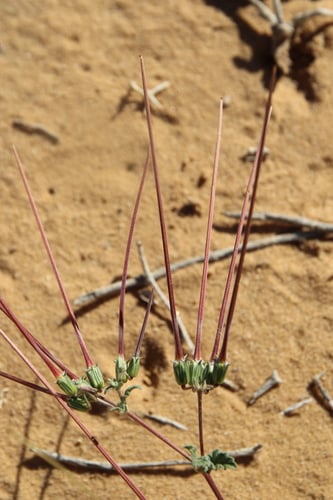
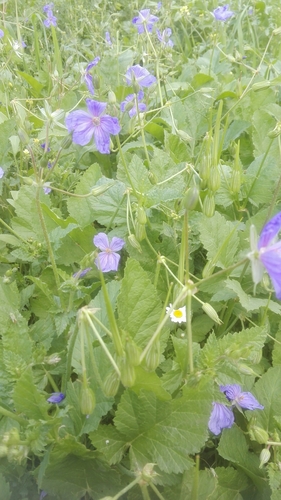
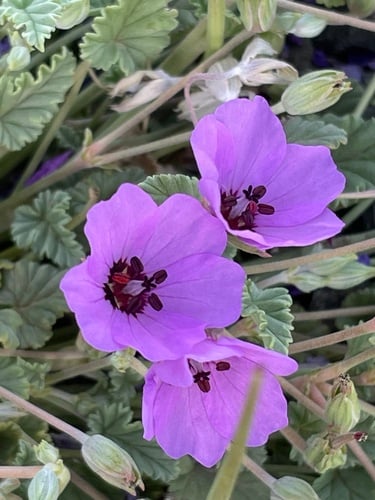
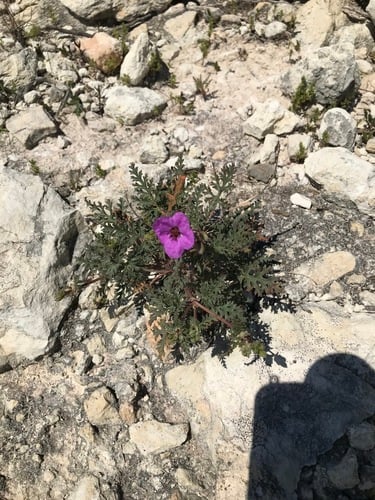
A herb. It keeps growing from year to year. The stems are 20-70 cm tall. They can be trailing and form roots at the nodes. The leaves are 2-6 cm long and divided like fingers.
Edible Uses
Young leaves can be eaten, though no further preparation details are given. Older leaves, harvested when the plant is at the peak of its growth, are used as a tea substitute.
Traditional Uses
The young leaves are eaten with oil and salt. The older leaves are dried and used as tea substitute.
This uses section is brief — help expand it
Medicinal Uses
The whole plant is astringent.
Distribution
It is a temperate. In China it grows from sea level to 2,000 m above sea level.
Where It Grows
Asia, Australia, China, Himalayas, Japan, Korea, Russia, Slovenia, Taiwan,
Cultivation
Succeeds in any moderately fertile retentive soil in a sunny position. Tolerates a wide range of soil types. Members of this genus are rarely if ever troubled by browsing deer or rabbits.
Propagation
Sow seed in spring in a cold frame. Once seedlings are large enough to handle, prick them out into individual pots and plant out during summer. Divide clumps in spring or autumn — larger clumps can go directly into permanent positions, but smaller ones are best potted up and grown on in a cold frame until well rooted, then planted out in spring.
Other Uses
None known
Notes
There are about 300-400 Geranium species. They are mostly temperate.
Also Known As
Chuisoni-phul, Gen-no-shoko, Thunbergova krvomočnica
References (7)
- Chen, B. & Qiu, Z., Consumer's Attitudes towards Edible Wild Plants, Ishikawa Prefecture, Japan. p 23 www.hindawi.com/journals/ijfr/aip/872413.pdf
- Facciola, S., 1998, Cornucopia 2: a Source Book of Edible Plants. Kampong Publications, p 117
- Hibbert, M., 2002, The Aussie Plant Finder 2002, Florilegium. p 110
- Paxton's Fl. Gard. 1(12):186, fig. 115. 1851
- Plants for a Future database, The Field, Penpol, Lostwithiel, Cornwall, PL22 0NG, UK. http://www.scs.leeds.ac.uk/pfaf/
Show all 7 references Hide references
- READ,
- Tanaka,