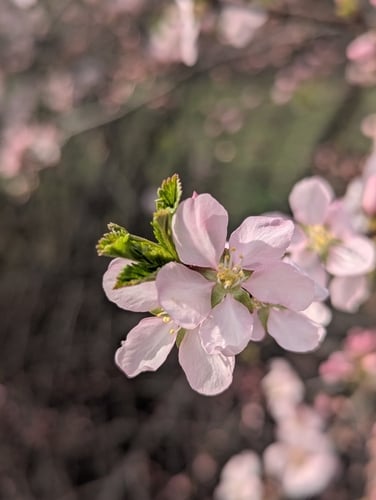
Sorbus austriaca
(Beck) Hedl.
iNaturalist· cc-by-nc
(c) Jasmin Rehrmbacher, some rights reserved (CC BY-NC)
iNaturalist· cc-by-nc
(c) Jasmin Rehrmbacher, some rights reserved (CC BY-NC)
iNaturalist· cc-by-nc
(c) Jasmin Rehrmbacher, some rights reserved (CC BY-NC)
Summary
Source: WikipediaDeciduous tree reaching 10m tall. Hardy to UK zone 6, frost-hardy. Hermaphroditic flowers May to June; seeds ripen September to October. Adapts to light sandy, medium loamy, and heavy clay soils with good drainage. Tolerates mildly acid to basic pH. Grows in semi-shade to full sun and prefers moist soil. Withstands strong winds but not maritime exposure.
Description
Deciduous tree reaching 10m tall. Hardy to UK zone 6, frost-hardy. Hermaphroditic flowers May to June; seeds ripen September to October. Adapts to light sandy, medium loamy, and heavy clay soils with good drainage. Tolerates mildly acid to basic pH. Grows in semi-shade to full sun and prefers moist soil. Withstands strong winds but not maritime exposure.
Edible Uses
The fruit can be eaten raw or used cooked in preserves. It has a mealy texture but a pleasant, semi-sweet flavour when fully ripe. The fruits measure about 13mm across and are borne in fairly large bunches, making harvesting easy.
Medicinal Uses
None known
Known Hazards
The seeds probably contain hydrogen cyanide. This is the ingredient that gives almonds their characteristic flavour. Unless the seed is very bitter it should be perfectly safe in reasonable quantities. In small quantities, hydrogen cyanide has been shown to stimulate respiration and improve digestion, it is also claimed to be of benefit in the treatment of cancer. In excess, however, it can cause respiratory failure and even death.
Distribution
It is a temperate plant.
Where It Grows
Austria, Europe, Hungary, Switzerland,
Cultivation
Succeeds in most reasonably good soils in an open sunny position. Tolerates light shade, though it fruits better in a sunny position. This species is closely related to S. intermedia. Plants are susceptible to fireblight. Trees seen at Wisley and at Cambridge Botanical Gardens in September 1993 were bearing very good crops of fruit. The name of this species might have been mis-spelt, it could be S. austrica.
Propagation
Seed is best sown as soon as it is ripe in a cold frame. Where seed is plentiful, it can be sown in an outdoor seedbed. Stored seed benefits from 2 weeks of warm stratification followed by 14–16 weeks of cold stratification, so sow as early in the year as possible. Prick out seedlings into individual pots once large enough to handle. Top-growth is very slow in the first year or two as the plant focuses on root development. Keep seedlings in pots in a cold frame through their first winter, then plant out into permanent positions in late spring.
Other Uses
None known Special Uses
Notes
There are about 75 Sorbus species.
References (2)
- Kongl. Svenska Vetenskapsakad. Handl. 35(1):65. 1901
- Plants for a Future database, The Field, Penpol, Lostwithiel, Cornwall, PL22 0NG, UK. http://www.scs.leeds.ac.uk/pfaf/