Sorbus aucuparia
Linnaeus
Mountain Ash, Rowan
iNaturalist· cc-by
(c) Hans Kylberg, some rights reserved (CC BY)
iNaturalist· cc-by
(c) Bryan Connolly, some rights reserved (CC BY)
iNaturalist· cc-by-sa
(c) Douglas Goldman, some rights reserved (CC BY-SA), uploaded by Douglas Goldman
Summary
Source: WikipediaSorbus aucuparia, commonly called rowan (, also UK: ) and mountain-ash, is a species of deciduous tree or shrub in the rose family. The tree has a slender trunk with smooth bark, a loose and roundish crown, and its leaves are pinnate in pairs of leaflets on a central vein with a terminal leaflet. It blossoms from May to June in dense corymbs of small yellowish white flowers and develops small red pomes as fruit that ripen from August to October and are eaten by many bird species. It is a highly variable species, and botanists have used different definitions of the species to include or exclude trees native to certain areas. A recent definition includes trees native to most of Europe and parts of Asia, as well as northern Africa. The range extends from Madeira, the British Isles and Iceland to Russia and northern China. Unlike many plants with similar distributions, it is not native to Japan. The plant is frost hardy and colonizes disrupted and inaccessible places as a short-lived pioneer species. The fruit and foliage have been used in the creation of dishes and beverages, as a folk medicine, and as fodder for livestock. Its tough and flexible wood has traditionally been used for woodworking. It is planted to fortify soil in mountain regions or as an ornamental tree and has several cultivars.
Description
A small tree which loses its leaves during the year. It grows 12-15 m tall and spreads 4.5-7.5 m wide. The bark is grey and smooth. The leaves are alternate and compound. The leaves are green, but whitish underneath and divided along the stalk. There are 9-17 leaflets. These are 3-5 cm long. There are teeth along the edge. They are usually hairy on both sides. The flowers are white and scented. They are on hairy stalks. The fruit are bright orange or red berries. They are large and 10-12 mm across. They occur in round topped clusters.
Edible Uses
The fruit can be eaten raw or cooked, though it is very acid and large quantities eaten raw can cause stomach upsets. It makes delicious, if slightly tart, jams and preserves, and can also be dried and used as a flour mixed with cereals. The fruit is about 7.5mm in diameter and is produced in large bunches, making harvesting straightforward. Leaves and flowers can be used as a tea substitute. Young leaves have been recorded as a famine food, but they contain a cyanogenic glycoside and should only be considered as a last resort. The roasted seed is used as a coffee substitute.
Traditional Uses
The leafy shoots are eaten. The ripe fruit can be made into jelly which is eaten with game meat. They are eaten after the first frost. Also for jam. They are also made into a drink. They are high in Vitamin C. The dried fruit are ground into flour to make bread. Leaves and flowers are used to adulterate tea. CAUTION: The fruit can be poisonous if eaten raw.
Medicinal Uses
The bark is astringent and is used in the treatment of diarrhoea and as a vaginal injection for leucorrhoea. The fruit is antiscorbutic and astringent, typically used as a jam or infusion to treat diarrhoea and haemorrhoids. An infusion can also be used as a gargle for sore throats and as a wash for haemorrhoids and excessive vaginal discharge. The seeds contain cyanogenic glycosides which react with water to produce prussic acid — in small quantities this stimulates the respiratory system, but in larger doses can cause respiratory failure and death; seeds should therefore be removed before medicinal or culinary use of the fruit. The flowers and fruit are also aperient, mildly diuretic, laxative, and emmenagogue, and an infusion is used for painful menstruation, constipation, and kidney disorders.
Known Hazards
Seeds contain cyanogenic glycosides which produce extremely toxic prussic acid when exposed to water. In small quantities this stimulates respiration, but larger doses cause respiratory failure and death. Remove seeds before consuming fruit.
Distribution
It is a temperate plant. It grows naturally in woodland and upland in the northern hemisphere. It is frost hardy. It suits hardiness zones 2-9. Arboretum Tasmania.
Where It Grows
Alaska, Andorra, Armenia, Argentina, Asia, Australia, Austria, Balkans, Belarus, Bosnia, Britain, Canada, Caucasus, China, Colombia, Estonia, Europe, Falklands, Finland, France, Georgia, Greece, Himalayas, Hungary, India, Italy, Latvia, Lithuania, Luxembourg, Macedonia, Mediterranean, New Zealand, North America, Northeastern India, Norway, Poland, Portugal, Russia, San Marino, Scandinavia, Slovakia, Slovenia, South America, Spain, Sweden, Switzerland, Tasmania, Turkey, Türkiye, Ukraine, USA,
Cultivation
Succeeds in most reasonably good soils in an open sunny position. Grows well in heavy clay soils. Tolerates some shade, though it fruits better in a sunny position. Prefers a cool moist position and a lighter neutral to slightly acid soil. Dislikes shallow soils or drought. Succeeds on chalk or acid peats. A very wind firm tree tolerating very exposed and maritime positions. Tolerates atmospheric pollution. Some named varieties have been developed for their improved fruits which are larger and sweeter than the type. Plants, and especially young seedlings, are quite fast growing. The fruit is very attractive to birds. 28 species of insects are associated with this tree. Responds well to coppicing. Plants are susceptible to fireblight. For polyculture design as well as the above-ground architecture (form - tree, shrub, etc. and size shown above), information on the habit and root pattern is also useful and given here if available. The plant's growth habit is a standard with a non-suckering single trunk. In garden design, as well as the above-ground architecture of a plant, root structure considerations help choose plants that work together for their optimal soil requirements, including nutrients and water. The tree is monoecious, with male and female flowers on the same plant. The Rowan tree is self-fertile, meaning it can pollinate itself and produce fruit without needing another tree. The fruits are typically harvested in late summer to early autumn, from August to October (Northern Hemisphere), once they are fully ripe. Sorbus species usually flower in late spring to early summer, generally from May to June (Northern Hemisphere), producing clusters of white or pink flowers. Sorbus species are generally moderate to fast-growing, with some species reaching maturity in about 5 to 10 years, depending on species and growing conditions.
Propagation
Seed is best sown as soon as it is ripe in a cold frame. Where seed is plentiful, it can be sown in an outdoor seedbed. Stored seed benefits from 2 weeks of warm stratification followed by 14–16 weeks of cold stratification, so sow as early in the year as possible. Prick out seedlings into individual pots once large enough to handle. Top-growth is very slow in the first year or two as the plant focuses on root development. Keep seedlings in pots in a cold frame through their first winter, then plant out into permanent positions in late spring.
Other Uses
An oil is obtained from the seed. A cosmetic face-mask made from the fruit is used to combat wrinkled skin. A black dye can be obtained from the young branches, and all parts of the plant contain tannin, which can also yield a black dye. Trees are highly wind-resistant and suitable for shelterbelt plantings. The flowers are rich in nectar and pollen, attracting bees, butterflies, and other pollinators. Fruit is eaten by birds and mammals, the canopy provides shelter and roosting habitat for birds, and fallen leaves and bark support overwintering invertebrates. The wood is hard, fine-grained, compact, and elastic — highly valued by wood turners and also used for barrel hoops, cogs, and furniture.
Other Information
It is sold in local markets. It is cultivated.
Notes
There are about 75 Sorbus species. It can be invasive.
Nutrition
| Part | Moisture | kJ | kcal | Protein | Vit A | Vit C | Iron | Zinc |
|---|---|---|---|---|---|---|---|---|
| Fruit | 355 | 85 | 1.5 | — | — | — | — | — |
Synonyms
Also Known As
Aroseni, Atkitia, Baltal, Battal, Belekenyer, Chacaha, Dogberry, European Mountain Ash, Jarebika, Jarzebina, Jerebika, Karusniak, Kus uvezi, Mts'oro, Pihlakas, Pihl'u, Piladzi, Rabina, Rangrek, Riabina, Rognebaer, Rowanberry, Ryabina, Sermuksnis, Skorucha, Skorusa, Wampulitsi
References (79)
- Abbet, C., et al, 2014, Ethnobotanical survey on wild alpine food plants in Lower and Central Valais (Switzerland). Journal of Ethnopharmacology 151 (2014) 624–634
- Ambasta, S.P. (Ed.), 2000, The Useful Plants of India. CSIR India. p 585
- Arora, R. K., 2014, Diversity in Underutilized Plant Species - An Asia-Pacific Perspective. Bioversity International. p 86
- Bodkin, F., 1991, Encyclopedia Botanica. Cornstalk publishing, p 939
- Bremness, L., 1994, Herbs. Collins Eyewitness Handbooks. Harper Collins. p 84
Show all 79 references Hide references
- Brickell, C. (Ed.), 1999, The Royal Horticultural Society A-Z Encyclopedia of Garden Plants. Convent Garden Books. p 970
- Bowser, M., 2017, Handout on Edible Plants of the Kenai Peninsula. USFWS Kenai National Wildlife Refuge p 18
- Bussman, R. W., et al, 2021, Unity in diversity—food plants and fungi of Sakartvelo (Republic of Georgia), Caucasus. Journal of Ethnobiology and Ethnomedicine (2021) 17:72 p 14
- Cerne, M., 1992, Wild Plants from Slovenia used as Vegetables. Acta Horticulturae 318
- Christanell, A., et al, 2010, The Cultural Significance of Wild Gathered Plant Species in Kartitsch (Eastern Tyrol, Austria) and the Influence of Socioeconomic Changes on Local Gathering Practices. Chapter 3 in Ethnobotany in the New Europe. Berghahn Books.
- Coombes, A.J., 2000, Trees. Dorling Kindersley Handbooks. p 275
- Denes, A., et al, 2012, Wild plants used for food by Hungarian ethnic groups living in the Carpathian Basin. Acta Societatis Botanicorum Poloniae 81 (4): 381-396
- Dobriyal, M. J. R. & Dobriyal, R., 2014, Non Wood Forest Produce an Option for Ethnic Food and Nutritional Security in India. Int. J. of Usuf. Mngt. 15(1):17-37 (As Pyrus aucuparia)
- Elias, T.S. & Dykeman P.A., 1990, Edible Wild Plants. A North American Field guide. Sterling, New York p 240
- Ertug, F, Yenen Bitkiler. Resimli Türkiye Florası -I- Flora of Turkey - Ethnobotany supplement
- Facciola, S., 1998, Cornucopia 2: a Source Book of Edible Plants. Kampong Publications, p 211
- Farrar, J.L., 1995, Trees of the Northern United States and Canada. Iowa State University press/Ames p 224
- Fisk, J. R. & Hoover, E., 2015, Wild Fruits of Minnesota. A Field Guide. University of Minnesota p 31
- Flowerdew, B., 2000, Complete Fruit Book. Kyle Cathie Ltd., London. p 182
- Girard, N. J., 2020, Sustainable Foraging of Wild Edible Plants in Norway. A Biocultural Approach. M. Sc. thesis Norwegian University. p 134
- Glowinski, L., 1999, The Complete Book of Fruit Growing in Australia. Lothian. p 45
- Hakkinen, S. H., et al, 1999, Content of the Flavonols Quercetin, Myricetin, and Kaemferol in 25 Edible Berries. Journal of Agricultural and Food Chemistry. 47: 2274-2279
- Harris, E & J., 1983, Field Guide to the Trees and Shrubs of Britain. Reader's Digest. p 172
- Hedrick, U.P., 1919, (Ed.), Sturtevant's edible plants of the world. p 537 (As Pyrus aucuparia)
- Hibbert, M., 2002, The Aussie Plant Finder 2002, Florilegium. p 292
- http://nordicfood lab/org/blog/2102/9/wild-edible-plants-an-overview
- http://www.botanic-gardens-ljubljana.com/en/plants
- Farvinen, R., et al, 2010, Cutin composition of selected northern berries and seeds. Food Chemistry 122: 137-144
- Irving, M., 2009, The Forager Handbook, A Guide to the Edible Plants of Britain. Ebury Press p 285
- Jackes, D. A., 2007, Edible Forest Gardens
- Johansson, A., Laakso, P. and Kallio, H., 1997, Characterization of seed oils of wild, edible Finnish berries. Food Chemistry 204:300-307
- John, L., & Stevenson, V., 1979, The Complete Book of Fruit. Angus & Robertson p 261
- Joyce, D., 1998, The Garden Plant Selector. Ryland, Peters and Small. p 119
- Kalle, R. & Soukand, R., 2012, Historical ethnobotanical review of wild edible plants of Estonia (1770s-1960s) Acta Societatis Botanicorum Poloniae 81(4):271-281
- Kermath, B. M., et al, 2014, Food Plants in the Americas: A survey of the domesticated, cultivated and wild plants used for Human food in North, Central and South America and the Caribbean. On line draft. p 829
- Kiple, K.F. & Ornelas, K.C., (eds), 2000, The Cambridge World History of Food. CUP p 434
- Kolosova, V., et al, 2020, Foraging in Boreal Forest: Wild Food Plants of the Republic of Karelia, NW Russia. Foods 2020, 9, 1015; p 20
- Kybal, J., 1980, Herbs and Spices, A Hamlyn Colour Guide, Hamlyn Sydney p 186
- Little, E.L., 1980, National Audubon Society Field Guide to North American Trees. Alfred A. Knopf. p 511
- Lord, E.E., & Willis, J.H., 1999, Shrubs and Trees for Australian gardens. Lothian. p 73
- Luczaj, L., 2012, Ethnobotanical review of wild edible plants of Slovakia. Acta Societatis Botanicorum Poloniae 81(4):245-255
- Luczaj, L. et al, 2013, Wild edible plants of Belarus: from Rostakinski's questionnaire of 1883 to the present. Journal of Ethnobiology and Ethnomedicine 9:21
- Łukasz Łuczaj and Wojciech M Szymański, 2007, Wild vascular plants gathered for consumption in the Polish countryside: a review. J Ethnobiol Ethnomedicine. 3: 17
- MacKinnon, A., et al, 2009, Edible & Medicinal Plants of Canada. Lone Pine. p 82
- Marinelli, J. (Ed), 2004, Plant. DK. p 468
- Mabey, R., 1973, Food for Free. A Guide to the edible wild plants of Britain, Collins. p 172
- Michael, P., 2007, Edible Wild Plants and Herbs. Grub Street. London. p 194
- Nanagulyan, S., et al, 2020, Wild plants and fungi sold in the markets of Yerevan (Armenia). Journal of Ethnobiology and Ethnomedicine 16:26
- Pardo-de-Santayana, M., et al, 2007, Traditional knowledge of wild edible plants used in the northwest of the Iberian Peninsula (Spain and Portugal): a comparative study. Journal of Ethnobiology and Ethnomedicine 2007, 3:27
- Pieroni, A.,& Giusti, M. E., 2009, Alpine Ethnobotany in Italy: Journal of Ethnobiology and Ethnomedicine. 5:32
- Pieroni, A. & Soukand, R., 2017, Are Borders more Important than Geographical Distance? The Wild Food Ethnobotany of the Boykos and its Overlap with that of the Bukovinian Hutsuls in Western Ukraine. Journal of Ethnobiology 37(2): 326–345
- Pieroni, A. & Soukand, R., 2018, Forest as Stronghold of Local Ecological Practice: Currently Used Wild Food Plants in Polesia, Northern Ukraine. Economic Botany, XX(X) pp. 1-21
- Pieroni, A., et al, 2020, Wild food plants traditionally gathered in central Armenia: archaic ingredients or future sustainable foods? Environment, Development and Sustainability. Springer p 11
- Plants for a Future database, The Field, Penpol, Lostwithiel, Cornwall, PL22 0NG, UK. http://www.scs.leeds.ac.uk/pfaf/
- Postman, J. D., et al, 2012, Recent NPGS Coordinated Expeditions in the Trans-Caucasus Region to Collect Wild Relatives of Temperate Fruit and Nut Crops. In Acta Horticulturae Number 948 p 191-198
- Prakofjewa, J., et al, 2023, Boundaries Are Blurred: Wild Food Plant Knowledge Circulation across the Polish-Lithuanian-Belarusian Borderland. Biology 2023, 12, 571.
- Pruse, B., et al, 2021, Active Wild Food Practices among Culturally Diverse Groups in the 21st Century across Latgale, Latvia. Biology 2021, 10, 551.
- READ,
- Redzic, S. J., 2006, Wild Edible Plants and their Traditional Use in the Human Nutrition in Bosnia-Herzegovina. Ecology of Food and Nutrition, 45:189-232
- Roa, J. A. G. & Boada, D. S. G., 2018, Fundación para el Fortalecimiento de la Fruticultura y Plantas Alimenticias no Convencionales en Colombia.
- Ryan, S., 2008, Dicksonia. Rare Plants Manual. Hyland House. p 56
- Schuler, S., (Ed.), 1977, Simon & Schuster's Guide to Trees. Simon & Schuster. No. 171
- Schunko, C., et al, 2010, Organic farmers use of wild food plants and fungi in a hilly area in Styria (Austria). Journal of Ethnobiology and Ethnomedicine 6:17
- Sfikas, G., 1984, Trees and shrubs of Greece. Efstathiadis Group. Athens. p 64
- Shikov, A. N. et al, 2017, Traditional and Current Food Use of Wild Plants Listed in the Russian Pharmacopoeia. Frontiers in Pharmacology. Vol. 8 Article 841
- Singh, H.B., Arora R.K.,1978, Wild edible Plants of India. Indian Council of Agricultural Research, New Delhi. p 72
- Singh, V. B., et al, (Ed.) Horticulture for Sustainable Income and Environmental Protection. Vol. 1 p 220
- Soukand, R. & Kalle, R., 2016, Perceiving the Biodiversity of Food at Chest-height: use of the Fleshy Fruits of Wild Trees and Shrubs in Saaremaa, Estonia. Hum Ecol 44:265–272
- Soukand, R., et al, 2017, Multi-functionality of the few: current and past uses of wild plants for food and healing in Liubań region, Belarus. Journal of Ethnobiology and Ethnomedicine (2017) 13:10
- Sp. pl. 1:477. 1753
- Stryamets, N., et al, 2015, From economic survival to recreation: contemporary uses of wild food and medicine in rural Sweden, Ukraine and NW Russia. Journal of Ethnobiology and Ethnomedicine 11:53
- Svanberg, I. et al, 2012, Uses of tree saps in northern and eastern parts of Europe. Acta Societatis Botanicorum Poloniae 81 (4): 343-357
- Tardio, J., et al, Ethnobotanical review of wild edible plants in Spain. Botanical J. Linnean Soc. 152 (2006), 27-71
- Upreti, K., et al, 2010, Diversity and Distribution of Wild Edible Fruit Plants of Uttarakhand. Bioversity Potentials of the Himalaya. p 188
- UPHOF,
- Upson, R., & Lewis R., 2014, Updated Vascular Plant Checklist and Atlas for the Falkland Islands. Falklands Conservation and Kew.
- van Wyk, B., 2005, Food Plants of the World. An illustrated guide. Timber press. p 351
- Wiersema, J. H. & Leon, B., 2013, World Economic Plants. A Standard Reference CRC Press. 2nd Ed. p 651
- World Checklist of Useful Plant Species 2020. Royal Botanic Gardens, Kew
More from Rosaceae
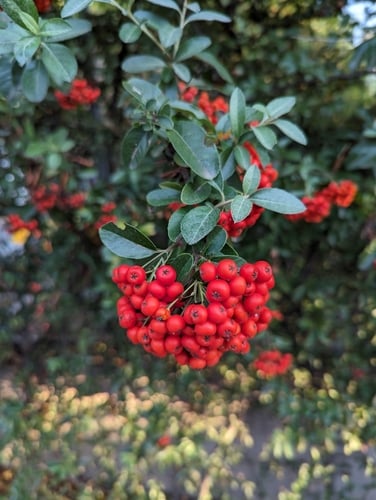
Pyracantha coccinea
Everlasting Thorn, Coral Tree, Scarlet firethorn
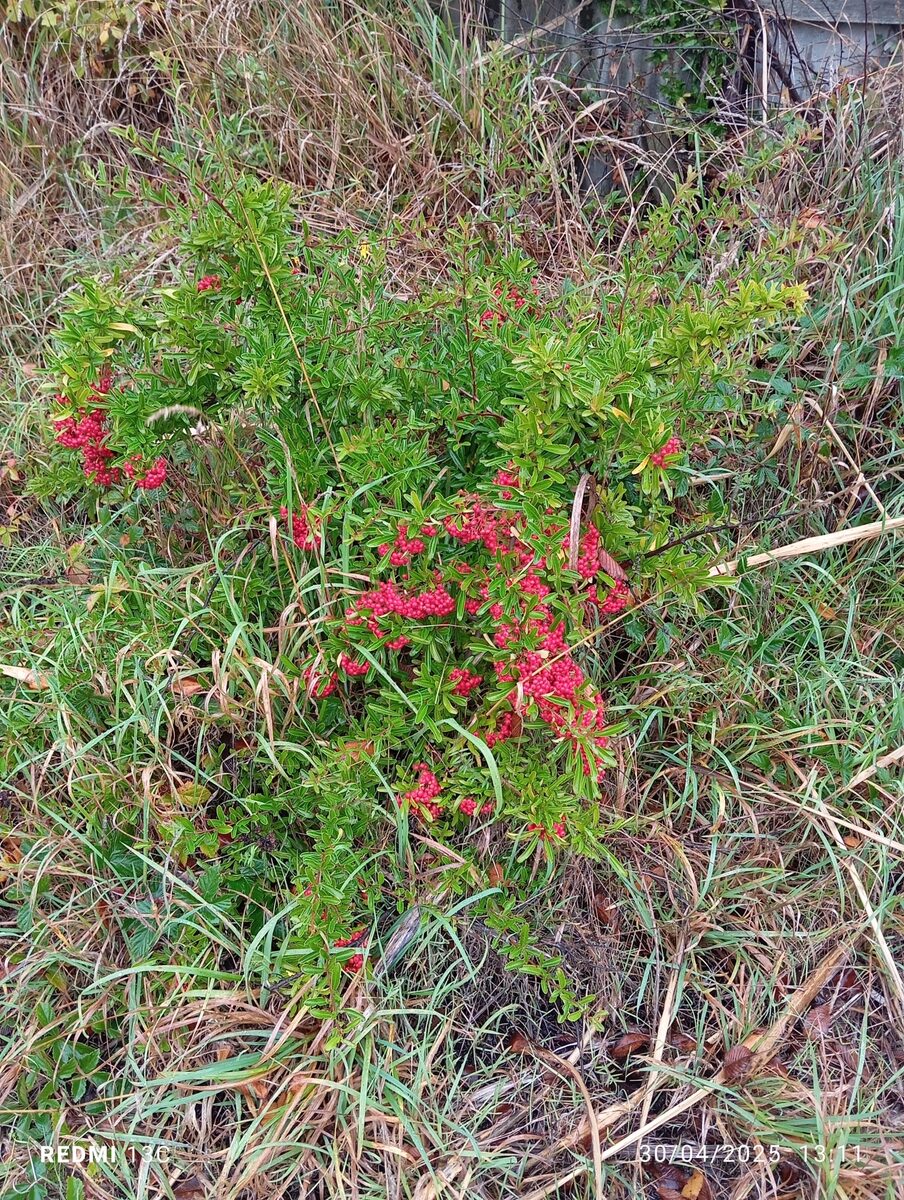
Pyracantha crenato-serrata - (Hance.)Rehder.
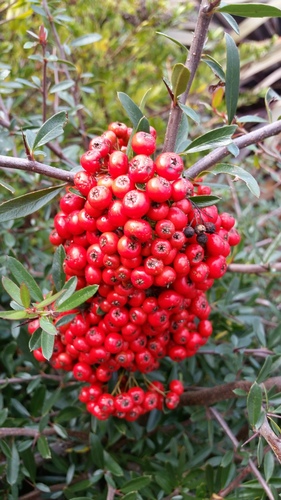
Pyracantha crenatoserrata
Chinese Firethorn
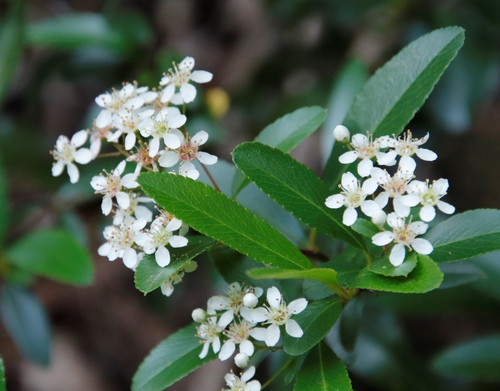
Pyracantha crenulata
Nepal Firethorn, Nepalese white thorn
Pyracantha fortuneana
Chinese fire-thorn, Torch fruit
Pyracantha koidzumii
Formosa Firethorn, Taiwan firethorn, Koidzumi's firethorn