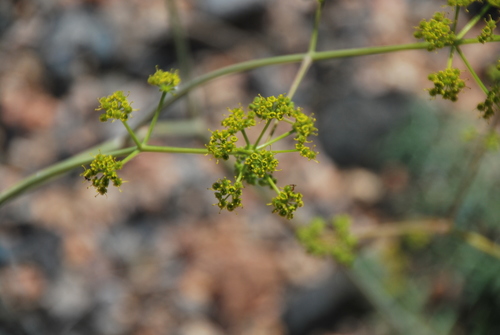
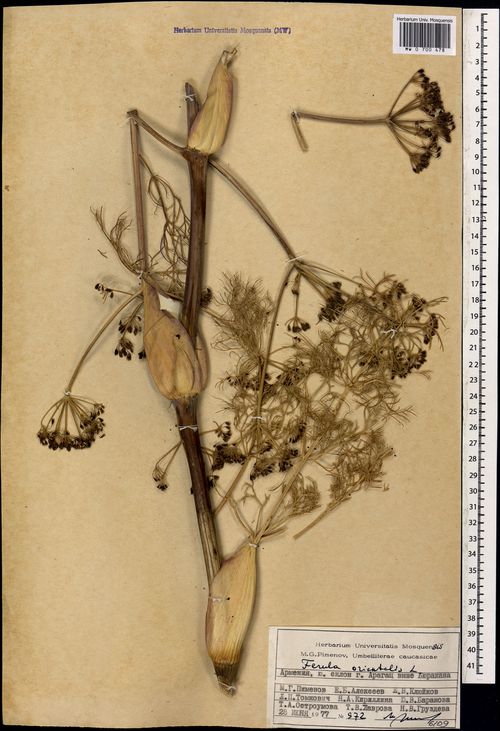
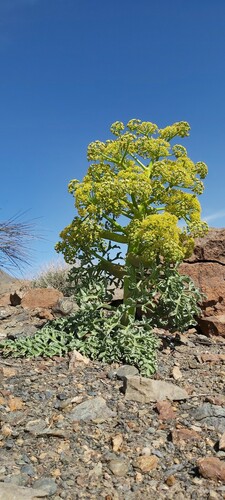
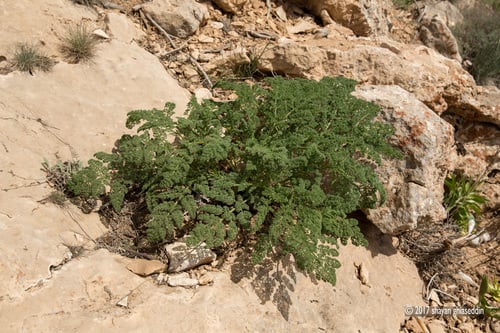
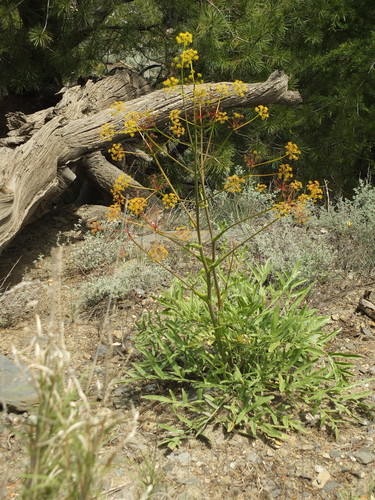
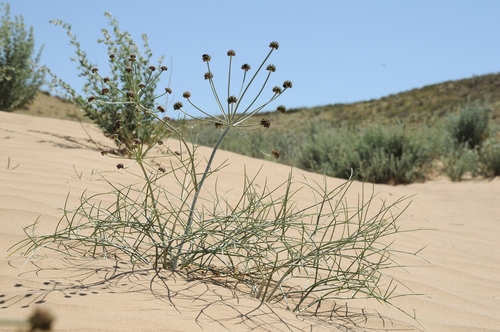
Erigenia bulbosa
(Michx.) Nutt.
Pepper and salt, Harbinger of Spring
iNaturalist· cc-by-nc
(c) Erin Haase, some rights reserved (CC BY-NC), uploaded by Erin Haase
iNaturalist· cc-by-nc
(c) Sporange, some rights reserved (CC BY-NC), uploaded by Sporange
iNaturalist· cc-by
(c) Benjamin Smith, some rights reserved (CC BY)
Summary
Source: WikipediaLow-growing perennial reaching 0.2 m in height. Blooms February through April. Hermaphroditic flowers attract insect pollinators and self-fertile. Adapts to light sandy, medium loamy, and heavy clay soils across mildly acidic to mildly alkaline pH ranges. Tolerates semi-shade in light woodland settings and prefers consistently moist soil.
Description
A herb. It grows 8-25 cm tall. It can have several stems. These are green to brown and have ridges along them. The leaves are alternate. They are 12 cm long by 8 cm wide. These have 3 leaflets and the leaflets are divided into narrow lobes. The flowers are in a flat topped group. They are white. These develop into flattened round fruit with one seed.
Edible Uses
The root can be eaten raw or cooked.
Traditional Uses
The roots are eaten raw or cooked.
This uses section is brief — help expand it
Medicinal Uses
The plant has been chewed to relieve toothache, though no details are given about which part is used.
Distribution
It is a temperate plant. It grows in rich moist woodland. It suits hardiness zones 4-7.
Where It Grows
North America, USA,
Cultivation
It grows from seed.
Propagation
Sow seed in spring in a greenhouse. Prick seedlings into individual pots once large enough to handle and grow them on under glass for their first winter. Plant out in late spring or early summer after the last expected frosts. The plant can also be propagated by division of tubers.
Other Uses
None known.
References (2)
- Jackes, D. A., Edible Forest Gardens
- Plants for a Future database, The Field, Penpol, Lostwithiel, Cornwall, PL22 0NG, UK. http://www.scs.leeds.ac.uk/pfaf/