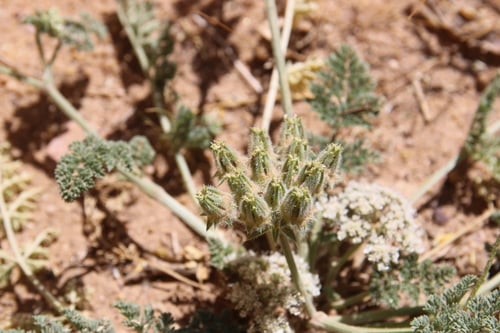
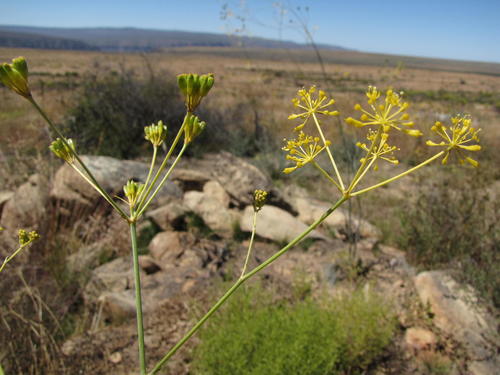
Spuriopimpinella brachycarpa
(Komarov) Nakai
Ch'am-namul, Spider spice, Shiny-leaved celery
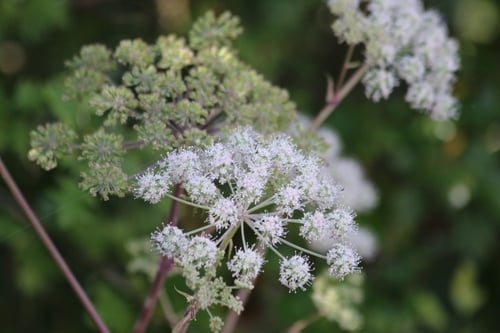
iNaturalist· cc-by-nc
(c) onidiras-iNaturalist, some rights reserved (CC BY-NC), uploaded by onidiras-iNaturalist
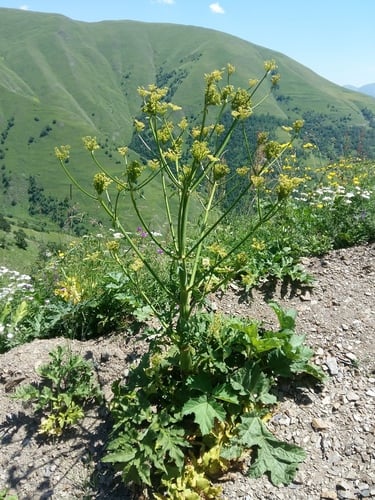
iNaturalist· cc-by-nc
(c) cosmos9494, some rights reserved (CC BY-NC)
Summary
Source: WikipediaSpuriopimpinella brachycarpa (Nakai) Kitag. (known formerly as Pimpinella brachycarpa) (common names chamnamul and short-fruit pimpinella) is a species in the genus Spuriopimpinella (family Apiaceae). It is a scented plant with saw-toothed, oval leaves, which bears white flowers between June and August, and edible baby leaves.
Description
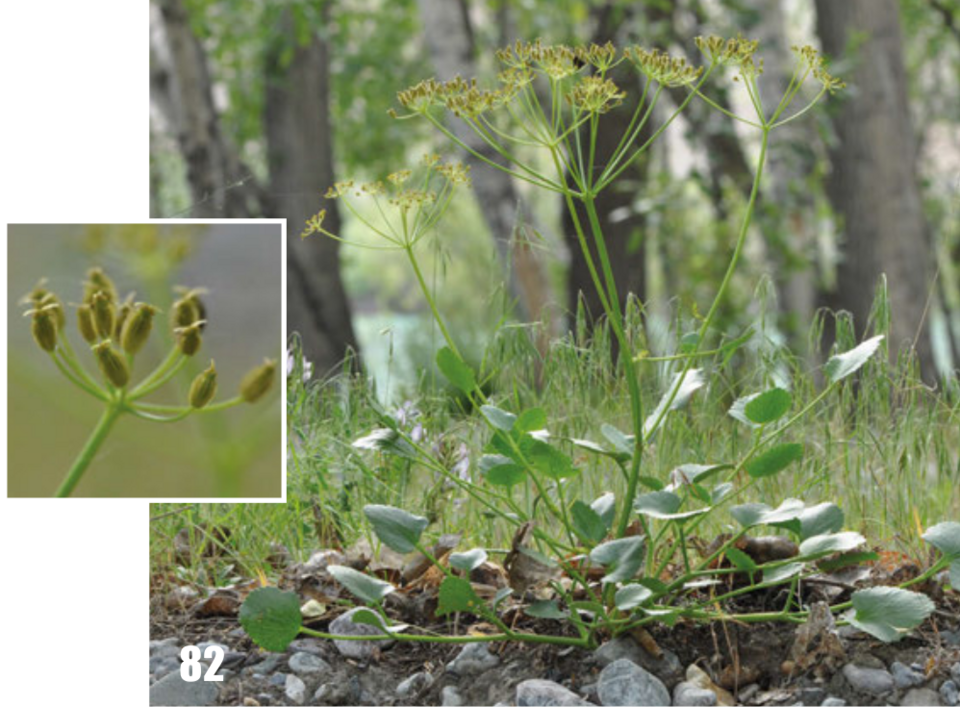
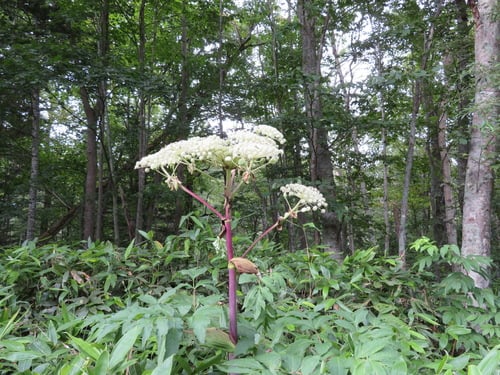
An erect herb. It keeps growing from year to year. It grows 60-120 cm high. The rootstock is short and stout. In has one bud at the end. This produces an upright stems that has lines along it. The leaves are oval or triangle shaped. The leaf blade is twice divided. The end segments are diamond shaped and 3-8 cm long. The side ones are oblique. The flowers are small and white. They are in compound groups at the top of the plant.
Edible Uses
Like many other species belonging to the family Apiaceae, chamnamul has aromatic leaves and is used as a culinary herb.
Traditional Uses
The young leaves are eaten fresh, boiled or seasoned with sesame oil or soy sauce. It is also pickled in brine.
This uses section is brief — help expand it
Distribution
It is a cold temperate plant. It grows in forests in northern China.
Where It Grows
Asia, China, Korea, Siberia,
Other Information
It is a cultivated food plant. It is considered one of the best wild edible plants in northern China.
Synonyms
References (6)
- Facciola, S., 1998, Cornucopia 2: a Source Book of Edible Plants. Kampong Publications, p 21 (As Pimpinella brachycarpa)
- Fan, L., et al, The Use of Edible Wild Plants and Fungi in Korean-Chinese Villages. Journal of Environmental Information Science 44-5 p 71-79
- Heo, B., et al., 2009, Antiproliferative Activity of Korean Wild Vegetables on Different Human Tumor Cell Lines. Plant Foods for Human Nutrition. 64:257-263 (As Pimpinella brachycarpa)
- Hu, Shiu-ying, 2005, Food Plants of China. The Chinese University Press. p 606
- Pemberton, R. W. & Lee, N. S., 1996, Wild Food Plants in South Korea: Market Presence, New Crops, and Exports to the United States. Economic Botany, Vol. 50, No. 1, pp. 57-70 (As Pimpinella brachycarpa)
Show all 6 references Hide references
- Tanaka, (As Pimpinella brachycarpa)