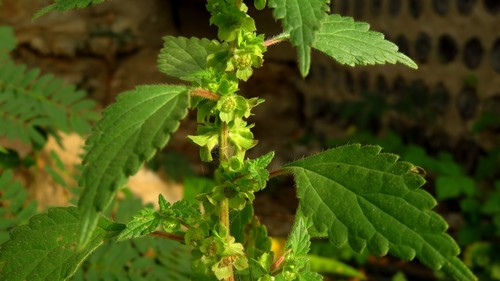
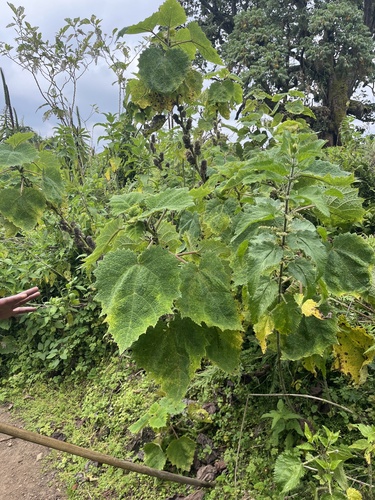
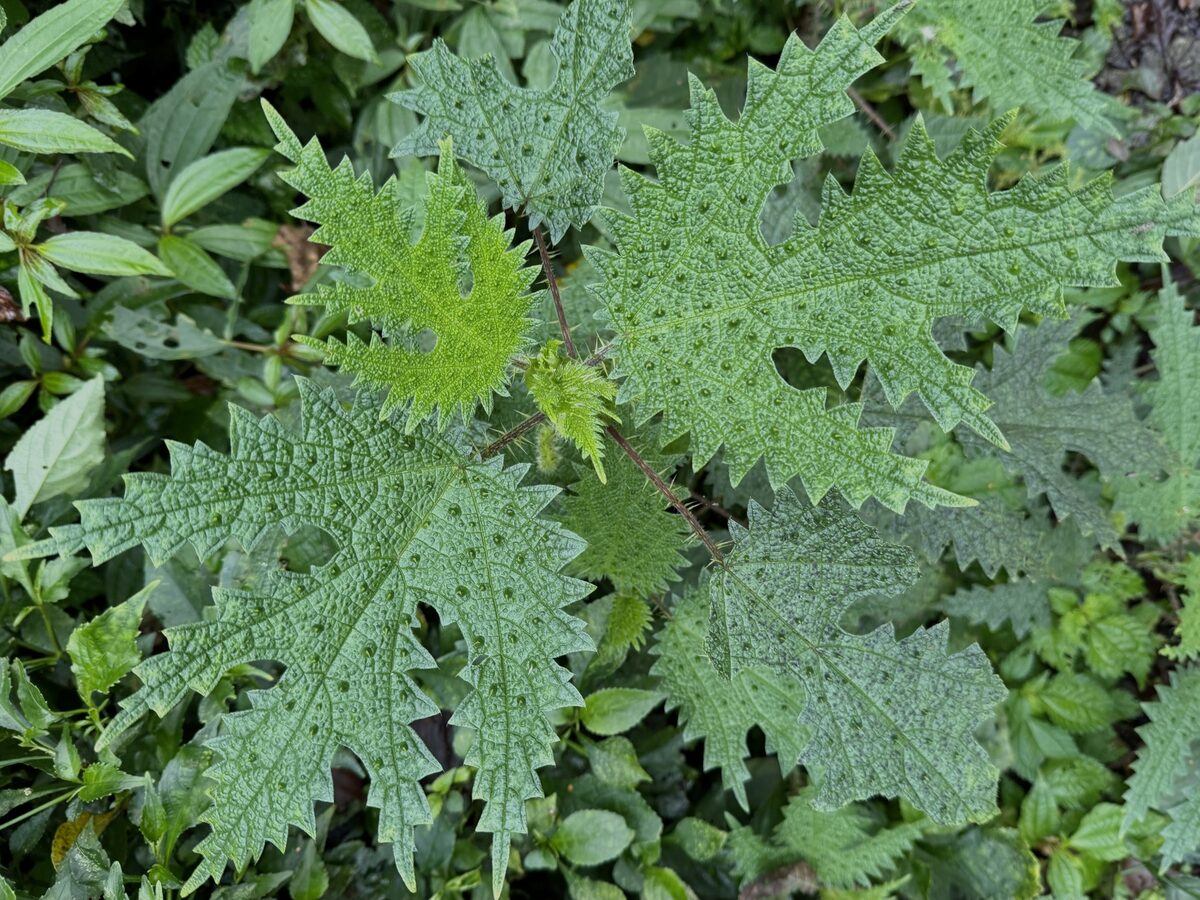
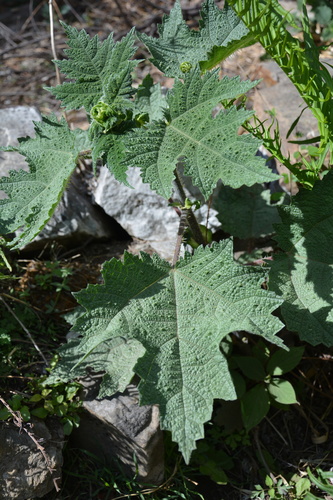
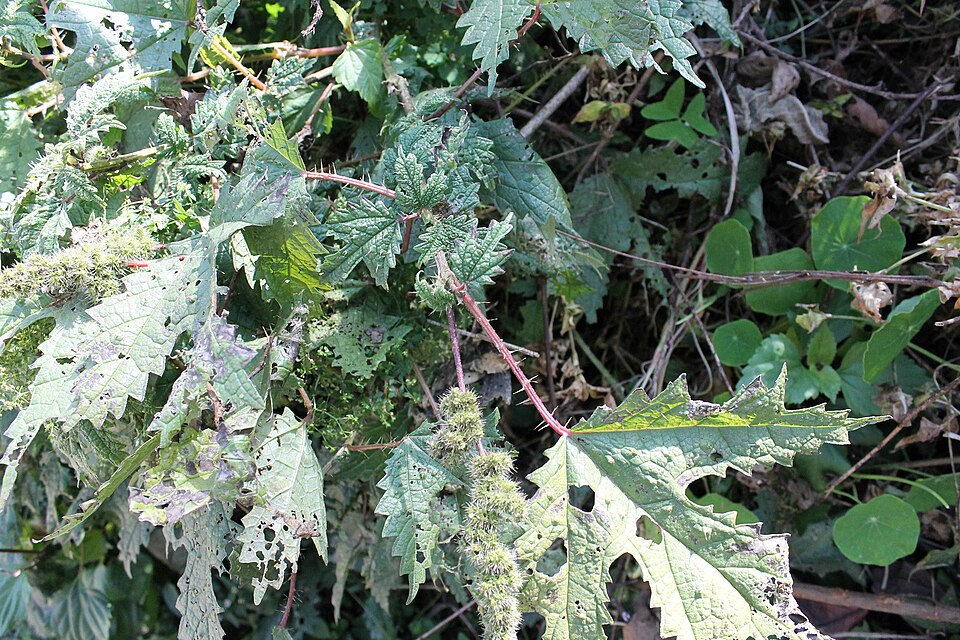
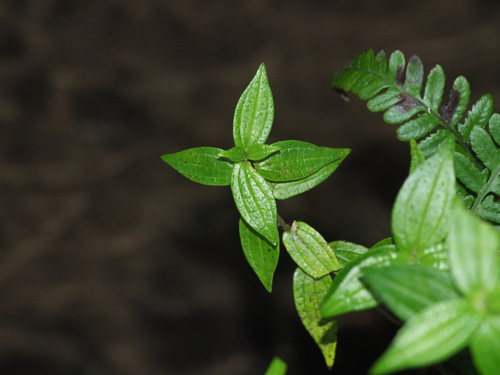
Laportea macrostachya - (Maxim.)Ohwi.
(Maxim.)Ohwi.
gbif· cc-by
Meise Botanic Garden
gbif· cc-by-sa
GBIF
gbif· cc0
Conveyor Belt
Description
Laportea macrostachya is a PERENNIAL growing to 0.8 m (2ft 7in). It is in flower from June to July, and the seeds ripen from August to September. The species is monoecious (individual flowers are either male or female, but both sexes can be found on the same plant). Suitable for: light (sandy), medium (loamy) and heavy (clay) soils. Suitable pH: mildly acid, neutral and basic (mildly alkaline) soils. It can grow in semi-shade (light woodland) or no shade. It prefers moist soil.
Edible Uses
Young leaves - cooked. Very nutritious, they have a peculiar sweetness. Some caution should be observed when harvesting this plant since the raw leaves have stinging hairs. It is perfectly safe to eat the leaves when they are cooked, however, since heat completely destroys the sting.
Known Hazards
The leaves have stinging hairs, much like stinging nettles to which they are related.
Distribution
E. Asia -China, Japan.
Where It Grows
TEMPERATE ASIA: China (Anhui Sheng, Gansu Sheng (southeast), Guangxi Zhuangzu Zizhiqu (north), Guizhou Sheng, Henan Sheng, Hubei Sheng, Hunan Sheng, Jiangsu Sheng, Shaanxi Sheng (south), Sichuan Sheng, Xizang Zizhiqu (southeast)), Korea, Japan (Hokkaidô, Honshu, Shikoku) TROPICAL ASIA: Myanmar
Cultivation
We have very little information on this plant and do not know if it will be hardy in Britain, though judging by its habitat it should succeed outdoors in most parts of the country. It should succeed in most soils in semi-shade.
Propagation
Seed - sow spring in a cold frame. When they are large enough to handle, prick the seedlings out into individual pots and grow them on in the greenhouse for their first winter. Plant them out into their permanent positions in late spring or early summer, after the last expected frosts. Division in spring. Very easy, larger clumps can be replanted direct into their permanent positions, though it is best to pot up smaller clumps and grow them on in a cold frame until they are rooting well. Plant them out in the spring.
Other Uses
FibreA fibre obtained from the stem is used for making nets, cordage etc. It is up to 50 times stronger than cotton.