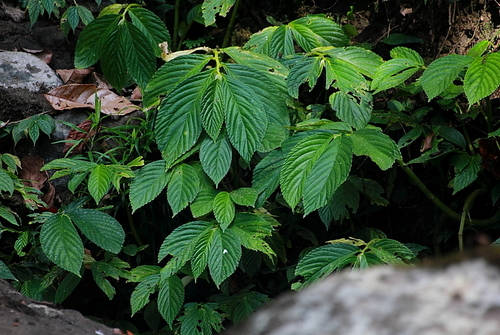
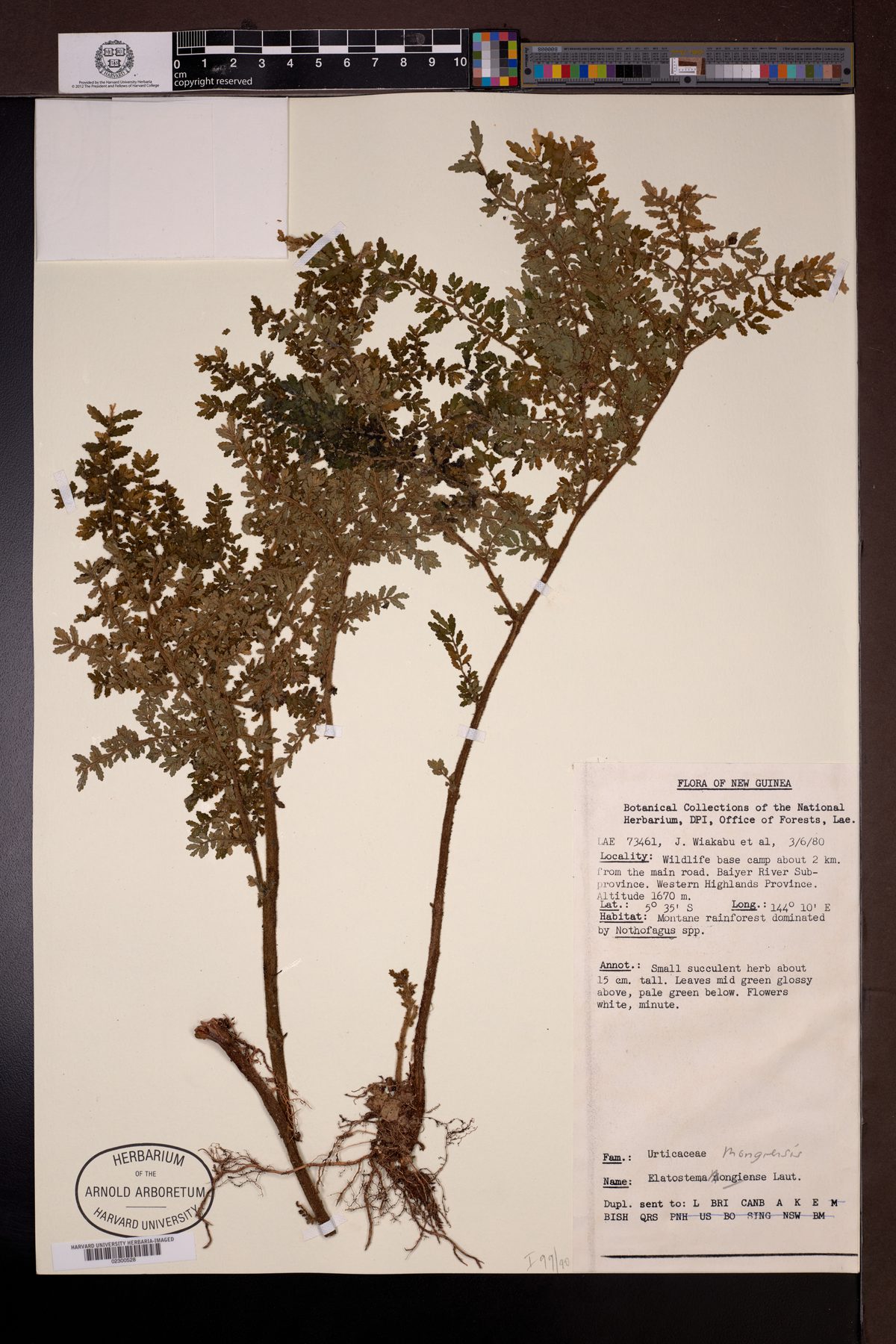
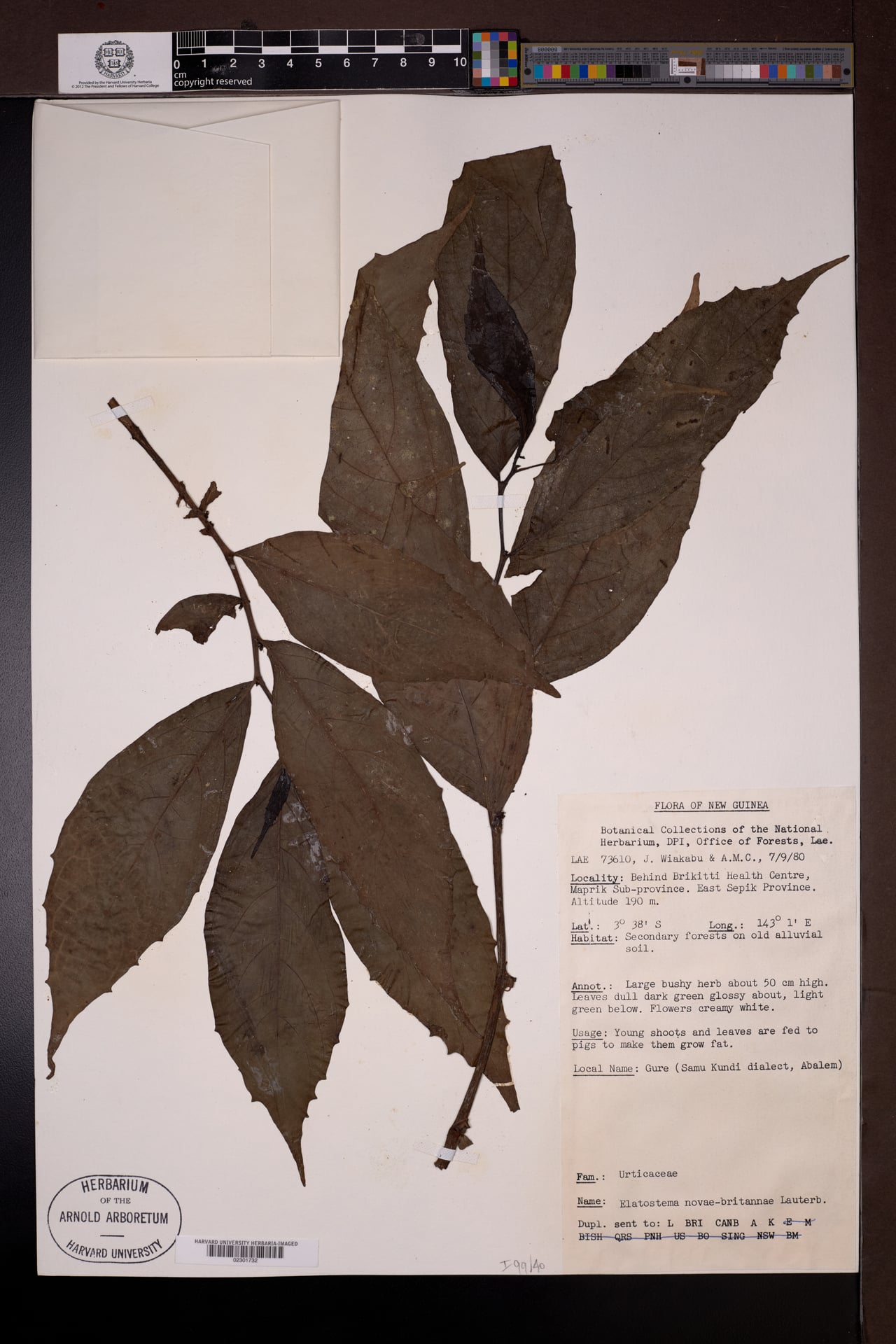
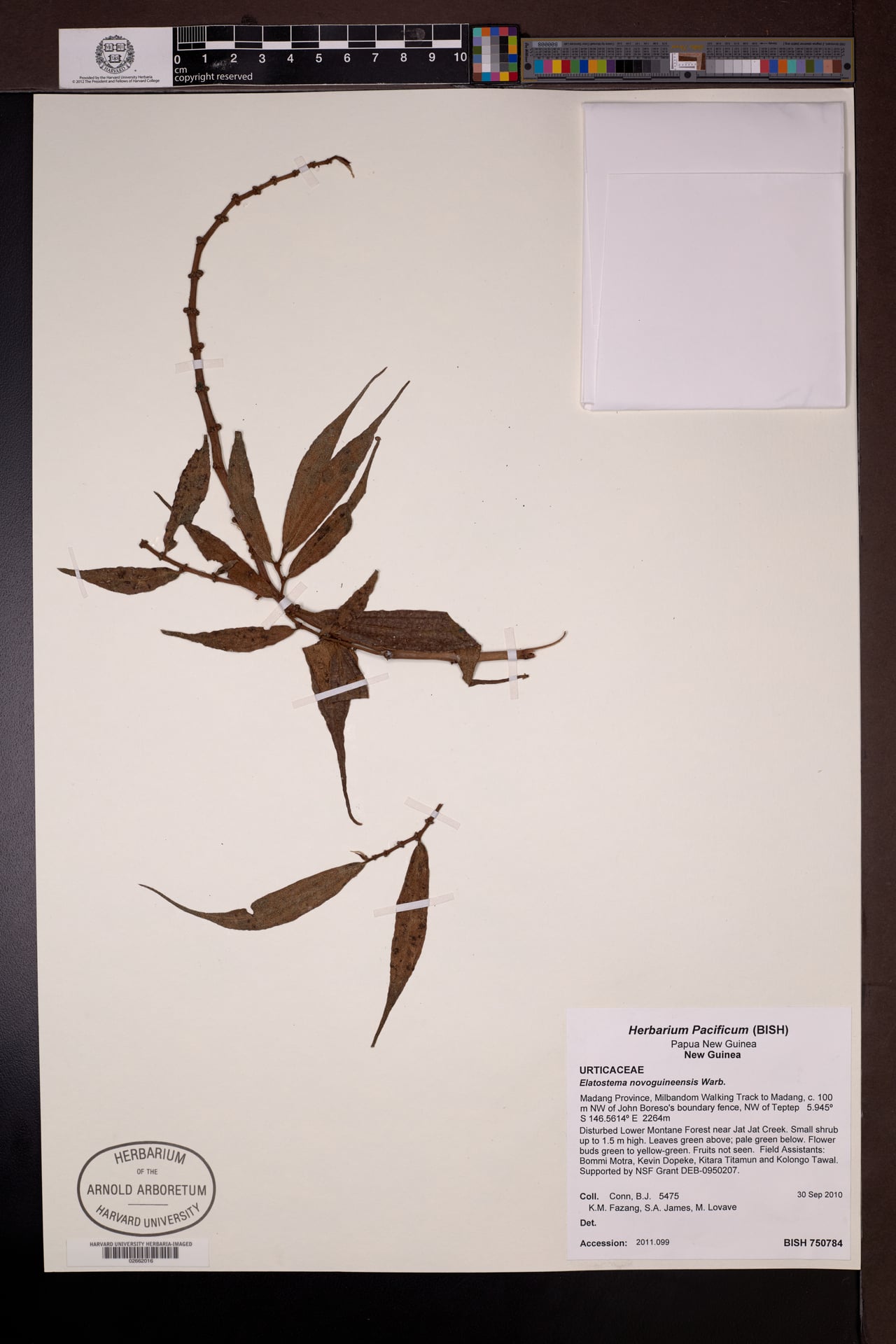
Gonostegia hirta
(Blume) Miquel
iNaturalist· cc-by-nc
(c) Hong, some rights reserved (CC BY-NC), uploaded by Hong
iNaturalist· cc-by-nc
(c) johnallcock, some rights reserved (CC BY-NC)
Summary
Gonostegia hirta is a perennial herb reaching 1 m tall with both male and female flowers on the same plant. It flowers from June to July with seeds ripening August to September. The plant grows in light sandy, medium loamy, or heavy clay soils with mildly acid to basic pH. It tolerates semi-shade or full sun and prefers consistently moist soil.
Description
A herb that keeps growing from year to year. It is a creeping shrub. It can grow 1 m tall. The leaves are more than 1 cm wide and about 3 cm long. They are opposite and thin. The leaves can be 2-12 cm long and 1-4 cm wide.
Edible Uses
None known
Traditional Uses
The young leaves are cooked and eaten as a vegetable. They are also used in soup. The ground root is used to prepare chapatti. They are also toasted or boiled.
Medicinal Uses
The plant is depurative and febrifuge. The roots, leaves, or whole plant can all be used. They are employed to treat boils and abscesses, abdominal cramps in females, and leucorrhoea, as well as bone dislocations and fractures.
Distribution
It is a subtropical plant. It grows in wet places at low to medium altitudes in Taiwan. In Northeastern India it grows between 1,900-2,200 m above sea level. In Sichuan and Yunnan.
Where It Grows
Asia, Australia, China, Himalayas, India, Japan, Nepal, Northeastern India, Philippines, SE Asia, Sikkim, Taiwan, Tibet,
Cultivation
The plant can be monoecious or dioecious.
Propagation
Seed.
Other Uses
None known
Notes
There are about 5 species of Gonostegia. Some put these in Pouzolzia.
Synonyms
Also Known As
Aluloy, Attinno, Bhuinchiple, Chiplay, Chiple, De gong, Hung-byuk, Pa qian a bo, Pinrapa, Ro-gyi-ba
References (12)
- Alegado, A. M. & De Guzman, R. B., 2014, Indigenous food crops of the Aetas tribe in the Philippines and their traditional methods of food preparation. in Promotion of Underutilized Indigenous Food Resources for Food Security and Nutrition in Asia and Pacific. FAO. Bangkok p 160
- Aryal, K. P., et al, 2018, Diversity and use of wild and non-cultivated edible plants in the Western Himalaya. Journal of Ethnobiology and Ethnomedicine (2018) 14:10
- Cheng, Z., et al, 2022, Ethnobotanical study on wild edible plants used by Dulong people in northwestern Yunnan, China. Journal of Ethnobiology and Ethnomedicine (2022) 18:3
- Ding, X., 2021, Collection calendar: the diversity and local knowledge of wild edible plants used by Chenthang Sherpa people to treat seasonal food shortages in Tibet, China. Journal of Ethnobiology and Ethnomedicine 17:40
- Flora of China @ efloras.org Volume 5
Show all 12 references Hide references
- Kuo, W. H. J., (Ed.) Taiwan's Ethnobotanical Database (1900-2000), http://tk.agron.ntu.edu.tw/ethnobot/DB1.htm
- Li, S., et al, 2020, Monpa, memory, and change: an ethnobotanical study of plant use in Mêdog County, South-east Tibet, China. Journal of Ethnobiology and Ethnomedicine. (2020) 16:5 p 23
- Luo, B., et al, 2019, Wild edible plants collected by Hani from terraced rice paddy agroecosystem in Honghe Prefecture, Yunnan, China. Journal of Ethnobiology and Ethnomedicine 15:56
- Salvi, J. et al, 2016, A review: Underutilized wild edible plants as a potential source of alternative nutrition. International Journal of Botany Studies. Volume 1; Issue 4; May 2016; Page No. 32-36
- Tsering, J., et al, 2017, Ethnobotanical appraisal on wild edible plants used by the Monpa community of Arunchal Pradesh. Indian Journal of Traditional Knowledge. Vol 16(4), October 2017, pp 626-637
- World Checklist of Useful Plant Species 2020. Royal Botanic Gardens, Kew
- Xu, You-Kai, et al, 2004, Wild Vegetable Resources and Market Survey in Xishuangbanna, Southwest China. Economic Botany. 58(4): 647-667. (As Memorialis hirta)