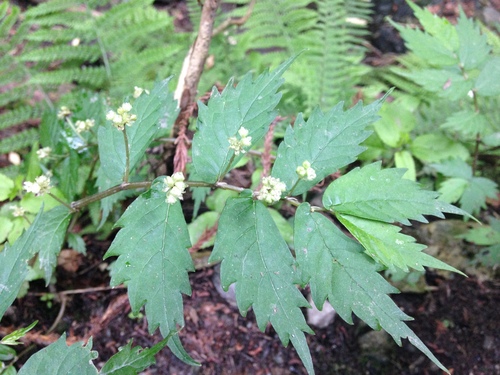
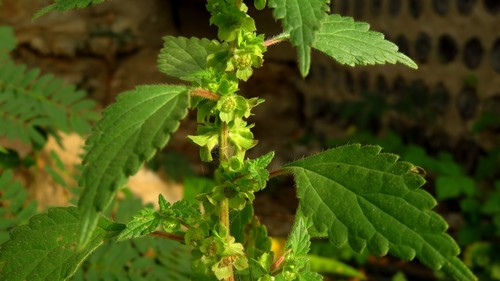
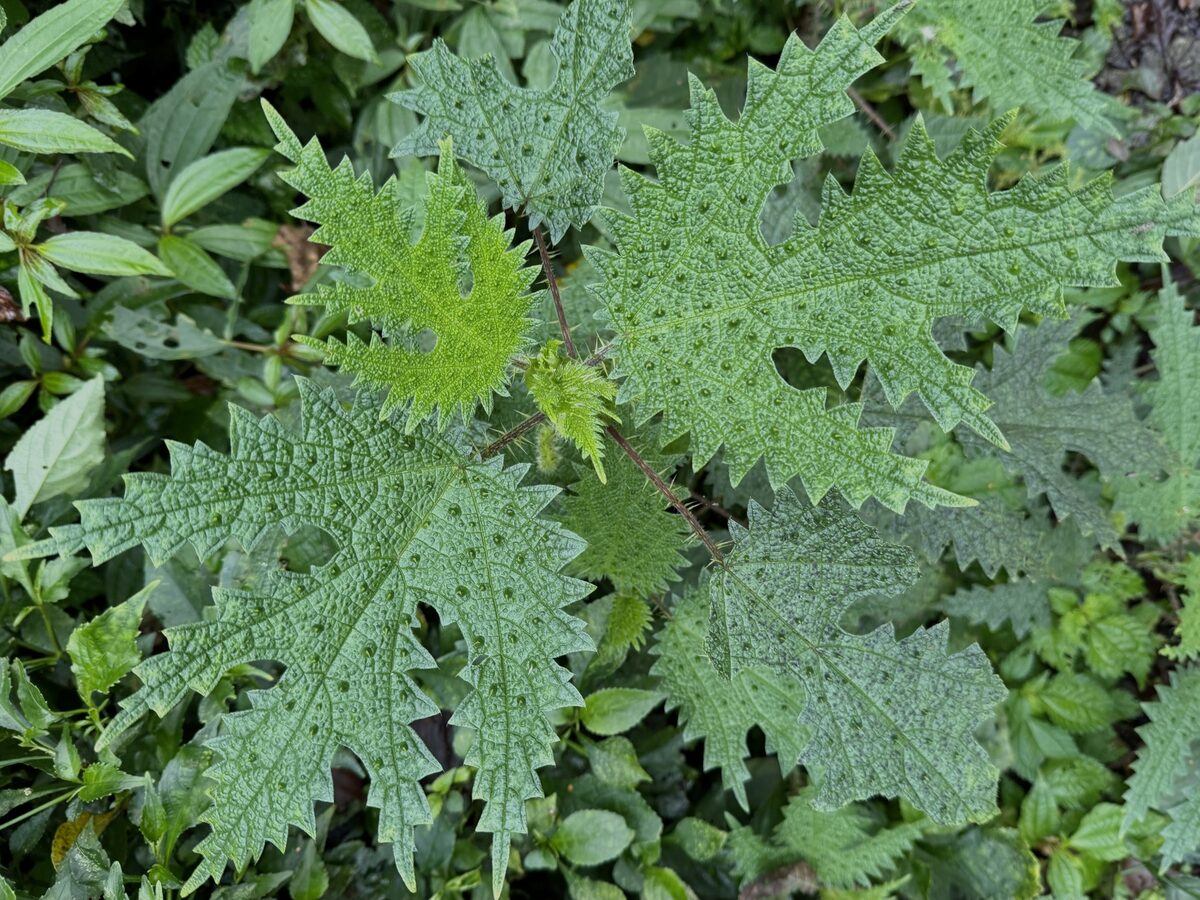
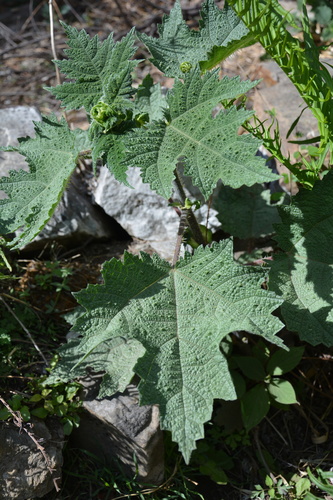
Girardinia bullosa
(Hochst. ex Steud.) Wedd.
iNaturalist· cc-by
(c) Elliot Greiner, some rights reserved (CC BY)
iNaturalist· cc0
no rights reserved
iNaturalist· cc0
no rights reserved
Description
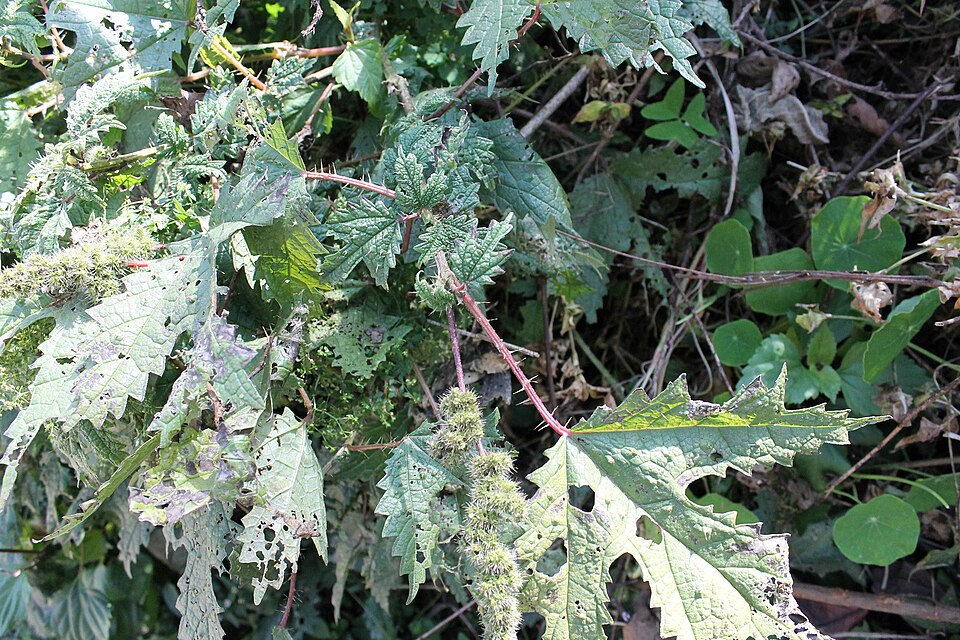
A tropical herb of the Urticaceae family that grows 2-3 m tall and is covered with stinging hairs.
This description is brief — help expand it
Edible Uses
The leaves are cooked and eaten as a vegetable.
Traditional Uses
The leaves are cooked and eaten as a vegetable.
This uses section is brief — help expand it
Known Hazards
The plant is densely covered with stinging hairs. It has the longest stinging hairs in the Urticaceae, but the sting seems less severe than that of some other genera, such as Laportea.
Distribution
It is a tropical plant.
Where It Grows
Africa, Burundi, Congo DR, East Africa, Ethiopia, Kenya, Rwanda, Sudan, Tanzania, Uganda,
Cultivation
The plant does not resprout after cutting. After the stems have been harvested in Burundi, the stinging hairs are removed and the entire bark is removed from the stem, after which the inner bark is separated in one piece and dried. Usually monoecious, the plant is occasionally dioecious, in which case both male and female forms will need to be grown if seed is required[
Other Uses
The bast fibre is made into string, sewing thread and textiles. In Ethiopia the bark is used for tying animals, making fences and making rope.
Other Information
It is now less commonly used.
Notes
There are 2 Girardinia species.
Synonyms
Also Known As
Dobii
References (3)
- Molla, A., Ethiopian Plant Names. http://www.ethiopic.com/aplants.htm
- Regassa, T., et al, 2014, Ethnobotany of Wild and Semi-Wild Edible Plants of Chelia District, West-Central Ethiopia. Science, Technology and Arts Research Journal. 3(4): 122-134
- World Checklist of Useful Plant Species 2020. Royal Botanic Gardens, Kew