Claytonia perfoliata
Donn. ex Willd.
Spring beauty, Cuban spinach, Petota, Miner's lettuce
iNaturalist· cc-by-nc
(c) Lauren Glevanik, some rights reserved (CC BY-NC), uploaded by Lauren Glevanik
iNaturalist· cc-by-sa
(c) Oscar Alejandro Morales Juárez, some rights reserved (CC BY-SA), uploaded by Oscar Alejandro Morales Juárez
iNaturalist· cc-by-nc
(c) marianneguarena, some rights reserved (CC BY-NC)
Summary
Source: WikipediaClaytonia perfoliata, commonly known as miner's lettuce or winter purslane, is a flowering plant in the family Montiaceae. It is an edible, fleshy, herbaceous, annual plant native to the western mountain and coastal regions of North America.
Description
A small herb. It grows each year from seed. It can grow 50 cm tall. It has a single stem and can be erect. The leaves are simple and in rings. They are broadly sword shaped. They can be up to 4 cm long. They have a long leaf stalk. The flowers are white or pink and have 5 parts. The flowers are in groups of 5-40.
Edible Uses
Leaves are edible raw or cooked and have a fairly bland, slightly mucilaginous character that works well in salads. Young leaves are the best choice; older leaves, particularly in summer or in hot, dry conditions, can turn bitter. Although individual leaves are small, they are produced in abundance and are easy to pick. Stalks and flowers can be eaten raw and make a pleasant addition to salads. The bulb is very small and labour-intensive to harvest; one report notes that boiled and peeled root tastes of chestnuts, though another report suggests the root system is fibrous, making this uncertain.
Traditional Uses
Young leaves, stems and flowers are edible raw. Older leaves are cooked. Roots are also edible cooked. Caution: It can at times have high levels of oxalates.
Medicinal Uses
The leaves act as a gentle laxative. The plant is rich in vitamin C and can be taken as an invigorating spring tonic and an effective diuretic. A poultice of mashed plant material has been applied to rheumatic joints.
Known Hazards
The common name of miner's lettuce refers to how the plant was used by miners during the California Gold Rush, who ate it to prevent scurvy. It is in season in April and May, and can be eaten as a leaf vegetable. The entire plant is edible, except the roots, and it provides vitamin C. Most commonly, it is eaten raw in salads, but it is not quite as delicate as cultivated lettuce. Sometimes, it is boiled like spinach, which it resembles in taste and chemical composition. Caution should be used because wild C. perfoliata can sometimes accumulate toxic amounts of sodium oxalate (as can happen in spinach). The plant is known as palsingat or, possibly, lahchumeek in Ivilyuat and it was eaten fresh or boiled as a green by the Ivilyuqaletem (Cahuilla) people of Southern California. It, along with Claytonia exigua, is available for gathering in the early spring.
Distribution
It is a temperate plant. It is a temperate plant. It suits cool, damp conditions. It is best in a sunny position and dry soil. It suits a pH between 6 and 7. It needs a frost free period of 6 weeks. In Argentina it grows between 500-1,000 m above sea level. It can tolerate cold weather. It suits hardiness zones 6-9.
Where It Grows
Alaska, Argentina, Australia, Britain, Canada, Central America, Central Europe, Cuba, Europe, Falklands, France, Ireland, Luxembourg, Mexico, Netherlands, New Zealand, North America, Siberia, Slovenia, South America, Switzerland, USA, West Indies,
Cultivation
Prefers a moist peaty soil. It is often found growing wild on sandy soils. An easily grown plant, it can succeed on very poor and dry soils. Plants grow well the dappled shade of trees, producing a better quality crop in such a situation. Although only an annual, it usually self-sows when well sited. A very hardy plant, tolerating temperatures down to at least -15°c. Miner's lettuce is occasionally cultivated as a salad plant. It's main value is as a reliable producer of leaves in the winter, though it can provide leaves all year round. It can be grown as a cut and come again crop. A self-seeding annual. A clumping mat former. Forming a dense prostrate carpet spreading indefinitely.
Propagation
Sow seed in spring or autumn in situ. Germination is usually rapid.
Other Uses
Although an annual, this species makes an excellent ground cover in cool, acid soil under trees, where it typically self-sows freely and grows year-round.
Production
It is fast growing and short lived.
Other Information
It is a commercially cultivated vegetable.
Notes
Also put in the family Portulacaceae.
Synonyms
References (36)
- Beckstrom-Sternberg, Stephen M., and James A. Duke. "The Foodplant Database." http://probe.nalusda.gov:8300/cgi-bin/browse/foodplantdb.(ACEDB version 4.0 - data version July 1994) (As Claytonia perfoliata)
- Bocek, B. R., 1984, Ethnobotany of Costanoan Indians, California, Based on Collections by John P. Harrington. Economic Botany 38(2): 240-255
- Bremness, L., 1994, Herbs. Collins Eyewitness Handbooks. Harper Collins. p 257 (As Montia perfoliata)
- Cribb, A.B. & J.W., 1976, Wild Food in Australia, Fontana. p 136 (As Montia perfoliata)
- Cundall, P., (ed.), 2004, Gardening Australia: flora: the gardener's bible. ABC Books. p 385 (As Montia perfoliata)
Show all 36 references Hide references
- Diaz-Betancourt, M., et al, 1999, Weeds as a future source for human consumption. Rev. Biol. Trop. 47(3):329-338
- Elias, T.S. & Dykeman P.A., 1990, Edible Wild Plants. A North American Field guide. Sterling, New York p 95 (As Montia perfoliata)
- Erythea 1:38. 1893 (As Montia perfoliata)
- Esperanca, M. J., 1988. Surviving in the wild. A glance at the wild plants and their uses. Vol. 2. p 88 (As Montia perfoliata)
- Facciola, S., 1998, Cornucopia 2: a Source Book of Edible Plants. Kampong Publications, p 187 (As Montia perfoliata)
- Hedrick, U.P., 1919, (Ed.), Sturtevant's edible plants of the world. p 203 (As Claytonia perfoliata)
- Heywood, V.H., Brummitt, R.K., Culham, A., and Seberg, O., 2007, Flowering Plant Families of the World. Royal Botanical Gardens, Kew. p 265 (As Claytonia perfoliata)
- http://www.botanic-gardens-ljubljana.com/en/plants (As Montia perfoliata)
- https://www.fireflyforest.com/flowers/category/edible-plants/ Edible Plants – Southeastern Arizona Wildflowers and Plants
- http://en.hortipedia.com
- Irving, M., 2009, The Forager Handbook, A Guide to the Edible Plants of Britain. Ebury Press p 258
- Jackes, D. A., Edible Forest Gardens (As Montia perfoliata)
- Kays, S. J., and Dias, J. C. S., 1995, Common Names of Commercially Cultivated Vegetables of the World in 15 languages. Economic Botany, Vol. 49, No. 2, pp. 115-152 (As Montia perfoliata)
- Kermath, B. M., et al, 2014, Food Plants in the Americas: A survey of the domesticated, cultivated and wild plants used for Human food in North, Central and South America and the Caribbean. On line draft. p 240
- Kiple, K.F. & Ornelas, K.C., (eds), 2000, The Cambridge World History of Food. CUP p 1840 (As Montia perfoliata)
- Lazarides, M. & Hince, B., 1993, Handbook of Economic Plants of Australia, CSIRO. p 61 (As Claytonia perfoliata)
- Lim, T. K., 2015, Edible Medicinal and Non Medicinal Plants. Volume 9, Modified Stems, Roots, Bulbs. Springer p 56
- Low, T., 1991, Wild Herbs of Australia and New Zealand. Angus & Robertson. p 88 (As Montia perfoliata)
- Mabey, R., 1973, Food for Free. A Guide to the edible wild plants of Britain, Collins. p 66, 103 (As Claytonia perfoliata)
- Martin, F.W. & Ruberte, R.M., 1979, Edible Leaves of the Tropics. Antillian College Press, Mayaguez, Puerto Rico. p 215 (As Claytonia perfoliata)
- Plants for a Future database, The Field, Penpol, Lostwithiel, Cornwall, PL22 0NG, UK. http://www.scs.leeds.ac.uk/pfaf/ (As Claytonia perfoliata)
- Saunders, C.F., 1948, Edible and Useful Wild Plants. Dover. New York. p 129 (As Montia perfoliata)
- Schneider, E., 2001, Vegetables from Amaranth to Zucchini: The essential reference. HarperCollins. p 386 (As Montia perfoliata)
- Self, M., 199, Phoenix Seeds catalogue. p 6 (As Montia perfoliata)
- Turner, N., et al, 2011, "Up on the Mountain": Ethnobotanical Important of Montane Sites in Pacific Coastal North America. Journal of Ethnobiology 31(1): 4-43
- Upson, R., & Lewis R., 2014, Updated Vascular Plant Checklist and Atlas for the Falkland Islands. Falklands Conservation and Kew.
- USDA, ARS, National Genetic Resources Program. Germplasm Resources Information Network - (GRIN). [Online Database] National Germplasm Resources Laboratory, Beltsville, Maryland. Available: www.ars-grin.gov/cgi-bin/npgs/html/econ.pl (10 April 2000) (As Montia perfoliata)
- van Wyk, B., 2005, Food Plants of the World. An illustrated guide. Timber press. p 303
- Vorstenbosch, T., et al, 2017, Famine food of vegetal origin consumed in the Netherlands during World War II. Journal of Ethnobiology and Ethnomedicine (2017) 13:63
- World Checklist of Useful Plant Species 2020. Royal Botanic Gardens, Kew
- www.wildediblefood.com
More from Montiaceae
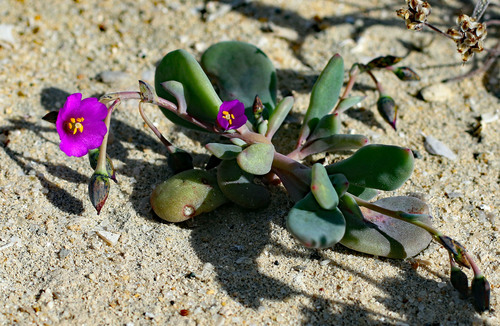
Cistanthe maritima
Seaside cistanthe
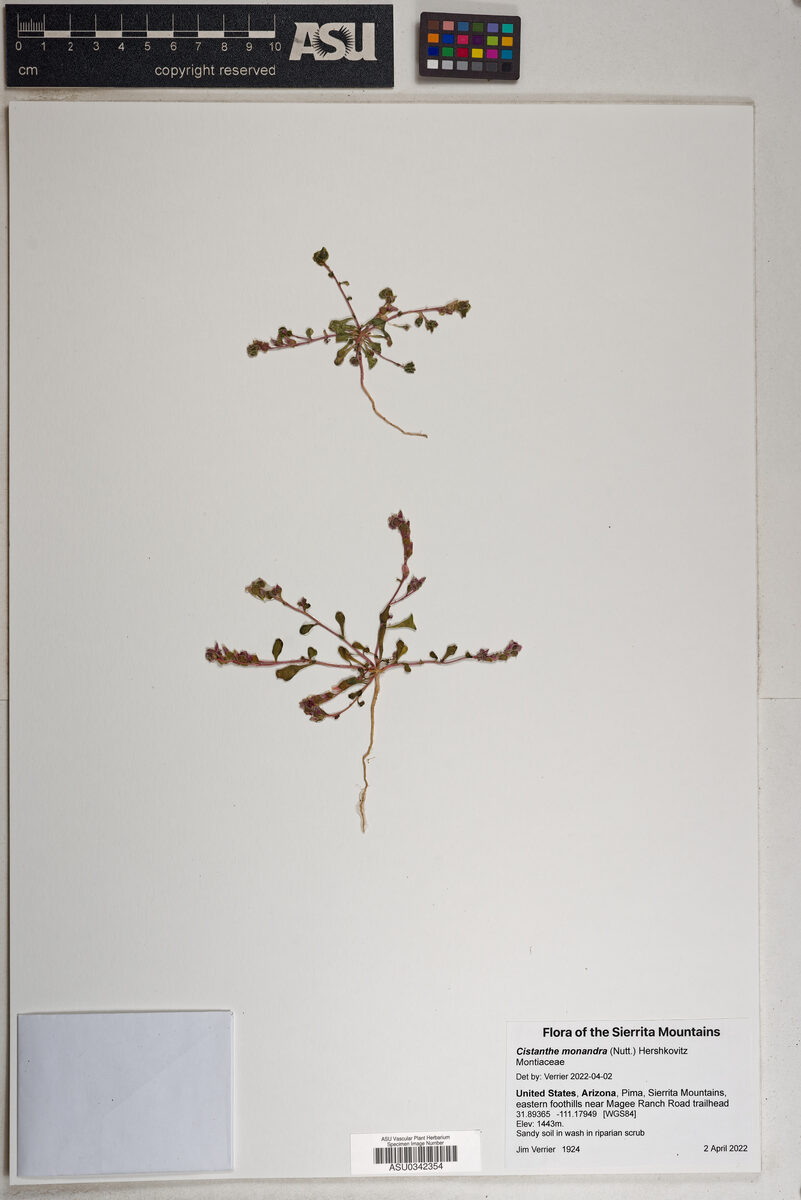
Cistanthe monandra
Common Pussypaws
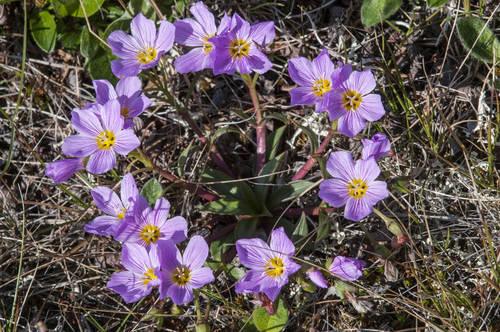
Claytonia acutifolia
Bering Sea spring beauty, Siberian narrow-leafed spring beauty
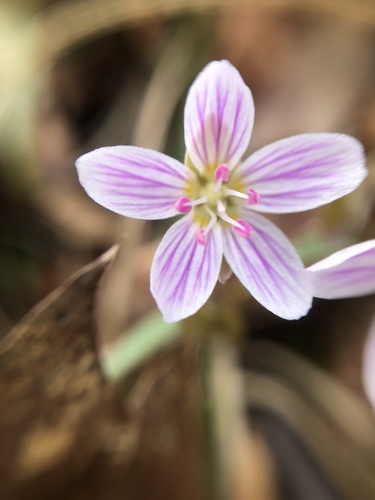
Claytonia caroliniana
Carolina spring beauty, Broad-leaved spring beauty
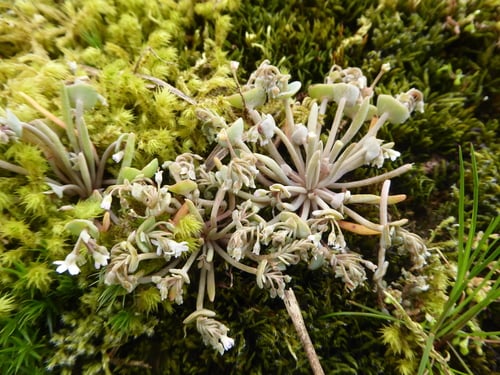
Claytonia exigua
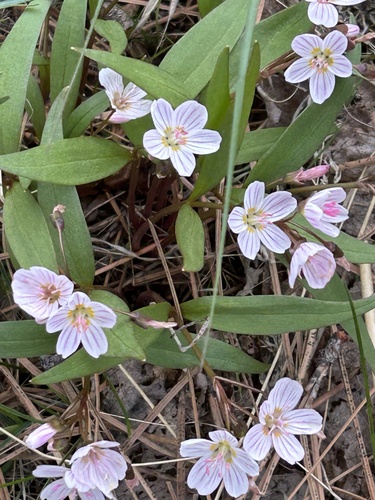
Claytonia lanceolata
Western spring beauty, Lanceleaf spring beauty