Claytonia megarhiza
(Gray.) Parry.
Alpine spring beauty, Thick-rooted spring beauty
iNaturalist· cc-by-nc
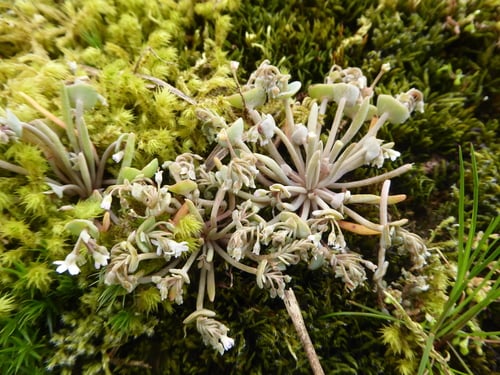
(c) Steve Wagner, some rights reserved (CC BY-NC), uploaded by Steve Wagner
iNaturalist· cc-by
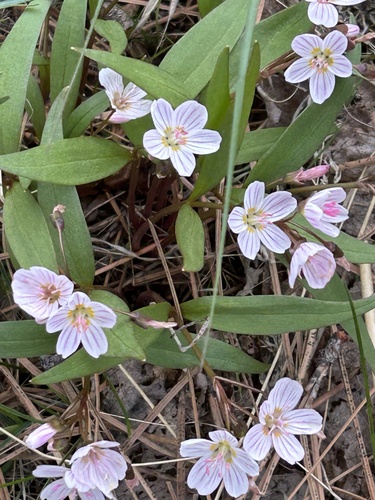
(c) Matt Berger, some rights reserved (CC BY), uploaded by Matt Berger
iNaturalist· cc-by-sa
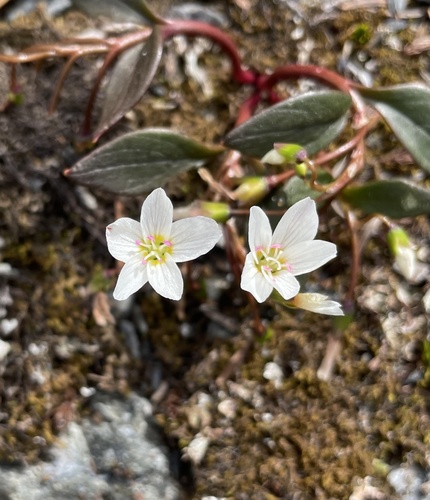
(c) Walter Siegmund, some rights reserved (CC BY-SA)
Summary
Source: WikipediaAn evergreen perennial reaching 30cm tall and 10cm wide, hardy to UK zone 3. In leaf year-round and flowers April through July, with seeds ripening in May. Requires full sun and well-drained, mildly acid soil. Prefers moist conditions. The plant develops a long, fleshy taproot and occupies alpine and high-elevation habitats.
Description
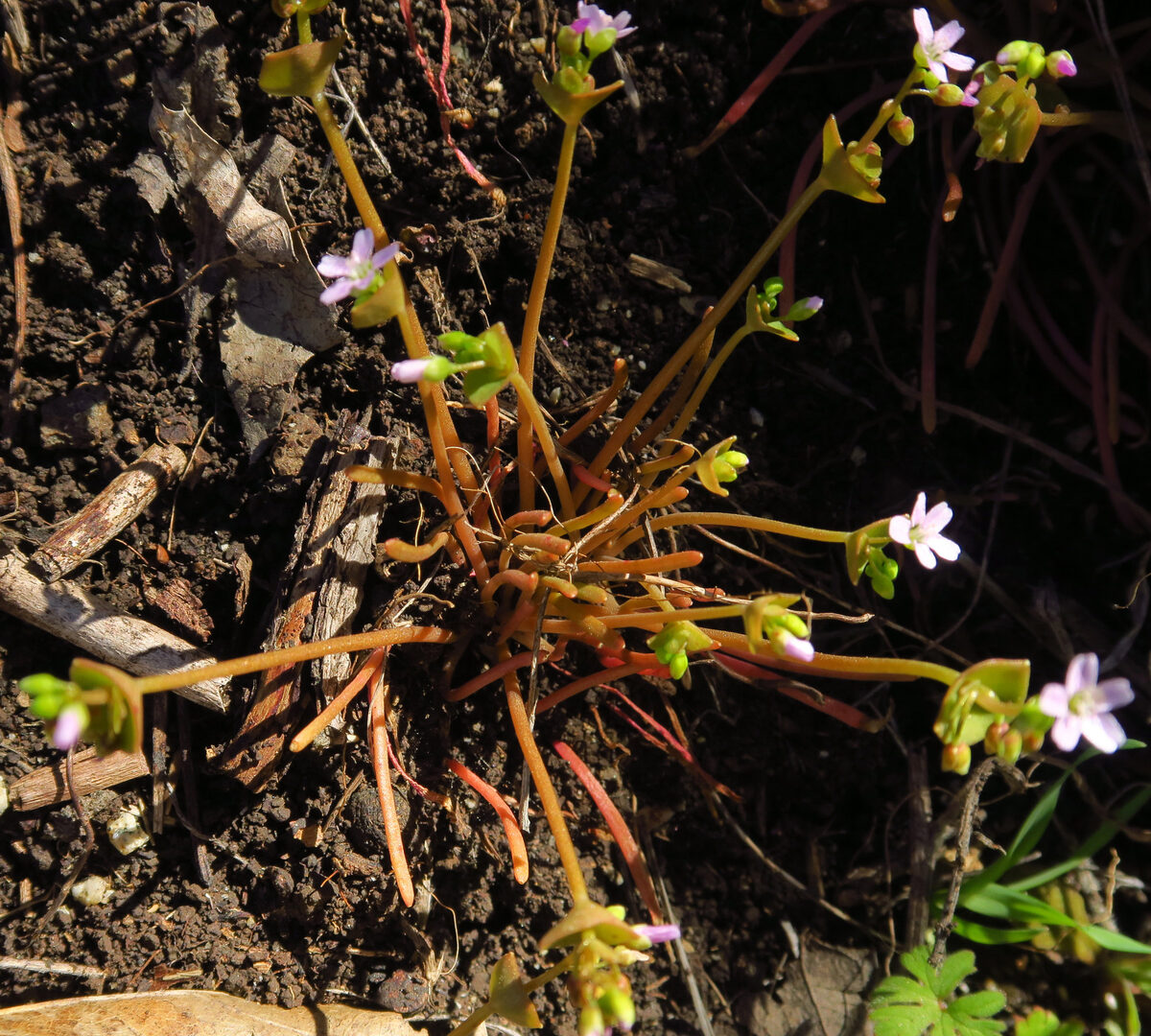
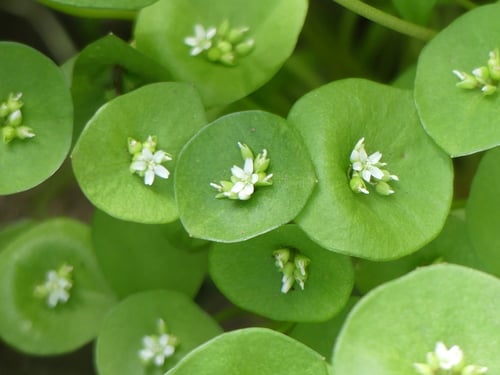
A herb. It has a thick rootstock. The stems are 10 cm tall. A small spray of leaves and flowers comes from the top of the rootstock. The leaves are spoon shaped. The flowers are 12-20 mm across.
Edible Uses
The rosettes of the leaves and the roots can be eaten as an emergency food.
Traditional Uses
The long fleshy taproot is peeled then boiled or baked then eaten. The young leaves and flowering tops are eaten raw in salads or cooked as a potherb.
Medicinal Uses
None known
Distribution
It is a temperate plant. It grows high in the Rocky Mountains in western North America. It grows on talus and scree slopes. It suits hardiness zones 5-7.
Where It Grows
Canada, North America, USA,
Cultivation
It can be grown from seeds.
Propagation
Propagate from seed with cold stratification sown into gritty, well-drained media, though establishment is slow in harsh conditions. Vegetative division is impractical due to the deep taproot structure.
Other Uses
Provides nectar and pollen during the short alpine growing season for high-elevation pollinators. The deep root system stabilizes sparse alpine soils and contributes to the long-lived vegetation matrix in fragile alpine systems.
Notes
It is a rare plant. They have also been put in the family Portulacaceae.
References (12)
- Beckstrom-Sternberg, Stephen M., and James A. Duke. "The Foodplant Database." http://probe.nalusda.gov:8300/cgi-bin/browse/foodplantdb.(ACEDB version 4.0 - data version July 1994)
- Brickell, C. (Ed.), 1999, The Royal Horticultural Society A-Z Encyclopedia of Garden Plants. Convent Garden Books. p 273
- Elias, T.S. & Dykeman P.A., 1990, Edible Wild Plants. A North American Field guide. Sterling, New York p 92
- Esperanca, M. J., 1988. Surviving in the wild. A glance at the wild plants and their uses. Vol. 1. p 38
- Facciola, S., 1998, Cornucopia 2: a Source Book of Edible Plants. Kampong Publications, p 187
Show all 12 references Hide references
- Hedrick, U.P., 1919, (Ed.), Sturtevant's edible plants of the world. p 203
- Jackes, D. A., Edible Forest Gardens
- Lim, T. K., 2015, Edible Medicinal and Non Medicinal Plants. Volume 9, Modified Stems, Roots, Bulbs. Springer p 24
- MacKinnon, A., et al, 2009, Edible & Medicinal Plants of Canada. Lone Pine. p 205
- Plants for a Future database, The Field, Penpol, Lostwithiel, Cornwall, PL22 0NG, UK. http://www.scs.leeds.ac.uk/pfaf/
- Porsild, A.E., 1974, Rocky Mountain Wild Flowers. Natural History Series No. 2 National Museums of Canada. p 154
- Tozer, F., 2007, The Uses of Wild Plants. Green Man Publishing. p 70