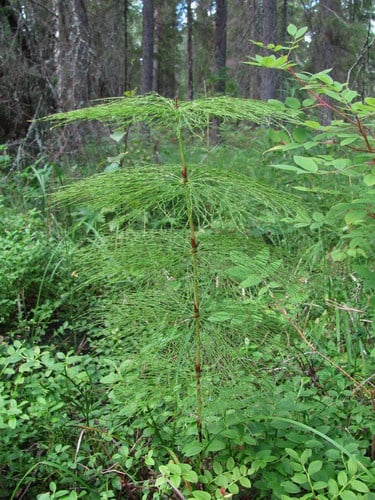
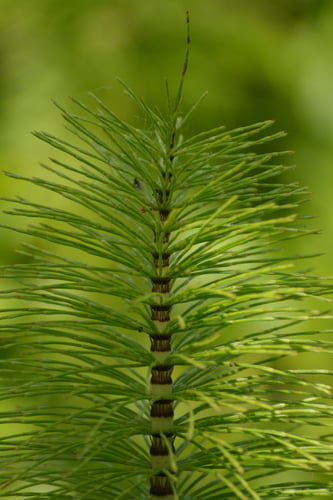
Equisetum telmateia
Ehrh.
Giant horsetail
iNaturalist· cc-by-nc
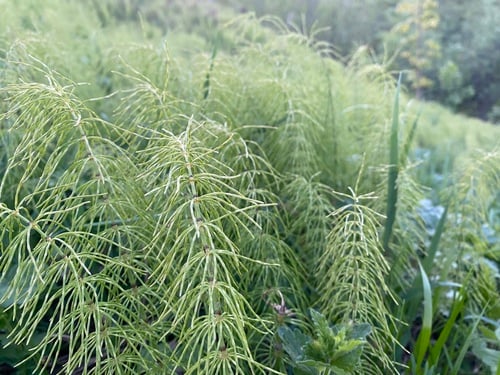
(c) Walter Fertig, some rights reserved (CC BY-NC)
iNaturalist· cc-by-nc
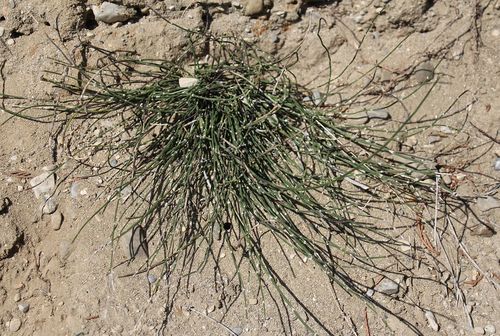
(c) Anton Gjeldum, some rights reserved (CC BY-NC), uploaded by Anton Gjeldum
iNaturalist· cc-by
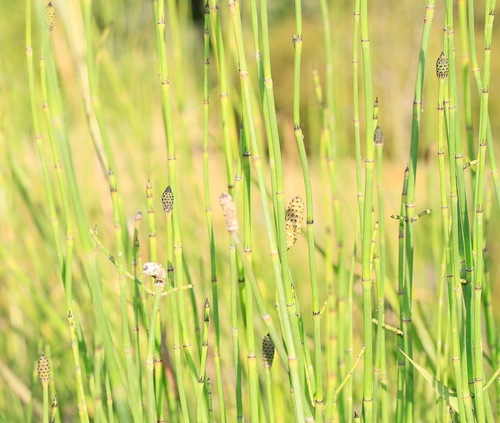
(c) Harry Podschwit, some rights reserved (CC BY)
Summary
Source: WikipediaEquisetum telmateia, the great horsetail, is a species of Equisetum (horsetail) native to Europe, western Asia and northwest Africa. It was formerly widely treated in a broader sense including a subspecies (subsp. braunii) in western North America, but this is now treated as a separate species, Equisetum braunii.
Description
A rush like plant. It keeps growing from year to year. It grows 0.5-1.8 m high and spreads 30-60 cm wide. The stems are erect and have fine grooves. They are white or pale green. They are 1.8 m high and have ridged nodes. There are several rough feathery branches.
Edible Uses
The fertile shoots (strobili) that emerge in spring can be eaten raw or cooked — the tough outer fibres are peeled away before eating, or chewed and discarded. The vegetative shoots produced from late spring onward were occasionally eaten by Native North American peoples, but only when very young and tightly compacted, after being stripped of leaves, sheaths, and branches. The root can also be cooked.
Traditional Uses
The sprouts are peeled and eaten raw. They are also baked in pits and eaten.
This uses section is brief — help expand it
Medicinal Uses
The plant is astringent and diuretic. A decoction has been used to treat 'stoppage of urine.' A poultice made from the rough leaves and stems is applied externally to cuts and sores.
Known Hazards
Large quantities of the plant can be toxic. This is because it contains the enzyme thiaminase, a substance that can rob the body of the vitamin B complex. In small quantities this enzyme will do no harm to people eating an adequate diet that is rich in vitamin B, though large quantities can cause severe health problems. The enzyme is destroyed by heat or thorough drying, so cooking the plant will remove the thiaminase. The plant also contains equisetic acid - see the notes on medicinal uses for more information.
Distribution
It is a temperate or Mediterranean climate plant. It suits hardiness zones 5-10.
Where It Grows
Africa, Asia, Australia, Canada, Europe, Italy, Luxembourg, Mediterranean, North Africa, North America, Sicily, USA,
Cultivation
Prefers a moist soil with a pH between 6.5 and 7.5. Plants are hardy to about -30°c. Plants have a deep and penetrating root system and can be invasive. If grown in the garden they are best kept in bounds by planting them in a large container which can be sunk into the ground.
Propagation
Spores should ideally be collected as soon as they ripen in spring and surface-sown immediately on sterile compost. Keep moist and pot up seedlings as soon as they are large enough to handle — this method is very difficult. Division is also an option; well-sited plants spread freely and generally require no assistance.
Other Uses
The stems are very rich in silica and are used for scouring and polishing metal and as a fine sandpaper, first bleached by alternately wetting and drying them in the sun. They also serve as a polish for wooden floors and furniture. An infusion of the stems acts as an effective fungicide against mildew, mint rust, and blackspot on roses, and makes a good liquid plant feed. Used as a hair rinse, it can eliminate fleas, lice, and mites. The black roots have been used for imbrication on coiled baskets. The plant is also a dynamic accumulator.
Synonyms
References (6)
- Cundall, P., (ed.), 2004, Gardening Australia: flora: the gardener's bible. ABC Books. p 544
- Etkin, N.L. (Ed.), 1994, Eating on the Wild Side, Univ. of Arizona. p 74
- Hannover Mag. 18:287. 1783
- Kuhnlein, H. V. and Turner, N. J., 1991, Traditional Plant Foods of Canadian Indigenous Peoples. Food and Nutrition in History and Anthropology Volume 8. Gordon and Breach. p 31
- Moerman, D. F., 2010, Native American Ethnobotany. Timber Press. p 216
Show all 6 references Hide references
- Turner, N., 1995, Food Plants of Coastal First Peoples. Royal BC Museum Handbook p 23