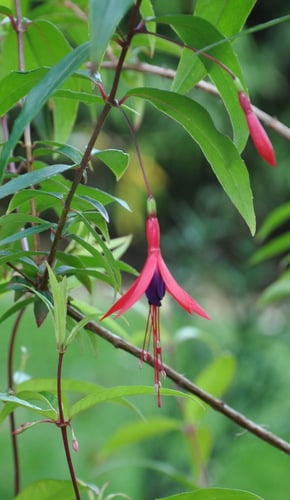
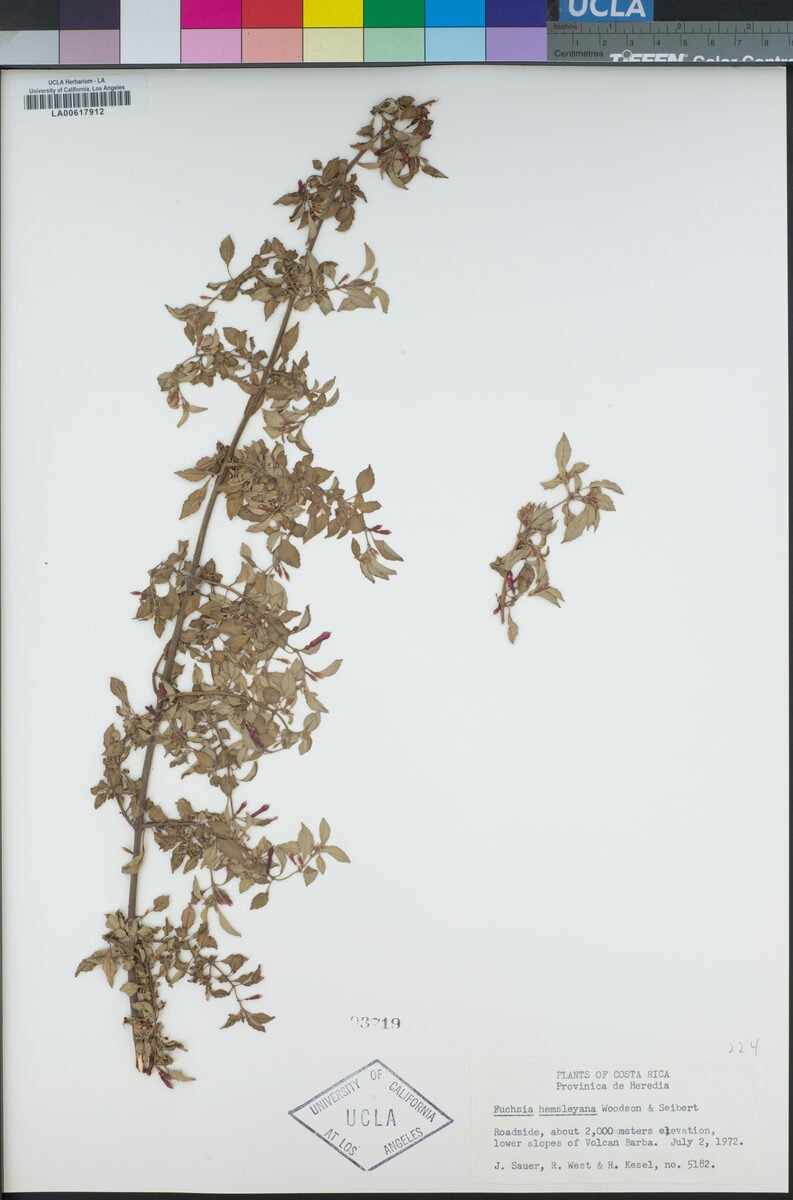
Epilobium latifolium
L.
Dwarf fireweed, Dwarf fireweed
iNaturalist· cc-by-nc
(c) resterationarne, some rights reserved (CC BY-NC)
iNaturalist· cc-by-nc
(c) resterationarne, some rights reserved (CC BY-NC)
iNaturalist· cc-by-nc
(c) resterationarne, some rights reserved (CC BY-NC)
Summary
Source: WikipediaA compact perennial growing 0.4 m tall and wide. Hardy to UK zone 5 and not frost tender. Flowers in July; seeds ripen in August. Hermaphroditic and bee-pollinated. Grows in light sandy, medium loamy, and heavy clay soils with good drainage; tolerates mildly acid, neutral, and basic soils. Adapts to semi-shade or full sun and prefers moist conditions.
Description
A small herb. It grows to 40 cm tall. The leaves are broad and dark green. They are 25-50 mm long. They often have a purplish tinge when grown in the open. The flowers are red-purple and large. They are 25-50 mm wide. Many flowers occur together in a short leafy spike. The fruit is a long narrow capsule. It contains many seeds. Each seed has a tuft of hairs.
Edible Uses
Young shoots are cooked and used like asparagus, though they are of very poor quality. Young leaves can be eaten raw but become bitter with age; they are a good source of vitamins A and C. Flower stalks are eaten raw or cooked when the flowers are still in bud. Dried leaves are used as a tea substitute. The core of mature stems is eaten raw — it is slightly sweet, tender, and pleasant, though fiddly to extract.
Traditional Uses
The flowers can be eaten raw in salads. The very young leaves are cooked and eaten. They are often eaten with meat. Leaves are used as a tea substitute.
Medicinal Uses
In Tibetan medicine the entire plant is used and is said to have a bitter taste and a cooling potency. It is considered analgesic, antidote, anti-inflammatory, antipruritic, antirheumatic, and febrifuge, and is used to treat fevers, inflammations, and itching pimples.
Distribution
It is a cold temperate plant. It grows in well watered sandy or gravelly floodplain. It grows in arctic and alpine regions. In Pakistan it grows between 2,700-4,850 m altitude. It suits hardiness zones 5-9.
Where It Grows
Alaska, Arctic, Canada, Europe, Greenland, Iceland, North America, Pakistan, Russia, Siberia, Tibet, USA,
Cultivation
Prefers a well-drained but moisture retentive soil in a sunny position. Succeeds in most soils. The roots are somewhat spreading and the plant can become invasive.
Propagation
Sow seed in early spring in situ, or as soon as it is ripe. Divide in spring or autumn — larger clumps can be replanted directly into permanent positions, though smaller clumps are best potted up and grown on in a cold frame until rooting well, then planted out in spring.
Other Uses
Attractive flowers.
Notes
There are about 165 Epilobium species. They are mostly temperate.
Synonyms
Also Known As
Anukak, Broad-leaved willow-herb, Mountain fireweed, Pahmeyuktuk, River beauty, Wiawiagte, Yeyegtyt
References (19)
- Ainana, L. & Zagrebin, I., 2014, Edible Plants Used by the Siberian Yupik Eskimos of Southeastern Chukotka Peninsula, Russia, (English translation). p 43 (As Chamerion latifolium)
- Brickell, C. (Ed.), 1999, The Royal Horticultural Society A-Z Encyclopedia of Garden Plants. Convent Garden Books. p 400
- Cormack, R. G. H., 1967, Wild Flowers of Alberta. Commercial Printers Edmonton, Canada. p 214
- Facciola, S., 1998, Cornucopia 2: a Source Book of Edible Plants. Kampong Publications, p 163 (As Chamaenerion latifolium)
- Flora of Pakistan. www.eFloras.org
Show all 19 references Hide references
- Hedrick, U.P., 1919, (Ed.), Sturtevant's edible plants of the world. p 291
- Heller, C. A., 1962, Wild Edible and Poisonous Plants of Alaska. Univ. of Alaska Extension Service. p 15
- Jackes, D. A., Edible Forest Gardens
- Jernigan, K. A., et al, 2017, Naukan ethnobotany in post-Soviet times: lost edibles and new medicinals. Journal of Ethnobiology and Ethnomedicine (2017) 13:61
- Jones, A., 2010, Plants that we eat. University of Alaska Press. p 6
- MacKinnon, A., et al, 2009, Edible & Medicinal Plants of Canada. Lone Pine. p 232
- Moerman, D. F., 2010, Native American Ethnobotany. Timber Press. p 213
- Mullory, C. & Aitken, S., 2012, Common Plants of Nunavut. Inhabit Media p 138 (As Chamerion latifolium)
- Plants for a Future database, The Field, Penpol, Lostwithiel, Cornwall, PL22 0NG, UK. http://www.scs.leeds.ac.uk/pfaf/
- Porsild, A.E., 1953, Edible Plants of the Arctic, Arctic 6:15-34, page 24
- Porsild, A.E., 1974, Rocky Mountain Wild Flowers. Natural History Series No. 2 National Museums of Canada. p 286
- Scotter, G. W., & Flygare, H., 1993, Wildflowers of the Canadian Rockies. Hurtig. p 124
- Sp. pl. 1:347. 1753
- Svanberg, I., et al, 2012, Edible wild plant use in the Faroe Islands and Iceland. Acta Societatis Botanicorum Poloniae 81(4): 233-238 (As Chamerion latifolium)