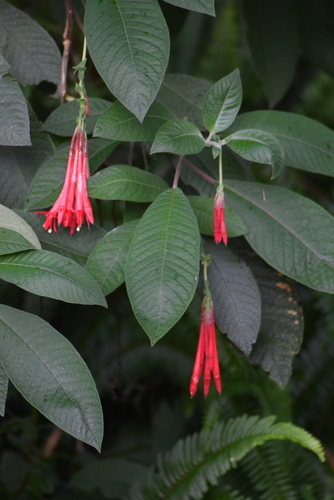
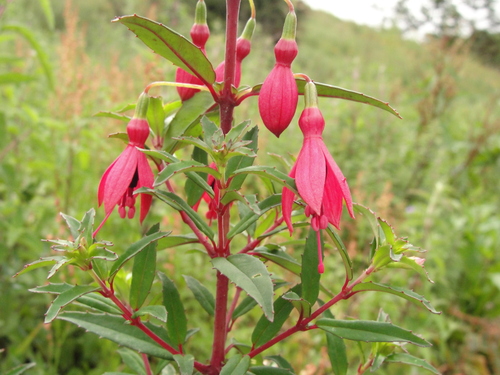
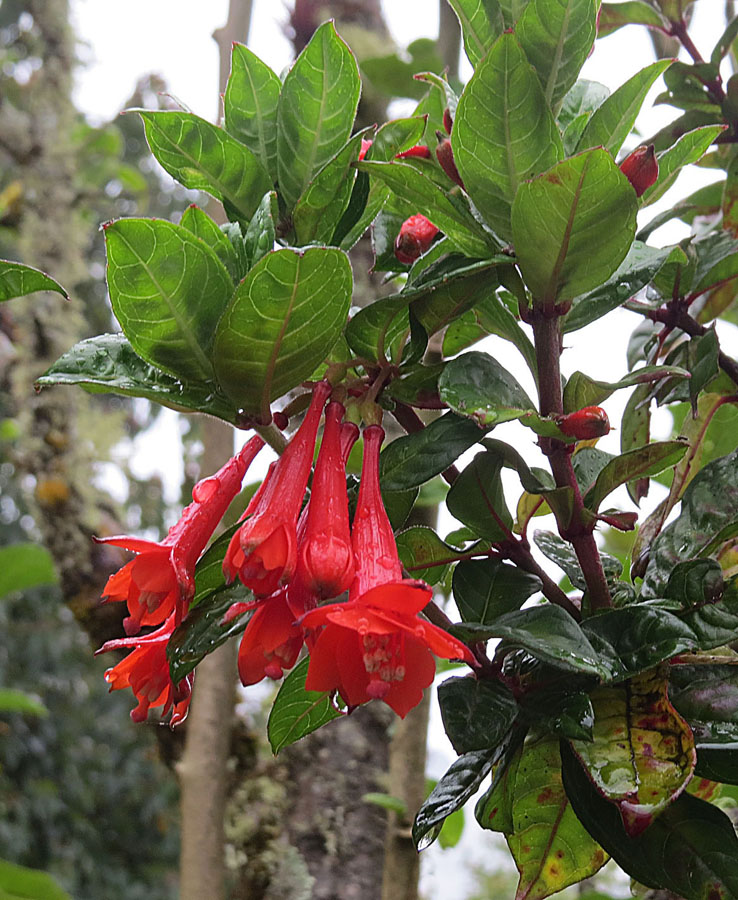
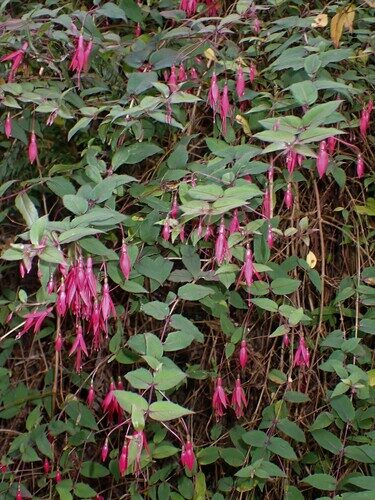
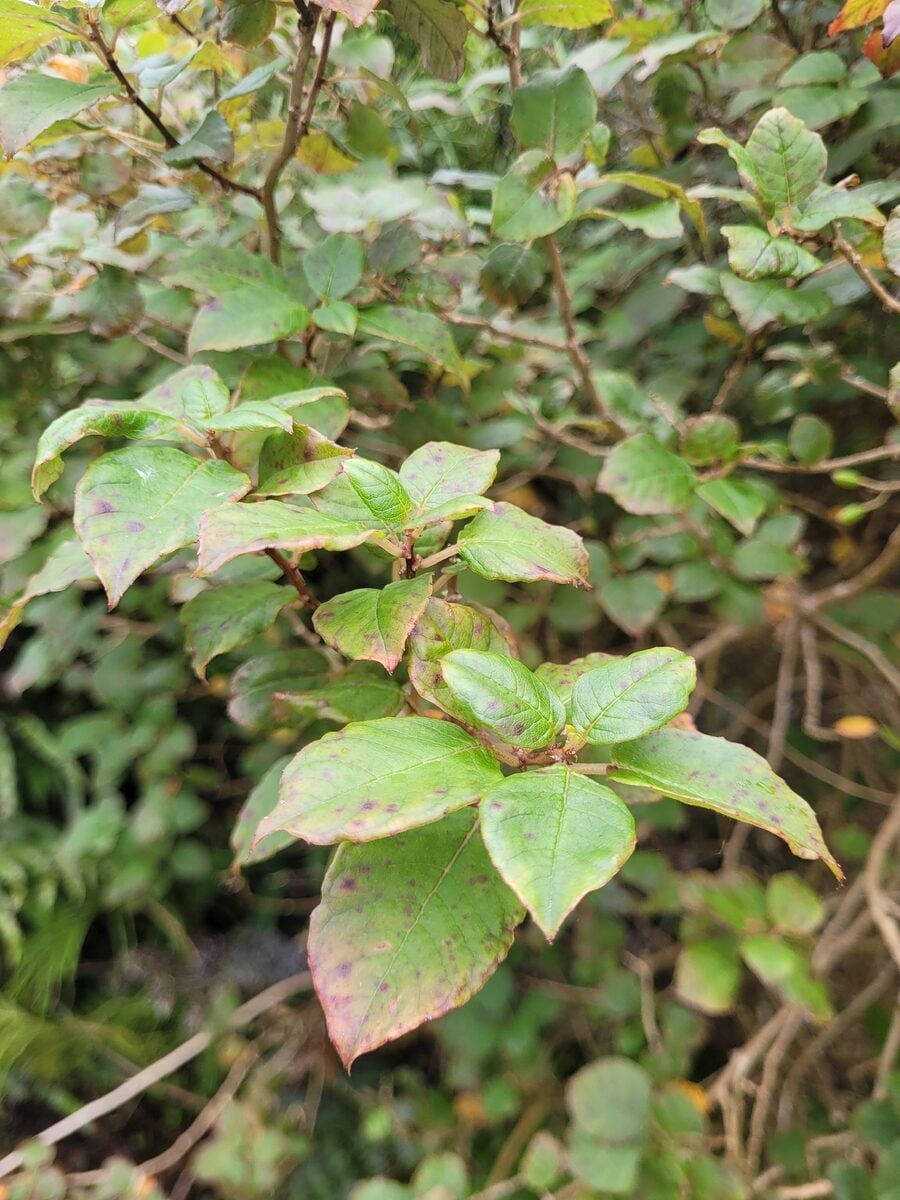
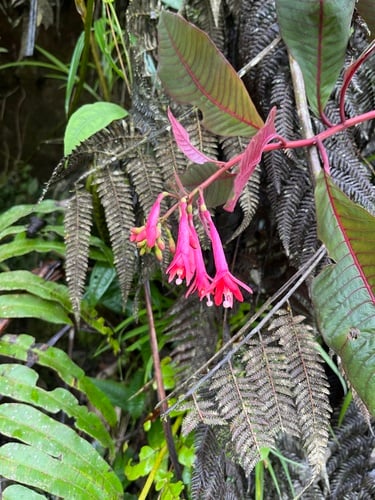
Fuchsia alpestris
Gardner
iNaturalist· cc-by-nc
(c) Luiz M. R. Gadelha Jr., some rights reserved (CC BY-NC), uploaded by Luiz M. R. Gadelha Jr.
wikimedia· cc-by-sa
Wikimedia Commons - Michael Wolf (Webseite)
gbif· cc-by-nc
Field Museum of Natural History - Botany Department
Summary
A deciduous shrub growing 2 m tall. Hardy to UK zone 10 and frost tender. Hermaphroditic. Tolerates light sandy, medium loamy, and heavy clay soils with mildly acid to basic pH. Grows in semi-shade or full sun and prefers moist soil conditions.
Description
A shrub. It grows 1-5 m tall. It loses its leaves during the year. The fruit is a juicy berry with small seeds. They are oblong and purple and 14-16 mm long by 8-10 mm wide.
Edible Uses
Fruit - raw or make into preserves etc. A sweet flavour, but with some aftertaste. A juicy berry with small seeds that can be swallowed. The purple, oblong fruit is 14 - 16mm long and 8 - 10mm wide.
Traditional Uses
The fruit are eaten raw and also used for preserves.
This uses section is brief — help expand it
Medicinal Uses
None known
Distribution
It is a tropical plant. It grows in low forest near granite outcrops. It grows between 1,400-1,600 m above sea level.
Where It Grows
Brazil, South America,
Cultivation
Succeeds in any fertile well-drained circum-neutral soil, preferring one that is rich in humus. Grows well in heavy clay soils. Prefers cool moist conditions and some shade. Succeeds in a good loam if leafmold and sand are added. The young growth in spring, even on mature plants, is frost-tender and so it is best to grow the plants in a position sheltered from the early morning sun. This is a seedling from an unlabelled hardy fuchsia cultivar that had good quality fruit (this does not relate to the named cultivars included here). Plants seem to be immune to the predations of rabbits.
Propagation
Seed is best sown as soon as ripe, though spring sowing is also possible. Surface sow in pots in a warm greenhouse, keeping the compost consistently moist. Germination should occur within six weeks. Prick out seedlings into individual pots once large enough to handle and grow on in the greenhouse for at least the first winter. Plant out in late spring or early summer after the last expected frosts. Note that this is a cultivar and will not breed true from seed, though seed-raised plants can yield interesting new fruiting forms. Inter-nodal greenwood cuttings 5–8cm long can be taken in May or June and rooted in a frame — success rates are high. Overwinter in the greenhouse for the first year and plant out after the last frosts. Inter-nodal half-ripe wood cuttings taken in July or August root just as readily and should be treated in the same way. Cuttings can generally be taken at any point during the growing season.
Other Uses
None known.
Synonyms
References (1)
- Fern, K., 2012, Tropical Species Database http://theferns.info/tropical/