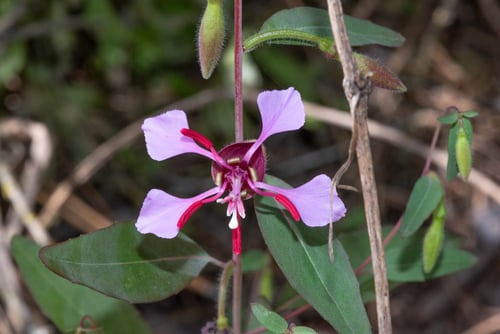
Epilobium parviflorum
Schreb.
Codlins and cream, Hoary willowherb
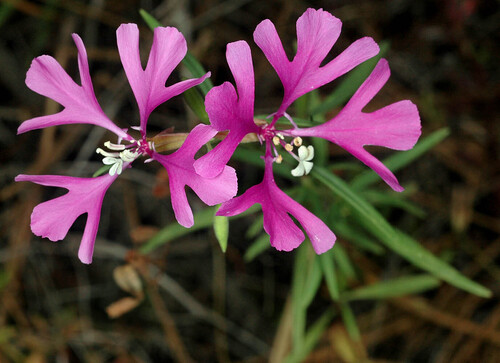
iNaturalist· cc-by
(c) Michel Langeveld, some rights reserved (CC BY), uploaded by Michel Langeveld
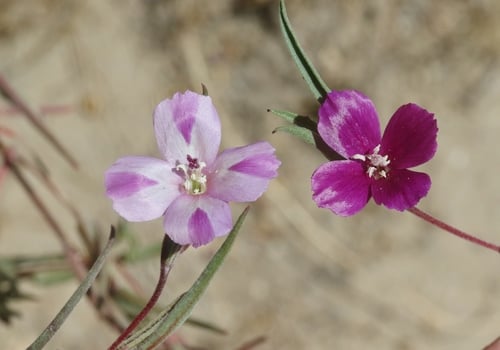
iNaturalist· cc-by-nc
(c) Leonard Schmalhaus, some rights reserved (CC BY-NC), uploaded by Leonard Schmalhaus
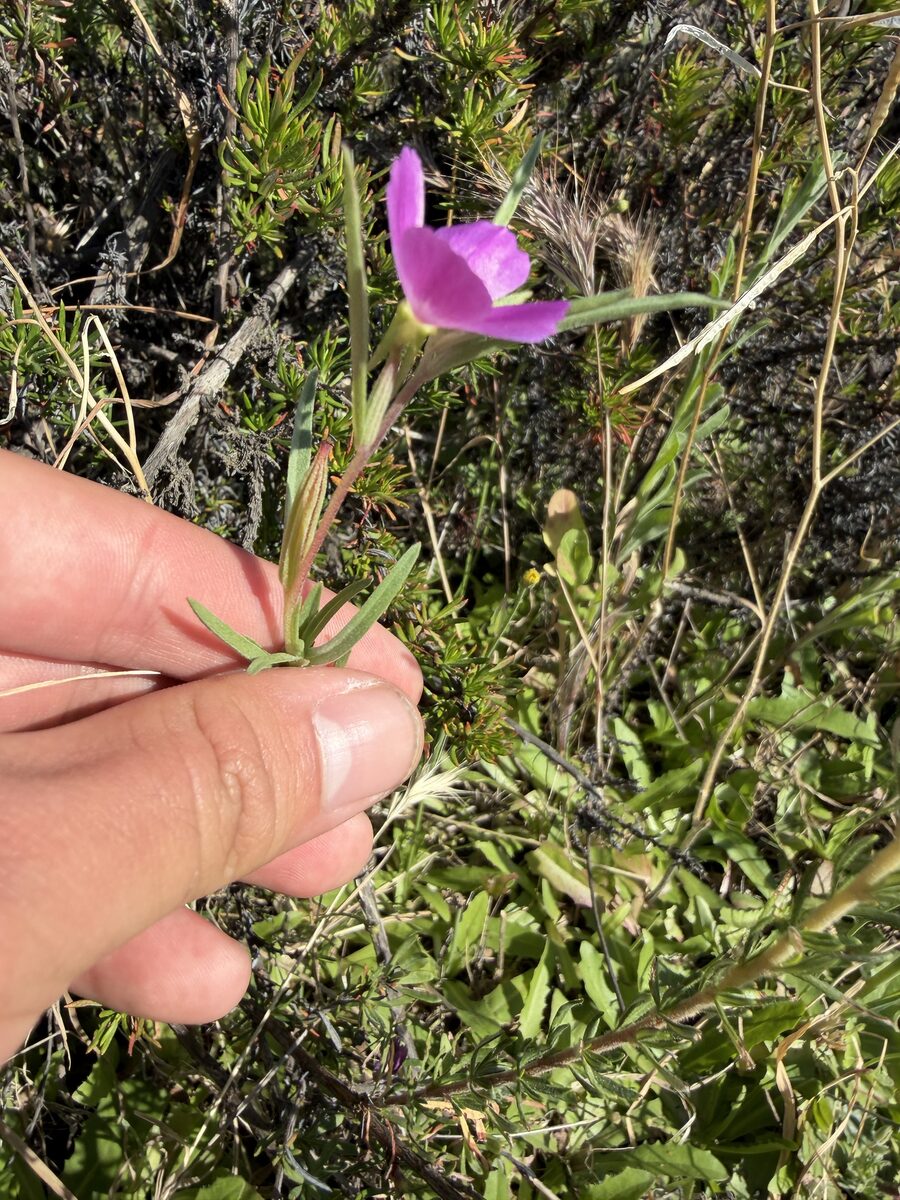
iNaturalist· cc-by-nc
(c) Alexander Baransky, some rights reserved (CC BY-NC), uploaded by Alexander Baransky
Summary
Source: WikipediaEpilobium parviflorum, commonly known as the hoary willowherb or smallflower hairy willowherb, is a herbaceous perennial plant of the family Onagraceae.
Description
A herb that keeps growing from year to year. It is up to 1 m tall. The leaves are usually in rings but do not clasp the stem. The leaves are narrowly oval and 3-12 cm long by 1-3 cm wide. There are teeth along the edge. The flowers are 7-12 mm wide. They are pale purplish-pink.
Edible Uses
The leaves can be eaten raw and make a pleasant addition to salads, where they contribute an agreeable flavour.
Traditional Uses
The young leaves are used in salads. They can be cooked as a tea.
This uses section is brief — help expand it
Medicinal Uses
None known
Distribution
It is a temperate plant. It grows in damp soil and near streams. In the Mediterranean it rarely grows to sea level. In China it grows between 500-1,800 m above sea level. In Sichuan and Yunnan.
Where It Grows
Afghanistan, Africa, Asia, Britain, Central Asia, China, Europe, France, Greece, Himalayas, India, Ireland, Italy, Japan, Korea, Luxembourg, Mediterranean, Myanmar, Nepal, New Zealand, North Africa, North America, Pakistan, Portugal, Russia, SE Asia, Slovenia, Spain, Switzerland, Tajikistan,
Cultivation
Succeeds in most soils. Prefers a well-drained but moisture retentive soil in a sunny position or in partial shade. The flowers are attractive to bees and provide a good late source of nectar.
Propagation
Sow seed directly in situ in early spring, or as soon as it ripens. Division can be done in spring or autumn. Larger clumps can be replanted straight into permanent positions, but smaller clumps are better potted up and grown on in a cold frame until well rooted, then planted out in spring.
Other Uses
None known. Attracts wildlife.
Notes
There are about 165 Epilobium species. They are mostly temperate.
Also Known As
Drobnocvetni vrbovec
References (6)
- Abbet, C., et al, 2014, Ethnobotanical survey on wild alpine food plants in Lower and Central Valais (Switzerland). Journal of Ethnopharmacology 151 (2014) 624–634
- Blamey, M and Grey-Wilson, C., 2005, Wild flowers of the Mediterranean. A & C Black London. p 152 (As Epilobium parviflora)
- Flora of Pakistan. www.eFloras.org
- Irving, M., 2009, The Forager Handbook, A Guide to the Edible Plants of Britain. Ebury Press p 305
- Plants for a Future database, The Field, Penpol, Lostwithiel, Cornwall, PL22 0NG, UK. http://www.scs.leeds.ac.uk/pfaf/
Show all 6 references Hide references
- Spic. fl. lips. 146. 1771