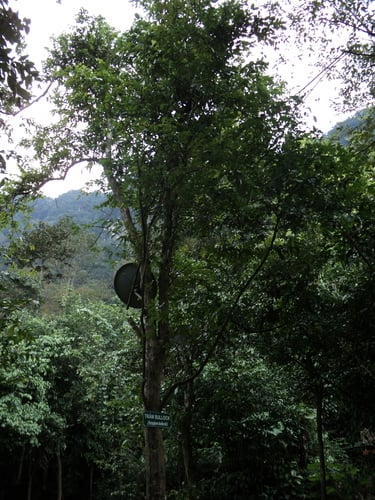
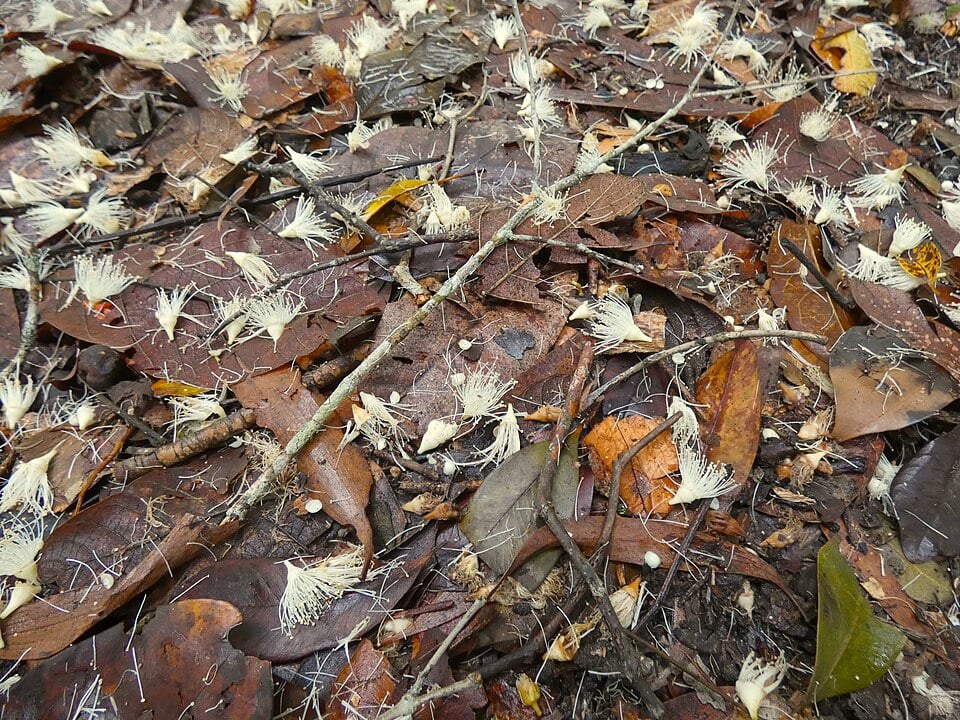
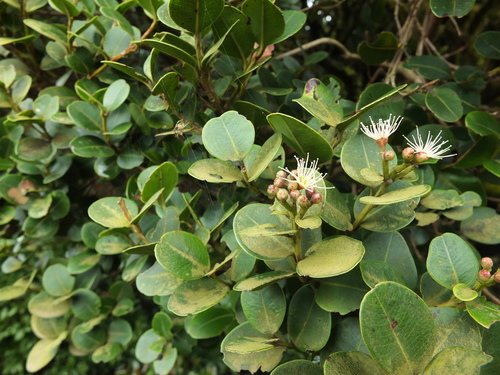
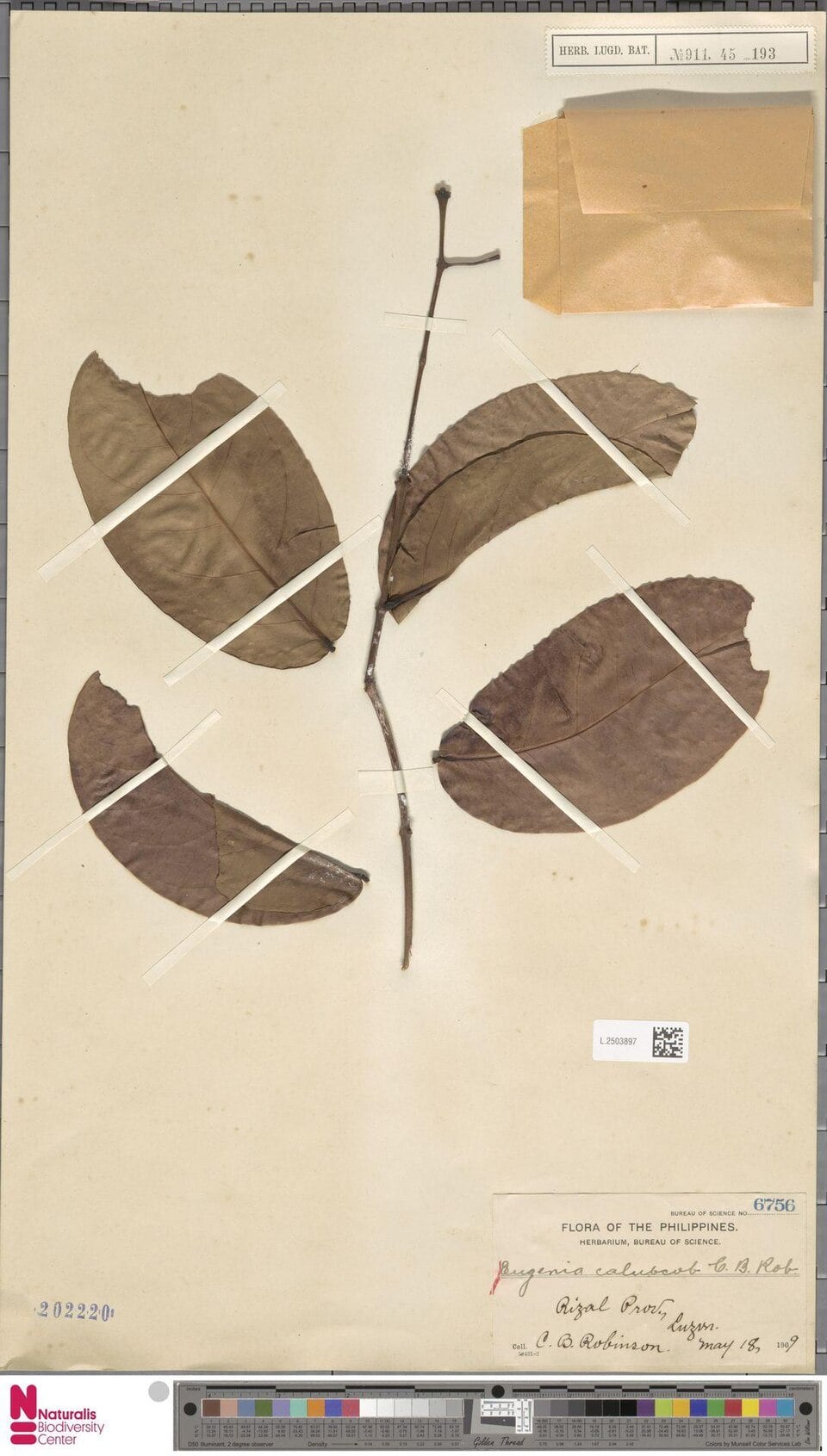
Myrteola nummularia - (Poir.)O.Berg.
(Poir.)O.Berg.
Cranberry-myrtle
gbif· cc-by-nc
maite trostel reyes
gbif· cc-by-nc
Erica Berntsen
gbif· cc-by-nc
Erica Berntsen
Description
Myrteola nummularia is an evergreen Shrub growing to 0.1 m (0ft 4in) by 0.5 m (1ft 8in) at a slow rate. See above for USDA hardiness. It is hardy to UK zone 8. It is in leaf all year, in flower from May to June, and the seeds ripen from November to December. The species is hermaphrodite (has both male and female organs) and is pollinated by Bees. The plant is self-fertile. Suitable for: light (sandy), medium (loamy) and heavy (clay) soils and prefers well-drained soil. Suitable pH: mildly acid, neutral and basic (mildly alkaline) soils. It cannot grow in the shade. It prefers dry or moist soil. The plant can tolerate maritime exposure.
Edible Uses
Tea. Fruit - raw or cooked. A sweet and agreeable flavour. The fruit is up to 1cm in diameter, it has a soft juicy flesh and a delicious slightly aromatic flavour. It is produced in late autumn and early winter, and is a very valuable fruit at this time of the year. The leaves are a tea substitute.
Distribution
S. America - S. Chile, Falklands.
Where It Grows
SOUTHERN AMERICA: Venezuela (Apure, Mérida, Táchira), Brazil (Amazonas (n. (Serra da Neblina))), Bolivia (Cochabamba, La Paz), Colombia (Antioquia, Arauca, Bolívar, Caldas, Cauca, Cundinamarca, Huila, Tolima, Valle del Cauca, Nariño), Ecuador (Azuay, Carchi, Imbabura, Morona Santiago, Napo, Pastaza, Tungurahua, Zamora Chinchipe), Peru (Ayacucho, Cusco, Huánuco, Pasco), Argentina (Neuquén, Río Negro, Santa Cruz, Tierra del Fuego), Chile (Juan Fernández Islands, Biobío, Magallanes, Aisén del General Carlos Ibañez del Campo, La Araucanía, Los Lagos)
Cultivation
Succeeds in any reasonably good soil including dry ones. Prefers a moderately fertile well-drained loam in a sunny position. Prefers a cool position according to another report. Tolerates maritime exposure. This species is not very hardy when grown outdoors in Britain, succeeding to the south and west of London. A group of plants in a sunny position on a rock garden at Kew Gardens seem to be perfectly happy and hardy, producing a reasonable crop of fruit in December 1996. A good carpeting plant for moist stones etc in a rockery. Plants in this genus are notably resistant to honey fungus.
Propagation
Pre-soak the seed for 24 hours in warm water and then sow it in late winter in a greenhouse. Prick out the seedlings into individual pots as soon as they are large enough to handle and grow them on in the greenhouse for at least their first winter. Plant them out into their permanent positions in late spring or early summer, after the last expected frosts. Cuttings of half-ripe wood, 7 - 10cm with a heel, July/August in a frame. Pot up in the autumn and overwinter in a cold frame. Plant out in late spring. High percentage. Cuttings of mature wood of the current seasons growth, 7 - 12cm with a heel, November in a shaded and frost free frame. Plant out in late spring or early autumn. High percentage. Layering.
Other Uses
Suitable for ground cover when spaced about 45cm apart each way, the plants form a carpet of low branches that root as they spread. Plants are a bit slow to become established and will need weeding for their first few years after planting.