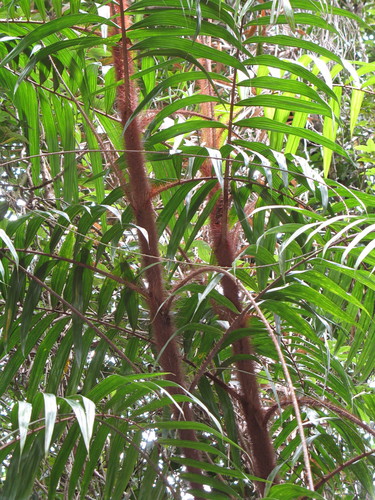
Mauritia flexuosa
L.f.
Buriti Palm, Aguaje Palm
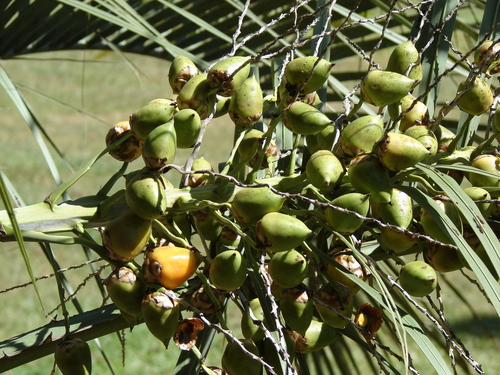
iNaturalist· cc-by-nc
(c) Paul Donahue, some rights reserved (CC BY-NC), uploaded by Paul Donahue
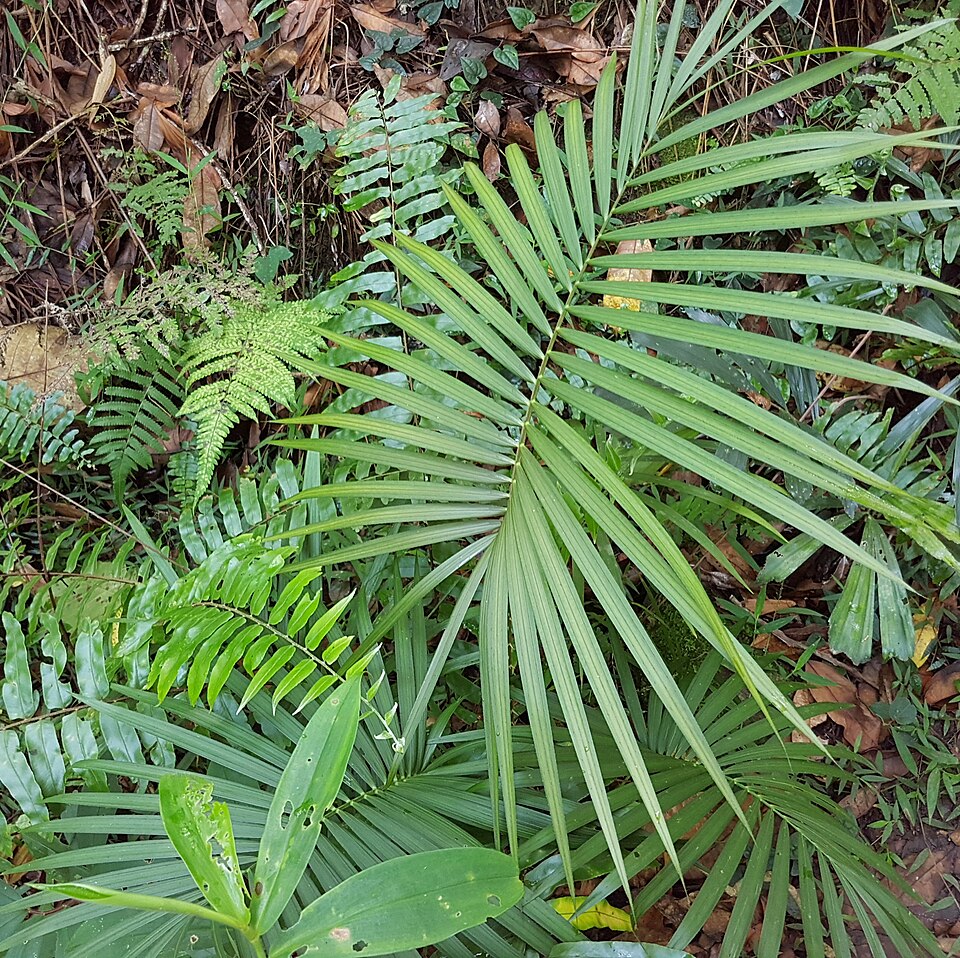
iNaturalist· cc-by-nc
(c) Geison Mesquita, some rights reserved (CC BY-NC), uploaded by Geison Mesquita
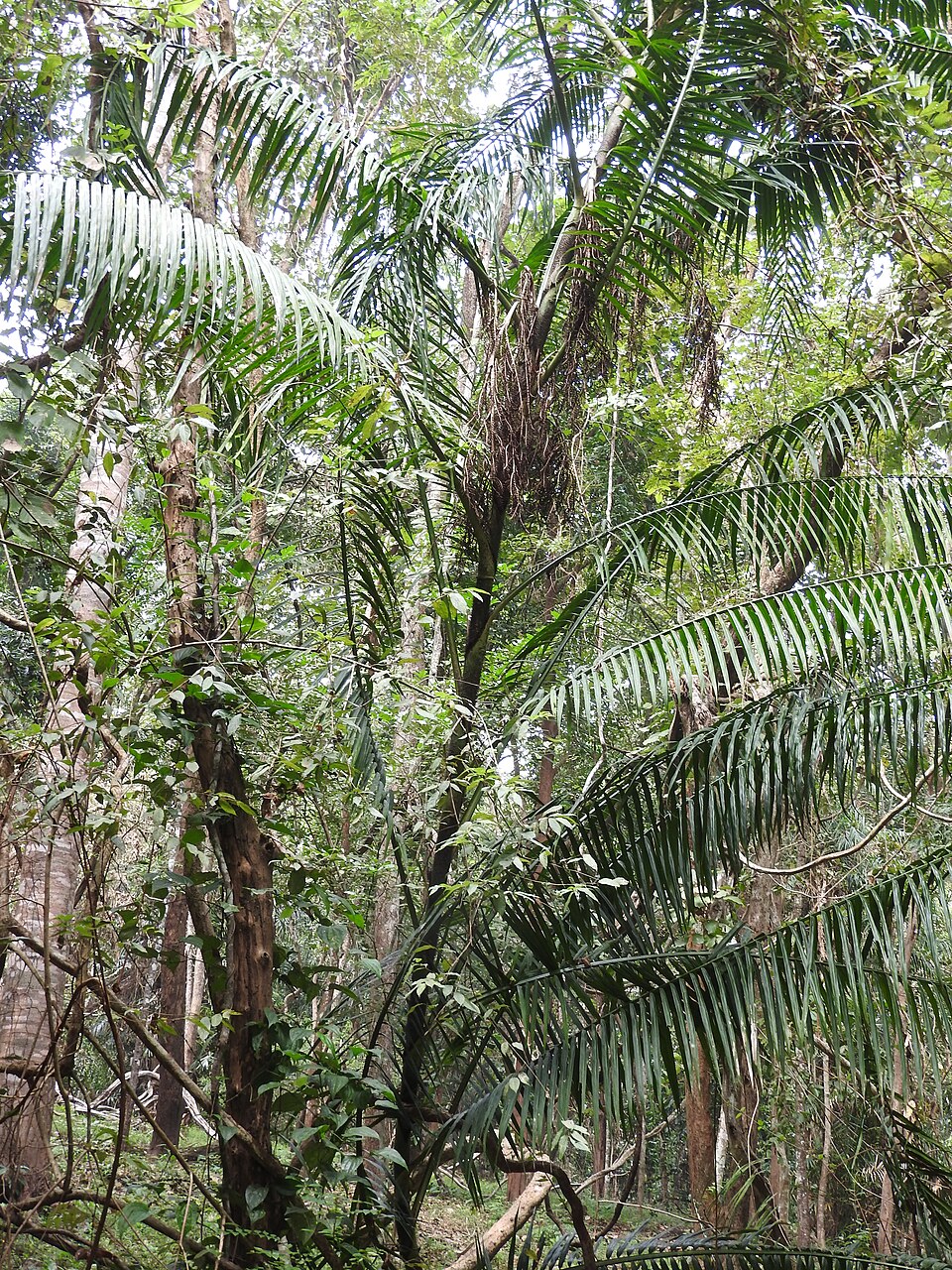
iNaturalist· cc-by
(c) Carlos Ruiz, some rights reserved (CC BY), uploaded by Carlos Ruiz
Description
Mauritia flexuosa is an evergreen Tree growing to 25 m (82ft) by 10 m (32ft) at a slow rate. See above for USDA hardiness. It is hardy to UK zone 10. The plant is not self-fertile. Suitable for: light (sandy), medium (loamy) and heavy (clay) soils and can grow in nutritionally poor soil. Suitable pH: mildly acid and neutral soils and can grow in very acid soils. It can grow in semi-shade (light woodland) or no shade. It prefers moist or wet soil.
Edible Uses
An edible oil is obtained from the fruit. The fleshy fruit is eaten raw. Rich in vitamins and oil. The fruit is also dried and ground into a flour. The fruit is 4 - 6cm long. A juice made from the pulp of the fruit is eaten with sugar and cassava meal. The pulp is also widely used in the production of juice, jam, liqueurs and other exotic drinks with a high vitamin C content. A favourite native beverage is produced from the fruits. They are soaked in water till they begin to ferment, and the scales and pulpy matter soften and can be easily rubbed off in water. When strained through a sieve it is ready for use, and has a slight acid taste and a peculiar flavour of the fruit at first rather disagreeable to European palates. The fruit is made into a cheese-like paste that is sometimes eaten for remedying bowel problems, or to allay hunger when desperate. An edible starch is obtained from the pith of the trunk. Used as a sago. Leaves - cooked. The apical bud, often known as a palm heart', is eaten as a vegetable. Eating this bud leads to the death of the tree because it is unable to make sideshoots. A sap obtained by tapping the young, unopened inflorescence can be drunk, boiled down to make a sugar or fermented to make palm wine. A sweet alcoholic drink called 'item' is prepared from the sap. The terminal bud is eaten as vegetable. Eating this bud will effectively kill the tree since it is unable to produce side branches.
Medicinal Uses
Antidiarrhoeal Dysentery Emollient Skin Tonic Vitamin CThe oil from the seed is high in vitamin A and is frequently used to treat burns, because of its soothing qualities and its ability to promote the formation of scar tissue. A pap prepared from the pith is used to treat dysentery and diarrhoea. The fruit is made into a cheese-like paste that is sometimes eaten for remedying bowel problems, or to allay hunger when desperate. The leaves are used in baths as an emollient. The sap from young stems is considered tonic.
Distribution
Northern S. America - Brazil, Bolivia and Peru northwards to the Guyanas and Caribbean.
Where It Grows
SOUTHERN AMERICA: Trinidad and Tobago, Trinidad, French Guiana, Guyana, Suriname, Venezuela (east), Brazil, Acre, Amazonas, Bahia, Goiás, Mato Grosso, Minas Gerais, Pará, Piauí, São Paulo, Amapá, Rondônia, Bolivia, Santa Cruz, Colombia (southeast), Ecuador, Peru,
Cultivation
It grows best in areas where annual daytime temperatures are within the range 22 - 30°c, but can tolerate 18 0 34°c. When dormant, the plant can survive temperatures down to about 10°c. It prefers a mean annual rainfall in the range 2,000 - 4,500mm, but tolerates 1,100 - 6,300mm. In areas with less than 2,000 mm of annual rainfall, or with a dry season, water must be available throughout the year. Requires a position in full sun, with lots of water. Tolerates a range of fertile, acid soils. Succeeds in poorly drained soils and acid soils. Prefers a pH in the range 4 - 5, tolerating 3.5 - 5.5. A very vigorous grower whose roots will normally out compete any nearby plant. A slow-growing tree?. A dioecious species, both male and female forms need to be grown if fruit and seed are required. Spacing: 8-10 ft. (2.4-3 m) 10-12 ft. (3-3.6 m) 12-15 ft. (3.6-4.7 m).
Propagation
Seed - best sown as soon as it is ripe in a partially shaded position in a nursery seedbed or in individual containers. A moderate germination rate can be expected, with the seed sprouting within 90 - 150 days. The seedlings develop slowly.
Other Uses
Basketry Buttons Fencing Fibre Oil Paper Roofing String Wood. Other Uses The leaves are used for covering roofs. A full-grown fallen leaf of this tree is a grand sight. The expanded sheathing base is 30cm in diameter; the petiole is a solid beam 3 - 3.6 metres, and the leaf itself is up to 3 metres in diameter. An entire leaf is a load for one person. A fibre is obtained from the leaves. Used to make fishing nets, ropes, hammocks, belts, hats, mats, and baskets. The leaf sheathes are used to make sandals. A spongy material, obtained from the petioles of the palm, is made into bottle-stoppers, mats and sandals or is used for paper production. The hard seeds are made into buttons and other small objects. The wood is moderately hard and heavy, but of low durability when exposed. The trunks are used as posts and floating bridges, and in the construction of rural buildings. The peripheral parts of the stems serve, like the dried petioles, for the construction of rafts.
Synonyms
Also Known As
Buriti Palm, Aguaje Palm, Moriche Palm, Burití, Moriche, Caranday-guazu, Murity palm, Aguaje, Palma real, Boriti, Guaish, Carandai-guazu, Mirisi, Achu, Miriti, Canangucho, Morete, Ite palm, Mauriti palm, Coqueiro-buriti, Muriti, Ita Palm, aguaje, buriti, burití, ita palm, itapalm, ite palm, moriche, morichepalme, muriti, murití, tree-of-life, yurumabrot.