Allagoptera leucocalyx
(Drude) & Kunze
Buri
iNaturalist· cc-by-nc
(c) Germaine Alexander Parada, some rights reserved (CC BY-NC), uploaded by Germaine Alexander Parada
iNaturalist· cc-by-nc
(c) Germaine Alexander Parada, some rights reserved (CC BY-NC), uploaded by Germaine Alexander Parada
iNaturalist· cc-by-nc
(c) Germaine Alexander Parada, some rights reserved (CC BY-NC), uploaded by Germaine Alexander Parada
Description
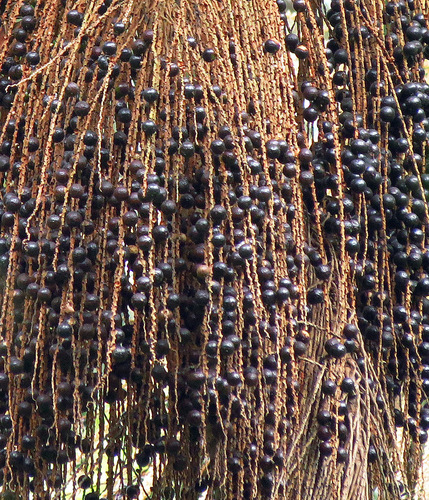
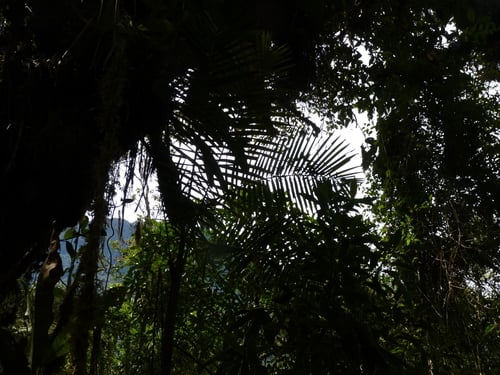
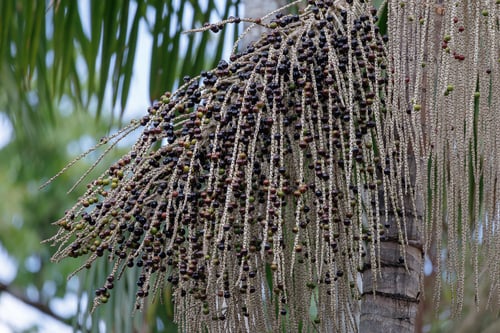
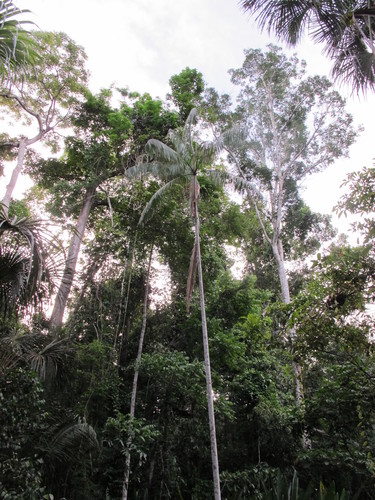
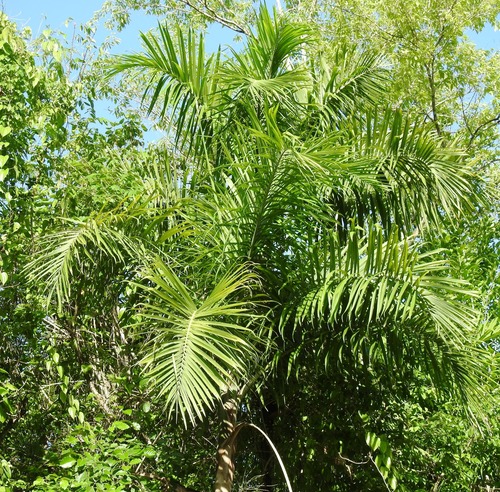
A small clumping palm. The trunk is underground. The leaves are in a small crown. They are greyish-green. The fronds are 1.5 m long. They have leaflets along the stalk. The leaflets are pointed and leathery. They are in groups of 2 or 3 along the stalk. The flowers are in a spiral. The fruit are oval and hairy.
Edible Uses
The flesh of the fruit is eaten fresh. Fat is extracted from the seeds by repeated boiling and skimming.
Traditional Uses
The fat is extracted from the seeds by repeated boiling and skimming. The flesh of the fruit is eaten fresh.
This uses section is brief — help expand it
Distribution
It is a tropical plant. It survives in places that are often burnt. In Bolivia it grows up to 500 m altitude. In Argentina it grows between 100-1,100 m above sea level.
Where It Grows
Amazon, Argentina, Bolivia, Brazil, Paraguay, South America,
Cultivation
A plant of the subtropics to the tropics, it is probably capable of withstanding at least some frost. Succeeds in full sun to light shade.
Production
There are between 40-100 seeds in each fruit.
Notes
There are 4 Allagoptera species.
Synonyms
Also Known As
Buri, Coco da chapada, Masuncotos, Motacuchi, Yatay pony
References (12)
- Bircher, A. G. & Bircher, W. H., 2000, Encyclopedia of Fruit Trees and Edible Flowering Plants in Egypt and the Subtropics. AUC Press. p 18
- Bortolotto, I. M., et al, 2015, Knowledge and use of wild edible plants in rural communities along Paraguay River, Pantanal, Brazil. Journal or Ethnobiology and Ethnomedicine. 11:46
- Bortolotto, I. M., et al, 2018, Lista preliminar das plantas alimenticias nativas de Mato Grosso do Sul, Brasil. Iheringia, Serie Botanica, Porto Alegre, 73 (supl.):101-116
- Haynes, J., & McLaughlin, J., 2000, Edible palms and Their Uses. University of Florida Fact sheet MCDE-00-50-1 p 2
- Henderson, A., Galeano, G and Bernal, R., 1995, Field Guide to the Palms of the Americas. Princeton. p 152
Show all 12 references Hide references
- Johnson, D.V., 1998, Tropical palms. Non-wood Forest products 10. FAO Rome. p 90
- Jones, D.L., 1994, Palms throughout the World. Smithtonian Institution, Washington. p 125
- Marcia, M. J., et al, 2011, Palm Uses in Northwestern South America: A Quantitative Review. Bot. Rev. (2011) 77:462-570
- Martins, R. C., et al, 2014, Use and Diversity of Palm (Arecaceae) Resources in Central Western Brazil. The Scientific World Journal.. Volume 2014, Article ID 942043
- Monica Moraes, R., 1996, Allagoptera (Palmae). Flora Neotropica Vol. 73 pp 1-34.
- Vasquez, Roberto Ch. & Coimbra, German S., 1996, Frutas Silvestres Comestibles de Santa Cruz. p 154
- World Checklist of Useful Plant Species 2020. Royal Botanic Gardens, Kew