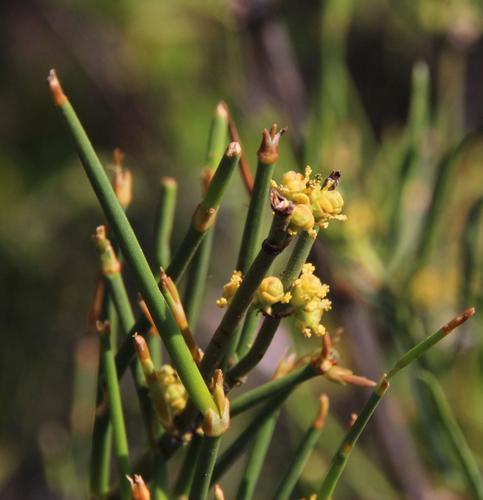
Ephedra torreyana
S. Watson
Mexican tea, Torrey's Joint-fir
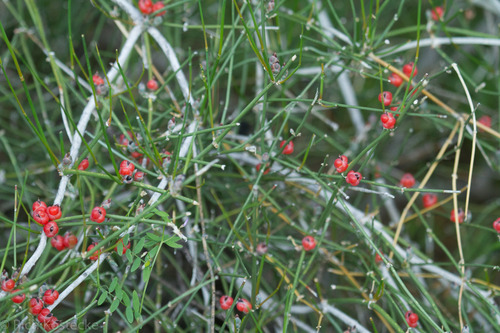
iNaturalist· cc-by-nc-nd
(c) Oscar Johnson, some rights reserved (CC BY-NC-ND), uploaded by Oscar Johnson
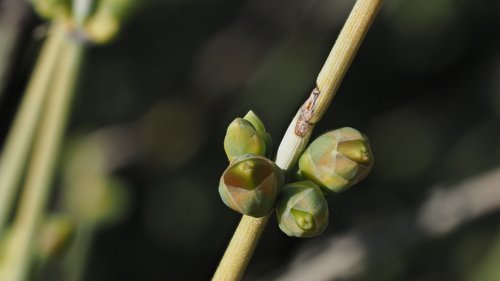
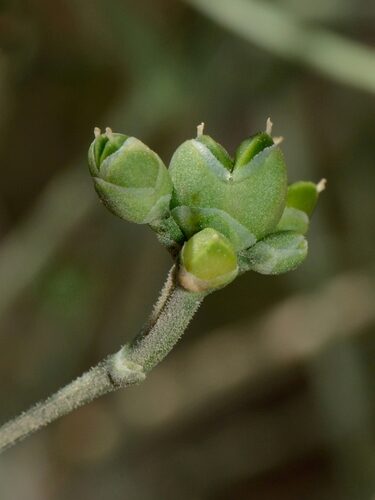
iNaturalist· cc-by-nc
(c) Andrey Zharkikh, some rights reserved (CC BY-NC)
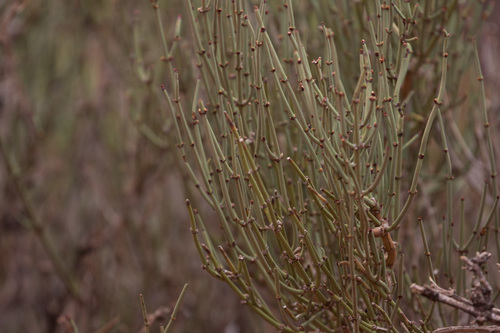
iNaturalist· cc-by-nc
(c) Andrey Zharkikh, some rights reserved (CC BY-NC)
Summary
Source: WikipediaEphedra torreyana, with common names Torrey's jointfir or Torrey's Mormon tea, is a species of Ephedra that is native to the deserts and scrublands of the Southwestern United States (Nevada, Utah, Colorado, Arizona, New Mexico, Texas) and to the State of Chihuahua and northern Mexico. It was originally described by Sereno Watson in 1879, and placed in section Alatae, "tribe" Habrolepides by Otto Stapf in 1889. In 1996 Robert A. Price left E. torreyana in section Alatae without recognizing a tribe.
Description
Ephedra torreyana is an evergreen shrub reaching 1 m in height with year-round foliage and flowers appearing April to May. The plant is dioecious, requiring both male and female specimens for seed production, and is not self-fertile. It thrives in light sandy or medium loamy, well-drained soils across mildly acid to basic pH ranges. This species demands full sun exposure and tolerates both drought and variable soil moisture, though it prefers well-drained conditions.
Edible Uses
The stems make an excellent tea — simply boil them for a few minutes and allow the brew to steep. The fruit can be eaten raw or cooked.
Traditional Uses
The stems are used to make tea.
This uses section is brief — help expand it
Medicinal Uses
This plant has a wide reputation as a cure for syphilis. A decoction of the stems is used for this purpose and also for treating coughs, bladder and kidney problems, and stomach disorders. A decoction of the leaves and stems can be applied as a lotion on itchy skin. Like most members of this genus, the stems contain the alkaloid ephedrine, making them valuable in treating asthma and other respiratory complaints. Using the whole plant at much lower concentrations than isolated ephedrine rarely causes side-effects. While ephedra does not cure asthma, it often manages symptoms effectively. The stems can be used fresh or dried, typically prepared as a tea, though they can also be eaten raw — young stems are best for raw eating, while older stems are more suited to tea. Stems can be harvested any time of year and dried for later use.
Distribution
It is a temperate plant.
Where It Grows
North America, USA,
Cultivation
We have very little information on this species and do not know if it will be hardy in Britain, though judging by its native range it could succeed outdoors at least in the milder parts of this country. It hybridises in the wild with other members of the genus. In particular, it hybridises with E. trifurca to form E . × intermixta. This hybrid occurs in a small area of southwestern New Mexico (near Engle, Sierra County) within the zone of sympatry of the two parental species; it may be fertile (mature seeds are formed). It is intermediate in most characters but can be identified by its combination of the spinelike terminal buds of E . trifurca and the scabrous, light yellow seeds of E . torreyana. The following notes are based on the general needs of the genus. Requires a well-drained loamy soil and a sunny position. Established plants are drought resistant and are also lime tolerant. Dioecious, male and female plants must be grown in fruit and seed are required.
Propagation
Seed is best sown as soon as it is ripe in autumn in a greenhouse, or in spring in a greenhouse using a sandy compost. Prick out seedlings into individual pots once large enough to handle and grow on for at least their first winter under glass. Plant out in spring or early summer after the last expected frosts, with some protection in their first winter. Can also be propagated by division in spring or autumn, or by layering.
Other Uses
None known.
Notes
There are about 40 Ephedra species.
Also Known As
Brigham tea, Torrey ephedra
References (5)
- Kermath, B. M., et al, 2014, Food Plants in the Americas: A survey of the domesticated, cultivated and wild plants used for Human food in North, Central and South America and the Caribbean. On line draft. p 337
- Moerman, D. F., 2010, Native American Ethnobotany. Timber Press. p 211
- Plants for a Future database, The Field, Penpol, Lostwithiel, Cornwall, PL22 0NG, UK. http://www.scs.leeds.ac.uk/pfaf/
- Proc. Amer. Acad. Arts 14:299. 1879
- Reis, S. V. and Lipp, F. L., 1982, New Plant Sources for Drugs and Foods from the New York Botanical Garden herbarium. Harvard. p 7