Ephedra equisetina
Bunge
Muzei ma huang
iNaturalist· cc-by-nc
(c) inessa_naturalist, some rights reserved (CC BY-NC), uploaded by inessa_naturalist
iNaturalist· cc-by-nc
(c) Salix lanata, some rights reserved (CC BY-NC)
iNaturalist· cc-by
(c) Alexander Dubynin, some rights reserved (CC BY)
Summary
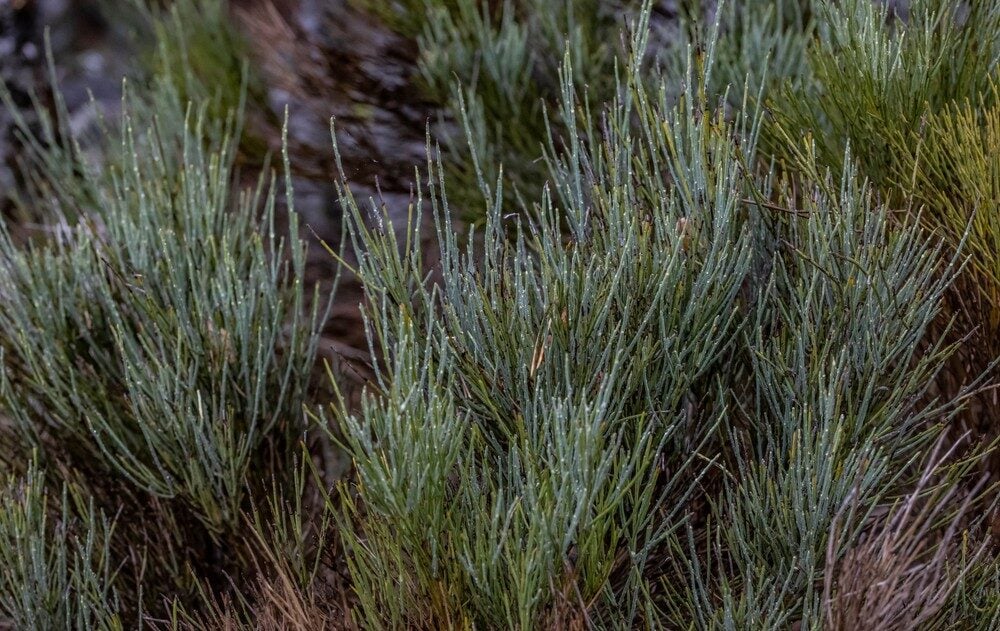
An evergreen shrub growing 1.5m tall by 1m wide. Year-round foliage. Dioecious and self-sterile, requiring both male and female plants for reproduction. Grows in light sandy and medium loamy soils with good drainage. Tolerates mildly acid, neutral, and alkaline conditions. Requires full sun; adapts to dry or moist soils and tolerates drought.
Description
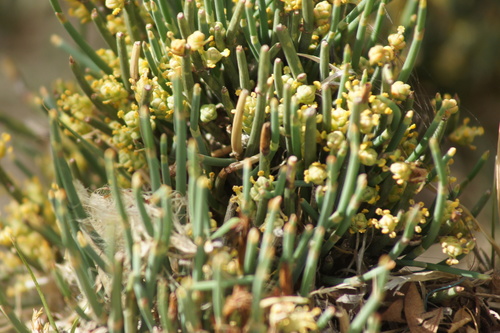
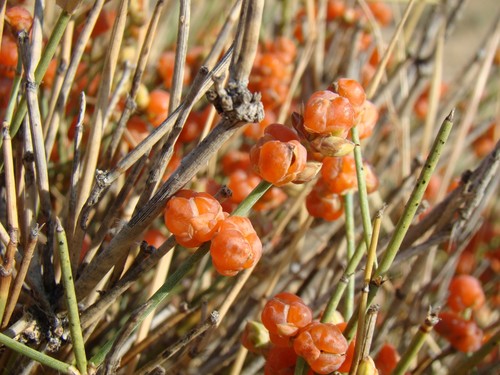
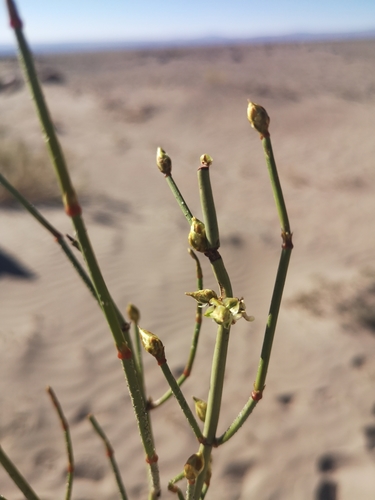
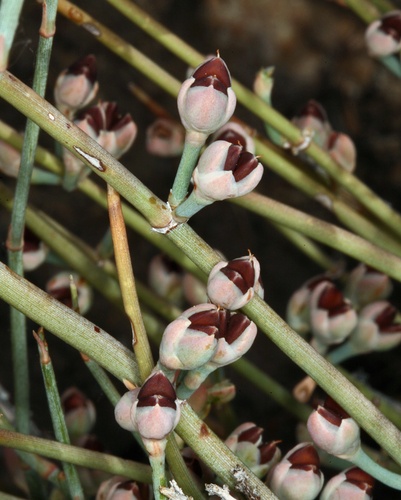
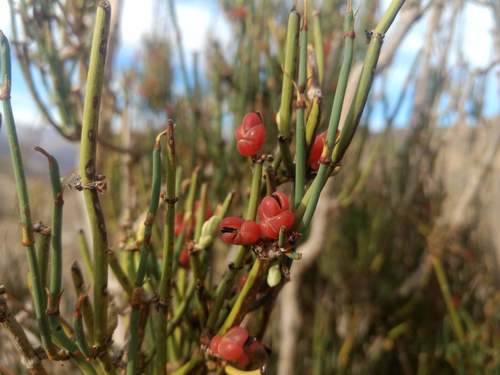
A wiry shrub. The leaves are reduced to scale. Male flowers are in dense spikes. The cones occur singly.
This description is brief — help expand it
Edible Uses
The fruit is edible and can be eaten raw.
Medicinal Uses
Members of this genus contain medicinally active alkaloids, most notably ephedrine, and are widely used in preparations for asthma and catarrh. Ephedrine has an adrenaline-like action in the body. Using the whole plant at much lower concentrations than isolated constituents rarely causes side-effects. The plant also has antiviral effects, particularly against influenza. The stems are a pungent, bitter, warm herb that dilates the bronchial vessels while stimulating the heart and central nervous system. They are also diaphoretic, diuretic, febrifuge, hypertensive, nervine, pectoral, tonic, vasoconstrictor, and vasodilator, and are used internally for asthma, hay fever, and allergic complaints. They are also combined with other herbs for a wide range of conditions. This herb should be used with great caution, preferably under the supervision of a qualified practitioner. It should not be prescribed to patients taking monoamine oxidase inhibitors or those suffering from high blood pressure, hyperthyroidism, or glaucoma. Ephedrine is banned in many sporting events as a performance-boosting substance. The root is antihydrotic, lowers blood pressure, and dilates the peripheral blood vessels; it is used in the treatment of night sweating and spontaneous sweating. Stems can be harvested at any time of year and dried for later use.
Distribution
It is a temperate plant.
Where It Grows
Asia, Central Asia, China, Japan, Mongolia, Tajikistan,
Cultivation
We have very little information on this species and do not know if it will be hardy in Britain, though judging by its native range it should succeed outdoors in many parts of this country. The following notes are based on the general needs of the genus. Requires a well-drained loamy soil and a sunny position. Established plants are drought resistant and are also lime tolerant. Dioecious, male and female plants must be grown in fruit and seed are required.
Propagation
Sow seed as soon as it is ripe in autumn in a greenhouse, or in spring in a greenhouse using a sandy compost. Prick out seedlings into individual pots once large enough to handle and grow on for at least their first winter under glass. Plant out in spring or early summer after the last expected frosts, with some protection during their first winter. Can also be propagated by division in spring or autumn, or by layering.
Other Uses
None known.
Notes
There are about 40 Ephedra species.
References (4)
- Beitr. Fl. Russl. 324.; Mem. Acad. Imp. Sci. St.-Peersbourg Divers Savans 7:499. 1852
- Phillips, R. & Rix, M., 2002, The Botanical Garden Vol. 1. Trees and Shrubs. MacMillan. p 54
- Plants for a Future database, The Field, Penpol, Lostwithiel, Cornwall, PL22 0NG, UK. http://www.scs.leeds.ac.uk/pfaf/
- Urgamal, M., et al, 2014, Conspectus of the Vascular Plants of Mongolia. Mongolia Academy of Sciences Institute of Botany and National University of Mongolia Department of Biology. p 36