Artocarpus sericicarpus
Jarr.
Pedalai, Terap bulu, Gumihan
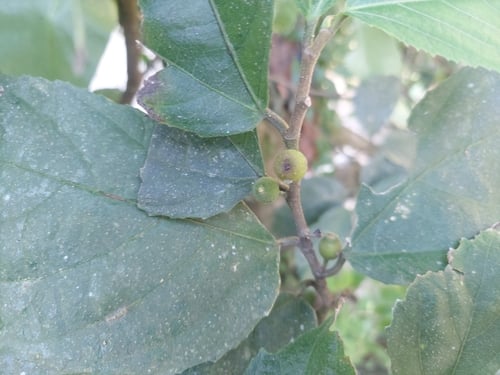
iNaturalist· cc-by-nc
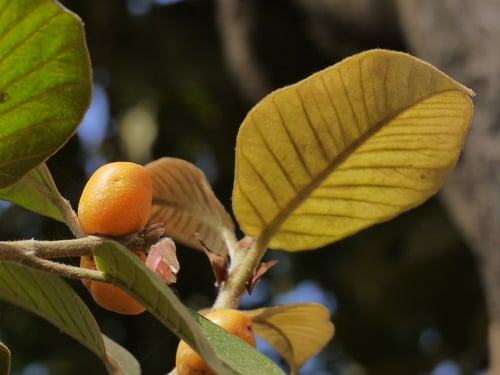
(c) I am Forester, some rights reserved (CC BY-NC), uploaded by I am Forester
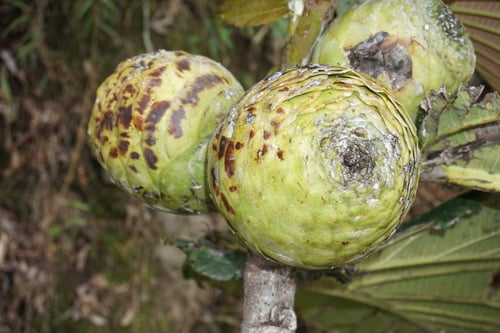
iNaturalist· cc-by-nc
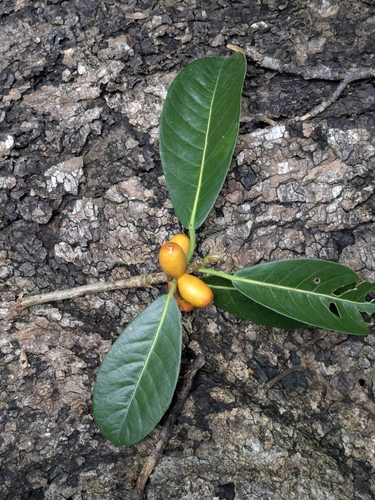
(c) Andi Siady Hamzah, some rights reserved (CC BY-NC), uploaded by Andi Siady Hamzah
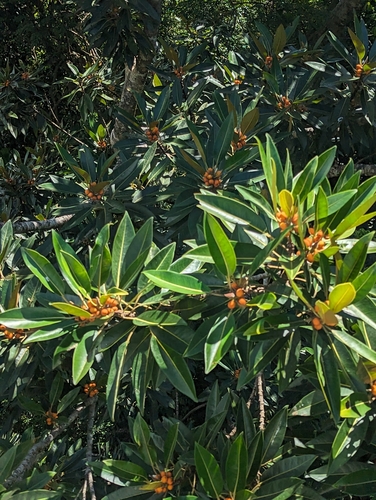
iNaturalist· cc-by
(c) Fabian Brambach, some rights reserved (CC BY)
Summary
Source: WikipediaArtocarpus sericicarpus, the peluntan, pedalai, gumihan or terap bulu, is a tropical evergreen tree species of the family Moraceae. It is a member of the genus Artocarpus, which also includes jackfruit and breadfruit. The tree is native to Borneo, the Philippines, the Maluku Islands and Sulawesi, and is most commonly found in humid tropics with a mild monsoon climate, occurring in tropical evergreen forests at 500–1,000 metres (1,600–3,300 ft) elevation. It is also occasionally found in steep, clayey hillsides of inland areas. The discovery date is not clear as it is listed as 1959 in one book and 1961 in the other. It is a very large rainforest tree to 40 m (120 ft). Similar to the marang fruit (Artocarpus odoratissimus), the pulp of the fruit is edible and considered very tasty but A. sericicarpus does not have strong odor of the marang. The seeds are also edible, people normally boil or roast them and consume them like peanuts. Artocarpus sericicarpus measures up to 30–40 m (100–130 ft), stipule are lanceolate and measure at 6–12 centimetres (2–5 in) and its dark green leaves are elliptic and ovate and measure at 20–70 cm (8–28 in) by 10–50 cm (4–20 in). The tree's bark is also used to make barkcloth. The fruit is hairy, and looks like a giant rambutan. When the globular fruits (15 cm (6 in) diameter) are ripe, the skins are bright orange, covered with hair. The pulp is white in color and tastes very sweet. Some say the Pedalai fruit is the tastiest of all Artocarpus.
Description
A large tree. It grows up to 40 m tall. It has a trunk 60 to 90 cm across. The leaves are dark green. The leaves are alternate and crowded. Young leaves are lobed but older leaves are entire. They are blunt in form at both ends. The larger leaves are 20 to 30 cm wide and 60 to 90 cm long. The male flower spikes are like a cylinder and soft and spongy and yellow. The female flower heads are rounded. The fruit are heavy and 10-15 cm or more long. The fruit is covered with soft spines. These are covered with brownish hairy processes. (Like a rambutan.) The fruit is a bright orange. The seeds are in a white gummy pulp. The pulp is edible. The seeds are edible.
Edible Uses
The fleshy pulp of the fruit is eaten raw. The seeds are roasted and eaten, with a tart nutty flavour similar to peanuts.
Traditional Uses
The fleshy portion of the fruit is eaten raw. The seeds are roasted and eaten. They have a tart nutty flavour like peanuts.
This uses section is brief — help expand it
Distribution
It is a tropical plant. It suits fertile soils which have been formed by rivers. It is in evergreen forests up to 500 m altitude. They are found in Quezon, Bicol, Surigao and Davao both cultivated and wild in the Philippines. In the Cairns Botanical Gardens.
Where It Grows
Asia, Australia, Indonesia, Malaysia, Pacific, Philippines, Sarawak, SE Asia,
Cultivation
Plants are grown from seed. Seed normally germinate immediately when fresh. They cannot be dried out.
Propagation
Seed - best sown as soon as it is ripe. The seed germinates best at a temperature of 24 - 27c. Root cuttings. Air layering.
Production
The tree grows rapidly.
Other Information
Fruit are sold in markets. It is a cultivated food plant.
Notes
There are about 50 Artocarpus species. They are in the tropics and subtropics of Asia and the Pacific.
Nutrition
| Part | Moisture | kJ | kcal | Protein | Vit A | Vit C | Iron | Zinc |
|---|---|---|---|---|---|---|---|---|
| Seeds | 42.9 | 988 | 241 | 7.2 | — | — | 31 | 24 |
| Fruit | 69.3 | 497 | 119 | 1.7 | — | 1.8 | 0.8 | 7.4 |
Also Known As
Pohon terap bulu, Pohon pedalai
References (10)
- Altschul, S.V.R., 1973, Drugs and Foods from Little-known Plants. Notes in Harvard University Herbaria. Harvard Univ. Press. Massachusetts. no. 698
- Chai, P. P. K. (Ed), et al, 2000, A checklist of Flora, Fauna, Food and Medicinal Plants. Lanjak Entimau Wildlife Sanctuary, Sarawak. Forestry Malaysia & ITTO. p 169
- Hoe, V. B. & Siong, K. H., 1999, The nutritional value of indigenous fruit and vegetables in Sarawak. Asia Pacific J. Clin. Nutr. 8(1):24-31
- Milow, P., et al, 2013, Malaysian species of plants with edible fruits or seeds and their evaluation. International Journal of Fruit Science. 14:1, 1-27
- Monsalud, M.R., Tongacan, A.L., Lopez, F.R., & Lagrimas, M.Q., 1966, Edible Wild Plants in Philippine Forests. Philippine Journal of Science. p 498
Show all 10 references Hide references
- PROSEA (Plant Resources of South East Asia) handbook, Volume 2, 1991, Edible fruits and nut. p 80
- Siong, K. H., 2003, Indigenous Fruits of Sarawak. Forest Department Sarawak. p 102
- Sukarya, D. G., (Ed.) 2013, 3,500 Plant Species of the Botanic Gardens of Indonesia. LIPI p 139
- Tankard, G., 1990, Tropical fruit. An Australian Guide to Growing and using exotic fruit. Viking p 120
- World Checklist of Useful Plant Species 2020. Royal Botanic Gardens, Kew