Artocarpus sepicanus
Diels
gbif· cc0
President and Fellows of Harvard College
gbif· cc0
President and Fellows of Harvard College
gbif· cc0
President and Fellows of Harvard College
Description
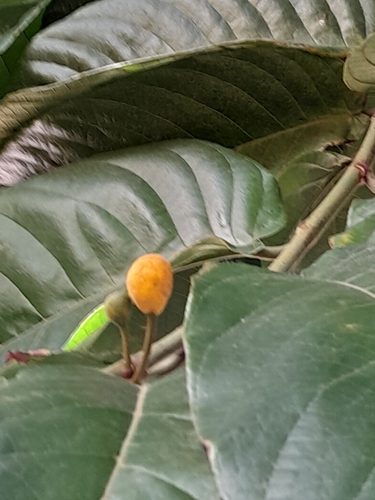
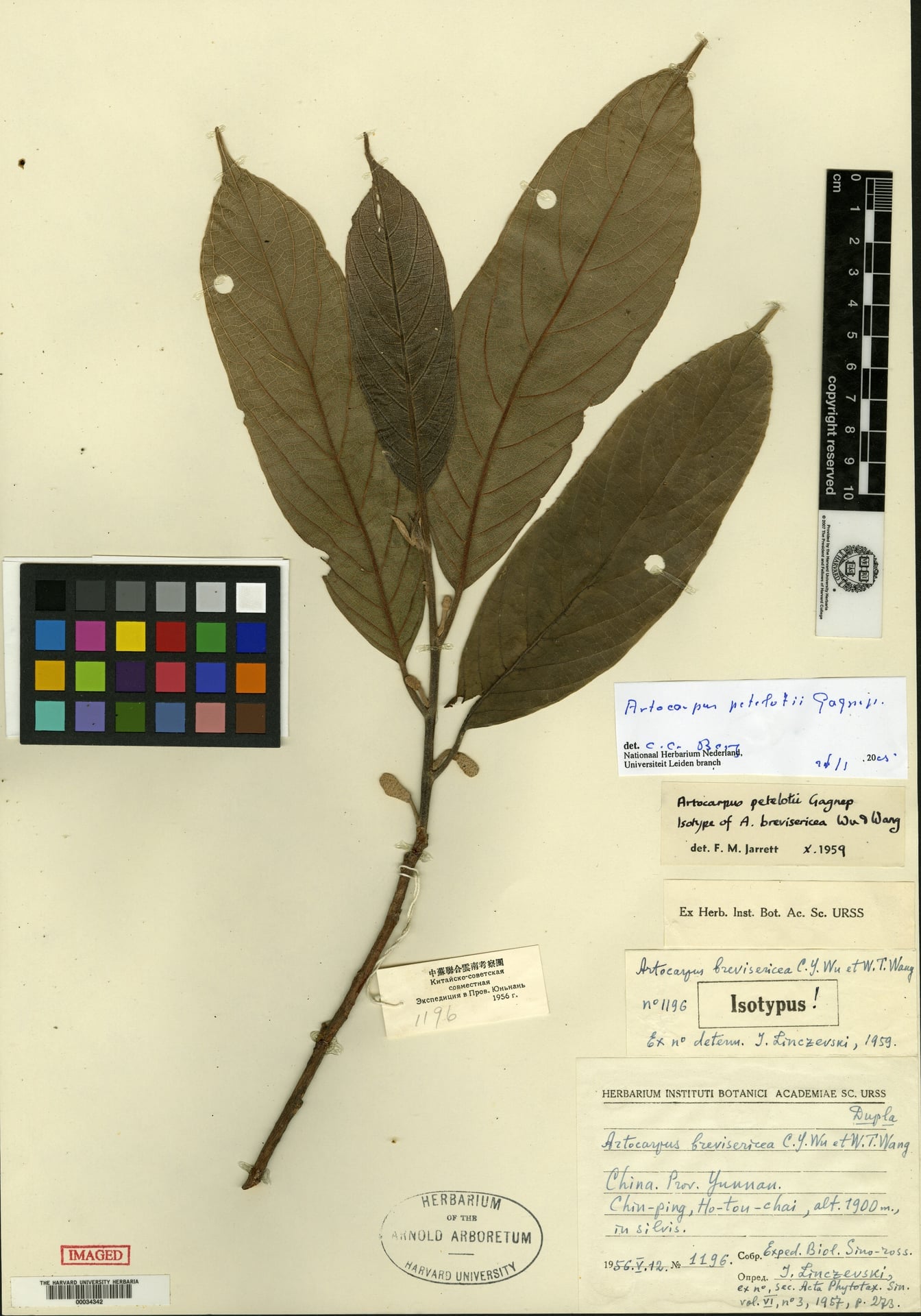
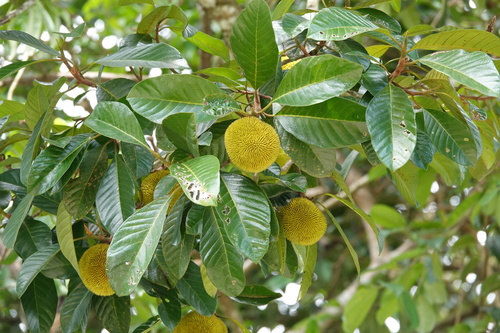
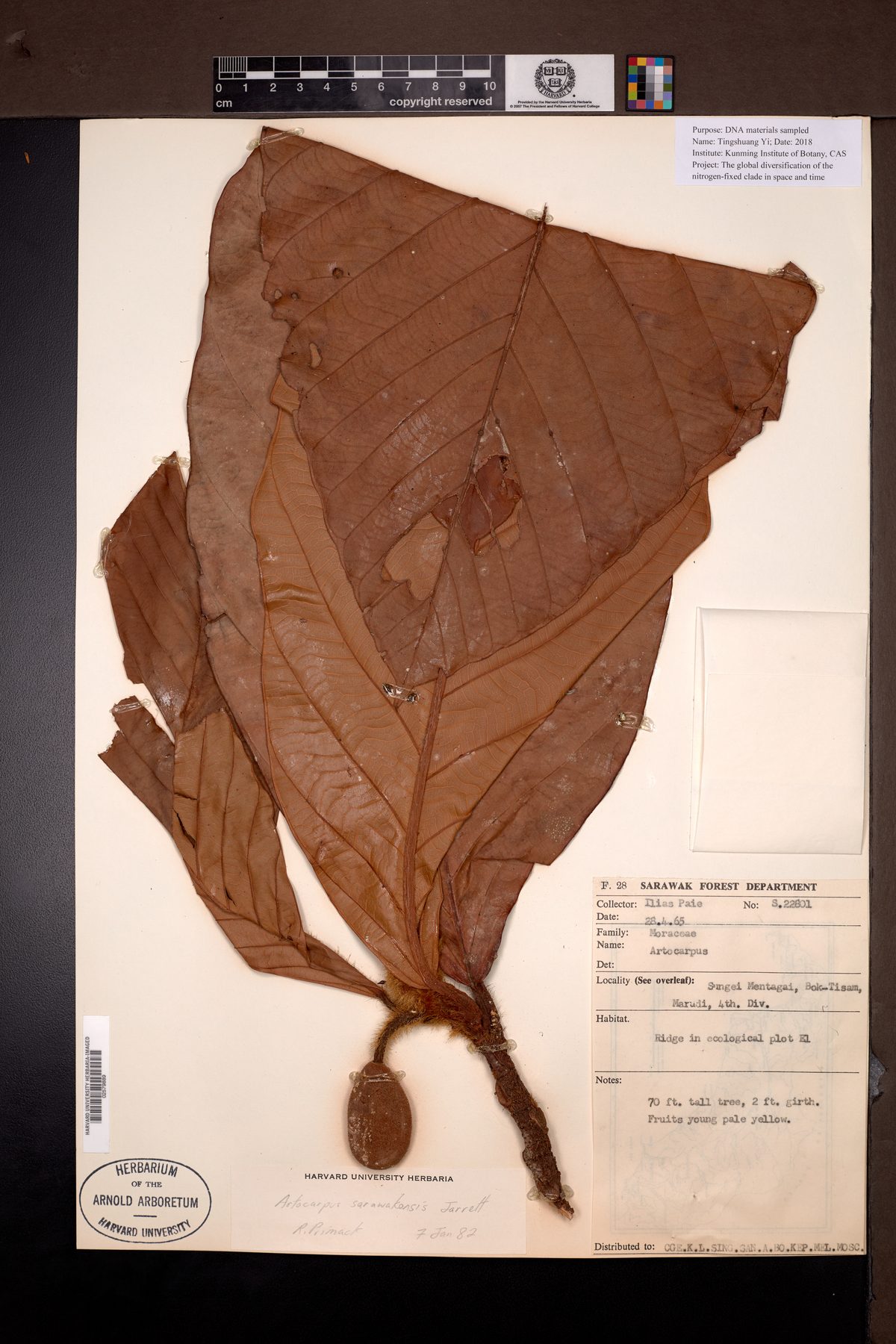
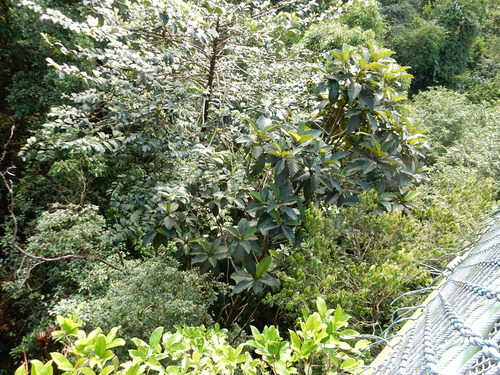
A small or large tree. It grows 16-40 m high. The trunk can be 80 cm across. It can have buttresses 2 m tall. The bark is rough and flaky. The leaves occur singly at a node and are arranged in spirals long the branch. The leaves are simple and broadest near the middle. They are 16-21 cm long by 8-10 cm wide. The flowers are in the axils of the leaves. Male flowers are along an axis and female flowers occur singly. Male and female flowers occur in the same plant. The fruit is a multiple fruit 2-3 cm long and 2 cm wide. They are green and fleshy and do not have spines. There are about 12 seeds 1 cm long.
Edible Uses
Several species in the genus bear edible fruit and are commonly cultivated: Breadfruit (Artocarpus altilis), Cempedak (Artocarpus integer), Jackfruit (Artocarpus heterophyllus), Kwai Muk (Artocarpus parvus), Lakoocha (Artocarpus lakoocha), Pudau (Artocarpus kemando), Anjily (a.k.a. Jungle Jack) (Artocarpus hirsutus), Chaplaish (Artocarpus chama), and Marang (Artocarpus odoratissimus). Breadfruit and jackfruit are cultivated widely in the tropical Southeast Asia. Other species are cultivated locally for their timber, fruit or edible seeds. Anjily, A. hirsutus, is grown for fruit and timber in the Western Ghats.
Traditional Uses
The seeds of the fruit are eaten.
This uses section is brief — help expand it
Distribution
It is a tropical plant. It grows in lowland rainforest. It grows in the Sepik Provinces and Morobe.
Where It Grows
Pacific, Papua New Guinea, PNG,
References (4)
- Conn, B. & Damas, K.. Guide to trees of Papua New Guinea. http:/www.pngplants.org/PNGtrees
- Conn, B., and Damas, K., PNGTreesKey - Artocarpus sepicanus;
- http://ng.atrium-biodiversity.org
- World Checklist of Useful Plant Species 2020. Royal Botanic Gardens, Kew