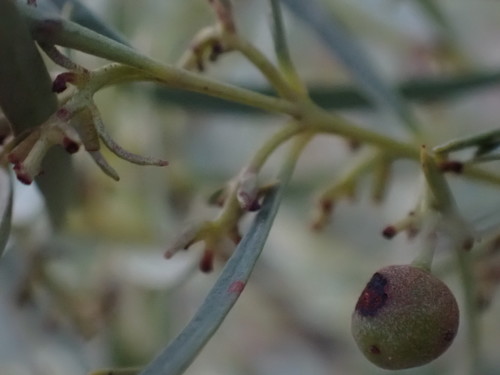
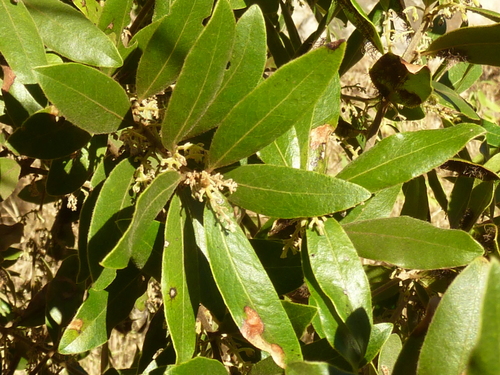
Diospyros digyna
Jacq.
Black Sapote, Chocolate Pudding Tree
gbif· cc-by-nc
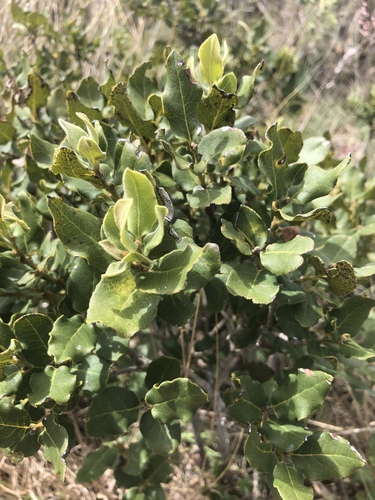
Reuben Heydenrych
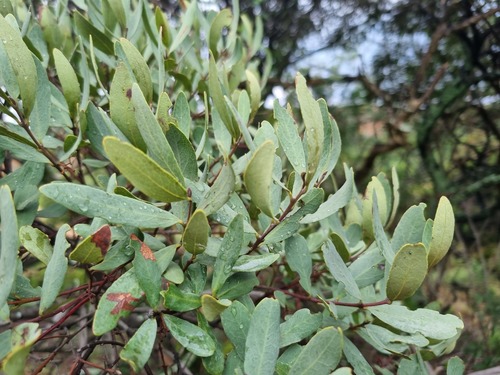
gbif· cc-by-nc
Sam Hain
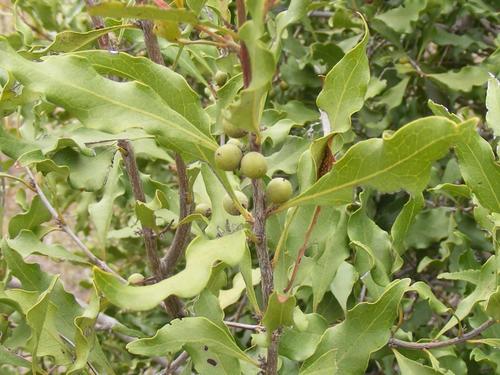
gbif· cc-by-nc
Reuben Heydenrych
Description
Diospyros digyna is an evergreen Tree growing to 15 m (49ft) by 15 m (49ft) at a slow rate. See above for USDA hardiness. It is hardy to UK zone 10. The plant is not self-fertile. It is noted for attracting wildlife. Suitable for: light (sandy), medium (loamy) and heavy (clay) soils and prefers well-drained soil. Suitable pH: mildly acid, neutral and basic (mildly alkaline) soils. It can grow in semi-shade (light woodland) or no shade. It prefers moist soil.
Edible Uses
Fruit - raw or cooked. Bitter and astringent when unripe, it should not be eaten until it is fully ripe and soft. Soft, rich, dark chocolate brown in colour and somewhat sweet. The black mushy flesh is repulsive in appearance, reminding one of dirty axle grease. Rather bland, the fruit is best mashed with a little orange, lemon or lime juice and chilled before serving. The immature fruit can be boiled and used as a vegetable. The fruit is rather boring on its own, but delicious when used in smoothies, jams etc. The dark olive-green fruit is a flattened globose to slightly lobed berry, 5 - 15cm in diameter. The fruit turns a duller colour when ripe and the persistent calyx at the base, which is pressed against the developing fruit, becomes reflexed. At this stage the fruits are still firm. They soften 3 - 14 days after harvesting, individual fruits ripening suddenly and unpredictably within 24 hours.
Medicinal Uses
Febrifuge Skin. Various preparations of bark and leaves have been used medicinally against fever and skin disease.
Known Hazards
The unripe fruit is used as a fish poison.
Distribution
Northern S. America - Colombia, north through Central America to Guatemala.
Where It Grows
Southern America Colombia, El Salvador, Guatemala, Honduras, Nicaragua, Panama,Costa Rica.
Cultivation
A plant of the moist tropics and subtropics. It can be grown at elevations up to 2,000 metres, but does best below 600 metres. It grows best in areas where annual daytime temperatures are within the range 20 - 27°c, but can tolerate 12 - 34°c. Mature plants can be killed by temperatures of -2°c or lower, whilst young growth will be severely damaged at 0°c. It prefers a mean annual rainfall in the range 1,200 - 1,600mm, but tolerates 1,000 - 2,400mm. Prefers a sunny position, tolerating some shade. The tree adapts to different soil types and survives flooding, but it is rather sensitive to drought, requiring abundant irrigation in dry areas. Plants are well adapted to calcareous soils. Prefers a pH in the range 6 - 7, tolerating 5.5 - 7.5. A dioecious species, both male and female forms need to be grown if fruit and seed are required. Although dioecious, solitary planted female plants have been observed to produce seedless fruits in the absence of a male, and on rare occasions have produced fruit with fertile seeds. Seedling trees commence bearing fruit when 5 - 6 years old, whilst grafted specimens can fruit when 2 - 3 years old. Flowers are borne on the new shoots; hence the crop cycle is linked to flushing. Some trees bear flowers that are self-incompatible, so it is not advisable to plant a solitary tree. Fruit on cultivated trees is often seedless or nearly so. Black persimmon is said to have 4 times the vitamin C content of sweet, and to be a good source of calcium and phosphorus. Response to the taste varies greatly between people, and the dark chocolate colour of the pulp is considered to be unattractive. Nevertheless, because the tree is robust, well-adapted to the tropics, and heavy-bearing, a close re-examination of its potential is merited. There are some named varieties. We have seen no individual confirmation for this species, but in general Diospyros species are dioecious and require both male and female forms to be grown if fruit and seed are required. Flowering time: Mid Spring. Some species of Diospyros, like Diospyros virginiana (American persimmon), are self-fertile, while others may require cross-pollination to produce fruit effectively. Persimmons are typically harvested in autumn depending on the species and climate. Persimmons usually flower in late spring to early summer. Persimmon trees grow at a moderate rate, typically reaching maturity in 3 to 5 years, with a full height of 15 to 25 feet (4.5 to 7.6 meters), depending on the species and growing conditions.
Propagation
Seed - commonly propagated from seed, which remains viable for several months if stored dry. Seeds germinate in about 30 days. As a rule fresh seeds have a high percentage of fertility. The seedlings develop long taproots at an early stage, often before any appreciable elongation of the shoot takes place. The growth of the seedling is decidedly slow. Budding or grafting on seedling rootstocks is the way to propagate seedless types.
Other Uses
Furniture Wood Other Uses: The wood is yellowish to deep-yellow with black markings near the heart of old trunks; it is compact and suitable for cabinetwork, but is little used. The wood is reported to have the qualities of typical ebony.
Synonyms
Also Known As
Black Sapote, Chocolate Pudding Tree, Black Persimmon, Axle Grease Plant, Caca-poule, Chocolate pudding fruit, Ebano, Ebano, Guayabote, Mueque, Sapote negro, Tauch, Zapote negro, Zapote prieto, barbaquois black persimmon black sapote ebenholzbaum sapote negro schwarze sapote svart sapote zapote negro