Diospyros kirkii
Hiern
Pink diospyros
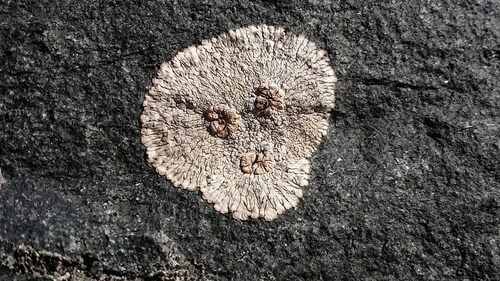
iNaturalist· cc-by-nc
(c) Grant Reed, some rights reserved (CC BY-NC), uploaded by Grant Reed
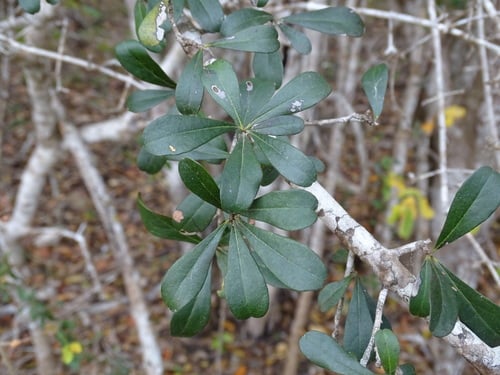
iNaturalist· cc-by-nc
(c) Troos van der Merwe, some rights reserved (CC BY-NC)
Description
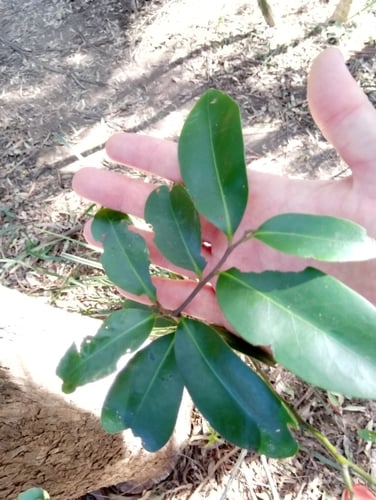
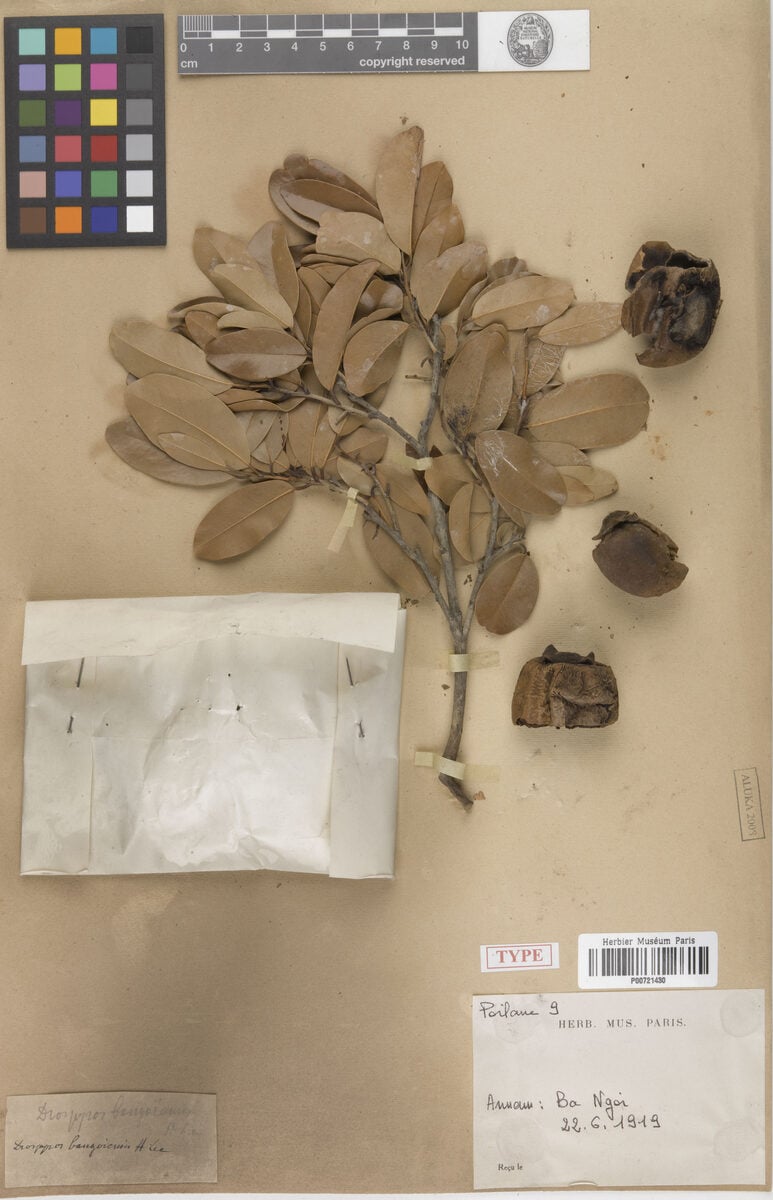
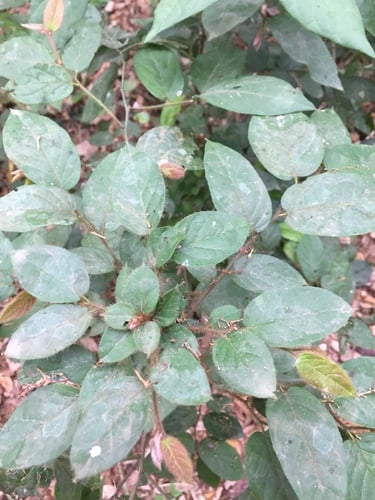
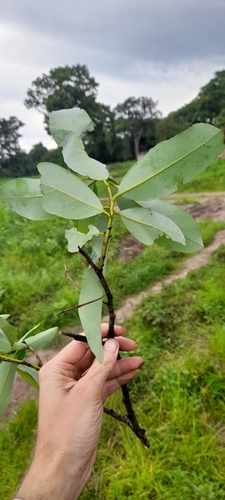
A small tree. It grows to 7 m high. The bark is dark grey and very rough. It often flakes off in square sections. It loses many leaves during the year. The leaves are oval or round and 15 cm long by 8.5 cm across. The young leaves and stems have pink hairs. The flowers are pinkish. They have pinkish woolly hairs. They occur in heads of a few flowers in the axils of leaves. These are about 2 cm long. The fruit are round and 3.5-4 cm across. They are yellow when mature. The fruit are edible.
Edible Uses
Fruit - raw. The fully ripe fruit has a sweet flesh. The rounded, yellow fruit is 3 - 4cm wide, containing 4 dark brown, angled seeds.
Traditional Uses
The ripe fruit are eaten raw.
This uses section is brief — help expand it
Distribution
A tropical plant. It occurs in open woodland and on rocky and stony ridges. It needs a sunny position. It grows between 400-1,250 m above sea level. It grows in areas with a rainfall between 500-1270 mm per year. It is best with temperatures between 16°-27°C. It can grow in arid places.
Where It Grows
Africa, Angola, Botswana, Central Africa, Congo DR, East Africa, Malawi, Mozambique, Southern Africa, Tanzania, Zambia, Zimbabwe,
Cultivation
Trees can be grow from seeds but they do not germinate easily. Plants can be grown from large cuttings and also from root suckers.
Propagation
Seed - best sown as soon as it is ripe. As a rule fresh seeds have a high percentage of fertility. The seedlings develop long taproots at an early stage, often before any appreciable elongation of the shoot takes place. The growth of the seedling is decidedly slow .
Other Uses
The wood is used for furniture, tool handles, gunstocks, grain mortars, bedsteads and spoons. The wood is used for fuel. In Zimbabwe the plant tolerates relatively low concentrations of copper in the soil. It also occasionally occurs on arsenical soils but is not common and is dwarfed.
Production
It takes about 6 months for the fruit to develop and ripen. They ripen during the dry season.
Other Information
It is an attractive fruit. The children are especially eaten by children.
Notes
There are about 485 species of Diospyros mostly in the tropics.
Synonyms
Also Known As
Mchechewe, Mkokokivu, Mng'akala, Mnumbulu, Muchenje, Mukolo-fuma, Ndima
References (16)
- FAO. 1983, Food and fruit-bearing forest species 1: Examples from Eastern Africa. FAO Food and Forestry Paper 44/1 p 39
- Fern, K., 2012, Tropical Species Database http://theferns.info/tropical/
- Fowler, D. G., 2007, Zambian Plants: Their Vernacular Names and Uses. Kew. p 23
- Grivetti, L. E., 1980, Agricultural development: present and potential role of edible wild plants. Part 2: Sub-Saharan Africa, Report to the Department of State Agency for International Development. p 72
- http://www.fao.org/forestry/25323-096344a3de335832e8f363c3ac5184a66.pdf
Show all 16 references Hide references
- Kakeya, 1976,
- Palgrave, K.C., 1996, Trees of Southern Africa. Struik Publishers. p 747
- Peters, C. R., O'Brien, E. M., and Drummond, R.B., 1992, Edible Wild plants of Sub-saharan Africa. Kew. p 105
- Royal Botanic Gardens, Kew (1999). Survey of Economic Plants for Arid and Semi-Arid Lands (SEPASAL) database. Published on the Internet; http://www.rbgkew.org.uk/ceb/sepasal/internet [Accessed 16th April 2011]
- Ruffo, C. K., Birnie, A. & Tengnas, B., 2002, Edible Wild Plants of Tanzania. RELMA p 280
- Scudder, 1971,
- Trans. Cambridge Philos. Soc. 12:199. 1873
- Tredgold, M.H., 1986, Food Plants of Zimbabwe. Mambo Press. p 98
- Wild, 1975,
- World Checklist of Useful Plant Species 2020. Royal Botanic Gardens, Kew
- www.zimbabweflora.co.zw 2011