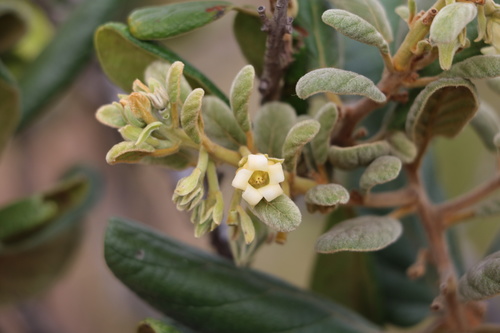
Diospyros kaki
Thunb.
Persimmon, Japanese persimmon, Kaki
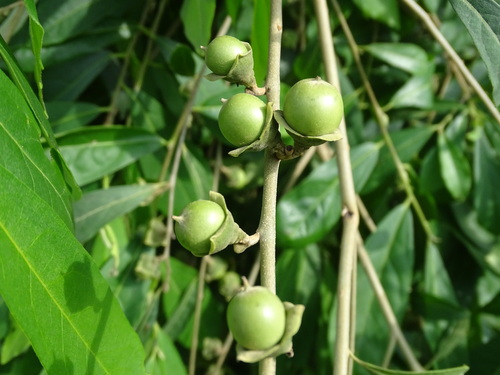
iNaturalist· cc-by-nc
(c) Stargazer, some rights reserved (CC BY-NC)
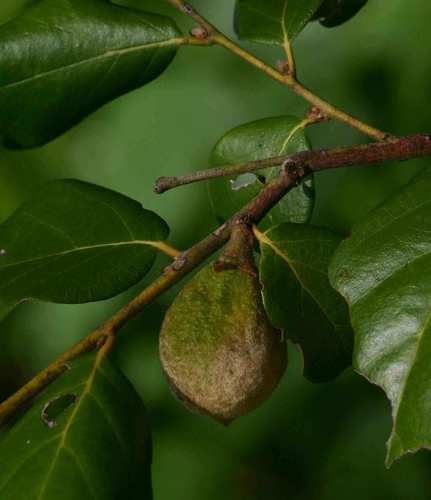
iNaturalist· cc-by-nc
(c) Stargazer, some rights reserved (CC BY-NC)
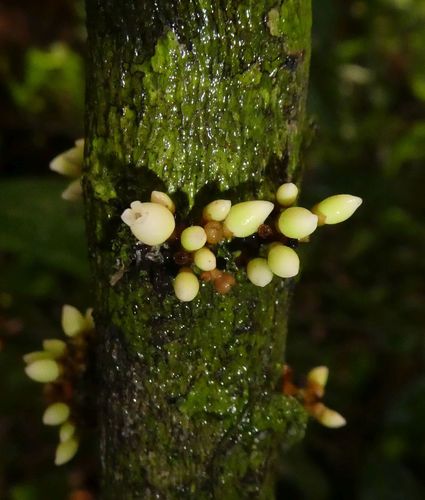
iNaturalist· cc-by-nc
(c) Stargazer, some rights reserved (CC BY-NC)
Summary
Source: WikipediaDiospyros kaki, the Oriental persimmon, Chinese persimmon, Japanese persimmon, kaki persimmon, or Fuyu persimmon, is the most widely cultivated species of the genus Diospyros. Although its first botanical description was not published until 1780, D. kaki cultivation in China dates back more than 2000 years.
Description
A tree up to 12 m high which loses its leaves each year. The branches tend to hang over and they have a dense covering of leaves. Leaves are long and pointed (10 x 6 cm). The leaves are dark green and shiny on top and lighter under. Young leaves are pale green and old leaves turn yellow or red before they fall. Male and female flowers are normally on separate tree. Therefore pollinator trees often help. Sometimes male and female flowers occur on the same tree. Fruit are 7 cm across, with flattened ends and orange with a thin skin. It can have a few large seeds inside or be seedless. Pollination and seeding influence flavour and fruit ripeness. There are many varieties. Fuya cultivated varieties are eaten when firm and Hachiya cultivated varieties when very ripe.
Edible Uses
The fruit can be eaten raw or used in cooking — in pies, cakes, bread, and desserts. When very soft and fully ripe (almost at the point of spoiling), the flavour is exquisitely rich, but many cultivars are harshly astringent before reaching this stage. In Britain, fruit should be harvested very late in the season — ideally in December or January — while still hard, then stored in a cool but frost-free place until fully soft and ripe. The fruit is about 7.5cm in diameter and contains 25% sugars. The peel can be powdered and used as a sweetener. Leaves are used to improve the flavour of pickled radishes. Roasted seeds serve as a coffee substitute. Dried fruit can also be stored for later use. Nutritional composition per 100g (dry weight, 350 calories, 0% water): Protein 3.6g, Fat 1.5g, Carbohydrate 91g, Fibre 7.7g, Ash 4g; Calcium 80mg, Phosphorus 100mg, Iron 8mg, Sodium 20mg, Potassium 950mg; Vitamin A 5600mg, Thiamine (B1) 0.2mg, Riboflavin (B2) 0.15mg, Niacin 0.9mg, Vitamin C 75mg.
Traditional Uses
The fruit is eaten raw or can be cooked. It needs to be fully ripe and soft. Freezing fruit overnight can improve sweetness. They are used in pies, puddings, cakes, bread, ice cream and other desserts. Fruit can be stored frozen. Fruit are used for wine and vinegar. The leaves are used to improve the flavour of pickled radishes. Roasted seeds are served as a coffee substitute.
Medicinal Uses
The fruit acts as an appetizer and sialagogue. The stem bark is astringent and styptic. The fruit's properties vary with ripeness, though it is generally antitussive, astringent, laxative, nutritive, and stomachic. Fresh fully ripe fruit is eaten raw to treat constipation and haemorrhoids, and when cooked is used for diarrhoea. Dried ripe fruit treats bronchial complaints, and when ground into a powder is used for dry coughs. Juice from unripe fruit is used in the treatment of hypertension. Fruits ripened in containers with their leaves become very sweet and are considered antifebrile, antivinous, and demulcent. Fruits that have been peeled and exposed alternately to sunlight by day and dew by night become encrusted with a white powder, at which point they are considered anthelmintic, antihaemorrhagic, antivinous, expectorant, febrifuge, and restorative. The peduncle is used to treat coughs and hiccups, and the calyx is used to treat hiccups.
Distribution
It suits cooler Mediterranean type climates. In the tropics it needs to grow in highland areas with a distinctly seasonal climate. Dormant trees can tolerate freezing temperatures. They have only a short (100 hours) chilling requirement. It needs 890 hours between 8-12°C during the dormant period. They will not tolerate acid soils. A pH of 6.5 to 7.5 is preferred. They can stand some waterlogging. It does best in well drained soils. Branches tend to be brittle and damaged by strong winds. In Nepal it grows to about 1200 m altitude. In Indonesia it grows above 1,000 m above sea level. In Yunnan in China it grows between 600-1800 m above sea level. It grows in secondary forest. It suits hardiness zones 8-10. In Brisbane Botanical Gardens. Arboretum Tasmania.
Where It Grows
Afghanistan, Africa, Algeria, Armenia, Asia, Australia, Azerbaijan, Bangladesh, Brazil, Britain, Cambodia, Caucasus, Central Asia, China*, Colombia, Cook Islands, Cuba, East Africa, Egypt, Europe, France, Georgia, Hawaii, Himalayas, India, Indochina, Indonesia, Israel, Italy, Japan*, Korea, Laos, Madagascar, Malaysia, Manchuria, Mediterranean, Mexico, Middle East, Myanmar, Nepal, New Zealand, North Africa, North America, Northeastern India, Pacific, Pakistan, Palestine, Papua New Guinea, PNG, Philippines, Russia, SE Asia, Slovenia, South America, Spain, Taiwan, Tajikistan, Tasmania, Thailand, Turkey, Türkiye, USA, Vietnam, West Indies,
Cultivation
Prefers a good deep loamy soil in sun or light shade but succeeds in most soils. Dislikes very acid or wet and poorly drained soils. Requires a sheltered position. Dormant plants are quite hardy in Britain, tolerating temperatures down to about -14°c, but they require warmer summers than are normally experienced in Britain in order to ripen their fruit and wood. The young growth in spring, even on mature plants, is frost-tender and so it is best to grow the plants in a position sheltered from the early morning sun. A warm sunny wall improves the chance of producing ripe fruit and trees fruit freely when grown under glass. Fruits are frequently produced outdoors at Kew. A tree seen in a open position with afternoon shade at Kew in November 1993 (after a cool summer) had about 200 almost ripe fruits around 8cm in diameter. The same tree, after a fairly warm summer in 1996, had a large quantity of fruit just about ready for harvesting in the middle of December. Trees produce a long taproot and should be planted out into their permanent positions as soon as possible. The young trees require some winter protection for their first winter or two. The persimmon is widely cultivated for its edible fruit in warm temperate areas of the world, especially in Japan and China, there are many named varieties. Some cultivars, such as 'Fuyu', lack the usual astringency and can be eaten whilst still firm, though they develop a richer flavour if allowed to become soft. These non-astringent forms require a warmer climate and do not ripen in cooler areas. The astringent cultivars are somewhat hardier and ripen well in cooler climates than the non-astringent forms. The fruit colours better and is sweeter in warmer areas but in hot conditions has a poor texture and deep black spots develop. If allowed to become very ripe (almost to the point of going rotten), they develop a better flavour than non-astringent forms. Dioecious, but the female tree can produce seedless fruits in the absence of a pollinator. However, unfertilized fruit tends to be smaller and more astringent. This astringency is due to the high content of tannin but once the fruit is fully ripe it loses this astringency and becomes sweet. If fertilized fruit is required, then growing one male for every 8 - 10 females is usually adequate. Some species of Diospyros, like Diospyros virginiana (American persimmon), are self-fertile, while others may require cross-pollination to produce fruit effectively. Persimmon trees grow at a moderate rate, typically reaching maturity in 3 to 5 years, with a full height of 15 to 25 feet (4.5 to 7.6 meters), depending on the species and growing conditions. Persimmons are typically harvested in autumn, depending on the species and climate. Persimmons usually flower in late spring to early summer.
Propagation
Seed is best sown in a cold frame as soon as it is ripe. Stored seed requires cold stratification and should be sown as early in the year as possible. Germination usually occurs within 1–6 months at 15°C. Pot up seedlings into fairly deep pots as soon as they are large enough to handle, and plant out into permanent positions in early summer. Provide some protection from winter cold for the first year or two outdoors. Cuttings of half-ripe wood can be taken in July or August in a frame. Layering can be done in spring.
Other Uses
Persimmon trees are suited to agroforestry systems, providing edible fruit that supports both wildlife and human consumption, along with shade and improved soil structure. The pulp of unripe fruits is used in cosmetics as a face-pack for its firming qualities. The wood is hard and durable with a beautiful grain and is used for fine furniture. Flowers are rich in nectar and pollen, attracting pollinators, especially bees. The fruit is a valuable food source for birds, mammals, and insects, and the tree provides foliage shelter and potential nesting or roosting sites for birds. The bark, leaf litter, and decaying matter at the base offer overwintering and shelter sites for invertebrates.
Production
Fruiting is seasonal. Often trees bear large crops one year and small ones the next year. This can be evened out by thinning out some of the fruit is the high yielding years. Fruit should be cut from the branches cutting the stalk near the fruit. Fruit are often ripened by putting near other ripening fruit like banana. Fruit must be handled carefully to avoid bruising. Fruit can be stored in a refrigerator for one month. Higher yields are obtained if pollination occurs. Trees can live for 60-80 years. Fruit mature after about 200 days.
Other Information
This tree has been introduced and tried in a few highland areas of Papua New Guinea but so far has not grown or fruited well. It is a cultivated fruit tree.
Notes
There are about 485 species of Diospyros mostly in the tropics. It is a polyploid. It is the national fruit of Japan. Fruit are high in folates 51μg/100.
Nutrition
| Part | Moisture | kJ | kcal | Protein | Vit A | Vit C | Iron | Zinc |
|---|---|---|---|---|---|---|---|---|
| Fruit - dried | 23 | 1146 | 274 | 1.38 | 56 | 0 | 0.7 | 0.4 |
| Fruit - raw | 80.3 | 293 | 70 | 0.58 | 217 | 7.5 | 0.2 | 0.1 |
Synonyms
Also Known As
Abe, Bonnaga, Buah kaki, Buah samak, Cachi, Caqui, Dieng-iong, Gamnamu, Ganuong, Halawa bet, Halwa tendu, Hpun-mang sabyin, Kaki americano, Kakinoki, Kasemek, Kesemak, Kesemek, Khradashi, Komi, Mezhajiedi, Oriental persimmon, Phlap chin, Sa-nar-ni, Shi tree, Shishu, Soh-tang-jong, Sur amioke, Tae, Taw-te, Tayok-te, Te, Tel, Tendu pat, Thei manta, Theipan, Toor amluk, Trabzon hurmasi, Tunloab chen, Yaixihua, Ziar amlok
References (109)
- Kaki persimmon references
- Ahmad, I., et al, 2011, Ethnobotanical Study of Tehsil Kabal, Swat District, KPK, Pakistan. Hindawi Publishing Corporation Journal of Botany Volume 2011, Article ID 368572, 9 pages
- Ambasta, S.P. (Ed.), 2000, The Useful Plants of India. CSIR India. p 176
- Anderson, E. F., 1993, Plants and people of the Golden Triangle. Dioscorides Press. p 209
- Arora, R. K., 2014, Diversity in Underutilized Plant Species - An Asia-Pacific Perspective. Bioversity International. p 67
Show all 109 references Hide references
- Aryal, K., Moe, A.T., Hein, P.P., Bay, Y.H.S., Htay, T., Aung, H.W., Shakya, B., Xuefei, Y., Shaoliang, Y. , 2020, Wild and non- cultivated edible plants and their contribution to local livelihoods in Putao, Myanmar. ICIMOD.
- Barwick, M., 2004, Tropical and Subtropical Trees. A Worldwide Encyclopedic Guide. Thames and Hudson p 149
- Bianchini, F., Corbetta, F., and Pistoia, M., 1975, Fruits of the Earth. Cassell. p 178
- Blamey, M and Grey-Wilson, C., 2005, Wild flowers of the Mediterranean. A & C Black London. p 173
- Blench, R., 2004, Fruits and Arboriculture in the Indo-Pacific Region. Indo-Pacific Prehistory Association Bulletin 24. (Taipei Papers Volume 2) p 37
- Bodkin, F., 1991, Encyclopedia Botanica. Cornstalk publishing, p 346
- Bot. Mag. (Tokyo) 22:159. 1908 (As Diospyros kaki var. sylvestris)
- Brickell, C. (Ed.), 1999, The Royal Horticultural Society A-Z Encyclopedia of Garden Plants. Convent Garden Books. p 370
- Brouk, B., 1975, Plants Consumed by Man. Academic Press, London. p 193
- Brown, D., 2002, The Royal Horticultural Society encyclopedia of Herbs and their uses. DK Books. p 195
- Burkill, I.H., 1966, A Dictionary of the Economic Products of the Malay Peninsula. Ministry of Agriculture and Cooperatives, Kuala Lumpur, Malaysia. Vol 1 (A-H) p 844
- Catalogus 110. 1823, nom. nudum (As Diospyros chinensis)
- Chase, P. & Singh, O. P., 2016, Bioresources of Nagaland: A Case of Wild 4 Edible Fruits in Khonoma Village Forest. in J. Purkayastha (ed.), Bioprospecting of Indigenous Bioresources of North-East India. p 50
- Cheifetz, A., (ed), 1999, 500 popular vegetables, herbs, fruits and nuts for Australian Gardeners. Random House p 189
- Chen, B. & Qiu, Z., Consumer's Attitudes towards Edible Wild Plants, Ishikawa Prefecture, Japan. p 23 www.hindawi.com/journals/ijfr/aip/872413.pdf (As Diospyros kaki var. sylvestris)
- Coombes, A.J., 2000, Trees. Dorling Kindersley Handbooks. p 138
- Cull, B.W., 1995, Fruit Growing in Warm Climates. Reed. p 172
- Cundall, P., (ed.), 2004, Gardening Australia: flora: the gardener's bible. ABC Books. p 503
- Darley, J.J., 1993, Know and Enjoy Tropical Fruit. P & S Publishers. p 27
- Dobriyal, M. J. R. & Dobriyal, R., 2014, Non Wood Forest Produce an Option for Ethnic Food and Nutritional Security in India. Int. J. of Usuf. Mngt. 15(1):17-37
- Ertug, F, Yenen Bitkiler. Resimli Türkiye Florası -I- Flora of Turkey - Ethnobotany supplement
- Etherington, K., & Imwold, D., (Eds), 2001, Botanica's Trees & Shrubs. The illustrated A-Z of over 8500 trees and shrubs. Random House, Australia. p 263
- Ethnobotanical Study of Tehsil Kabal, Swat District, KPK, Pakistan, Table 1
- Facciola, S., 1998, Cornucopia 2: a Source Book of Edible Plants. Kampong Publications, p 92
- Flora reipublicae popularis sinicae.
- Flora of Pakistan www.eFloras.org
- Flowerdew, B., 2000, Complete Fruit Book. Kyle Cathie Ltd., London. p 139
- French, B.R., 1986, Food Plants of Papua New Guinea, A Compendium. Asia Pacific Science Foundation p 288
- Ghorbani, A., et al, 2012, A comparison of the wild food plant use knowledge of ethnic minorities in Naban River Watershed Nature Reserve, Yunnan, SW China. Journal of Ethnobiology and Ethnomedicine; 8:17
- Gouldstone, S., 1983, Growing your own Food-bearing Plants in Australia. Macmillan p 122 (Also as Diospyros chinensis)
- Haj, F., et al, 2012, Species Diversity and Ethno Botanical Classes of the Flora of Allai Valley District Battagram Pakistan. International Journal of Plant Research 2012, 2(4): 111-123
- Hamayun, M., Ethnobotanical Studies of some Useful Shrubs and Trees of District Buner, NWFP, Pakistan
- Hara, H., et al. 1978-1982. An enumeration of the flowering plants of Nepal.
- Hedrick, U.P., 1919, (Ed.), Sturtevant's edible plants of the world. p 277
- Heywood, V.H., Brummitt, R.K., Culham, A., and Seberg, O. 2007, Flowering Plant Families of the World. Royal Botanical Gardens, Kew. p 135
- Hibbert, M., 2002, The Aussie Plant Finder 2002, Florilegium. p 87
- Hu, Shiu-ying, 2005, Food Plants of China. The Chinese University Press. p 623
- Huxley, ed. The new Royal Horticultural Society dictionary of gardening. 1992
- Iwatsuki, K., et al. 1993-. Flora of Japan.
- Jardin, C., 1970, List of Foods Used In Africa, FAO Nutrition Information Document Series No 2.p 133
- Jayaraman, U., & Singh, V., 1987, A Census of Edible Species of Diospyros L. in India. J. Econ. Tax. Bot. Vol. 10 No. 2 pp 416-419
- Jeeva, S., 2009, Horticultural potential of wild edible fruits used by the Khasi tribes of Meghalaya. Journal or Horticulture and Forestry Vol. 1(9) pp. 182-192
- Jin, Chen et al, 1999, Ethnobotanical studies on Wild Edible Fruits in Southern Yunnan: Folk Names: Nutritional Value and Uses. Economic Botany 53(1) pp 2-14 (As Diospyros kaki var. sylvestris)
- John, L., & Stevenson, V., 1979, The Complete Book of Fruit. Angus & Robertson p 227
- Khan, D. & Shaukat, S.S., 2006, The Fruits of Pakistan: Diversity, Distribution, Trends of Production and Use. Int. J. Biol. Biotech., 3(3):463-499
- Kiple, K.F. & Ornelas, K.C., (eds), 2000, The Cambridge World History of Food. CUP p 1833
- Kuo, W. H. J., (Ed.) Taiwan's Ethnobotanical Database (1900-2000), http://tk.agron.ntu.edu.tw/ethnobot/DB1.htm
- Lazarides, M., & B. Hince. 1993. CSIRO Handbook of Economic Plants of Australia.
- Lembaga Biologi Nasional, 1977, Buah-Buahan, Balai Pustaka, Jakarta. p 70
- Lord, E.E., & Willis, J.H., 1999, Shrubs and Trees for Australian gardens. Lothian. p 53
- Lorenzi, H., Bacher, L., Lacerda, M. & Sartori, S., 2006, Brazilian Fruits & Cultivated Exotics. Sao Paulo, Instituto Plantarum de Estuados da Flora Ltda. p 401
- Lyle, S., 2006, Discovering fruit and nuts. Land Links. p 181
- Macmillan, H.F. (Revised Barlow, H.S., et al) 1991, Tropical Planting and Gardening. Sixth edition. Malayan Nature Society. Kuala Lumpur. p 314
- Maituthisakul, P., et al, 2007, Assessment of phenolic content and free radical-scavenging capacity of some Thai indigenous plants. Food Chemistry 100: 1409-1418
- Manandhar, N.P., 2002, Plants and People of Nepal. Timber Press. Portland, Oregon. p 203
- Marinelli, J. (Ed), 2004, Plant. DK. p 102
- Martin, F. W., et al, 1987, Perennial Edible Fruits of the Tropics. USDA Handbook 642 p 25
- Medhi, P., Sarma, A and Borthakur, S. K., 2014, Wild edible plants from the Dima Hasao district of Assam, India. Pleione 8(1): 133-148
- Meyer, F. G., et al. 1994. A catalog of cultivated woody plants of the southeastern United States. 65.
- Miguel, E., et al, 1989, A checklist of the cultivated plants of Cuba. Kulturpflanze 37. 1989, 211-357
- Morton, Julia F., 1987, Fruits of Warm Climates. Creative Resources Systems, Inc. . p. 411
- Mozhui, R., et al, 2011, Wild edible fruits used by the tribals of Dimapur district of Nagaland, India. Pleione 5(1): 56 - 64.
- Nova Acta Regiae Soc. Sci. Upsal. 3:208. 1780 - non D. kaki L. f. (1781)
- Patiri, B. & Borah, A., 2007, Wild Edible Plants of Assam. Geethaki Publishers. p 79
- Peekel, P.G., 1984, (Translation E.E.Henty), Flora of the Bismarck Archipelago for Naturalists, Division of Botany, Lae, PNG. p 432, 430
- Pfoze, N. L., et al, 2012, Survey and assessment of floral diversity on wild edible plants from Senapati district of Manipur, Northeast India. Journal of Biodiversity and Environmental Sciences. 1(6):50-52
- Pham-Hoang Ho, 1999, An Illustrated Flora of Vietnam. Nha Xuat Ban Tre. p 641
- Phon, P., 2000, Plants used in Cambodia. © Pauline Dy Phon, Phnom Penh, Cambodia. p 240
- Pieroni, A., 1999, Gathered wild food plants in the Upper Valley of the Serchio River (Garfagnana), Central Italy. Economic Botany 53(3) pp 327-341
- Plants for a Future database, The Field, Penpol, Lostwithiel, Cornwall, PL22 0NG, UK. http://www.scs.leeds.ac.uk/pfaf/
- Priyadi, H., et al, Five hundred plant species in Gunung Halimun Salak National Park West Java. A checklist including Sundanese names, distribution and use. CIFOR, FFPRI, SLU p 83
- Rashid, H. E., 1977, Geography of Bangladesh. Westview. p 346
- Recher, P, 2001, Fruit Spirit Botanical Gardens Plant Index. www.nrg.com.au/~recher/ seedlist.html p 2
- Roa, J. A. G. & Boada, D. S. G., 2018, Fundación para el Fortalecimiento de la Fruticultura y Plantas Alimenticias no Convencionales en Colombia.
- Sarma, H., et al, 2010, Updated Estimates of Wild Edible and Threatened Plants of Assam: A Meta-analysis. International Journal of Botany 6(4): 414-423
- Sawian, J. T., et al, 2007, Wild edible plants of Meghalaya, North-east India. Natural Product Radiance Vol. 6(5): p 415
- Segura, S., et al, 2018, The edible fruit species in Mexico. Genet Resour Crop Evol (2018) 65:1767–1793
- Self, M., 199, Phoenix Seeds catalogue. p 16
- Sharma, B.B., 2005, Growing fruits and vegetables. Publications Division. Ministry of Information and broadcasting. India. p 117
- Sher, H. et al, 2011, Ethnobotanical and Economic Observations of Some Plant Resources from the Northern Parts of Pakistan. Ethnobotany research & Applications 9:027-041
- Sher, Z., Hussain, F., & Ibrar, M., 2014, Traditional knowledge on plant resources of Ashezai and Salarzai Valleys, District Buner, Pakistan. African Journal of Plant Science. Vol. 8(1), pp. 42-53, January 2014
- Shin, T., et al, 2018, Traditional knowledge of wild edible plants with special emphasis on medicinal uses in Southern Shan State, Myanmar. Journal of Ethnobiology and Ethnomedicine (2018) 14:48
- Shu-kang, L., Gilbert, M.G., & White, F., Ebenaceae. Flora of China.
- Singh, H.B., Arora R.K., 1978, Wild edible Plants of India. Indian Council of Agricultural Research, New Delhi. p 55
- Singh, V. B., et al, (Ed.) Horticulture for Sustainable Income and Environmental Protection. Vol. 1 p 215
- Smith, K., 1998. Growing Uncommon Fruits and Vegetables. New Holland. p 89
- Smith, P.M., 1979, Persimmon, in Simmonds, N.W., (ed), Crop Plant Evolution. Longmans. London. p 306
- Solomon, C., 2001, Encyclopedia of Asian Food. New Holland. p 279
- Staples, G.W. and Herbst, D.R., 2005, A tropical Garden Flora. Bishop Museum Press, Honolulu, Hawaii. p 272
- Striegel, L., et al, 2019, Promising Tropical Fruits High in Folates. Foods 2019, 8, 363; doi:10.3390/foods8090363. www.mdpi.com/journal/foods
- Suwardi, A. B., et al, 2020, Wild edible fruits generate substantial income for local people of the Gunung Leuser National Park, Aceh Tamiang Region. Ethnobotany Research & Applications 20:11
- Tankard, G., 1990, Tropical fruit. An Australian Guide to Growing and using exotic fruit. Viking p 86
- Tate, D., 1999, Tropical Fruit. Archipelago Press. Singapore. p 58
- Terrell et al. 1986. Agric. Handb. no. 505.
- USDA, ARS, National Genetic Resources Program. Germplasm Resources Information Network - (GRIN). [Online Database] National Germplasm Resources Laboratory, Beltsville, Maryland. Available: www.ars-grin.gov/cgi-bin/npgs/html/econ.pl (10 April 2000)
- Valder, P., 1999, The Garden Plants of China. Florilegium. p 280
- van Wyk, B., 2005, Food Plants of the World. An illustrated guide. Timber press. p 180
- Verheij, E. W. M., and R. E. Coronel, eds. 1991. Edible fruits and nuts. In: E. W. M. Verheij & R. E. Coronel (eds.), Plant Resources of South-East Asia (PROSEA). 2:154.
- Wiersema, J. H. & Leon, B., 2013, World Economic Plants. A Standard Reference CRC Press. 2nd Ed. p 249
- Wild edible plants of Himachal Pradesh
- World Checklist of Useful Plant Species 2020. Royal Botanic Gardens, Kew
- www.worldagroforestrycentre.org/sea/products/afdbases/af
- Zawiah, N. & Othaman, H., 2012, 99 Spesies Buah di FRIM. Institut Penyelidikan Perhutanan Malaysia. p 98
- Zeven, A. C. & de West, J. M. J., 1982, Dictionary of cultivated plants and their regions of diversity. Wageningen. p 36