Ephedra americana
Humb. & Bonpl. ex Willd.
American ephedra, Pinco-pinco
iNaturalist· cc-by-nc
(c) Francisco Prieto Albuja, some rights reserved (CC BY-NC)
iNaturalist· cc-by-nc
(c) Francisco Prieto Albuja, some rights reserved (CC BY-NC)
iNaturalist· cc-by-nc
(c) Francisco Prieto Albuja, some rights reserved (CC BY-NC)
Description
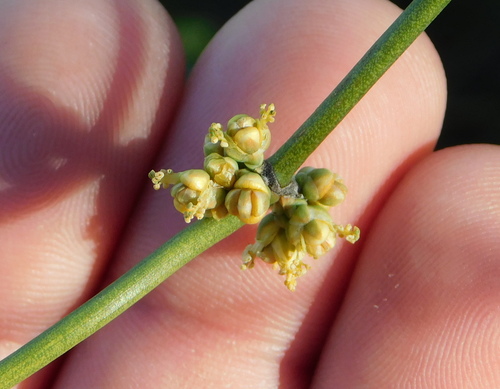
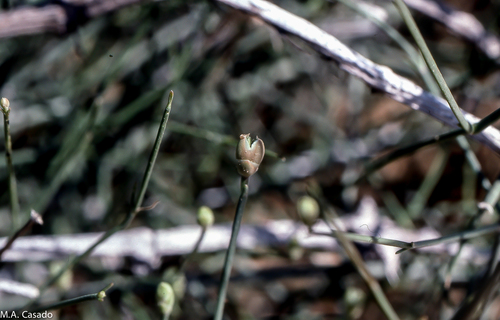
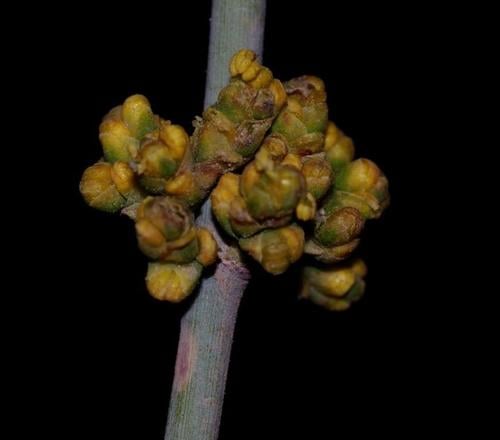
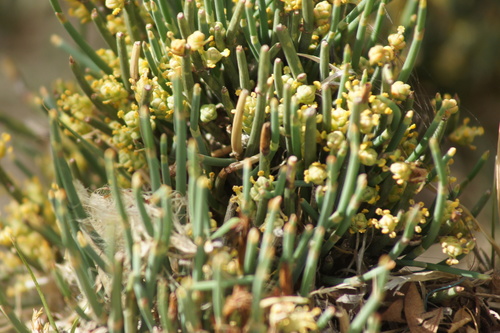
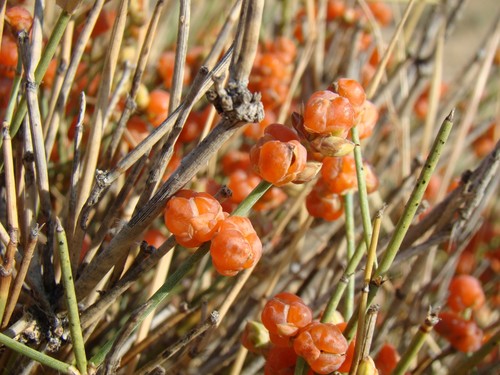
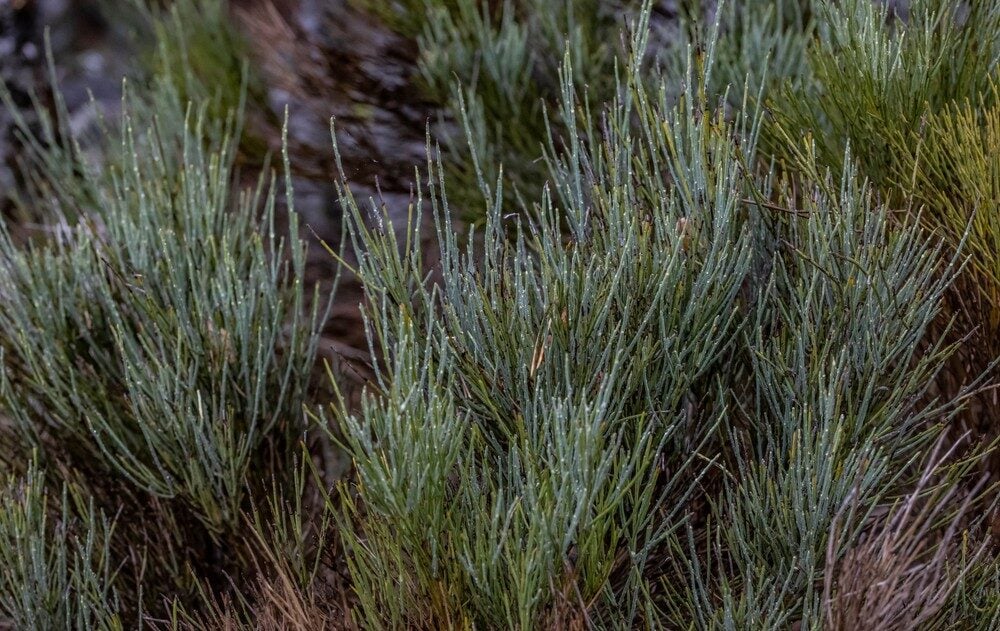
A sprawling shrub. It normally grows 2.4 m high but can be a small tree 3.5 m high. The young shoots are green and finely ridged. The leaves are small and fall quickly. They are 6 mm long. The fruit are berries which are 12 mm long. They are red or orange.
Edible Uses
The fruit are eaten raw.
Traditional Uses
The fruit are eaten raw.
This uses section is brief — help expand it
Medicinal Uses
The plant is a diuretic and blood cleanser. A decoction or infusion of the branches and roots is used. Drunk as a tonic, possibly to help the kidneys. The stems of many members of this genus contain the alkaloid ephedrine and are of value in the treatment of asthma and many other complaints of the respiratory system. However, species from the Americas (such as this one) are said to be lacking this alkaloid.
Distribution
It is a tropical plant that grows in the Andes. It is frost hardy. They need light sandy or stony soil with good drainage. In Argentina it grows from sea level to 1,000 m above sea level. It suits hardiness zones 6-9.
Where It Grows
Andes, Argentina, Bolivia, Central America, Chile, Ecuador, Honduras, Peru, South America*,
Cultivation
Plants are grown from seed.
Propagation
Seed - Division. Layering.
Notes
There are about 40 Ephedra species. Also put in the family Gnetaceae.
Synonyms
Also Known As
Belcho, Canadillo, Canatilla, Chita mikuna, Cola de buey, Cola de caballo, Condorsara, Pingopingo
References (11)
- Caveney et al., 2001, New observations on the secondary chemistry of world Ephedra (Ephedraceae), (American Journal of Botany. 88:1199-1208.)
- Chamorro, M. F., & Ladio, A., 2020, Native and exotic plants with edible fleshy fruits utilized in Patagonia and their role as sources of local functional foods. BMC Complementary Medicine and Therapies. 20:155
- Denkschr. Kaiserl. Akad. Wiss. Wien, Math.-Naturwiss. Kl. 56(2):86. 1889
- Etherington, K., & Imwold, D., (Eds), 2001, Botanica's Trees & Shrubs. The illustrated A-Z of over 8500 trees and shrubs. Random House, Australia. p 281
- Fouqué, A., 1972, Espèces fruitières d'Amérique tropicale. Institut français de recherches fruitierès outre-mer
Show all 11 references Hide references
- Kermath, B. M., et al, 2014, Food Plants in the Americas: A survey of the domesticated, cultivated and wild plants used for Human food in North, Central and South America and the Caribbean. On line draft. p 336
- Leon-Lobos, P., et al, 2022, Patterns of Traditional and Modern Uses of Wild Edible Native Plants of Chile: Challenges and Future Perspectives. Plants (Basel) v 11 (6) Table S1
- Thomas, E., et al, 2008, The Relationship Between Plant Use and Plant Diversity in the Bolivian Andes, with Special Reference to Medicinal Plant Use. Hum Ecol (2008) 36:861–879
- Torre, de la L., et al, 2008, Enciclopedia de las Plantas Útiles del Ecuador. Herbario QCA. Pontificia Universidad Católica del Ecuador. p 140
- Thomas, E., et al, 2009, The relation between accessibility, diversity and indigenous valuation of vegetation in the Bolivian Andes. Journal of Arid Environments. 73:854-861
- Young, J., (Ed.), 2001, Botanica's Pocket Trees and Shrubs. Random House. p 338