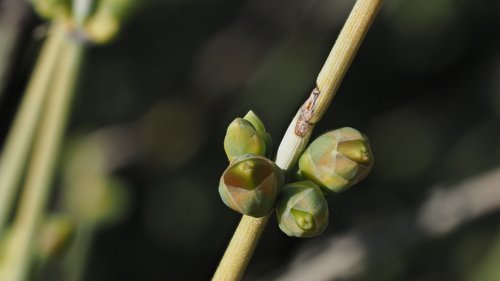
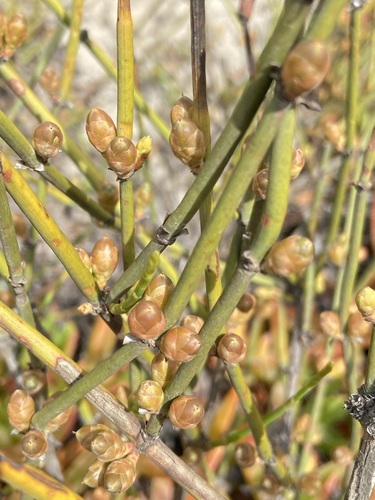
Ephedra breana
Phil.
Pingo-pingo, Tume
iNaturalist· cc-by-nc
(c) avocat, some rights reserved (CC BY-NC), uploaded by avocat
iNaturalist· cc-by-nc
(c) Juan Mauricio Contreras, some rights reserved (CC BY-NC)
iNaturalist· cc-by
(c) GREGORY ANTHONY PAUCA TANCO, some rights reserved (CC BY)
Summary
Source: WikipediaEphedra breana (frutilla de campo, pingo-pingo) is a species of Ephedra growing from northwest Argentina through to Chile and Bolivia.
Description
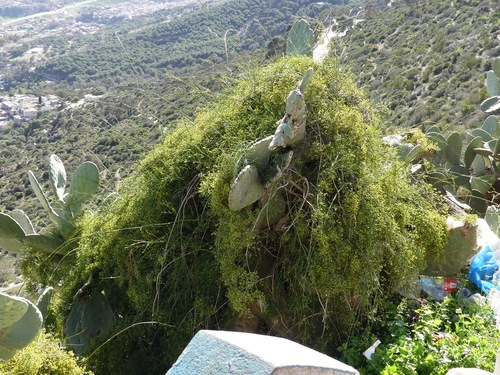
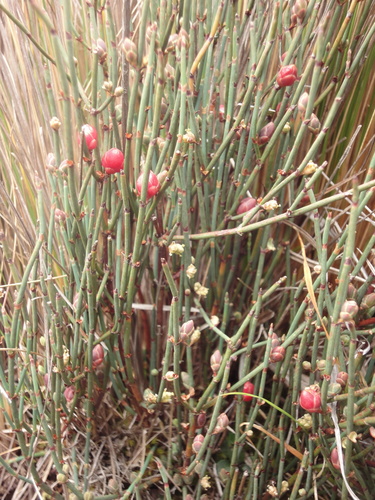
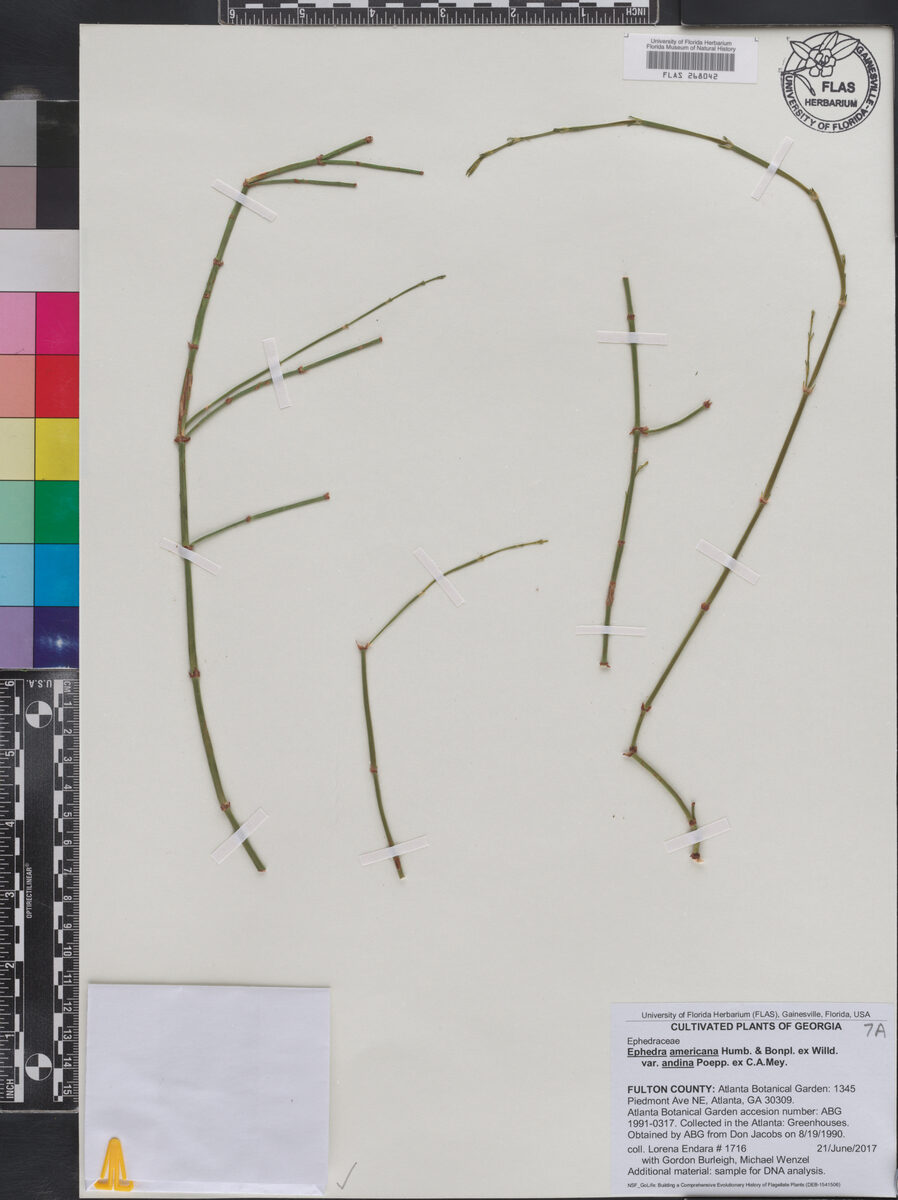
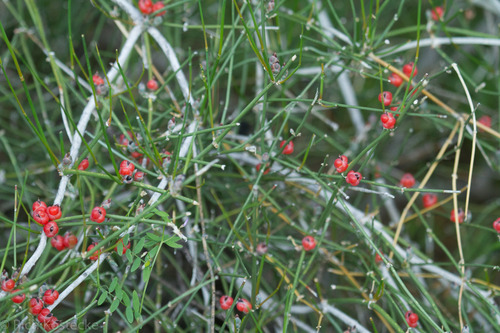
A shrub. It grows 2 m high. The stems are 1-2 mm across and internodes 2-5 cm long. The leaves are in rings of 2-3.
This description is brief — help expand it
Edible Uses
The fruit is eaten.
Known Hazards
Ephedra species contain ephedrine alkaloids; consumption carries health risks.
Distribution
It is a temperate plant. In Chile it can grow from 500 m altitude to 3,500 m above sea level. It grows in dry areas with a winter rainfall of 100-300 mm. It can grow in areas with very low rainfall. It grows in full sun. It suits a hardiness zone of 8. It can tolerate some snow.
Where It Grows
Andes, Argentina, Chile, South America,
Notes
There are about 40 Ephedra species.
Also Known As
Granada, Sanguinaria
References (5)
- Aldunate, C. et al, 1983, Ethnobotany of pre-Altiplanic Community in the Andes of Northern Chile. Economic Botany 37( ) p 120-134
- Rapoport, E., H., et al, 2003, Plantas Nativas Comestibles de la Patagonia Andina Argentino/Chilena Parte 1, Department de Ecologi Centro Regional Universitario Briloche p 28
- Ugalde, P. C., et al, 2020, 13,000 years of sociocultural plant use in the Atacama Desert of northern Chile. Vegetation History and Archaeobotany. Springer
- Villagran, C., et al, 1999, La Tradicion Altiplanica: Estudio Etnobotanico en Los Andes de Iquique, Primera Region, Chile. Chungara, volumen 31 No. 1 pp 81-186
- www.chileflora.com