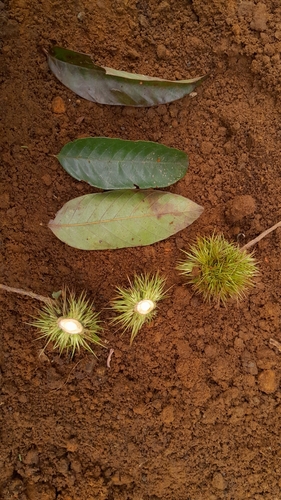
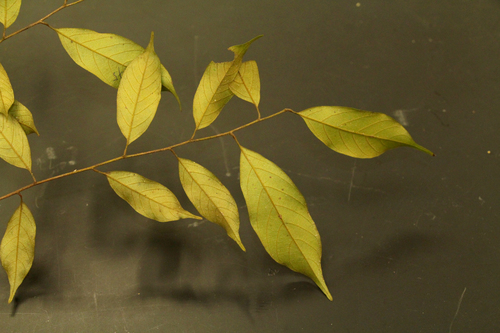
Castanea species
Various
Chestnut Hybrids
gbif· cc-by-nc
Dragonfyre
gbif· cc-by-nc
Rafael Carvalho
gbif· cc-by-nc
esdena
Description
Castanea species is a deciduous Tree growing to 30 m (98ft) by 25 m (82ft) at a fast rate. See above for USDA hardiness. It is hardy to UK zone 4. It is in flower in July, and the seeds ripen in October. The species is monoecious (individual flowers are either male or female, but both sexes can be found on the same plant) and is pollinated by Insects. Suitable for: light (sandy), medium (loamy) and heavy (clay) soils, prefers well-drained soil and can grow in nutritionally poor soil. Suitable pH: mildly acid and neutral soils. It can grow in semi-shade (light woodland) or no shade. It prefers dry or moist soil and can tolerate drought.
Edible Uses
Seed - raw or cooked. Eaten raw, there is a distinct astringency, especially if the fleshy inner skin beneath the outer shell of the seed is not removed. When cooked, however, and especially when baked, the seed becomes much sweeter and has a floury texture. It then makes an excellent food and can be used as a staple food in much the same way as potatoes or cereals. The seed is low in fats and oils but high in carbohydrates. Carbon Farming Solutions - Staple Crop: balanced carb (The term staple crop typically refers to a food that is eaten routinely and accounts for a dominant part of people's diets in a particular region of the world).
Medicinal Uses
Some see for example the individual entries for Castanea dentata, Castanea mollissima, Castanea pumila
Distribution
Hybrid origin
Where It Grows
Coming Soon
Cultivation
Prefers a good well-drained slightly acid loam but succeeds in dry soils. Once established, it is very drought tolerant. Very tolerant of highly acid, infertile dry sands. Averse to calcareous soils but succeeds on harder limestones. An excellent soil-enriching understorey in pine forests. Flowers are produced on wood of the current year's growth. Plants are fairly self-sterile. They hybridize freely with other members of this genus. Plants in this genus are notably resistant to honey fungus. Carbon Farming Solutions - Cultivation: new crop. Management: standard, coppice (Describes the non-destructive management systems that are used in cultivation).
Propagation
Seed - where possible sow the seed as soon as it is ripe in a cold frame or in a seed bed outdoors. The seed must be protected from mice and squirrels. The seed has a short viability and must not be allowed to become dry. It can be stored in a cool place, such as the salad compartment of a fridge, for a few months if it is kept moist, but check regularly for signs of germination. The seed should germinate in late winter or early spring. If sown in an outdoor seedbed, the plants can be left in situ for 1 - 2 years before planting them out in their permanent positions. If grown in pots, the plants can be put out into their permanent positions in the summer or autumn, making sure to give them some protection from the cold in their first winter. These plants are of hybrid origin, so seed is unlikely to breed true.
Other Uses
The bark, leaves, wood and seed husks all contain tannin. Wood - hard, strong, light. Carbon Farming Solutions - Industrial Crop: biomass, tannin (Crops grown for non-food uses. Industrial crops provide resources in three main categories: materials, chemicals, and energy. Traditional materials include lumber and thatch, paper and cardboard, and textiles). Other Systems: woody agriculture.
Also Known As
Hybrid & Neohybrid Chestnuts. Castanea spp.