Castanopsis tonkinensis
Seem. ex Engl.
Gong sun zhui
gbif· cc-by
Moscow State University (copyright is managed by Dr. Alexey P. Seregin)
gbif· cc-by
Moscow State University (copyright is managed by Dr. Alexey P. Seregin)
Description
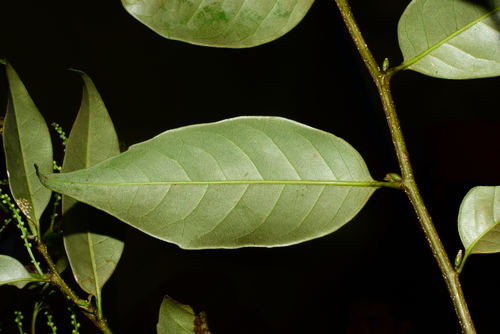
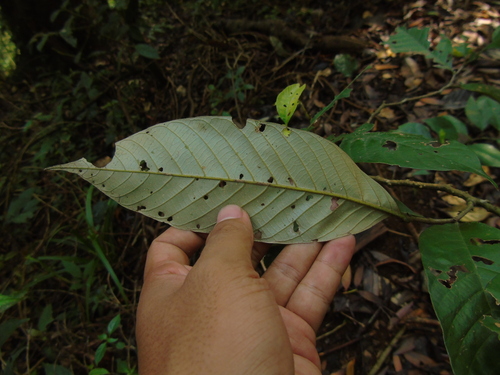
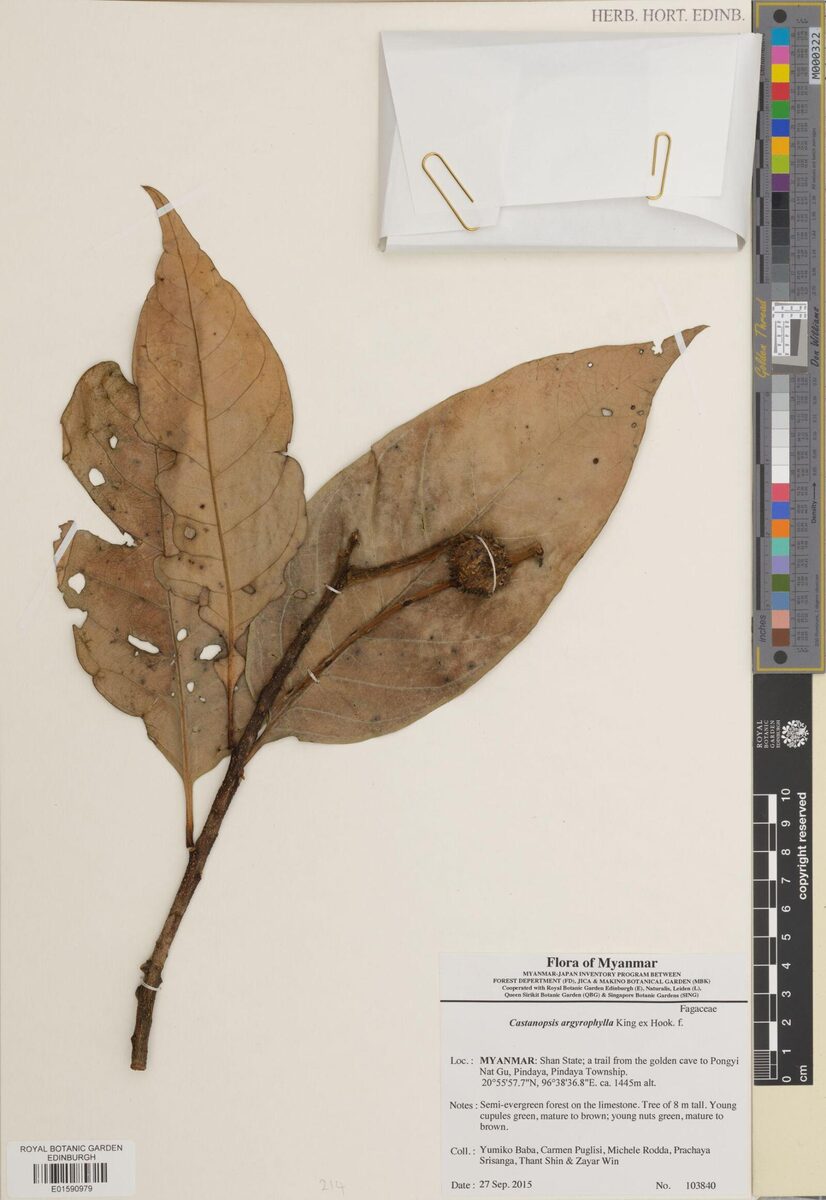
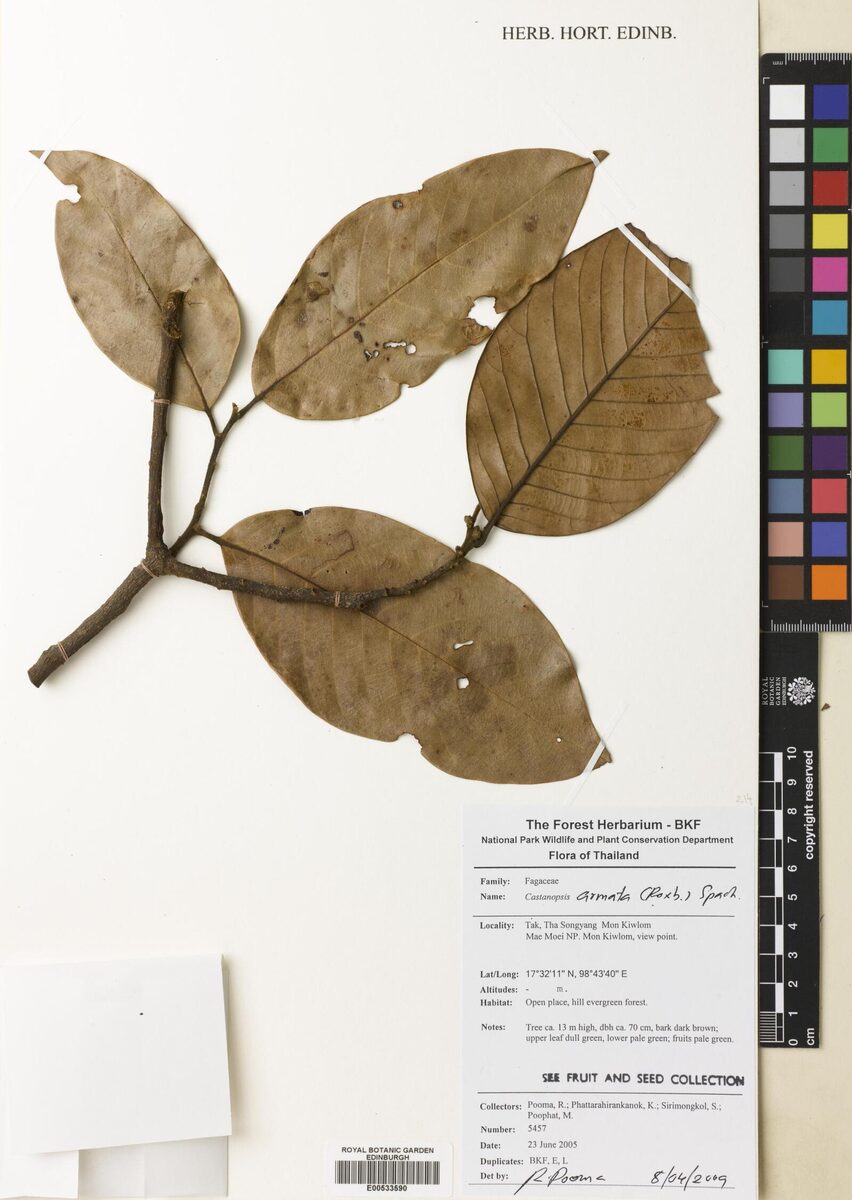
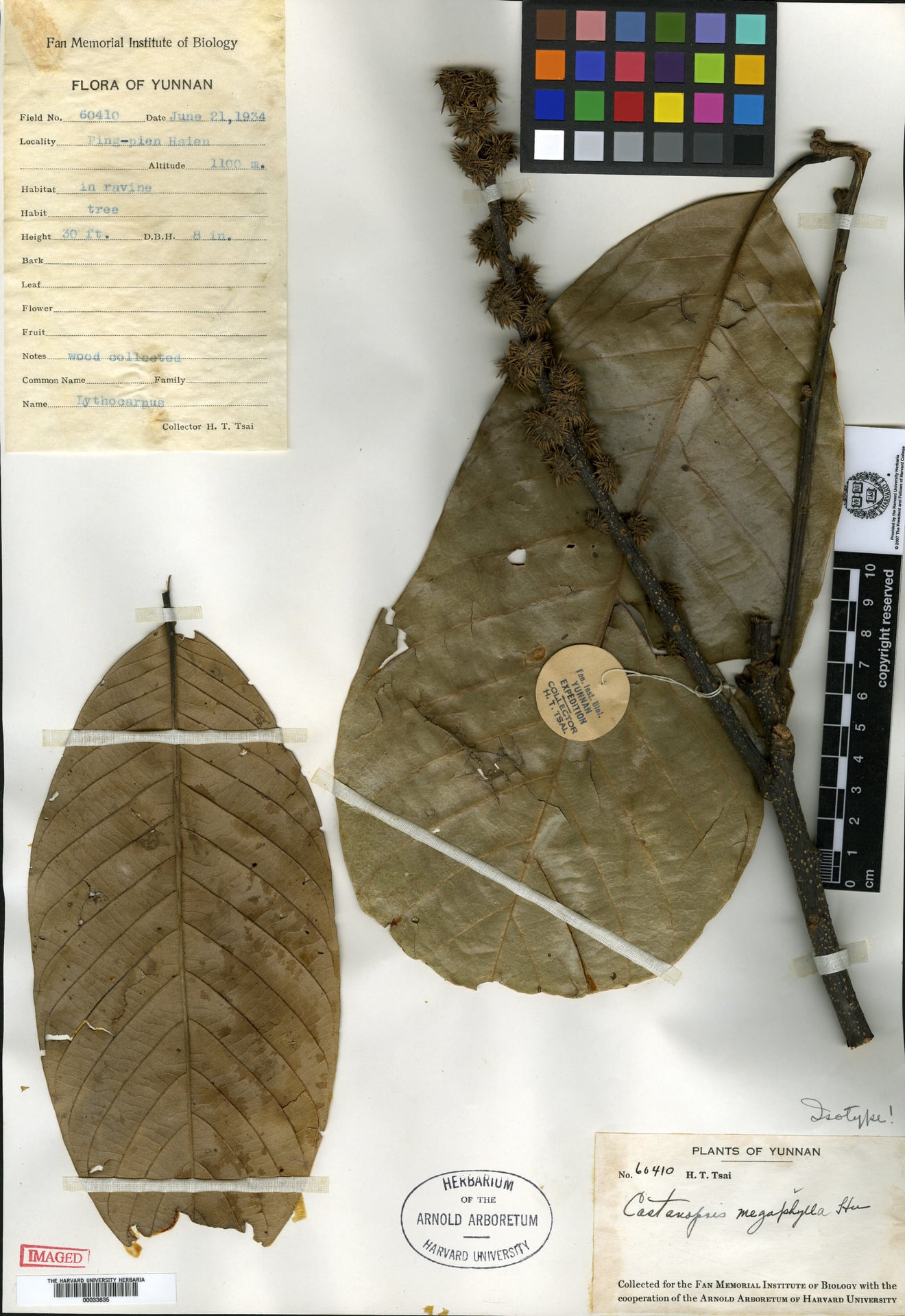
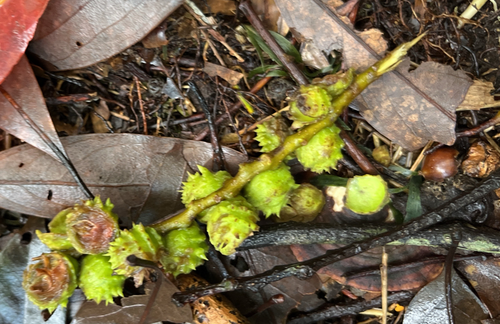
A medium or large tree. It grows 30-35 m tall. The trunk is 50-90 cm across. The leaf stalk is 1-2 cm long. The leaf blade is sword shaped and 6-13 cm long by 1.5-4 cm wide. It is deep green above and green with reddish brown scale like layer underneath. The base is narrow and wedge shaped. The tip is heart shaped or with a short tip. There are 9-13 veins each side of the main vein. The female flowering stalk is about 20 cm long. The cup is oval. It is 2-3 cm across. The fruit is a nut. There is one nut per cup. It is 1 cm high.
Edible Uses
Fresh and dried shiitake have many uses in East and Southeast Asia. In Chinese cuisine, they are used in many dishes, including soups, braises, and stir-fried vegetable dishes such as Buddha's delight. In Japan, they are served in miso soup, used as the basis for a kind of vegetarian dashi, and as an ingredient in many steamed and simmered dishes. Two prized varieties are produced in cooler temperatures. One high-grade variety is called dōnggū (冬菇) (literally "winter mushroom") in Chinese, or donko (冬子) in Japanese. The most highly prized variety is called huāgū (花菇) (literally "flower mushroom") in Chinese, due to the flower-like pattern of cracks in the cap.
Traditional Uses
The seed contains edible starch.
This uses section is brief — help expand it
Known Hazards
Rarely, consumption of raw or slightly cooked shiitake mushrooms may cause an allergic reaction called "shiitake dermatitis", including an erythematous, micro-papular, streaky pruriginous rash that occurs all over the body including face and scalp, appearing about 24 hours after consumption, possibly worsening by sun exposure and disappearing after 3 to 21 days. This effect – presumably caused by lentinan, a polysaccharide – is more common in East Asia, but may be growing in occurrence in Europe as shiitake consumption increases. Thorough cooking may eliminate the allergenicity.
Distribution
A tropical plant. It grows below 1500-1600 m altitude. In southern China it grows up to 2000 m altitude.
Where It Grows
Asia, China, Indochina, Laos, SE Asia, Vietnam,
Notes
There are about 120 Castanopsis species. Many have edible nuts.
Also Known As
Ca oi bac bo
References (2)
- Huang Chengjiu, Zhang Yongtian, Bartholomew, B., Fagaceae, Flora of China.
- Forest Inventory and Planning Institute, 1996, Vietnam Forest Trees. Agriculture Publishing House p 266