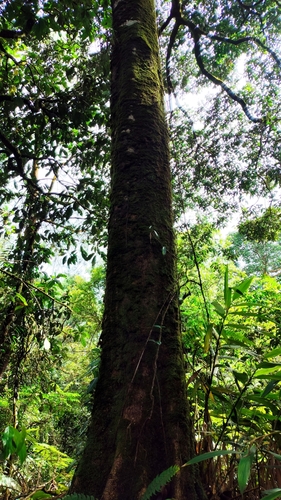
Castanopsis tessellata
Hickel & A. Camus
Zong mao zhui
gbif· cc-by
Royal Botanic Gardens, Kew
Description
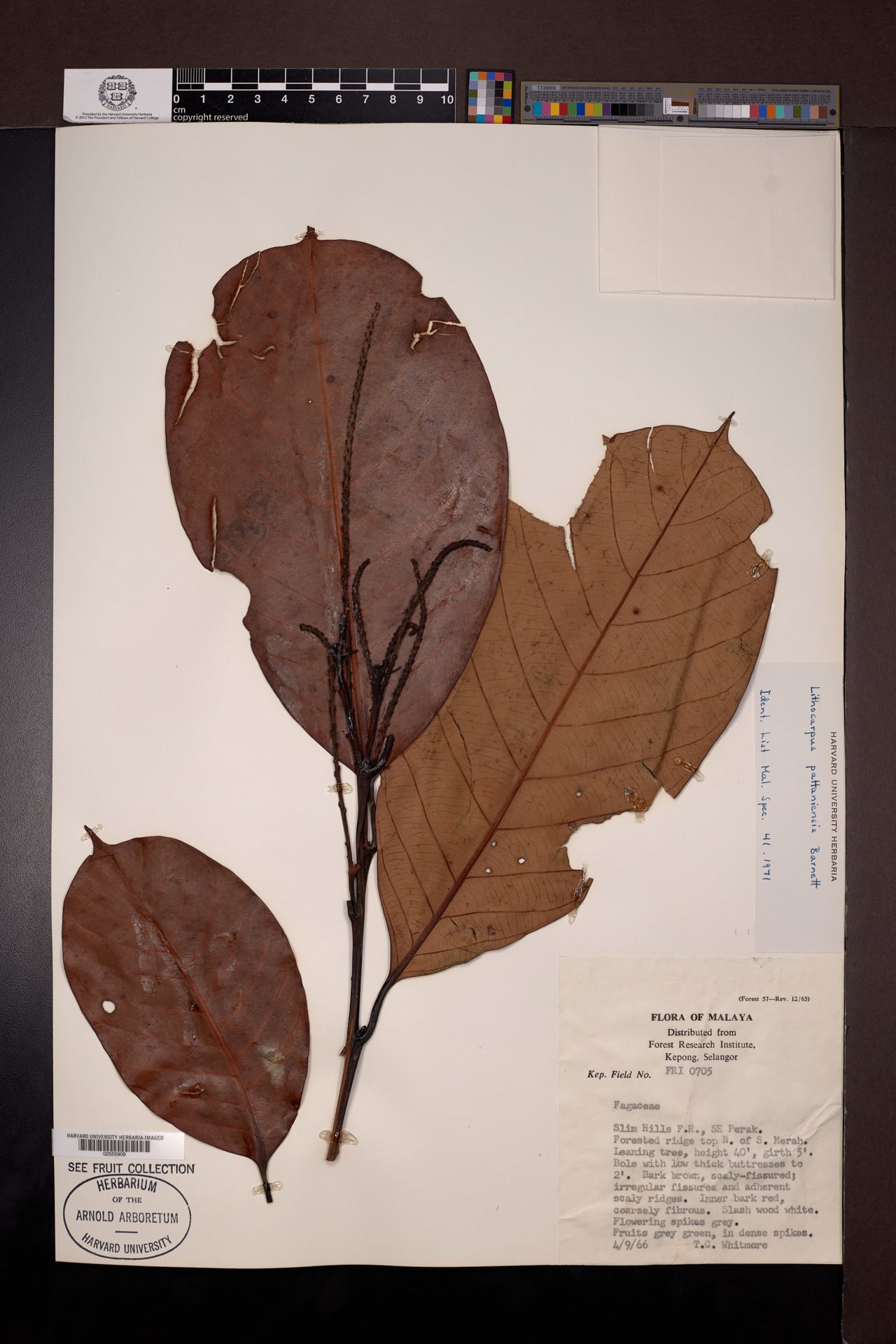
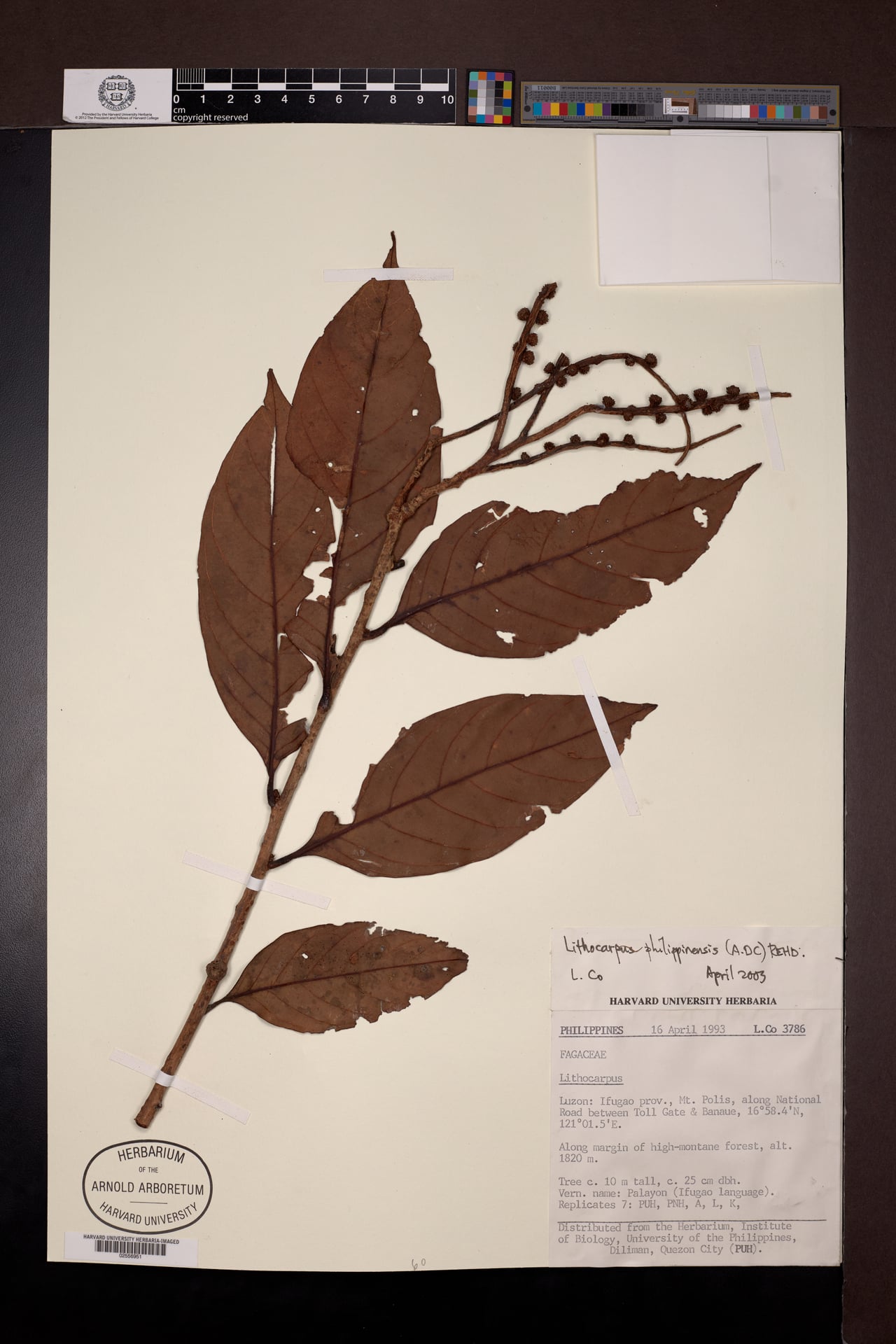
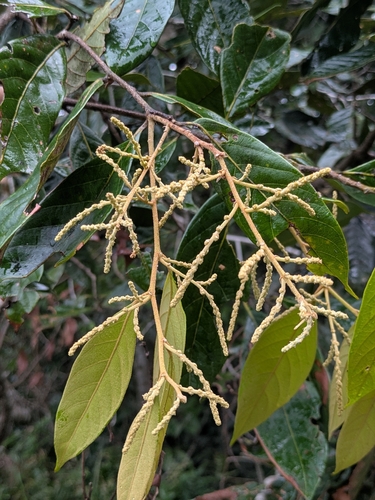
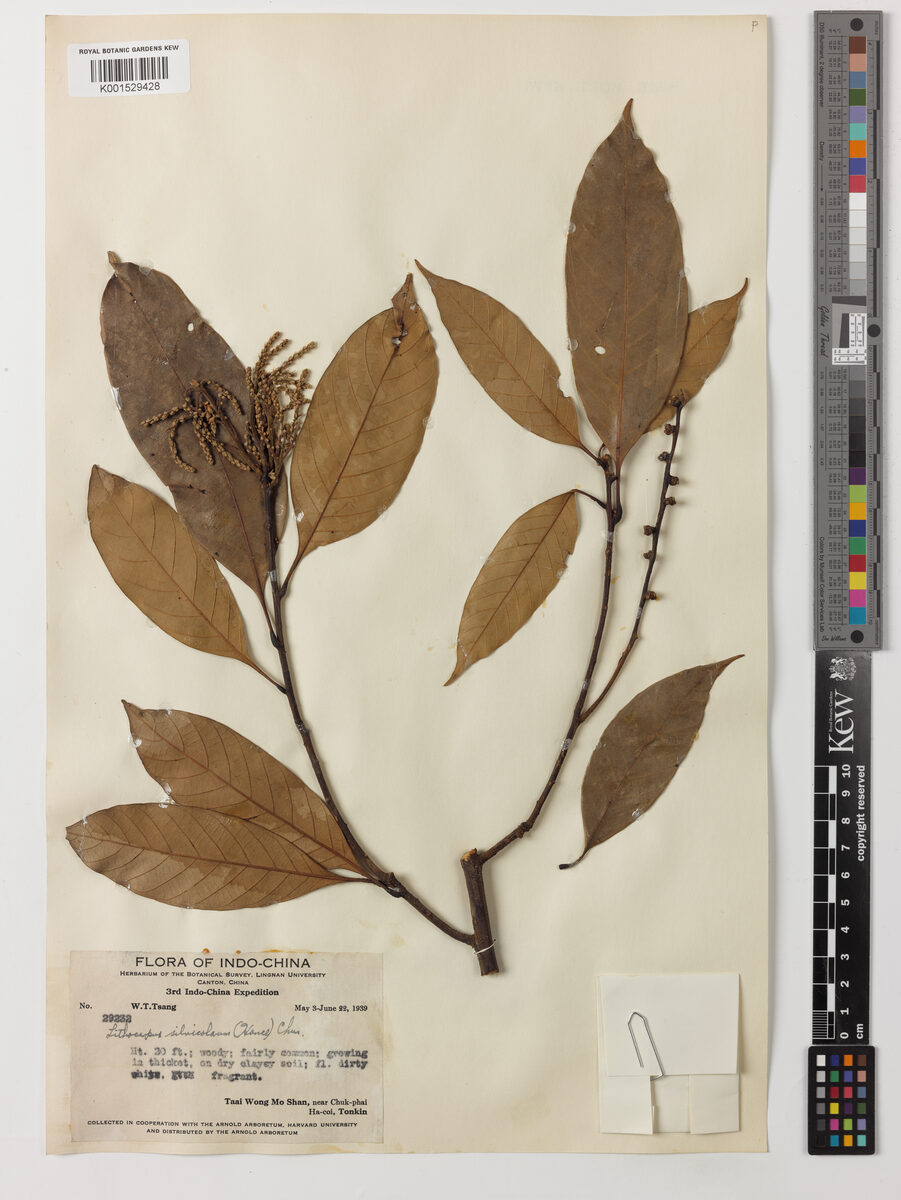
A large evergreen tree. It grows 25-30 m tall. It is 50-60 cm across. The trunk is straight. Plant parts can be densely hairy. The leaf stalk is 1.5-3 cm long. The leaf blade is oblong and 15-30 cm long by 5-8 cm wide. They base can be wedge shaped. There are 16-22 side veins on each side of the midrib. The male flowers are arranged in spirals. The female flowers are crowded along the stalk. There can be 3 flowers per cup. The cup is 5-6 cm across. The outside is densely covered with spine like bracts. There are 2-3 nuts per cup. They are cone shaped. They are 1.5-1.8 cm long by 1.5-2 cm wide.
Edible Uses
The seeds contain edible starch and are consumed as nuts.
Traditional Uses
The seeds contain edible starch.
This uses section is brief — help expand it
Distribution
A tropical plant. It grows in tropical monsoon forest. It grows below 1000 m altitude. It can tolerate shade when young. In southern China it grows in broad leafed evergreen forest below 500 m altitude.
Where It Grows
Asia, China, Indochina, Laos, SE Asia, Vietnam,
Notes
There are about 120 Castanopsis species. Many have edible nuts.
Also Known As
Ca oi la da
References (3)
- Bull. Soc. Bot. France 68:399. 1922
- Huang Chengjiu, Zhang Yongtian, Bartholomew, B., Fagaceae, Flora of China.
- Forest Inventory and Planning Institute, 1996, Vietnam Forest Trees. Agriculture Publishing House p 265