Agave deserti
Engelm.
Desert agave
iNaturalist· cc-by-nc
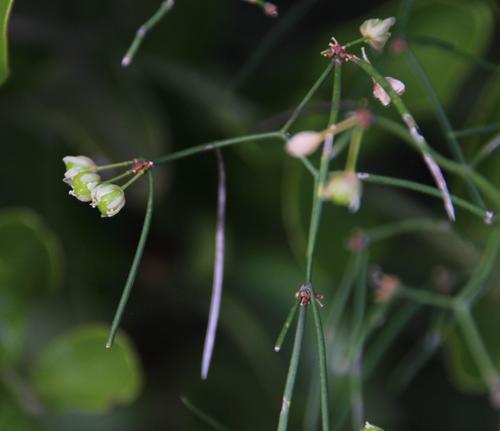
(c) Stephen Hodges, some rights reserved (CC BY-NC), uploaded by Stephen Hodges
iNaturalist· cc-by-nc-sa
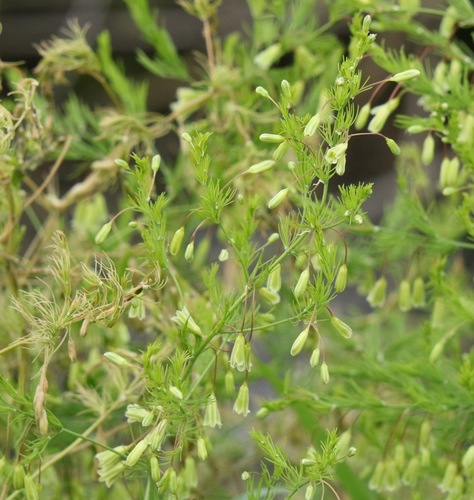
(c) Cristian A. D. Meling L., some rights reserved (CC BY-NC-SA), uploaded by Cristian A. D. Meling L.
iNaturalist· cc-by-nc-sa
(c) edgeplot, some rights reserved (CC BY-NC-SA)
Summary
Source: WikipediaAgave deserti (desert agave, mescal, century plant or maguey) is an agave native to desert regions in southern California, Arizona, and Baja California. Its tall yellow flower stalks dot dry rocky slopes and washes throughout the spring. It forms a rosette of fleshy gray-green leaves 20–70 cm long and 4.5–10 cm broad, with sharp spines along the edges and at the tips. It flowers at maturity (20 to 40 years), sending up an inflorescence 2–6 m tall. The panicle bears numerous yellow, funnel-shaped flowers 3–6 cm long. There are two varieties: Agave deserti var. deserti. Plants usually with numerous rosettes; perianth tube 3–5 mm. Southern California only. Agave deserti var. simplex (Gentry) W.C.Hodgson & Reveal. Plants usually with one or only a few rosettes; perianth tube 5–10 mm. Southern California and Arizona.
Description
A succulent plant. It can be simple or form clumps. It grows 2.4-4.5 m high and spreads 40-60 cm wide. The leaves are narrow and 15-40 cm long. They are bluish-green to grey and have small sharp teeth along the edge. The flower stalk is 2.4-4.5 m tall. It is branched. The flowers are bright yellow.
Edible Uses
The young flowering stem and flowers are both suitable for eating when cooked. The heart of the rosette is slow-baked; this process converts much of the carbohydrates into sugars, making the heart very sweet. Traditionally it was eaten as a vegetable or sweetmeat, dried for later use, made into a syrup, or fermented to produce an alcoholic drink. The plant is known to have been eaten by the Arizona Indians and may still be consumed by some tribes in northwestern Sonora. Parts used include caudices (crowns, heads, or hearts), flower stalks, flower buds, flowers, and seeds. Extensive preparation is often required, as cooking reduces saponins. Crowns can be gathered at any time but traditionally were harvested when flower stalks emerged; flower stalks are best gathered when they first appear (April to June) while still soft. Traditionally, Native Americans baked agave flower stalks and crowns in fire pits overnight; baked parts can be consumed immediately or stored. Agave syrup is made by boiling baked crowns with water.
Traditional Uses
The flowers and flower buds are eaten. The flower stalks are baked and the starchy cake eaten. The leaf bases are baked and eaten. The sap is used to make an alcoholic drink. Caution: Alcohol is a cause of cancer. The flower nectar is eaten.
Medicinal Uses
The plant contains little or no sapogenins, and no medicinal uses have been recorded.
Known Hazards
Many Agave species have strong, sharp spines on the leaves and leaf tips. In theory at least, the flowers, nectar, immature flowering stem and the centre of the rosette of all Agave species is edible and, with proper preparation, can provide a sweet, tasty foodstuff. Some species, however, contain relatively high levels of saponins (which makes them taste bitter) and some other compounds which can cause bellyache, and so these would only be eaten in times of desperation. In addition, many people may find these foods to be strongly laxative the first few times they eat them.
Distribution
It is a subtropical plant. It grows in desert areas. It can grow in arid places. Melbourne Botanical gardens. It suits hardiness zones 9-11.
Where It Grows
Australia, Central America, Mexico, North America, USA,
Cultivation
Agave deserti is native to a very arid region of southwest N. America, where the mean annual rainfall can be just 90 - 250mm. Many species can withstand at least a few degrees of frost and will succeed outdoors in warm temperate climates, but only in drier regions and where soils are very well-drained. Agave species generally require a sunny position, succeeding in most soils of medium fertility so long as they are very well-drained. Most species are undemanding as to the soil pH, though those found in the wild on limestone soils will grow better in neutral to alkaline conditions. This is an extremely drought-tolerant species, it can survive several years with little or no rainfall. Most Agave species are monocarpic, individual rosettes living for several years without flowering before sending up an often very large flowering stem and then dying after flowering and setting seed. This species, however, produces a number of new rosettes from suckers or offsets during its lifespan and these new plants will continue to grow after the death of the parent plant. Individual plants take about 7 - 15 years in their native habitat, considerably longer in colder climates, before flowering. Members of this genus are rarely if ever troubled by browsing deer. Bloom Time: Late spring to early summer. Wildlife: Flowers are better left for wildlife as they contain acrid compounds, making them unpalatable for human consumption. Environmental Impact: Some species are protected, so gathering may be restricted in certain areas. Challenges: Dislodging an agave is difficult and requires tools like a sharp axe. Preparation: Removing leaves to access crowns is challenging due to their toughness and spines. The main harvest of the agave hearts (piñas) occurs after about 7 to 10 years, typically in late winter to early spring (January to April), depending on the climate and growing conditions. Agave usually flowers once it reaches maturity, which can be after 7 to 10 years, and the flowering period generally occurs in late spring to summer.
Propagation
Sow seed on the surface in a light position in mid-spring in a warm greenhouse; germination typically occurs within 1–3 months at 15–20°C. Prick out seedlings into individual pots of well-drained soil when large enough to handle and grow on in a sunny greenhouse position until at least 15cm tall. Plant out at the beginning of the growing season and provide some protection from cold for at least the first few winters. Offsets and suckers can be potted up at any time and kept in a warm greenhouse until well established. Bulbils, where produced, offer an easy propagation method — pot them up and plant out at the start of a growing season once they reach 10cm or more in height.
Other Uses
A fibre obtained from the leaves is used for cordage and similar purposes. The leaves are very fibrous, producing a fibre that is harsh but strong and durable, suitable for making ropes, mats, nets, and sewing thread.
Notes
There are about 250 Agave species. The Agavaceae are mostly in the tropics and subtropics.
Synonyms
Also Known As
Desert Agave, Maguey de Desierto
References (7)
- Beckstrom-Sternberg, Stephen M., and James A. Duke. "The Foodplant Database." http://probe.nalusda.gov:8300/cgi-bin/browse/foodplantdb.(ACEDB version 4.0 - data version July 1994)
- Bircher, A. G. & Bircher, W. H., 2000, Encyclopedia of Fruit Trees and Edible Flowering Plants in Egypt and the Subtropics. AUC Press. p 13
- Brickell, C. (Ed.), 1999, The Royal Horticultural Society A-Z Encyclopedia of Garden Plants. Convent Garden Books. p 88
- Cundall, P., (ed.), 2004, Gardening Australia: flora: the gardener's bible. ABC Books. p 113
- Facciola, S., 1998, Cornucopia 2: a Source Book of Edible Plants. Kampong Publications. p 3
Show all 7 references Hide references
- Trans. Acad. Sci. St. Louis 3:310. 1875
- World Checklist of Useful Plant Species 2020. Royal Botanic Gardens, Kew