Chlorophytum tuberosum
(Roxb.) Baker
Vereb Ribbon Plant
iNaturalist· cc-by-nc
(c) davduf, some rights reserved (CC BY-NC)
iNaturalist· cc-by-nc
(c) davduf, some rights reserved (CC BY-NC)
Summary
Source: WikipediaChlorophytum tuberosum is a species of flowering plant in the Asparagaceae family. It is one of several species known by the common name musli. It is native to parts of Africa and India. It has historical uses in Ayurveda.
Description
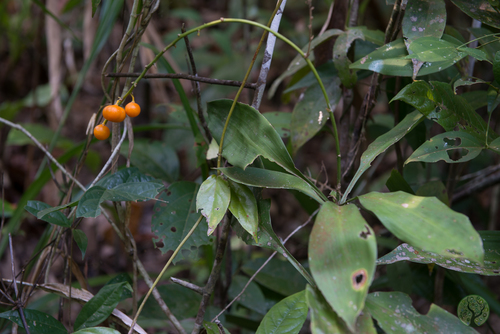
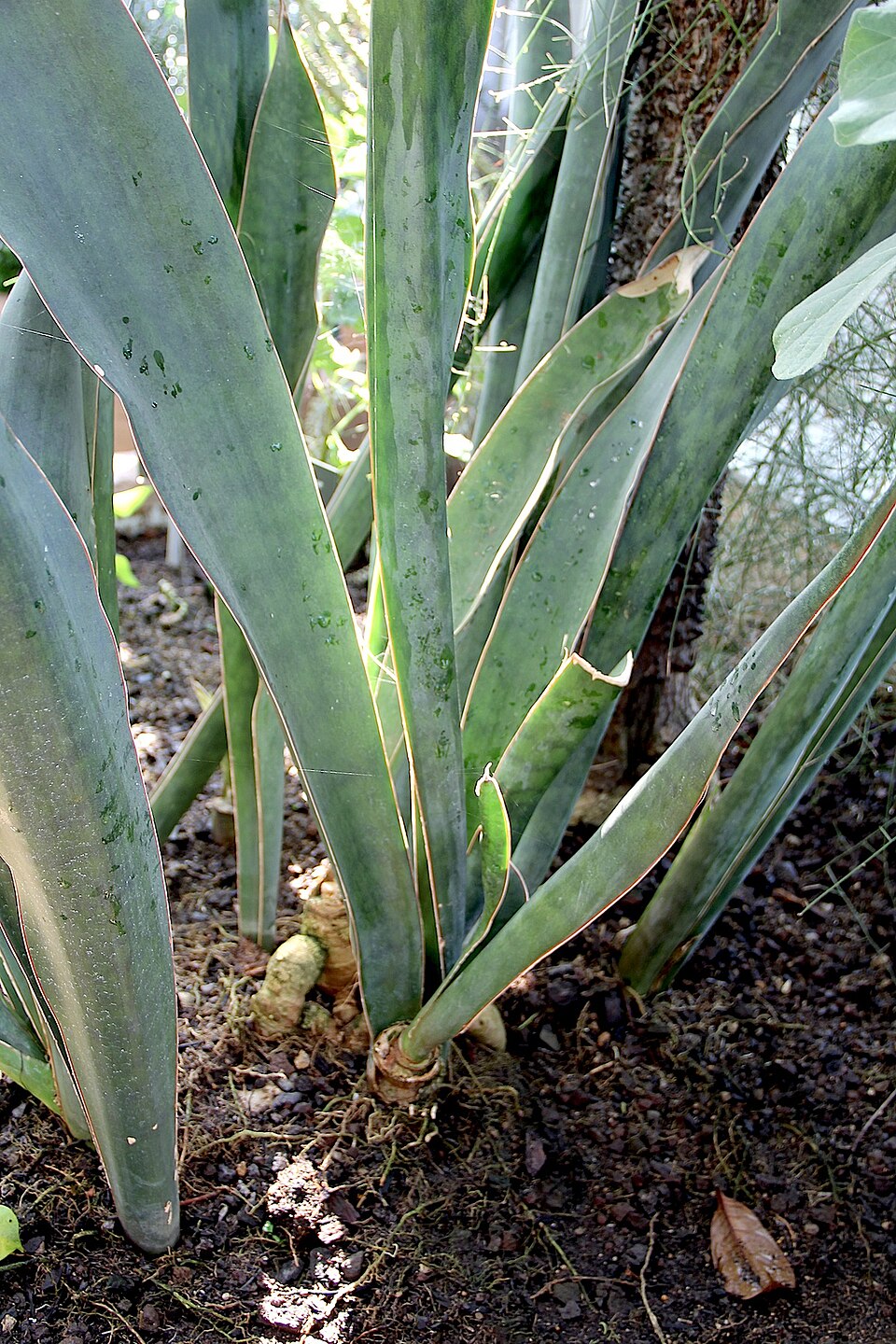
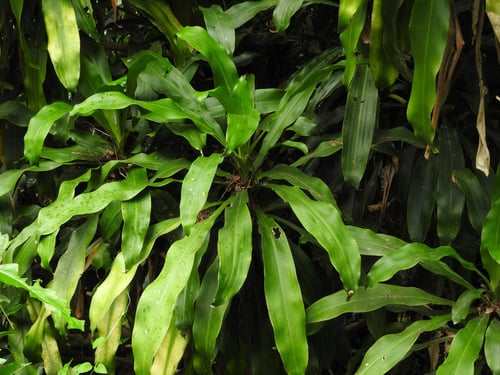
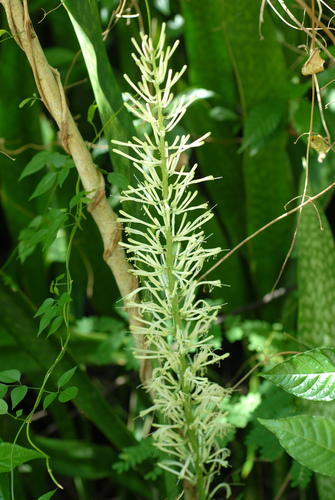
A herb that keeps growing from year to year. It has a bulb or tubers. It grows 45 cm high and spreads 75 cm wide. The stems are slender and arch over. Small plantlets develop at the ends of the stems after flowering. The leaves are narrow and like grass. They have yellow and green stripes. The flowers are large and white.
Edible Uses
The bulbs and tubers are eaten after removing the outer layer, and can be dried and pounded into flour for bread or cooked in vegetable curries. The leaves are cooked as a vegetable.
Traditional Uses
The bulbs and leaves are eaten. The outer layer is removed. The bulbs and leaves are dried and pounded into flour for bread. The are also used in vegetable curry. The leaves are cooked as a vegetable.
Medicinal Uses
Chlorophytum tuberosum is one of several species of Chlorophytum known as 'safed musli' and commonly used in traditional Indian medicine. Safed musli holds an important position in Indian herbal medicine, where the tuber is valued mainly as a tonic, intended to give strength and vigour, and is widely used as a natural aphrodisiac. It is an integral part of more than 100 herbal drug formulations.. It is used in the treatment of general debility, diabetes and lactation problems. A small amount of the tuber is given to females to check leuchorroea. The regular use of this remedy is a valuable help in the treatment of impotency and premature ejaculation. The tuber is an integral part of more than 100 herbal drug formulations.. In northern Nigeria the tubers are crushed to produce a lotion used to treat guinea-worm. The leaves and root are used to treat centipede bites and other poisonous bites. The root powder is given to animal to cure fractured bones. The dried roots of Chlorophytum contain 42% carbohydrate, 8 - 9% protein, 3 - 4% fiber and 2 - 17% saponin. Studies on Chlorophytum conducted in India and elsewhere indicate that saponins are responsible for the medicinal properties. Saponin content is thought to be highest in roots of forest origin. Many native Indian species are sold as safed musli in the Indian drug market. Chlorophytum boriviliahum produces the highest yield and highest saponin content, other native species that are used include Chlorophytum arundinaceum, Chlorophytum breviscapum, Chlorophytum indicum, Chlorophytum laxum and Chlorophytum tuberosum
Distribution
A tropical plant. It grows in humid tropical places. It will grow in most soils. It needs a protected shady position. It can grow in arid places.
Where It Grows
Africa*, Asia, Australia, Central Africa, Central African Republic, CAR, East Africa, Ethiopia, India, Kenya, Niger, Sahel, Sudan, Tanzania, Uganda, West Africa,
Cultivation
Plants are grown from the offsets.
Notes
There are between 100-150-215 Chlorophytum species. They are mostly in the tropics. Also put in the family Anthericaceae and Liliaceae.
Also Known As
Dholimusli, Dombali, Jereng sanga, Jhinkapatta, Kishelli, Kolu, Kolu sevni, Kuchela, Kulai, Kuli, Kuvli, Longdabhaji, Pulum musali, Safed mosali, Safed musli, Sevni, Shevalikardi, Turshi, Ugat phylli
References (23)
- Ambasta, S.P. (Ed.), 2000, The Useful Plants of India. CSIR India. p 121
- Bhogaonkar, P. Y. & Devarkar, V. D., 2018, Inventory for ethnovegetable knowledge of the tribals of Satpura hill area-Melghat, Dist. Amravati (India), Plantae Scientia, 2018; Vol. 01 Issue 01: 01-08
- Bodkin, F., 1991, Encyclopedia Botanica. Cornstalk publishing, p 253
- Chauhan, S. H., et al, 2018, Consumption patterns of wild edibles by the Vasavas: a case study from Gujarat, India. Journal of Ethnobiology and Ethnomedicine (2018) 14:5
- Dobriyal, M. J. R. & Dobriyal, R., 2014, Non Wood Forest Produce an Option for Ethnic Food and Nutritional Security in India. Int. J. of Usuf. Mngt. 15(1):17-37
Show all 23 references Hide references
- GAMMIE,
- Jadhav, R., et al, 2015, Forest Foods of Northern Western Ghats: Mode of Consumption, Nutrition and Availability. Asian Agri-History Vol. 19, No. 4: 293-317
- Jardin, C., 1970, List of Foods Used In Africa, FAO Nutrition Information Document Series No 2.p 66
- Khayde, M. S., et al, 2009, Wild Edible Plants Used by the tribes of Akole Tahasil of Ahmednagar District (MS), India. Ethnobotanical Leaflets 13:1328-36
- Kiran, K. C., et al, 2019, Diversity and Seasonal Availability of Potential Wild Edible Plants from Vidarbha Region of Maharashtra State, India. Int.J.Curr.Microbiol.App.Sci (2019) 8(2): 1434-1446
- Kuhnlein, H. V., et al, 2009, Indigenous Peoples' food systems. FAO Rome p 213
- Kuvar, S. D. & Shinde, R. D., 2019, Wild Edible Plants used by Kokni Tribe of Nasik District, Maharashtra. Journal of Global Biosciences. Volume 8, Number 2, 2019, pp. 5936-5945
- Lim, T. K., 2015, Edible Medicinal and Non Medicinal Plants. Volume 9, Modified Stems, Roots, Bulbs. Springer p 24
- Misra, R. C., et al, 2013, Genetic resources of wild tuberous food plants traditionally used in Similipal Biosphere Reserve, Odisha, India. Genetic Resources and Crop Evolution. Vol. 60 No. 2. Springer
- Pandy, R. K. & Saini, S. K., 2007, Edible plants of tropical forests among tribal communities of Madhya Pradesh. Indian Journal of Traditional Knowledge. 6(1), pp 185-190
- Prabha, Y. P., et al, 2010, Documentation of Wild Edible Plants of Melghat Forest, Dist. Amravati, Maharashtra State, India. Ethnobotanical Leaflets 14: 751-58, 2010.
- Reddy, K. N. et al, 2007, Traditional knowledge on wild food plants in Andhra Pradesh. Indian Journal of Traditional Knowledge. Vol. 6(1): 223-229
- Royal Botanic Gardens, Kew (1999). Survey of Economic Plants for Arid and Semi-Arid Lands (SEPASAL) database. Published on the Internet; http://www.rbgkew.org.uk/ceb/sepasal/internet [Accessed 28th March 2011]
- Samydurai, P., et al, 2012, Wild habits of Kolli Hills being staple food of inhabitant tribes of eastern Ghats, Tamil Nadu, India. Indian Journal of Natural Products and Resources. 3(3) September 2012 pp 432-437
- Singh, H.B., Arora R.K.,1978, Wild edible Plants of India. Indian Council of Agricultural Research, New Delhi. p11, 21
- Toppo, P. et al, 2016, Wild edible plants of Dhamtari district of Chhattisgarh, India. Van Sangyan Vol. 3, No. 4
- Vartak, V.D. and Kulkarni, D.K., 1987, Monsoon wild leafy vegetables from hilly regions of Pune and neighbouring districts, Maharashtra state. J. Econ. Tax. Bot. Vol. 11 No. 2 pp 331-335
- World Checklist of Useful Plant Species 2020. Royal Botanic Gardens, Kew