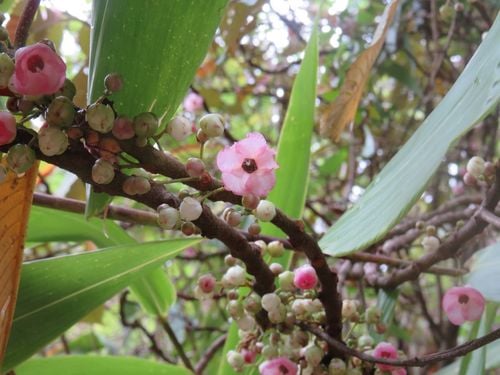
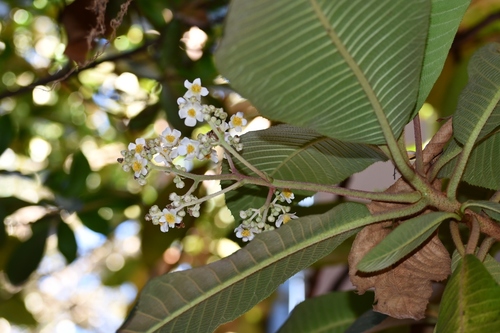
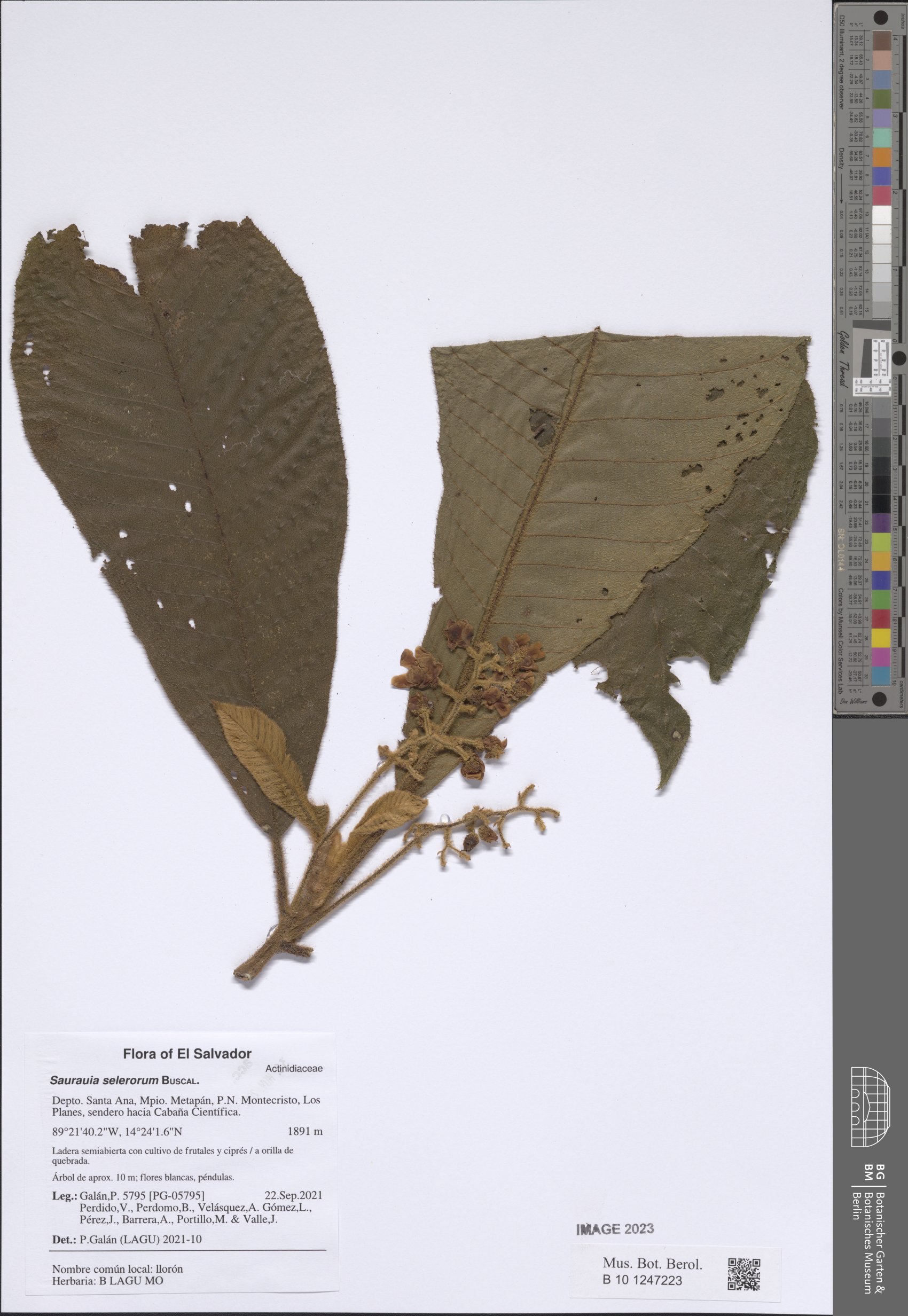
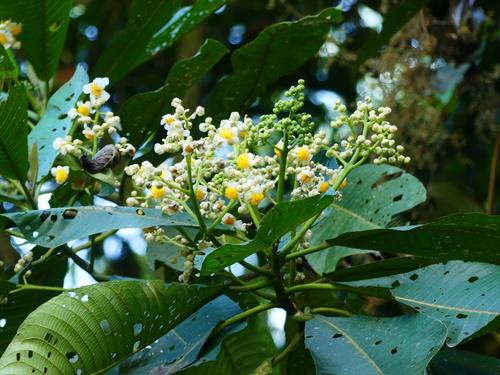
Actinidia arguta cordifolia - (Miq.)Bean.
(Miq.)Bean.
No photos yet for Actinidia arguta cordifolia - (Miq.)Bean.
Sign in to contribute a photoDescription
Actinidia arguta cordifolia is a deciduous Climber growing to 7 m (23ft) at a fast rate. It is frost tender. It is in flower from April to May, and the seeds ripen from October to December. The species is dioecious (individual flowers are either male or female, but only one sex is to be found on any one plant so both male and female plants must be grown if seed is required). and is pollinated by Bees, insects. The plant is not self-fertile. It is noted for attracting wildlife. Suitable for: light (sandy), medium (loamy) and heavy (clay) soils. Suitable pH: mildly acid, neutral and basic (mildly alkaline) soils. It can grow in semi-shade (light woodland) or no shade. It prefers moist soil.
Edible Uses
Fruit - raw or cooked. Smooth skinned with a sweet flesh. About the size of a grape. The globose to oblong fruit is greenish-yellow or purple-red when mature and 2 - 3 cm long. It contains a number of small seeds, but these are easily eaten with the fruit.
Distribution
E. Asia - China, Japan, Korea.
Where It Grows
Coming Soon
Cultivation
Prefers a sound loamy neutral soil. Succeeds in semi-shade but full sun is best for fruit production. Prefers a sheltered position. This is a very vigorous plant that can climb to the tops of tall trees. Very hardy, tolerating temperatures down to -30°c or more, but young spring growth is susceptible to frost damage. Fruits are formed on second year wood and also on fruit spurs on older wood, any pruning is best carried out in the winter. The small flowers are sweetly scented. This is a climbing plant, supporting itself by twining around branches etc. Sometimes cultivated for its edible fruit, there are some named varieties. Dioecious. Male and female plants must be grown if seed is required. Plants in this genus are notably resistant to honey fungus. Most Actinidia species are not self-fertile. Male and female plants are required for fruit production. Kiwifruit is typically harvested in late autumn to early winter, depending on the variety and climate. Kiwifruit flowers in spring. Kiwifruit vines are fast-growing and can reach maturity in 3-4 years, producing fruit within that timeframe. They require support structures for optimal growth.
Propagation
Seed - sow spring in a greenhouse. It is probably best if the seed is given 3 months stratification, either sow it in a cold frame as soon as it is ripe in November or as soon as it is received. Fresh seed germinates in 2 - 3 months at 10°c, stored seed can take longer. When they are large enough to handle, prick the seedlings out into individual pots and grow them on in light shade in the greenhouse for at least their first winter. When the plants are 30cm or more tall, plant them out into their permanent positions in late spring or early summer, after the last expected frosts. Most seedlings are male. The seedlings are subject to damping off, they must be kept well ventilated. Cuttings of softwood as soon as ready in spring in a frame. Cuttings of half-ripe wood, July/August in a frame. Very high percentage. Cuttings of ripe wood, October/November in a frame.
Other Uses
Most Actinidia species are not self-fertile. Male and female plants are required for fruit production. Kiwifruit is typically harvested in late autumn to early winter, depending on the variety and climate. Kiwifruit flowers in spring. Kiwifruit vines are fast-growing and can reach maturity in 3-4 years, producing fruit within that timeframe. They require support structures for optimal growth.