Saurauia roxburghii
Wall.
Singkrang
iNaturalist· cc-by-sa
(c) Rohit, some rights reserved (CC BY-SA), uploaded by Rohit
iNaturalist· cc0
no rights reserved
Description
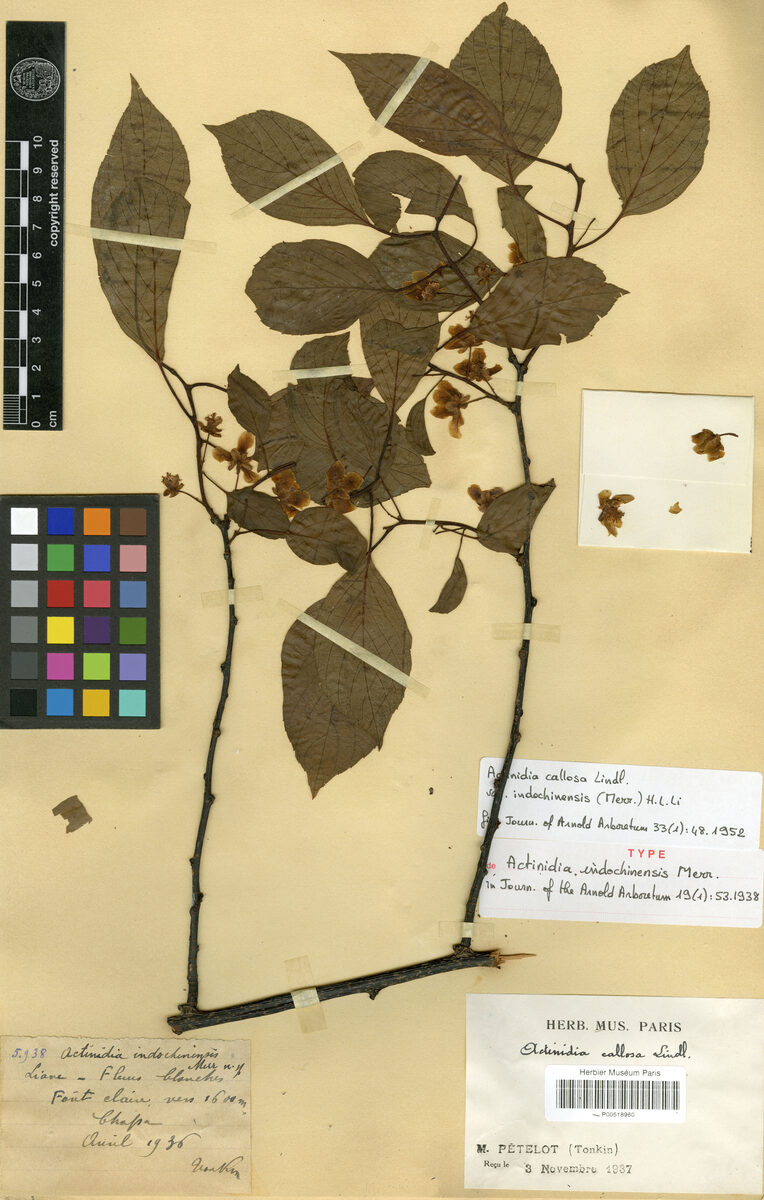
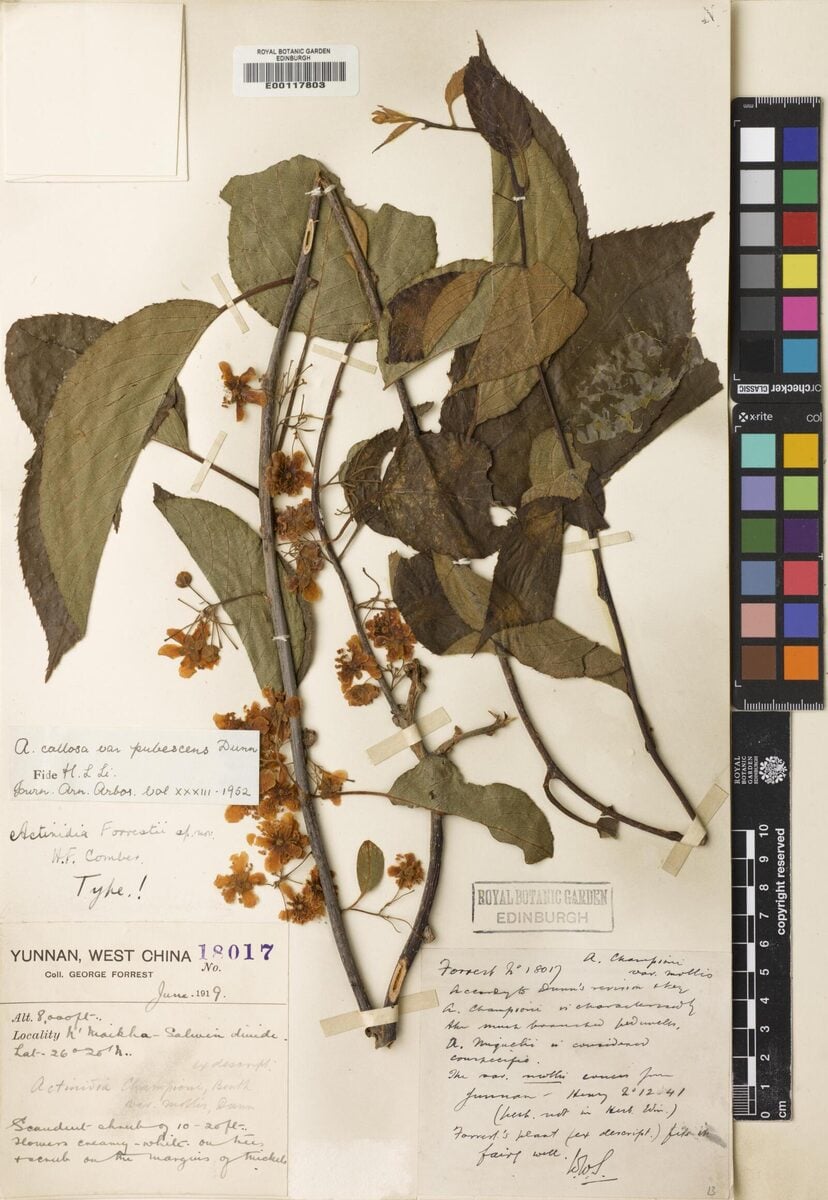
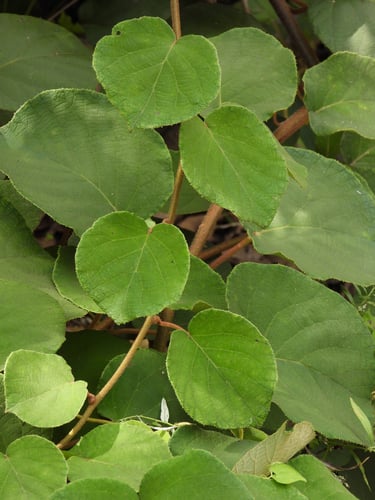
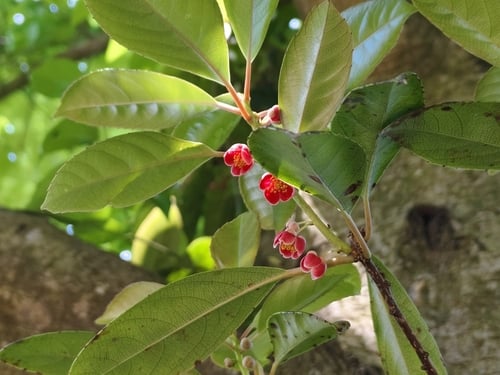
An evergreen shrub or small tree. It grows 6 m tall. The trunk is short. The crown is narrow. The branches are thick and spreading. The bark is dark brown and cracks. The leaves are 18-35 cm long by 5-9 cm wide. They are clustered near the ends of the twigs. They are dark green and sword shaped. There are fine teeth along the edge. The flowers are white or pink and 1 cm across. They are in short clusters of 3-15 flowers. They hang on old woody stems and trunks. The fruit are 1.2 cm across. They are greenish-yellow.
Edible Uses
Fruit. Eaten when ripe. The fruit is the size of a small pea. The leaves are used to promote quick fermentation when making alcoholic drinks.
Traditional Uses
Ripe fruit are eaten fresh.
This uses section is brief — help expand it
Medicinal Uses
A leaf infusion is used in baths to treat boils. It is used especially for children.
Distribution
It is a temperate plant. It grows in moist open places. In Sikkim it grows between 300-1,000 m above sea level.
Where It Grows
Asia, Bangladesh, Himalayas, India, Indochina, Laos, Myanmar, Nepal, Northeastern India, SE Asia, Sikkim, Thailand, Vietnam,
Other Uses
A gummy or mucilaginous matter obtained from the leaves is used as a hair pomade. The reddish-brown wood is soft with a large central pith. We have no more information on the wood of this species, but the following is a general description of the wood from species in this genus. The wood is little used, except locally for fuel. It is a pale reddish brown throughout; not attractive; lustre rather low; odourless and tasteless; rather light, but firm, tough, and strong; texture medium; grain straight; easy to cut, saws finely woolly, is rather hairy under the plane; probably not durable. Useful locally for general carpentry and interior construction.
Production
In Sikkim fruit are available in February.
Synonyms
Also Known As
Ajichila, Aule gogun, Bon pachala, Bon-loisu-phang, Bon-posola, Bor-jir-sinnig, Chiellay, Daibri, Dalup, Dangsipha, Dia-ching, Dieng-soh-la-pied, Ekeeprin, Geng-sning, Gogan, Hengunia, Hinche, Nonthler arong, Pani pachala, Paniposola, Parbatia hengunia, Patok, Porbotia-sengunia, Safar-kung, Sing-khrau, Soda roxburgh, Tarsingahi, Terpui, Thit-nga-yan, Tong-bahu
References (18)
- Ambasta S.P. (Ed.), 2000, The Useful Plants of India. CSIR India. p 552
- Anderson, E. F., 1993, Plants and people of the Golden Triangle. Dioscorides Press. p 220
- Balkrishna, A., et al, 2022, Indigenous Uses of Plants among Forest-dependent Communities of Seijosa, Arunachal Pradesh. International Journal of Economic Plants 2022, 9(1):064-080
- Dobriyal, M. J. R. & Dobriyal, R., 2014, Non Wood Forest Produce an Option for Ethnic Food and Nutritional Security in India. Int. J. of Usuf. Mngt. 15(1):17-37
- Gardner, S., et al, 2000, A Field Guide to Forest Trees of Northern Thailand, Kobfai Publishing Project. p 63
Show all 18 references Hide references
- Mozhui, R., et al, 2011, Wild edible fruits used by the tribals of Dimapur district of Nagaland, India. Pleione 5(1): 56 - 64
- Pasha, M. K. & Uddin, S. B., 2019, Minor Edible Fruits of Bangladesh. Bangladesh J. Plant Taxon. 26(2): 299–313
- Patiri, B. & Borah, A., 2007, Wild Edible Plants of Assam. Geethaki Publishers. p 13
- Sarma, H., et al, 2010, Updated Estimates of Wild Edible and Threatened Plants of Assam: A Meta-analysis. International Journal of Botany 6(4): 414-423
- Sawian, J. T., et al, 2007, Wild edible plants of Meghalaya, North-east India. Natural Product Radiance Vol. 6(5): p 421
- Sen, R., et al, 1985, Ethnobotanical Uses of Herbaria - 4 J. Econ. Tax. Bot. Vol 6. No.2 pp 331-335
- Singh, H.B., Arora R.K.,1978, Wild edible Plants of India. Indian Council of Agricultural Research, New Delhi. p 72
- Srivastava, R. C., 2009, Traditional knowledge of Adi tribe of Arunachal Pradesh on plants. Indian Journal of Traditional Knowledge. 8(2): 146-153
- Srivastava, R. C., 2010, Traditional knowledge of Nyishi (Daffla) tribe of Arunachal Pradesh. Indian Journal of Traditional Knowledge. 9(1):26-37
- Srivastava, R. C., et al, 2010, Indigenous biodiversity of Apatani plateau: Learning on biolcultural knowledge of Apani tribe of Qrunachal Pradesh for sustainable livelihoods. Indian Journal of Traditional Knowledge 9(3): 432-442
- Sundriyal, M., et al, 1998, Wild edibles and other useful plants from the Sikkim Himalaya, India. Oecologia Montana 7:43-54
- Sundriyal, M., et al, 2004, Dietary Use of Wild Plant Resources in the Sikkim Himalaya, India. Economic Botany 58(4) pp 626-638
- Tsering, J., et al, 2017, Ethnobotanical appraisal on wild edible plants used by the Monpa community of Arunchal Pradesh. Indian Journal of Traditional Knowledge. Vol 16(4), October 2017, pp 626-637