Nephelium lappaceum
L.
Rambutan, Hairy Lychee
iNaturalist· cc-by-nc
(c) neptune2023, some rights reserved (CC BY-NC)
iNaturalist· cc-by-nc
(c) Julien Piolain, some rights reserved (CC BY-NC), uploaded by Julien Piolain
iNaturalist· cc-by-nc-sa
(c) Ahmad Fuad Morad, some rights reserved (CC BY-NC-SA)
Description
Nephelium lappaceum is an evergreen Tree growing to 20 m (65ft) by 20 m (65ft) at a fast rate. See above for USDA hardiness. It is hardy to UK zone 10 and is frost tender. The flowers are pollinated by Insects. The plant is self-fertile. It is noted for attracting wildlife. Suitable for: medium (loamy) and heavy (clay) soils. Suitable pH: mildly acid and neutral soils and can grow in very acid soils. It can grow in semi-shade (light woodland) or no shade. It prefers moist soil.
Edible Uses
Oil. Fruit - raw or cooked. The sweet, juicy, light-coloured flesh is delicious eaten raw. It can also be stewed, canned in syrup, used in jams, jellies etc. The bright red, ovoid fruit is 5 - 6cm long and is produced in clusters of 10 - 12 fruits. Seed - occasionally roasted and eaten. A bitter flavour, it is said to have narcotic properties. An oil or tallow similar to cacao butter, with a high level of arachidic acid, can be rendered from the seeds
Medicinal Uses
Anthelmintic Antidiarrhoeal Astringent Febrifuge Poultice Stomachic. The green fruit is said to be astringent, stomachic, and anthelmintic. It is used in the treatment of various diseases, especially fevers and diarrhoea. The leaves are used in poultices for headaches. The shell of the fruit contains tannins and is used as an astringent. In Java, the toxic saponin found in the fruit wall is dried and used as medicine. In Malaysia, the roots are used in a decoction for treating fever. The bark is used as an astringent for tongue diseases.
Known Hazards
The fruit wall contains a toxic saponin; cases of poisoning are known.
Distribution
E. Asia - China, Thailand, Cambodia, Laos, Vietnam, Malaysia, Indonesia, Philippines.
Where It Grows
TEMPERATE ASIA: Hainan Sheng, Yunnan Sheng,China. TROPICAL ASIA: Cambodia, Laos, Thailand, Vietnam, Indonesia, Kalimantan, Sulawesi, Jawa, Sumatera, Malaysia, Philippines,
Cultivation
Rambutan grows best in the lowland humid tropics at an elevation below 600 metres, though it can also be grown non-commercially up to 1,950 metres. It grows best in areas where annual daytime temperatures are within the range 21 - 35°c, but can tolerate 10 - 42°c. When dormant, a mature plant mat survive temperatures down to about -1°c, but young growth does not tolerate any frost and will be severely damaged at 4°c. Temperatures down to about 5 - 6°c will cause defoliation. It prefers a mean annual rainfall in the range 2,000 - 3,000mm, but tolerates 1,400 - 4,000mm. It prefers climates with all-year rain, but can tolerate up to 2 - 3 dry months. Prefers a sunny position, though young trees appreciate the shelter and dappled shade of trees growing overhead. Prefers a clay loam soil, though it can be grown in a wide range of soil types, even ones with poor drainage, so long as they are not water-logged. Requires a moist fertile acid soil rich in organic matter. Requires shelter from drying winds. Prefers a pH in the range 5 - 6.5, tolerating 4.5 - 7.5. Seedling trees take 6 - 8 years to produce their first crop, whilst grafted trees can fruit in their second year. Fruit yields increase for the next 8 - 10 years; the tree has an economic life of about 15 - 20 or even 30 years, whilst it might live for up to 60 years. Trees usually fruit twice a year, yielding 1,000 - 1,500 fruits per tree per year at age 5 - 7 years and 5,000 - 6,000 fruits per tree for older trees. Very good trees may yield up to 170 kilos per tree and yields per hectare may be from 2 - 20 tonnes. There are many named varieties. Trees are usually dioecious, but most commercial cultivars behave hermaphroditically and are self-fertile. Spacing: 30-40 ft. (9-12 m).
Propagation
Seed - it has a very short viability and so need to be sown as soon as it is extracted from the fruit. Wash the seed first to remove traces of the fruit. When ripe, the seed germinates very quickly and grows rapidly. Seedlings quickly produce a large root system and so need to be planted out into their permanent positions when still young. The seed has a very short viability and needs to be sown as soon as possible after the fruit is harvested. Layering. Grafting.
Other Uses
Dye Houseplant Lighting Oil Soap Tannin. Small shade tree. Humid shade garden. Backyard tree. Large planter. Conservatory. Agroforestry Uses: Legumes with low growth habits, such as Canavalia, Crotalaria and Vigna, can be beneficially intercropped with rambutan. Other Uses The young shoots are used to produce a green colour on silk that is first dyed yellow with turmeric. The fruit walls are used, together with tannin-rich parts of other plants, to dye silk black after a preliminary red staining. The leaves are used, together with mud, as an impermanent black dye. A red dye used in batik can be obtained from the leaves and fruit. The seeds contain an oil that has been used for illumination and a fat that has been used to make soap. The seed kernel can be used for the production of rambutan tallow, a solid fat similar to cacao butter, which is used for soap and candles. The reddish coloured wood is liable to splitting during seasoning. It is moderately hard to very hard, strong and tough. It is easy to work and can be finished well. It is durable under cover and generally resistant to insect attacks, but susceptible to fungal attacks. Usually too small to be valued as timber.
Synonyms
Also Known As
Rambutan, Hairy Lychee, Amaw, Chom chom, Gente, Gerat, Hairy litchi, Hong mao dan, Kakapas, Legos, Nefelio, Nerat, Ngoh, Ngork, Phruan, Ramboostan, Rambotan, Ramboutanier, Rambutan usan, Rambutao, Ramtum, Ranbuutan, Saaw maaw, Saw maw, Ser mon, Tangoi, Tangui, Usau, Vai thieu, rambutan|rambutan.
More from Sapindaceae
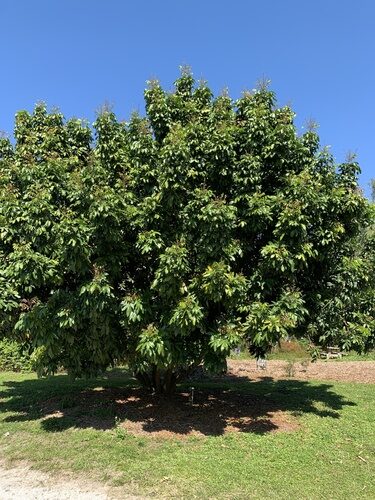
Dimocarpus longan
Longan
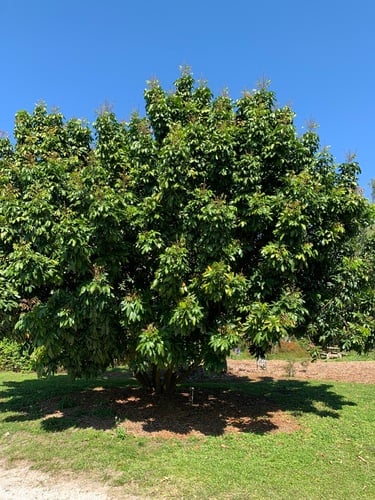
Dimocarpus longan subsp. malesianus
Mata kuching, Cat's eyes
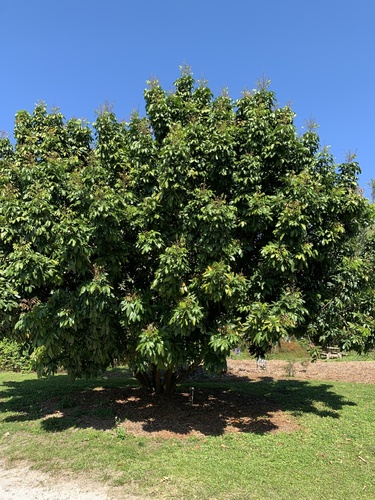
Dimocarpus longan subsp. malesianus var. echinatus
Spiny longan
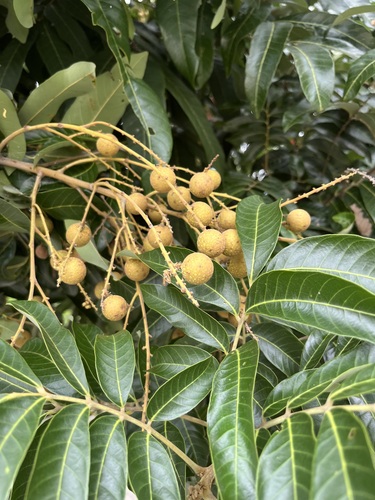
Dimocarpus longan subsp. malesianus var. malesianus cv. kakus
Kakus
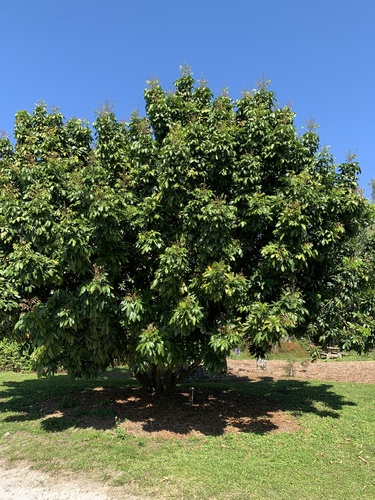
Dimocarpus longan subsp. malesianus var. sau
Sau
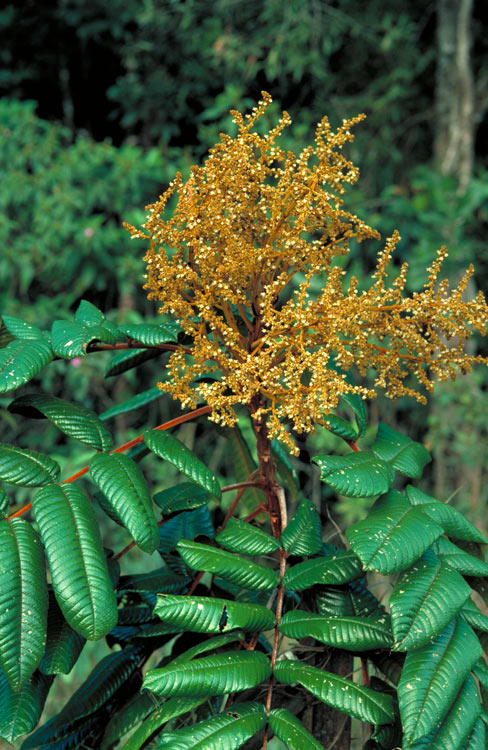
Diploglottis berniana
Giant-leaved tamarind